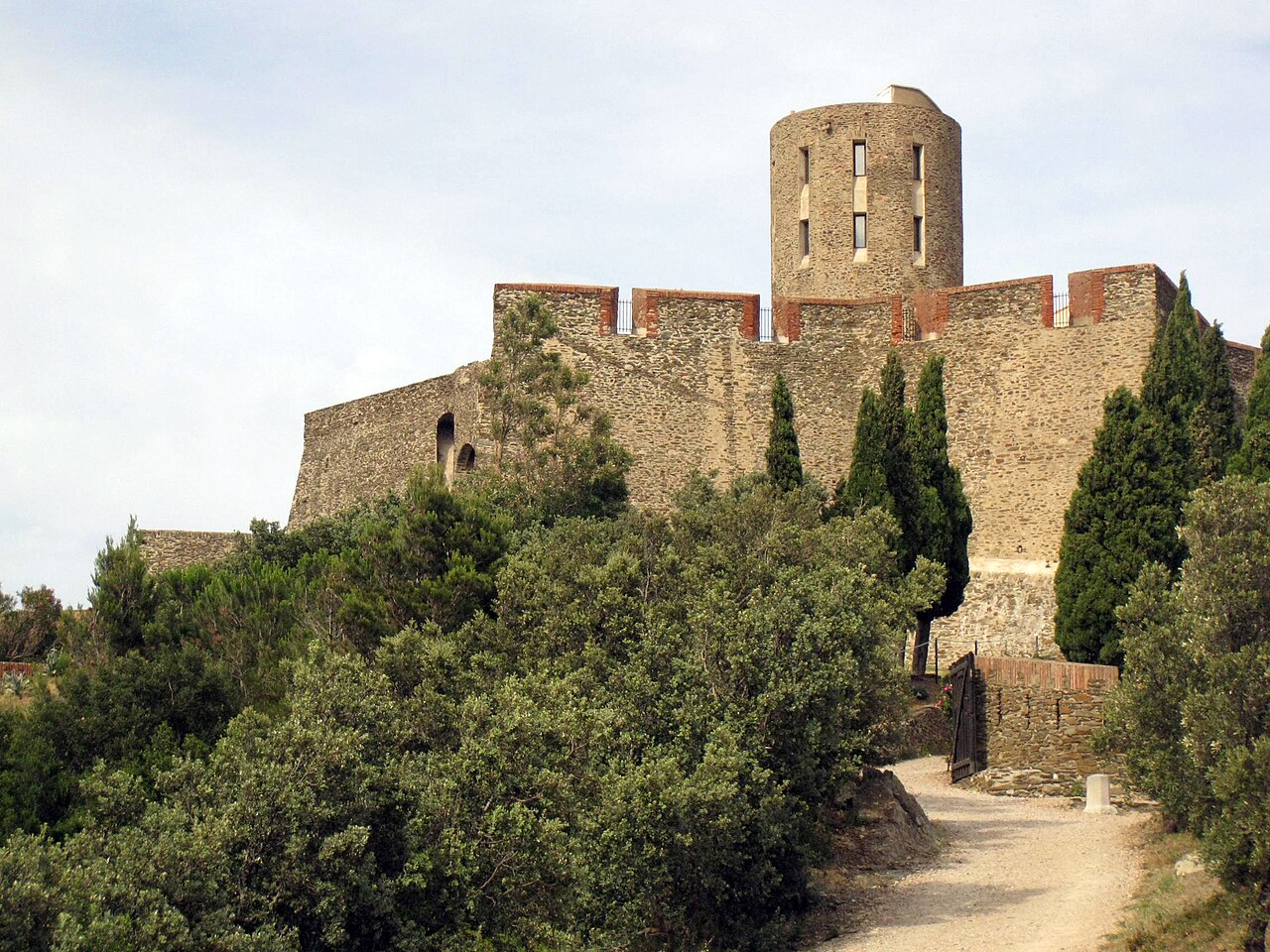
Castell de Querroig
Castell de Querroig is a notable medieval fortress located within the municipality of Banyuls-sur-Mer in present-day France. This hill castle occupies a commanding position on the summit of Puig de Querroig, near the border with Spain, highlighting its strategic importance in controlling the surrounding territory. The castle's history spans several centuries, reflecting the complex feudal dynamics and military architecture of the region.
Early history and strategic significance
The site of Castell de Querroig is first recorded in the year 981 as "podium Cariorubio," marking it as a significant landmark within the feudal estate governed by Count Gausfred I of Empúries. This early mention underscores the location's longstanding role as a border fortification. The castle itself is documented in the late medieval period, specifically in 1385, under the names "castrum de Carroig" or "Castrum de Carroia," confirming its established function as a fortified structure during this era.
Its position atop a rocky hill provided natural defensive advantages, with the castle walls designed to conform to the irregular shape of the plateau. This adaptation to the terrain was crucial for defense and surveillance, allowing control over the surrounding valleys and routes leading into the region from Spain.
Architectural features and construction
The remains of Castell de Querroig reveal a fortress that was carefully integrated with the rugged landscape. The castle's walls follow an irregular, winding pattern, shaped by the natural topography of the summit. This layout is typical of many medieval hill castles, which prioritized maximizing defensive capabilities by utilizing the terrain.
At the core of the site lie the ruins of a large keep, or tower of homage, which is elongated and rectangular in form. The surrounding curtain walls vary in height, with some sections on the eastern side reaching about five meters. A notable feature is a stretch of wall with tall, narrow arrow slits, which allowed defenders to shoot arrows while remaining protected.
The construction materials reflect the local geology. The walls are built from roughly broken slabs of llicorella, a dark, flaky schist native to the area, giving the fortress a distinctive rustic appearance. In contrast, the cornerstones and the frames of the arrow slits are made from finely cut granite blocks, which are lighter in color and carefully shaped to provide structural strength and aesthetic contrast.
One of the most prominent features is the Torre de Querroig, a cylindrical defensive watchtower constructed between the 14th and 15th centuries. This tower was built on the remains of the original keep and curtain walls, reaching nearly seven meters in height. Constructed with large, roughly hewn stones bound with mortar, the tower has lost its upper floors but still retains a semi-spherical vaulted ceiling inside, a characteristic element of medieval defensive towers designed to resist attacks and support the structure above.
Historical evolution and military role
Over the centuries, Castell de Querroig experienced gradual decline, with the original medieval castle falling into ruin. The construction of the Torre de Querroig watchtower during the late medieval period reflects the evolving military needs of the region, emphasizing surveillance and defense against increasingly sophisticated threats.
The castle's location near the border between France and Spain made it a strategic military site during periods of conflict, including the various wars and territorial disputes that shaped the medieval and early modern history of the region.
Modern recognition and preservation
In contemporary times, the French portion of Castell de Querroig and its surrounding lands have been officially recognized for their cultural and historical value. In December 2016, the site was designated as a historic monument, ensuring its protection and raising awareness of its significance as a heritage site.
Today, the ruins offer valuable insights into medieval military architecture and the adaptation of fortifications to challenging natural landscapes. Visitors can explore the remains of the walls, keep, and watchtower, gaining an appreciation for the castle's role in regional history and its architectural legacy.
Architectural details and materials
The use of llicorella schist in the castle's construction is a notable example of medieval builders utilizing local materials to blend the fortress with its environment. The contrast between the dark schist and the lighter granite cornerstones not only provided structural integrity but also added visual distinction to the fortress's silhouette against the landscape.
The arrow slits are particularly well-preserved in some sections, illustrating the defensive strategies employed by medieval architects to balance offensive capabilities with protection. These narrow openings allowed archers to cover a wide field of fire while minimizing vulnerabilities.
The Torre de Querroig stands as a testament to the castle's ongoing military function during the late Middle Ages, with its vaulted ceiling and sturdy construction designed to withstand sieges and attacks.
Visitor experience and cultural significance
While the castle is in a state of ruin, its dramatic hilltop location and the rugged beauty of the surrounding landscape make it a compelling destination for visitors interested in medieval history and architecture. The site offers panoramic views of the surrounding region, including the nearby Pyrenees mountains and the Mediterranean coast.
As a protected historic monument, Castell de Querroig serves as a cultural landmark that connects present-day visitors with the medieval past of the region. Its preservation allows for ongoing research, education, and tourism, contributing to the appreciation of France's rich architectural heritage.
Frequently asked questions (FAQ)
- How do I get to Castell de Querroig?
- Castell de Querroig is located in the picturesque region of France, easily accessible by car or public transport. The nearest major city is Perpignan, from where you can take a bus or a taxi to reach the castle. Make sure to check local transport schedules for the most convenient routes.
- What is the historical significance of Castell de Querroig?
- Castell de Querroig dates back to the 13th century and played a vital role in protecting the region from invasions. Its strategic location provided a lookout point for monitoring enemy movements, making it an essential fortress during conflicts. Today, it stands as a testament to the medieval architecture and military history of the area.
- When was Castell de Querroig built?
- Construction of Castell de Querroig began in the early 1200s, with significant expansions and modifications made over the centuries. The castle was completed in the late 13th century, showcasing the architectural styles of that period. Visitors can appreciate the intricate designs and historical features that have survived through time.
- Can I visit Castell de Querroig year-round?
- Yes, Castell de Querroig is open to visitors throughout the year, but it's best to check for any seasonal hours or special closures. The castle offers guided tours during the peak tourist seasons, allowing guests to fully explore its history and architecture. Be sure to plan ahead for the best experience.
- Why is Castell de Querroig a popular tourist attraction?
- Castell de Querroig attracts visitors due to its stunning views, rich history, and impressive architecture. The castle's dramatic location atop a hill provides breathtaking panoramas of the surrounding landscape. Additionally, the blend of history and natural beauty creates a unique experience for all who visit.
- Is it possible to access Castell de Querroig for individuals with mobility challenges?
- While Castell de Querroig offers a remarkable historical experience, it may pose challenges for individuals with mobility issues due to its hilly terrain and uneven surfaces. However, the site is continually working on improving accessibility, so it's best to contact the castle administration for the latest information on available accommodations.
- What are the ticket prices for Castell de Querroig?
- Tickets to visit Castell de Querroig are reasonably priced, with discounts available for children, students, and seniors. Family passes are also offered for those visiting with multiple members. It's advisable to check the official website for the most current pricing and any special offers.
- What are the opening hours for Castell de Querroig?
- The opening hours for Castell de Querroig vary by season, typically opening later in the morning and closing in the early evening. During peak tourist seasons, extended hours may be available to accommodate more visitors. Always check the official website before your visit for the most accurate schedule.
- What nearby attractions can I visit while at Castell de Querroig?
- In addition to Castell de Querroig, visitors can explore the charming villages and natural parks nearby. The region is known for its beautiful hiking trails, local vineyards, and historical sites. Be sure to plan a full day to enjoy the rich cultural heritage and stunning landscapes surrounding the castle.
Information
Loading map...
Visitor reviews
No reviews yet. Been here? Write the first review and help other travelers!
Write the first reviewVisited this castle? Share your experience
Your review helps other travelers and adds first-hand knowledge to our encyclopedia.