Roxburgh Castle
Roxburgh Castle stands as a significant relic of medieval Scottish history, located near Kelso in the Scottish Borders region. Established in the early 12th century, it commanded a strategic position overlooking the confluence of the Tweed and Teviot rivers. This location was crucial for controlling borderlands contested by Scotland and England, making Roxburgh Castle a focal point in centuries of conflict and political power struggles.
The castle is traditionally attributed to King David I of Scotland, with its first documentary mention dating around 1128. As a royal burgh developed around the fortress, Roxburgh became one of the most important strongholds in the region. Its imposing defensive walls, originally about nine meters high and nearly two meters thick, were designed to withstand sieges and assaults, reflecting the turbulent nature of the Scottish-English border during the High and Late Medieval periods.
Historic significance and turbulent history
Roxburgh Castle's history is marked by repeated captures and recaptures, emblematic of the ongoing struggle between Scotland and England. In 1174, after the capture of King William I of Scotland at the Battle of Alnwick, the castle fell under English control. This began a long period of contested ownership, with the fortress changing hands multiple times through warfare and political maneuvering.
A particularly grim episode occurred between 1306 and 1310 when Mary Bruce, sister of the Scottish king Robert the Bruce, was imprisoned in a metal cage exposed outside the castle walls by the English, underscoring the brutal realities of medieval warfare and border politics.
The castle was famously recaptured on 19 February 1314 by Sir James Douglas, also known as "Black Douglas," during a daring night assault amid the First War of Scottish Independence. This victory was significant for Scottish morale and control of the border region. Following this, Robert the Bruce ordered the castle's destruction to prevent its reuse by English forces, a tactic repeated after subsequent Scottish retakings.
English forces regained Roxburgh in 1334 and again after the Battle of Neville's Cross in 1346. Scottish sieges in 1417 and 1460 further demonstrate the castle's strategic importance. The siege of 1460 was notably tragic, as King James II of Scotland died due to a cannon explosion during the assault. Despite this loss, the Scots captured the castle and, under the direction of Queen Mary of Guelders, ordered its demolition to prevent further military use.
In the 16th century, during the conflict known as the Rough Wooing, the English constructed a rectangular fort on the site in 1545 under Ralph Bulmer's command, following orders from the Earl of Hertford. This fort included military buildings such as a brewhouse and residential quarters but was dismantled after the Treaty of Boulogne in 1550.
Architectural features and surviving remains
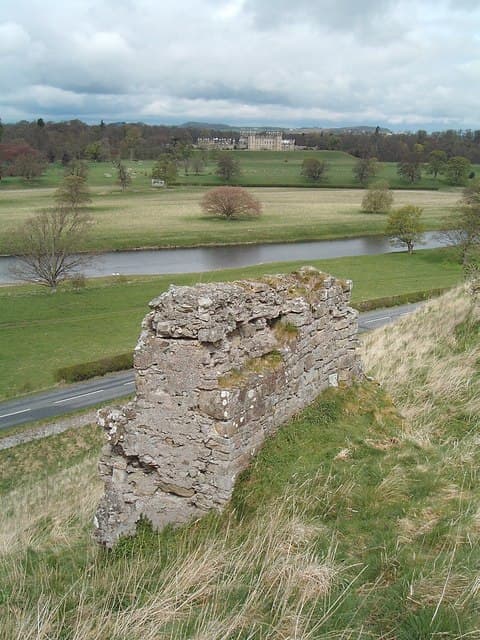
The castle's original layout was carefully planned to maximize defense, utilizing the natural protection of the two rivers. The surviving sections of the defensive walls on the Tweed side, dating from a reconstruction completed in 1378, highlight the fortress's formidable construction with walls nearly two meters thick.
The western gatehouse, facing the Teviot River, remains a notable surviving feature. This gatehouse included two small gates called poternes, which have endured through centuries. Restoration work around 1420 is evident in parts of this structure, showcasing medieval defensive architecture.
The castle's main keep, known as Douglas Tower after the famed Scottish commander, no longer stands but is believed to have been situated at the site's highest point. Later defensive works, such as the Bell Mount bastion, were constructed on this elevated position.
Along the Teviot side, remnants of defensive walls survive, though heavily weathered by time. A detailed plan from 1547 documents the English fortifications added during the Rough Wooing, including a courtyard with protective ditches, a water well secured by a barbican called Base Court, a brewhouse, and the Captain's Lodgings.
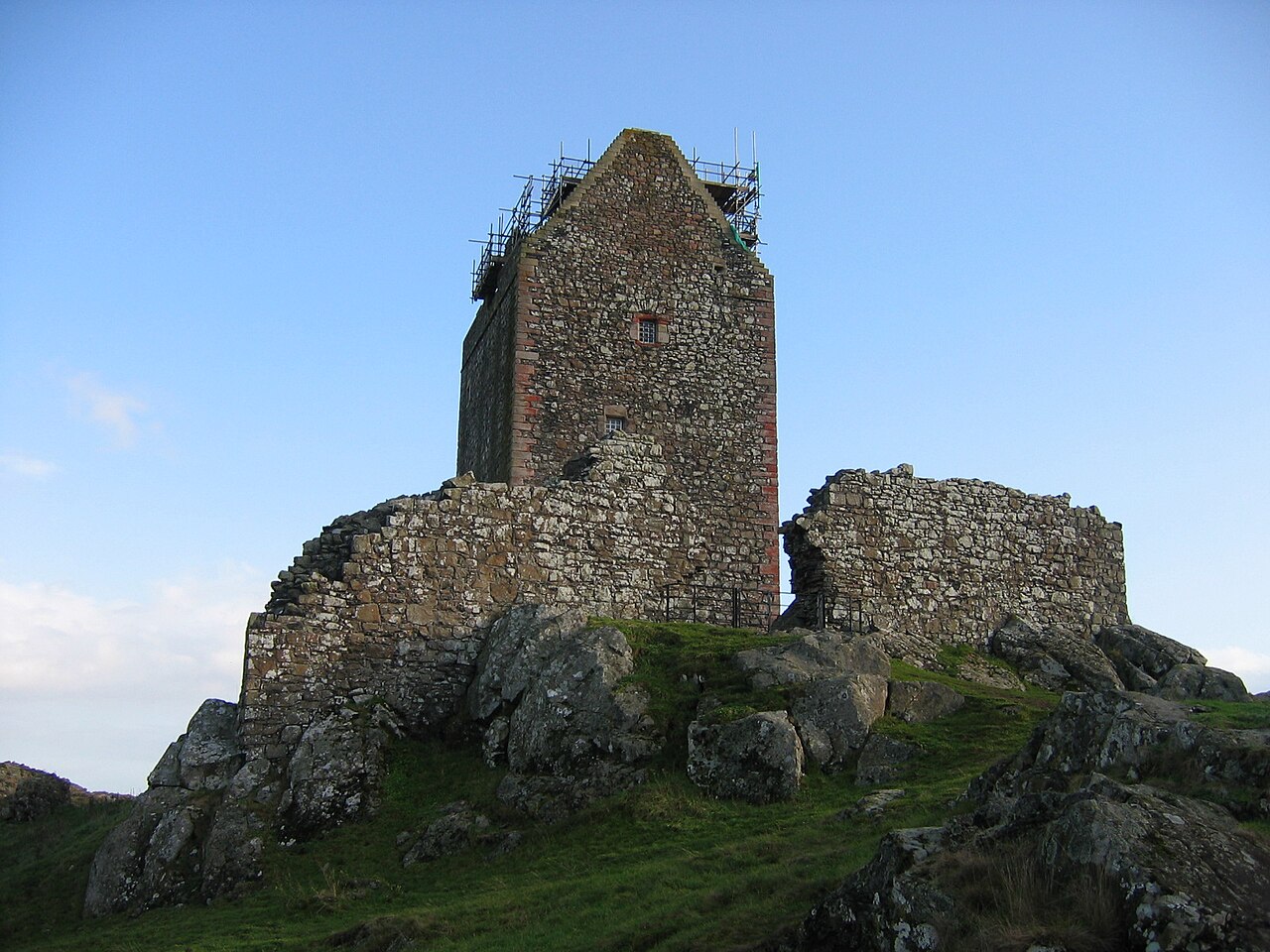
Today, the site is largely overgrown with vegetation, including nettles and trees, which obscure much of the original ground plan. Small fragments of stone walls remain visible, especially along the southern edge. The ruins lie within the parkland of Floors Castle, the residence of the Duke of Roxburghe, who acquired the estate in 1488. An information panel near the Teviot riverbank provides visitors with historical context about this once formidable stronghold.
Cultural legacy and visitor information
Roxburgh Castle holds a prominent place in Scottish cultural memory, particularly due to its dramatic history during the Wars of Scottish Independence. The castle's 1314 recapture by Black Douglas inspired literary works such as James Hogg's The Three Perils of Man, reflecting its enduring symbolic importance.
While the castle now exists primarily as ruins, its remains offer valuable insights into medieval military architecture and Scottish border history. The site is accessible to visitors who wish to explore the grounds and learn about the castle's pivotal role in shaping Scotland's past.
Visitors can view the ruins from the parkland of Floors Castle and along the riverbanks, where interpretive signage helps illuminate the castle's historical significance. The overgrown nature of the ruins invites exploration while reminding visitors of the passage of time and the castle's once formidable presence.
Frequently asked questions (FAQ)
- When was Roxburgh Castle founded and by whom?
- Roxburgh Castle was founded around 1128, traditionally attributed to King David I of Scotland, to secure the strategic border area.
- What significant events took place at Roxburgh Castle during the Wars of Scottish Independence?
- The castle changed hands multiple times, notably with Mary Bruce imprisoned there and its daring recapture by Sir James Douglas in 1314 during the First War of Scottish Independence.
- What remains of Roxburgh Castle can visitors see today?
- Visitors can see surviving sections of the defensive walls, the western gatehouse with poternes, and ruins within the parkland of Floors Castle, though much of the site is overgrown.
- Why was Roxburgh Castle demolished multiple times?
- The castle was demolished by Scots after recaptures to prevent English reuse, reflecting its strategic importance and the ongoing border conflicts.
- Is Roxburgh Castle accessible to the public?
- The ruins are accessible within Floors Castle grounds, with information panels providing historical context, though the site is largely overgrown and without formal visitor facilities.
Photo gallery

Information
Current owner
Duke of Roxburghe
Loading map...
Visitor reviews
No reviews yet. Been here? Write the first review and help other travelers!
Write the first reviewVisited this castle? Share your experience
Your review helps other travelers and adds first-hand knowledge to our encyclopedia.