Smailholm Tower
Smailholm Tower stands as a remarkable example of a late medieval peel tower located near the village of Smailholm in the Scottish Borders region of Scotland. Constructed in the late 15th or early 16th century, this fortified tower was originally built by the Pringle family, who were vassals to the powerful Earl of Douglas. The Pringles, formerly known as Hoppringle, held these lands from the early 1400s and managed part of the nearby Ettrick Forest on behalf of their feudal overlords. This strategic position along the turbulent Anglo-Scottish border made Smailholm Tower a key defensive stronghold during centuries of conflict.
The primary purpose of Smailholm Tower was military defense amidst the frequent border raids and skirmishes characteristic of the Anglo-Scottish border conflicts. As a typical peel tower, it was designed to provide refuge and protection for the local population against English incursions. The tower endured several documented assaults, notably in 1543, 1544, and 1546. During the 1546 attack, English forces from Wark Castle succeeded in sacking the tower, capturing inhabitants and livestock. Despite these violent episodes, the tower remained a significant military and residential site in the region.
Architectural features and defensive design
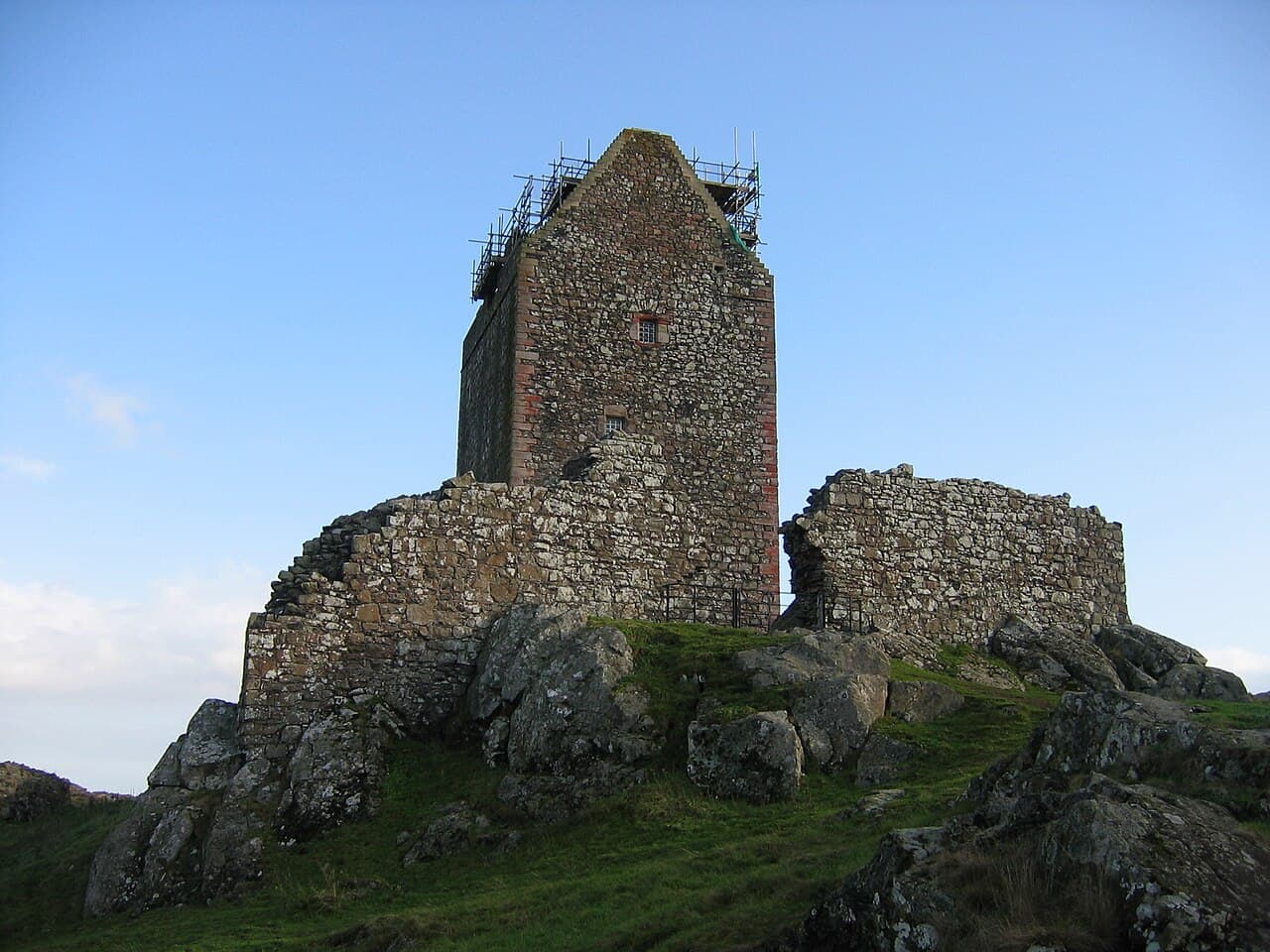
Smailholm Tower is a rectangular peel tower constructed primarily from basalt rubble, set atop a rocky prominence known as Lady Hill. This elevated position provides natural defense on three sides, complemented by a man-made ditch protecting the western approach. The tower's walls are approximately 2.4 meters thick, enclosing a footprint roughly 12 by 9 meters. Rising to four storeys, the tower's robust construction reflects its defensive purpose.
The basement level features a vaulted stone ceiling and was originally divided into two floors by a wooden platform accessed via a ladder. Above this lies the main hall, notable for its distinctive north-facing fireplace adorned with a carved human face, a rare decorative element in such fortifications. Access to the upper floors is provided by a spiral turnpike staircase tucked into the southeast corner. The highest storey boasts an elliptical stone vault ceiling that supports a durable flat stone roof, an unusual architectural feature enhancing the tower's resilience.
In the 17th century, the tower underwent defensive modifications including the addition of a gunloop in the west-facing gable overlooking the enclosed courtyard. This adaptation reflects the evolving military technology and defensive needs of the period. The surrounding courtyard, or barmkin, measures approximately 16 by 19 meters and is enclosed by the remains of a stone wall.
Auxiliary buildings and courtyard features
Within the barmkin lie the foundations of several 17th-century outbuildings, including a single-storey hall house to the north and a two-room kitchen block to the south. These structures indicate the tower's role not only as a defensive fortification but also as a domestic residence adapted for more comfortable living. Remnants of a small chapel and other ancillary buildings are scattered throughout the courtyard, though the eastern section that once contained a garden leaves no visible traces today. The western barmkin wall remains relatively well preserved, with portions standing up to the first-floor height around a narrow entrance.
Historical context and ownership
Originally built by the Pringle family, Smailholm Tower was a vital part of the border defense system during the late medieval period. By the mid-17th century, ownership passed to the Scotts of Harden, ancestors of the renowned author Sir Walter Scott. Around 1640, Sir Andrew Ker of Greenhead famously defended the tower against another English attack, underscoring its ongoing strategic importance.
The Scott family undertook significant rebuilding and reinforcement of the tower and its barmkin walls, adapting the structure to the changing military and domestic requirements of the time. However, by the 18th century, the tower's importance declined as its occupants moved to a nearby farmhouse called Sandyknowe. The property eventually came under the ownership of the Earl of Ellesmere, who entrusted it to state guardianship in 1950.
Literary and cultural significance
Smailholm Tower is famously associated with Sir Walter Scott, who spent part of his youth in the tower. The evocative atmosphere of the tower and its surroundings inspired Scott's poetry, including works such as "The Eve of St John" and "Marmion". Around 1800, Scott's uncle undertook repairs to secure the building, preserving it for future generations.
The tower also attracted notable artists and innovators. The celebrated painter J. M. W. Turner captured its dramatic form in his works, while early photography pioneer Henry Fox Talbot documented the structure, contributing to its cultural legacy. Since 2006, conservation specialists have experimented with natural roofing techniques, culminating in the restoration of a traditional turf roof completed by 2011, reflecting a commitment to sustainable preservation methods.
Archaeological significance and site features
Approximately 100 meters southeast of the tower, earthworks reveal traces of a prehistoric settlement likely dating back to the first millennium BC. This evidence points to a long history of human occupation at this strategic site, predating the medieval tower by many centuries.
Inside the tower, visitors can explore a permanent exhibition featuring finely detailed model figures that depict the history of Smailholm Tower and stories connected to Walter Scott. Created by local artists using advanced embroidery and modeling techniques, these exhibits enhance the cultural and educational value of the site.
Conservation and modern restoration efforts
The roof of Smailholm Tower has been a particular focus of innovative conservation efforts since 2006. Specialists tested various natural damp-proofing methods, including planting turf and sedum mats, to protect the structure from moisture damage. These experiments culminated in the reinstatement of a traditional turf roof covering the entire building during restoration work completed between 2010 and 2011. This approach not only preserves the tower's historic character but also exemplifies sustainable heritage conservation practices.
Today, Smailholm Tower stands as a well-preserved monument to Scotland's turbulent border history, medieval architecture, and literary heritage. Its combination of military, domestic, and cultural significance makes it a compelling destination for visitors interested in history, architecture, and the arts.
Frequently asked questions (FAQ)
- How do I get to Smailholm Tower?
- Smailholm Tower is located in the village of Smailholm in the Scottish Borders. You can reach it by car or public transport, with the nearest major town being Kelso. There are signposted walking paths leading to the tower from the village, making it accessible for visitors who enjoy a scenic hike.
- What is the historical significance of Smailholm Tower?
- Smailholm Tower dates back to the 15th century and served as a defensive structure during turbulent times in Scottish history. It is closely associated with the famous Scottish poet Sir Walter Scott, who drew inspiration from the tower for his works. The tower provides insight into the medieval architecture and the feudal system that dominated Scotland during its time.
- When was Smailholm Tower built?
- Construction of Smailholm Tower began in the late 15th century, around 1460, and it was likely completed shortly thereafter. The tower's design reflects the typical defensive architecture of the period, with thick walls and a strategic position overlooking the surrounding landscape. Its enduring structure is a testament to the craftsmanship of the era.
- Can I take guided tours of Smailholm Tower?
- Yes, guided tours are available at Smailholm Tower, providing visitors with a deeper understanding of its history and significance. Knowledgeable guides share fascinating stories and facts about the tower and its surroundings. It's advisable to check the schedule in advance, especially during peak tourist seasons.
- Why is Smailholm Tower a popular tourist attraction?
- Smailholm Tower is popular for its picturesque setting and rich history, making it a favorite among history buffs and nature lovers alike. The tower offers stunning views of the Scottish Borders and is an integral part of the area's heritage. Visitors are drawn to its connection with Sir Walter Scott and the opportunity to explore a well-preserved medieval structure.
- Is it possible to visit Smailholm Tower year-round?
- Smailholm Tower is usually open to visitors from spring through autumn, with specific opening hours that can vary. However, during the winter months, access may be restricted due to weather conditions. It's best to check the official website for the most up-to-date information on opening times before planning your visit.
- What are the ticket prices for Smailholm Tower?
- Ticket prices for Smailholm Tower are generally affordable, with discounts available for children and families. Entrance fees contribute to the maintenance and preservation of the site. Visitors can typically purchase tickets on-site, but checking in advance for any special events or offers is recommended.
- What is the best time to visit Smailholm Tower?
- The best time to visit Smailholm Tower is during the spring and summer months when the weather is milder and the surrounding landscape is in full bloom. This period also coincides with the tower's regular opening hours, allowing for a more enjoyable experience. Autumn can also be beautiful, with changing foliage, but be prepared for cooler temperatures.
- Are there any nearby attractions to visit alongside Smailholm Tower?
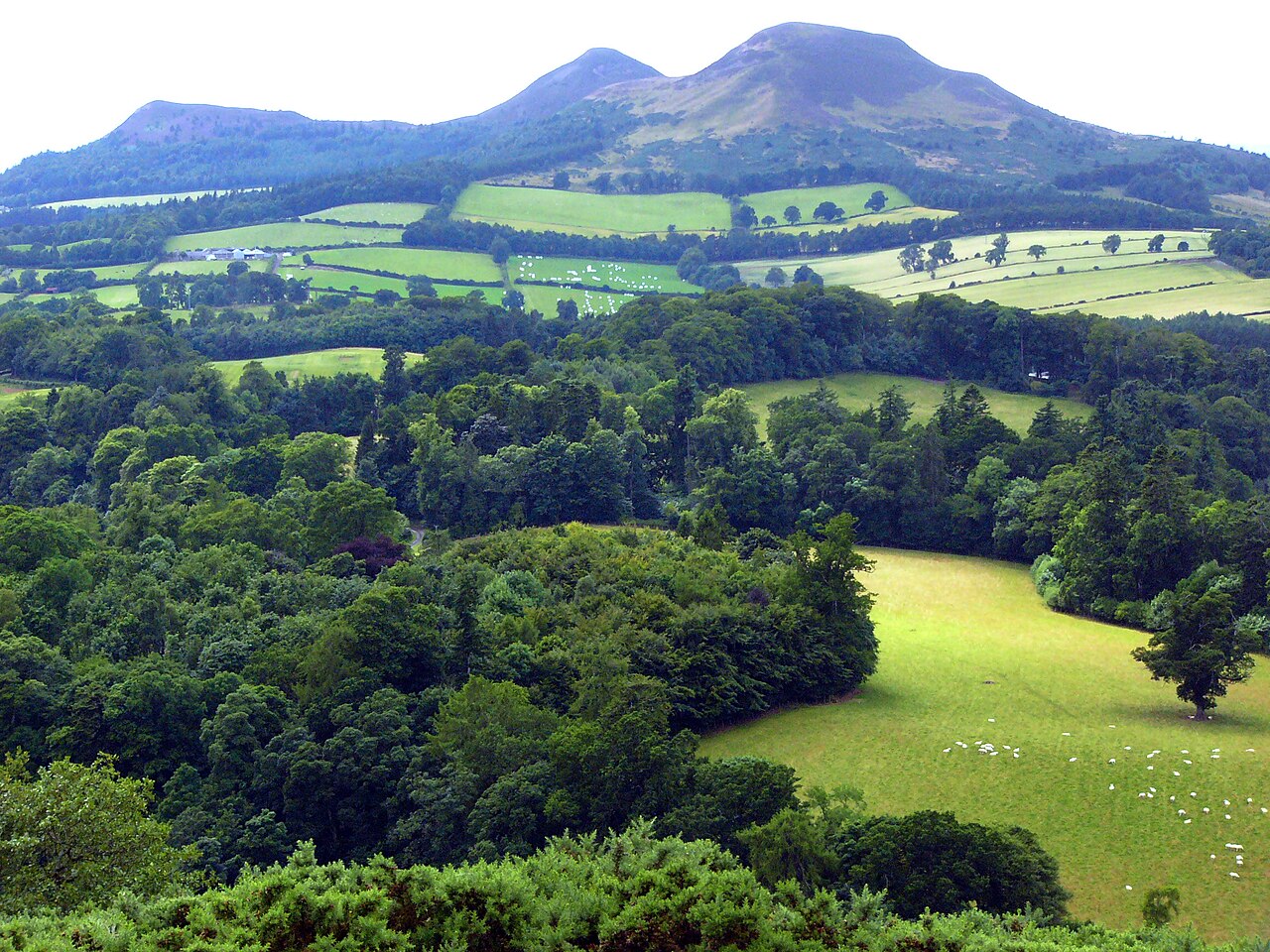
- Yes, there are several nearby attractions worth exploring, such as the scenic village of Smailholm and the historic town of Kelso. Visitors can also enjoy the beautiful landscapes of the Scottish Borders, including the nearby Eildon Hills and the River Tweed. These sites offer opportunities for hiking, photography, and soaking in the natural beauty of the region.
Photo gallery

Information
Website
Visit websiteSources & official resources
Verify the information above using these authoritative references.
Loading map...
Visitor reviews
No reviews yet. Been here? Write the first review and help other travelers!
Write the first reviewVisited this castle? Share your experience
Your review helps other travelers and adds first-hand knowledge to our encyclopedia.