Floors Castle
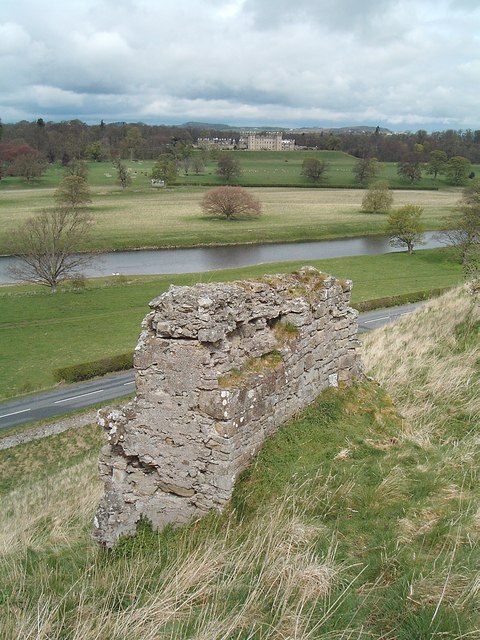
Floors Castle stands prominently in the Scottish Borders near Kelso, renowned as the largest inhabited house in Scotland. This grand estate, overlooking the River Tweed and facing the ruins of Roxburgh Castle, exemplifies a remarkable architectural evolution from a 16th-century fortified tower house to a magnificent 18th-century Georgian mansion enhanced with 19th-century romantic embellishments.
The castle's origins trace back to the late 1500s when the Ker family, prominent local landowners, established a fortified tower house or donjon on the site. This medieval structure, likely incorporating elements from a 15th-century predecessor, formed the core around which the modern Floors Castle developed. The Kers acquired the land from the dissolved Kelso Abbey, cementing their status in the region.
In the early 18th century, John Ker, 1st Duke of Roxburghe, a key political figure during the 1707 Acts of Union, commissioned the celebrated architect William Adam to design a new residence. Constructed between 1721 and 1726, Adam's design skillfully merged the remaining medieval fabric with the refined Georgian architectural style that emphasized symmetry, proportion, and classical detail. The resulting structure featured a large, symmetrical main block flanked by two service wings, a common layout of the period, reflecting the transition from defensive architecture to stately aristocratic living.
19th-century transformation and romantic revival
During the 19th century, Floors Castle underwent significant remodeling under the direction of William Henry Playfair, a leading Scottish architect known for his neoclassical and romantic designs. Commissioned by the 6th Duke of Roxburghe between 1837 and 1847, Playfair introduced turrets, battlements, and castellated features that gave the mansion a picturesque and romanticized medieval appearance. These additions aligned with the Victorian era's fascination with Gothic revival and castle aesthetics, enhancing the estate's grandeur and visual impact.
Internally, Playfair reconfigured the castle's layout by relocating the central staircase and installing a large fireplace in the entrance hall, improving both circulation and ambiance. These changes respected the original Georgian proportions while adding the dramatic flair expected of a noble residence during the period.
Art collections and interior highlights
The castle's interiors boast an impressive collection of French 17th and 18th-century furniture, Oriental and European porcelain, and exquisite tapestries, including 18th-century Brussels tapestries depicting ancient deities and a rare tapestry originally woven for the Fontainebleau Palace in France. These artworks reflect the family's refined taste and international connections.
Notable rooms include the salon with intricate stucco work, a sewing room displaying embroidered pieces alongside paintings by renowned artists such as Henri Matisse and Odilon Redon, and a ballroom featuring wood-carved wall panels and portraits by masters like Gainsborough, Reynolds, and Kneller. The billiard room, once a bedroom for Prince Leopold of Albany in 1867, contains family portraits and a built-in library, illustrating the castle's role as a Victorian-era aristocratic home.
An unusual highlight is the bird room, housing nearly 400 taxidermied birds collected by the 6th Duke, including species such as grouse and carrier pigeons. Adjacent to this is a collection of ancient coins, showcasing the Duke's interests beyond architecture and art.
The gallery displays glass cabinets filled with Qing dynasty porcelain and regalia of Scotland's Order of the Thistle, underscoring the family's noble heritage. The dining room is arranged to evoke a 19th-century setting and contains a portrait of the 18th-century actress Peg Woffington, highlighting social connections and cultural tastes.
Grounds, gardens, and estate features
The Floors Castle estate spans approximately 52,000 acres, featuring beautifully maintained walled gardens, extensive walking paths, picnic areas, and a garden center with an on-site restaurant. The grounds provide visitors with a tranquil environment to explore the natural beauty of the Scottish Borders alongside the castle's rich heritage.
The estate's position on a natural terrace offers commanding views towards the Cheviot Hills, and its proximity to the River Tweed adds to the scenic and strategic significance of the location. The castle is clearly visible from the nearby Kelso Bridge, making it a prominent landmark in the region.
Historical significance and current status
Floors Castle has remained the ancestral seat of the Ker family and the Dukes of Roxburghe since its construction, reflecting centuries of Scottish aristocratic history. The family has played active roles in politics, science, and conservation, maintaining the estate as a living heritage site.
Despite its name, Floors Castle is primarily an estate house rather than a fortress, illustrating the evolution of Scottish noble residences from medieval defensive structures to grand country homes. It is well preserved and continues to be inhabited by the family, with parts of the castle open to the public from Easter to October, seven days a week, offering guided tours that showcase eleven richly decorated rooms.
Floors Castle has also gained cultural recognition as a filming location, notably appearing in the 'Tarzan of Greystoke' films, where local residents participated as extras. The castle's blend of historical architecture, art collections, and picturesque grounds make it a significant destination for visitors interested in Scottish history and heritage.
Visiting information and public access
The castle welcomes visitors seasonally, typically from Easter through October, seven days a week. An admission fee applies, supporting the maintenance and conservation of the estate. Visitors can enjoy guided tours of the castle's interior, explore the extensive gardens, and dine at the on-site restaurant.
The estate's walking paths and picnic areas provide additional recreational opportunities, making Floors Castle a comprehensive cultural and natural attraction in the Scottish Borders.
Frequently asked questions (FAQ)
- How do I get to Floors Castle?
- Floors Castle is located in Kelso, Scotland, easily accessible by car or public transport. If traveling by car, it is well-signposted from the A698 and A6105 roads. There are also local bus services that connect Kelso to nearby towns and cities.
- What are the opening hours for Floors Castle?
- Floors Castle is typically open from 10 AM to 5 PM, but hours may vary depending on the season. It’s recommended to check the official website for the most current opening times, especially during holidays or special events.
- Can I take photos inside Floors Castle?
- Yes, visitors are allowed to take photographs in many areas of Floors Castle, but flash photography may be restricted in certain rooms. Always check for signage or ask staff if you're unsure about photography policies in specific areas.
- When was Floors Castle built?
- Floors Castle was originally constructed in the 18th century, with its design attributed to the architect William Adam. The castle has undergone several renovations and expansions over the years, reflecting changes in architectural styles and the needs of its inhabitants.
- Why is Floors Castle historically significant?
- Floors Castle is the largest inhabited castle in Scotland and serves as the family seat of the Duke of Roxburghe. Its rich history and architectural grandeur make it a significant landmark, showcasing the heritage of Scottish nobility and the evolution of castle architecture.
- Is it possible to explore the gardens at Floors Castle?
- Absolutely! The beautiful gardens at Floors Castle are open to the public, featuring stunning landscapes and a variety of plant species. Visitors can enjoy leisurely walks through the grounds and find designated areas for picnics.
- What are the ticket prices for Floors Castle?
- Ticket prices for Floors Castle vary depending on age and group discounts, with standard adult tickets typically priced around £12. Children and family tickets are available at reduced rates, and it’s advisable to check the official website for any current offers or seasonal pricing.
- What nearby attractions can I visit while at Floors Castle?
- While visiting Floors Castle, you can explore the charming town of Kelso, known for its historic sites and local shops. Nearby attractions include the beautiful River Tweed, the ruins of Kelso Abbey, and the stunning landscapes of the Scottish Borders, perfect for hiking and outdoor activities.
- Is Floors Castle accessible for visitors with disabilities?
- Floors Castle aims to be accessible to all visitors, offering facilities such as ramps and accessible restrooms. However, some areas may have limited access due to the historic nature of the building, so it’s best to contact the castle in advance for specific accessibility inquiries.
Information
Website
Visit websiteSources & official resources
Verify the information above using these authoritative references.
Loading map...
Visitor reviews
No reviews yet. Been here? Write the first review and help other travelers!
Write the first reviewVisited this castle? Share your experience
Your review helps other travelers and adds first-hand knowledge to our encyclopedia.