Roxborough Castle
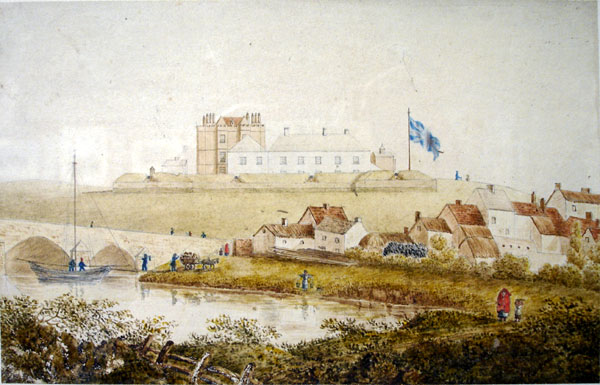
Roxborough Castle was a prominent hill castle located in Moy, County Tyrone, Northern Ireland. Originally constructed in 1738, it served as the ancestral seat of the Earls of Charlemont, alongside Charlemont Fort. The castle's history reflects significant architectural evolution and turbulent political events, culminating in its destruction by the Irish Republican Army (IRA) in 1922.
18th-century origins and initial construction
The castle was initially built in the early 18th century, embodying the architectural sensibilities of that period. Its location on a hill provided strategic advantage and commanding views over the surrounding landscape, typical of hill castles designed for both defense and status. The original structure likely combined residential and defensive elements customary for an aristocratic estate of that era.
19th-century remodeling and architectural transformation
William Murray's Italianate influence
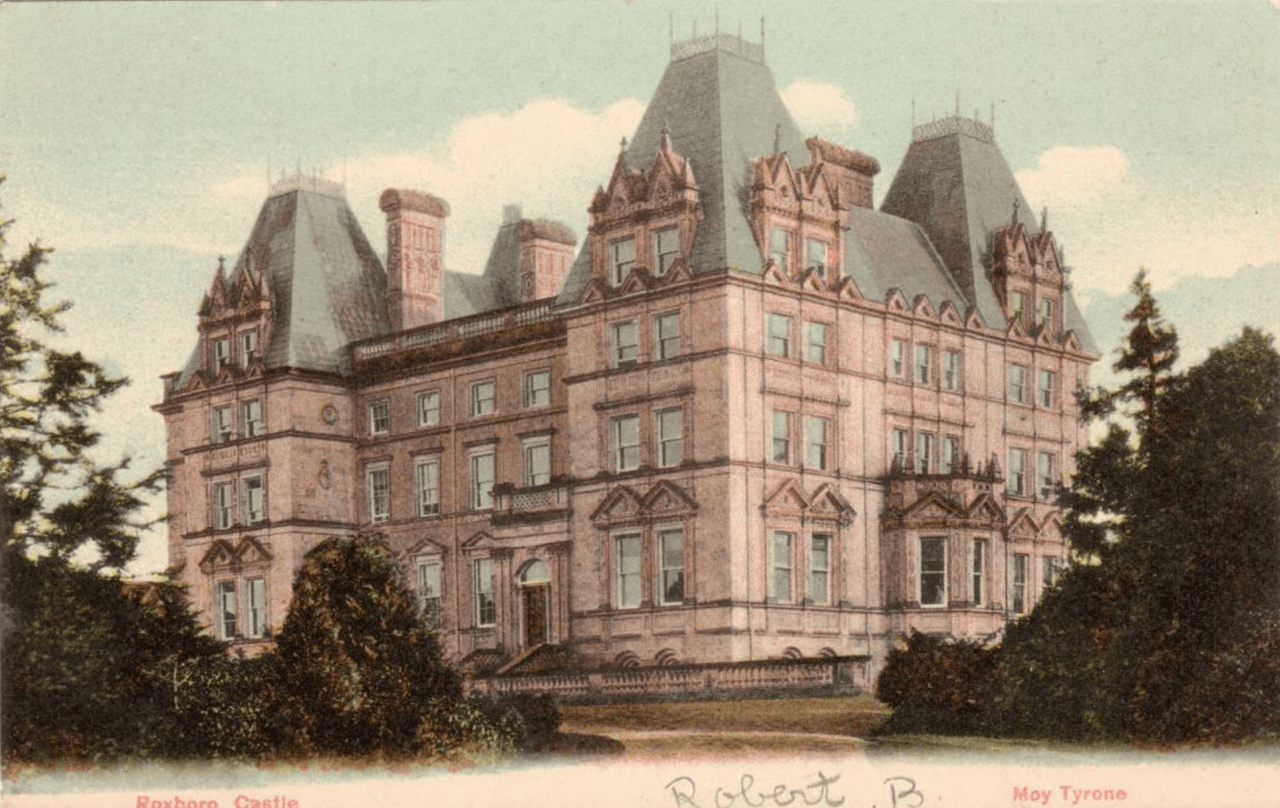
In 1842, the castle underwent a significant remodeling commissioned by the second Earl of Charlemont. The architect William Murray was responsible for this transformation, which introduced a restrained Italianate style to the castle's appearance. Murray added wings of one bay and two storeys over a basement, extending the full length of the original block. To unify the design, the original block was enhanced with triangular window pediments and complementary architectural details matching the new wings.
The entrance was relocated to the side of one wing, creating a new entrance front comprising three bays with a low portico. This alteration gave the castle the appearance of a French château, a popular stylistic reference in 19th-century British aristocratic architecture.
Richard Turner's conservatory addition
Between approximately 1850 and 1855, a conservatory designed by the renowned ironmaster and glasshouse designer Richard Turner was added to the castle. This addition reflected Victorian interests in horticulture and technological advances in glass and iron construction.
Further remodeling by William Barre
In 1864, the third Earl of Charlemont initiated further remodeling efforts. Architect William Barre was commissioned to carry out these works, which included installing fittings salvaged from the family's Dublin townhouse, Charlemont House. Barre's involvement likely introduced elements of the Gothic Revival or eclectic Victorian styles, though specific stylistic details from this phase are less documented.
Destruction and legacy
Roxborough Castle's history was dramatically altered during the Irish War of Independence and subsequent civil unrest. In 1922, the castle was burned out by the Irish Republican Army, leaving it a ruin. The destruction marked the end of its role as a noble residence and reflected the broader political and social upheaval in Ireland during the early 20th century.
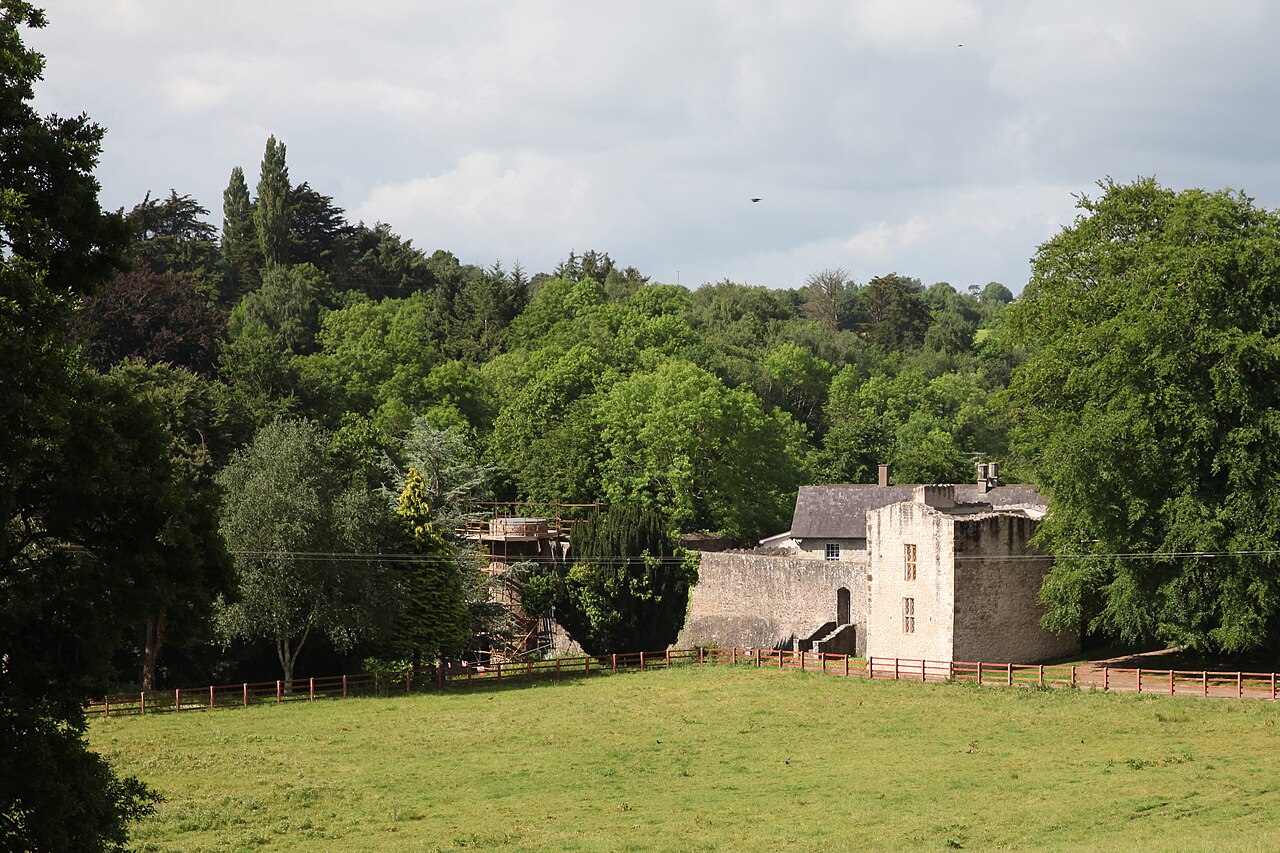
Today, the site of Roxborough Castle holds historical significance as a reminder of the complex interplay between architecture, aristocratic heritage, and Irish history. Though the castle no longer stands intact, its architectural evolution and the stories of its occupants continue to be studied by historians and enthusiasts of Irish heritage.
Architectural features and style
Roxborough Castle's architectural journey from its 18th-century origins through 19th-century remodeling encapsulates shifts in taste and technology. The Italianate wings added by William Murray are characterized by their balanced proportions and classical motifs, including the use of pediments and a portico entrance. The conservatory by Richard Turner is notable for its use of iron and glass, showcasing Victorian innovation.
The castle's transformation into a house styled like a French château illustrates the influence of continental European architecture on British and Irish aristocratic residences during the 19th century. The later additions by William Barre introduced further Victorian-era refinements, blending historic elements with contemporary trends.
Historical context and the Earls of Charlemont
The Earls of Charlemont were influential figures in Irish history, with Roxborough Castle serving as their country seat. The castle's proximity to Charlemont Fort highlights the family's strategic and military interests. Their Dublin townhouse, Charlemont House, contributed furnishings and fittings to Roxborough during the 1864 renovations, indicating the interconnected nature of their properties and the importance placed on maintaining aristocratic status through architecture.
Visiting and cultural significance
While Roxborough Castle no longer stands as a complete structure, its site remains a point of interest for those studying Irish history and architecture. The castle's story is intertwined with significant historical events, including the Irish struggle for independence. Visitors to County Tyrone can explore the surrounding landscape and nearby heritage sites to gain a broader understanding of the region's past.
Frequently asked questions (FAQ)
- How do I get to Roxborough Castle?
- Roxborough Castle is located in Moy, United Kingdom. You can reach it by car via the A29 road, and there are public transport options available, including local bus services that connect to nearby towns. It is advisable to check the latest transport schedules for the most convenient route.
- What is the historical significance of Roxborough Castle?
- Roxborough Castle dates back to the 17th century and is known for its role during the tumultuous period of the Irish Civil War. It served as a strategic fortification and has been a witness to numerous historical events. Today, it stands as a symbol of the region's rich heritage and architectural evolution.
- When was Roxborough Castle built?
- Roxborough Castle was constructed in the early 1600s, showcasing the architectural styles of the time. Its design reflects the defensive needs of the era, with features that illustrate both strength and grandeur. The castle has undergone various changes over the centuries, but its historical charm remains intact.
- Can I visit Roxborough Castle year-round?
- Yes, Roxborough Castle is open to visitors throughout the year, though specific opening hours may vary seasonally. It is recommended to check the official website or contact the visitor center for the most up-to-date information on visiting times. Special events may also be held during certain periods.
- Why is Roxborough Castle a popular tourist destination?
- Roxborough Castle attracts visitors for its stunning architecture and significant historical background. The picturesque surroundings and the castle's intriguing stories make it a favorite among history enthusiasts and casual tourists alike. Its location also offers scenic views of the surrounding countryside.
- Is it possible to access all areas of Roxborough Castle?
- While some areas of Roxborough Castle are accessible to the public, certain sections may be restricted due to preservation efforts. Visitors are encouraged to follow designated paths and guidelines provided during their visit. Accessibility options are available for those with mobility challenges, ensuring everyone can enjoy the site.
- What are the ticket prices for visiting Roxborough Castle?
- Ticket prices for Roxborough Castle are generally affordable, with discounts available for children, students, and seniors. Family packages may also be offered to provide a cost-effective option for larger groups. For the latest pricing details, please check the official website or inquire at the entrance.
- What is the best time to visit Roxborough Castle?
- The best time to visit Roxborough Castle is during the spring and early autumn months when the weather is mild, and the gardens are in full bloom. These seasons often provide a more pleasant experience for exploring the grounds. Additionally, special events and tours may be scheduled during these times, enhancing your visit.
- Are there any nearby attractions to explore after visiting Roxborough Castle?
- Yes, there are several nearby attractions worth exploring after your visit to Roxborough Castle, including the historic village of Moy and the scenic countryside of County Tyrone. Local parks and walking trails offer opportunities for outdoor activities. Be sure to check for additional historical sites and museums in the area to enrich your experience.
Photo gallery

Photo by Publisher - T Mc Clelland , Stationers,, Cookstown, County Tyrone•Public domain
Information
Loading map...
Visitor reviews
No reviews yet. Been here? Write the first review and help other travelers!
Write the first reviewVisited this castle? Share your experience
Your review helps other travelers and adds first-hand knowledge to our encyclopedia.