Castle Raw
Castle Raw, also known as Castleraw, is a historic fortified house located in the rural landscape east of the village of Loughgall and west of Portadown in County Armagh, Northern Ireland. This site offers a rare glimpse into early 17th-century fortified domestic architecture in the region, representing the transitional period between medieval castles and more modern manor houses.
Historical background and construction
The construction of Castle Raw is generally dated to around 1618-1619, with historical records attributing its building to Anthony Cope. Cope was a notable figure during the early Stuart period, and the castle likely served both as a residence and a defensive structure in a time of political unrest and plantation settlements in Ulster. The early 17th century in Ireland was marked by the establishment of fortified houses by English and Scottish settlers, blending domestic comfort with military features.
The castle’s design reflects the Renaissance architectural influences of the era, though it retains many defensive elements typical of fortified houses rather than grand palatial styles. Its construction during the plantation period situates it within the broader context of English colonization efforts in Ireland, where such fortified houses were symbols of control and authority.
Architectural features and layout
Castle Raw was built as a three-storied fortified house with a distinctive cruciform plan. This layout, uncommon in many Irish fortified houses, involved a cross-shaped footprint that enhanced both the internal spatial arrangement and defensive capabilities. The house was enclosed within a square entrenchment, likely a defensive earthwork or ditch, adding an extra layer of protection.
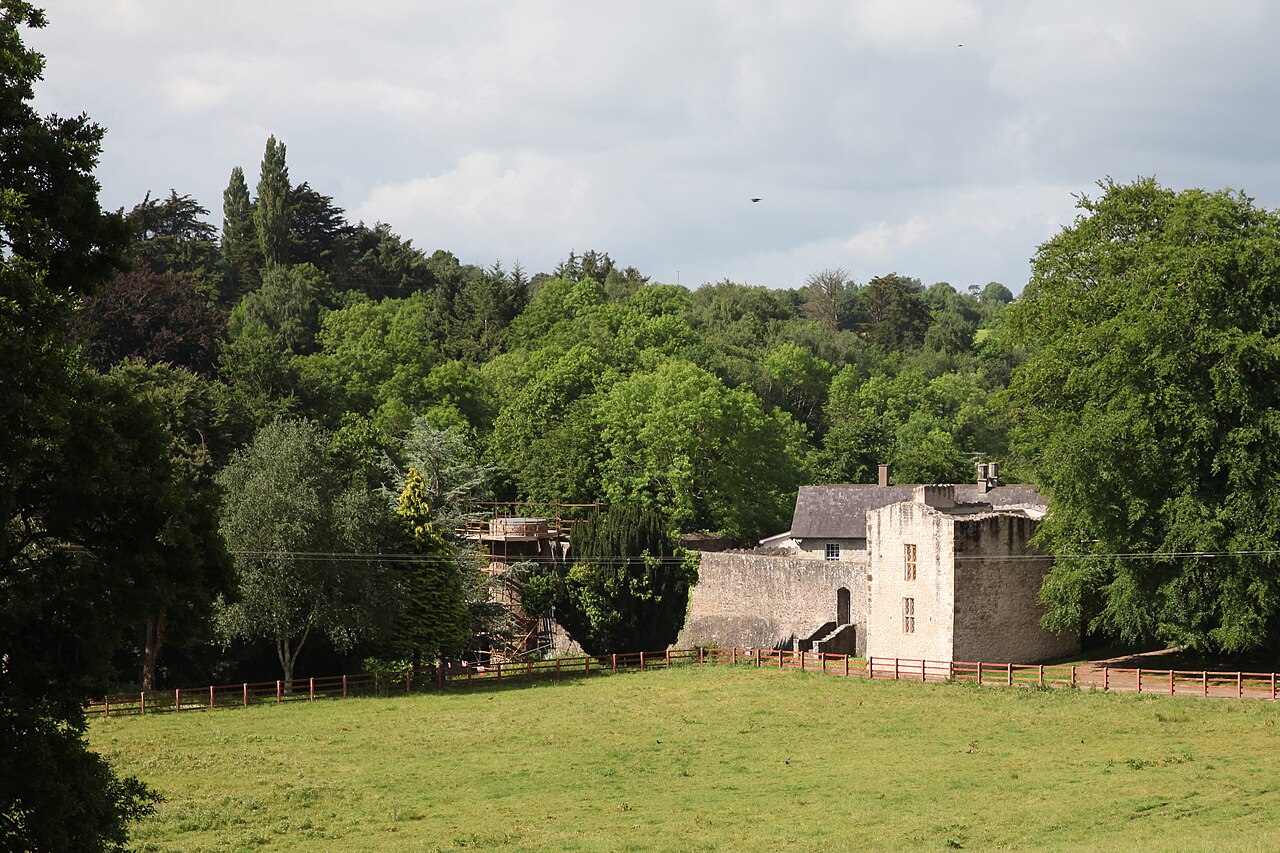
The surviving ruins include a semi-basement level and two upper floors. Of particular note is the northern wall of the western wing, which remains standing to approximately its original height, providing valuable insight into the construction techniques and materials used. The rest of the structure has largely fallen to foundations, with much of the masonry reduced and overgrown by vegetation.
The castle’s walls were likely constructed from local stone, typical of fortified houses in Ulster, with thick walls designed to withstand small-scale attacks. Window openings would have been narrow, serving defensive purposes while allowing light into the interior chambers. The cruciform shape may have allowed for better fields of fire and internal division of space for different household functions.
Current condition and preservation
Today, Castle Raw stands as a ruined fortified house, with much of its fabric lost to time and nature. The ruins are overgrown, and aside from the northern wall of the western wing, the walls are mostly reduced to their foundations. The site’s location at the corner of a field makes it accessible for viewing from the adjacent road, but it lacks formal visitor facilities or interpretive signage.
The castle’s ruinous state reflects centuries of neglect and the challenges of preserving small fortified houses in rural Northern Ireland. Despite this, the remains are important for understanding the architectural evolution of fortified domestic buildings during the plantation period.
Significance and visitor information
Castle Raw is a site of interest primarily for enthusiasts of castle architecture and Irish history, particularly those fascinated by the plantation era and early 17th-century fortified houses. Its cruciform design and historical context provide valuable insight into the defensive and residential strategies of the time.
While the site is not developed as a tourist attraction, its visibility from Castleraw Road allows casual visitors to appreciate the ruins. Due to its overgrown and fragile condition, visitors are advised to view the castle from a distance and respect the surrounding farmland.
Further research and archaeological investigation could reveal more about the castle’s history, construction phases, and the life of its inhabitants, but currently, detailed historical records remain limited.
Frequently asked questions (FAQ)
- When was Castle Raw built and by whom?
- Castle Raw was built around 1618-1619 by Anthony Cope, during the early 17th century plantation period in Ulster.
- What type of castle is Castle Raw?
- Castle Raw is a fortified house with a cruciform layout, typical of plantation-era defensive residences in Northern Ireland.
- Can visitors access the interior of Castle Raw?
- The castle is in ruins and overgrown, with limited structural remains. Visitors can view the site from the adjacent road but should avoid entering due to safety and preservation concerns.
- Where is Castle Raw located?
- Castle Raw is situated near Loughgall in County Armagh, Northern Ireland, accessible from Castleraw Road.
- What architectural features remain at Castle Raw?
- The northern wall of the western wing remains standing to near original height, while other walls are mostly foundations covered by vegetation.
Information
Address
Castleraw Road, United Kingdom of Great Britain and Northern Ireland
Loading map...
Visitor reviews
No reviews yet. Been here? Write the first review and help other travelers!
Write the first reviewVisited this castle? Share your experience
Your review helps other travelers and adds first-hand knowledge to our encyclopedia.