Rötteln Castle Ruins
Rötteln Castle is a significant medieval fortress located in Lörrach, Germany, with origins tracing back to the early 11th century. The castle's first documented mention dates to 1102, coinciding with the founding of the city of Lörrach and the appearance of a lord of Rötteln, the bailiff of St. Albans near Basel. The castle itself is first explicitly recorded in 1259, marking its established presence in the region's feudal landscape.
Historical development and ownership
The castle was initially the seat of the lords of Rötteln, who held significant territory in the Wiese valley. Dietrich III of Rötteln, who died in 1204, had amassed extensive holdings, establishing the castle's importance. The passing of Rötteln to the Hachberg-Sausenburg line in 1316 through Luithold II's death was a pivotal moment, contributing to the formation of the Markgräflerland region.
Rötteln Castle witnessed several conflicts, including a notable siege in 1332 by the people of Basel after Margrave Rudolf II stabbed Basel's mayor. Archaeological evidence such as arrowheads and crossbow bolts found near the castle corroborate this event. The devastating Basel earthquake of 1356 caused severe damage to the castle, necessitating repairs and fortification upgrades.
In 1503, the castle came under the possession of the Margrave of Baden. It briefly fell to revolting farmers during the 1525 Peasants' War. Throughout the Thirty Years' War (1618-1648), the castle was occupied alternately by Swedish and Imperial forces, reflecting its strategic importance.
The castle's final destruction occurred during the Franco-Dutch War on June 29, 1678, when French forces under Marshal François de Créquy destroyed Rötteln along with nearby Sausenburg and Badenweiler castles. Post-war poverty led to the castle ruins being quarried for building stone, further diminishing the structure.
Architectural features and layout
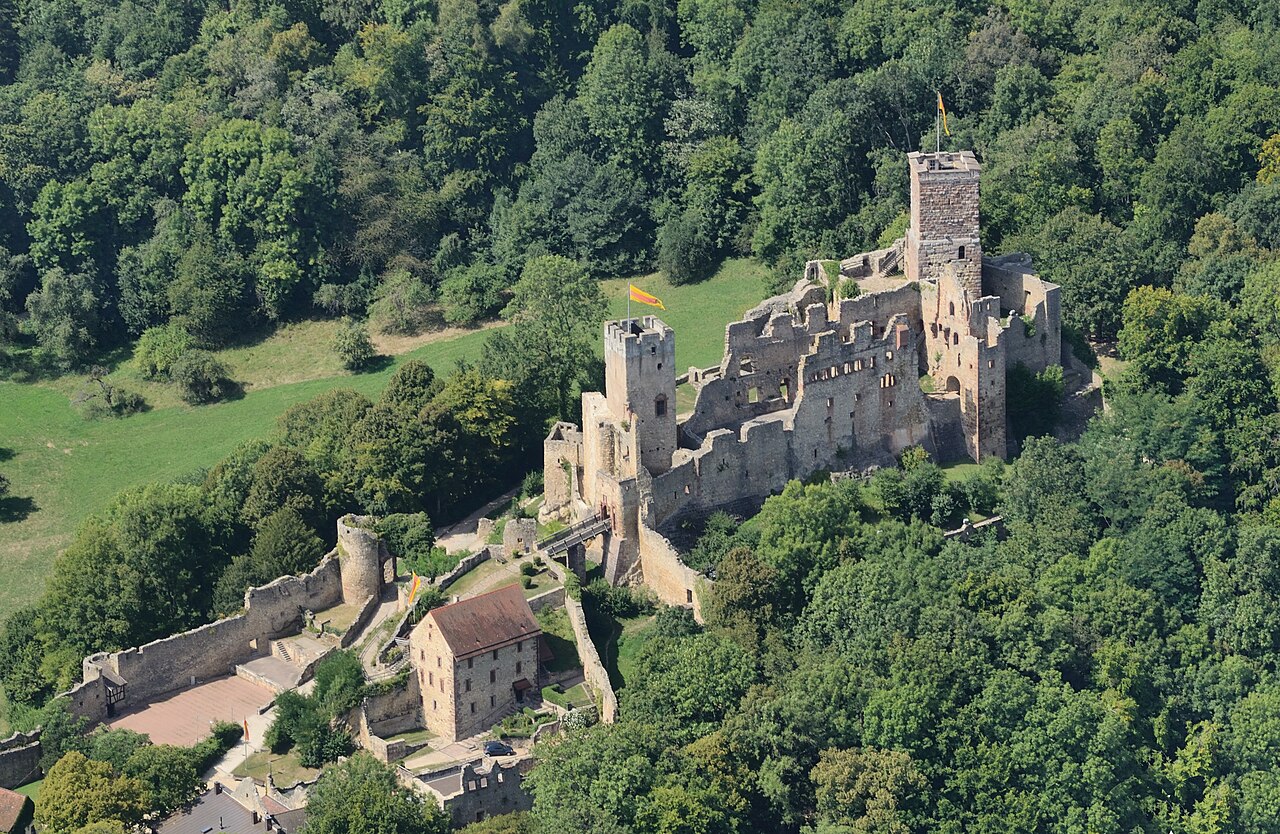
The castle complex extends approximately 300 meters from northwest to southwest and is divided into the fore-castle and the upper castle. The upper castle is the oldest section, featuring a powerful keep that served as the main defensive stronghold. Access between the fore-castle and upper castle was controlled by a drawbridge, enhancing security.
To the west, a bastion-like point was designed for the placement of light artillery, reflecting adaptations to evolving military technology. The castle's Green Tower, located at the highest point of the keep, offers panoramic views of Lörrach, the Wiese valley, and surrounding Swiss mountain peaks.
The castle's walls, battlements, and fortified gates exemplify high medieval military architecture, with remnants that allow visitors to appreciate the defensive strategies employed during its active use.
Preservation, museum, and cultural significance
After centuries of decline and partial dismantlement, efforts to preserve Rötteln Castle began in the late 19th century. The Black Forest Society of Baden initiated surveys in 1884, followed by ongoing preservation work by the Röttelnbund e.V. since 1926.
Today, the ruins have been restored to closely resemble their state after the 1678 destruction. The site includes a small museum in the castle courtyard showcasing archaeological finds such as arrowheads, crossbow bolts, and medieval artifacts recovered during excavations.
The castle ruins serve as a prominent landmark for the border town of Lörrach, attracting visitors interested in medieval history and architecture. The Röttler Burgfestspiele, an open-air theater festival held annually since 1968, utilizes the castle courtyard as a dramatic backdrop, enhancing the cultural life of the region.
Visitors can explore the lower castle year-round, while the keep and museum are open during summer and weekends in winter. Guided tours are available by prior arrangement. Additionally, the Burgschänke, a traditional restaurant within the bailey, offers a historical ambiance for guests.
Strategic importance and regional influence
Rötteln Castle played a crucial role in controlling the Wiese valley and the surrounding borderlands between Germany and Switzerland. Its position allowed the lords of Rötteln and later the Margraves of Baden to exert influence over trade routes and regional politics.
The castle's history of sieges, occupations, and destruction reflects the turbulent medieval and early modern periods in southwestern Germany. Its architectural evolution demonstrates adaptations to changing military technologies and political circumstances.
Frequently asked questions (FAQ)
- What are the opening hours for Rötteln Castle Ruins?
- Rötteln Castle Ruins is open to visitors year-round, but opening hours vary by season. Typically, the site opens from 9 AM to 6 PM during the summer months and from 9 AM to 5 PM in the winter. It is advisable to check the official website for any seasonal changes or special events that may affect access.
- Can I access Rötteln Castle Ruins with a wheelchair?
- Rötteln Castle Ruins has some challenging terrain due to its historic nature, and parts of the site may not be fully accessible for individuals with mobility impairments. However, the main pathways are navigable, and staff are available to assist visitors as needed. It's best to plan your visit and inquire about accessibility options in advance.
- When was Rötteln Castle built?
- Rötteln Castle was first mentioned in historical records in the 13th century, making it an important site in the region's medieval history. The castle served as a strategic fortification for the surrounding area and underwent several renovations over the centuries. Its ruins today reflect the architectural evolution that occurred throughout its long history.
- What is the historical significance of Rötteln Castle?
- Rötteln Castle played a crucial role in the defense and administration of the region during the Middle Ages. Its strategic location allowed it to serve as a lookout and control point over the surrounding valleys. Today, it stands as a testament to the region's rich history and is a popular destination for those interested in medieval architecture and heritage.
- Is there a ticket price for visiting Rötteln Castle Ruins?
- Visiting Rötteln Castle Ruins is free of charge, allowing everyone to enjoy the historical site without an entry fee. Donations are appreciated to help with the maintenance and preservation of the castle. Remember to check for any special tours or events that may have associated costs.
- What is the best time to visit Rötteln Castle Ruins?
- The best time to visit Rötteln Castle Ruins is during the spring and early fall when the weather is mild and the landscapes are particularly beautiful. These seasons offer comfortable temperatures for exploring the site and enjoying the surrounding nature. Additionally, visiting during weekdays can help avoid larger crowds.
- Are there any nearby attractions to Rötteln Castle Ruins?
- Yes, there are several attractions near Rötteln Castle Ruins, including the picturesque town of Lörrach and the beautiful surrounding Black Forest region. Visitors can also explore the Vitra Design Museum, which is renowned for its architecture and design exhibitions. These nearby sites provide a great opportunity to enrich your visit.
Information
Website
Visit websiteSources & official resources
Verify the information above using these authoritative references.
Loading map...
Visitor reviews
No reviews yet. Been here? Write the first review and help other travelers!
Write the first reviewVisited this castle? Share your experience
Your review helps other travelers and adds first-hand knowledge to our encyclopedia.