Inzlingen Castle
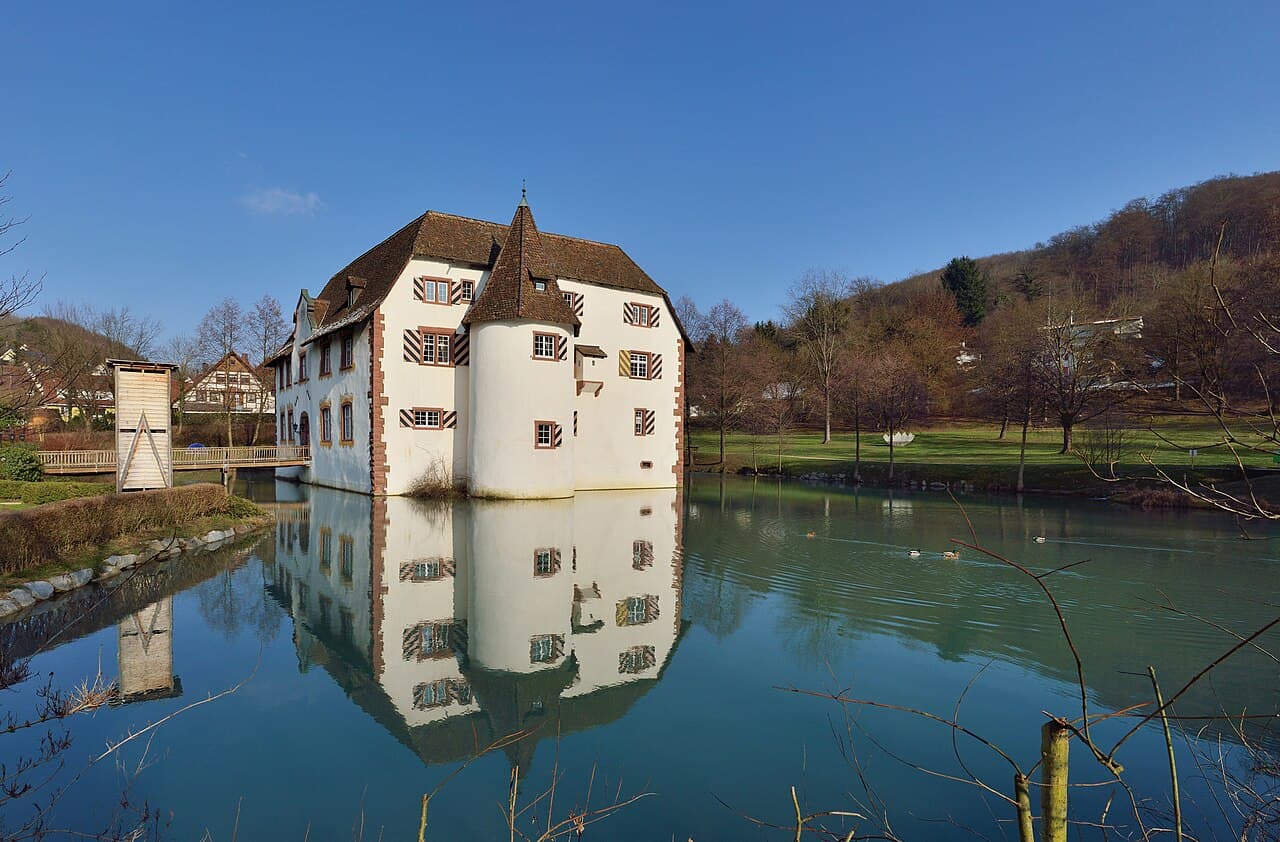
Inzlingen Castle is a remarkable example of a Renaissance water castle located in the village of Inzlingen, Germany, near the Swiss border close to Basel. Surrounded by a moat fed by a small stream, the castle exemplifies the architectural and cultural transitions from the late medieval period through the Baroque and Rococo eras. Its strategic location at approximately 360 meters above sea level offers a vantage point south of the junction between the roads leading to Inzlingen and the Swiss village of Riehen, highlighting its historical significance in the border region.
The castle's origins are somewhat obscure, but the earliest written records date back to 1511, when it was already owned by a relative of the noble Reich von Reichenstein family. This influential family held fiefdoms from the Prince-Bishopric of Basel, the Margraviate of Baden, and the House of Habsburg. Notably, members of this family served as a prince-bishop of Basel, six mayors of Basel, and a principal of Basel University, underscoring their regional importance. The family's acquisition of high justice rights over Inzlingen in 1394 from Margrave Rudolf III of Hachberg-Sausenberg established their lordship and landholdings in the area, leading them to style themselves as the Lords of Inzlingen.
Architectural evolution and styles
The castle's initial structure likely began around the late 14th to early 15th century as a fortified residence with an angular layout, including economic buildings supporting domestic and agricultural functions. The moat, added in the 16th century, was designed more for aesthetic appeal inspired by Dutch trends than for military defense, as it was not capable of withstanding artillery attacks.
The first major construction phase occurred between 1563 and 1566, resulting in significant expansions that laid the groundwork for the castle's Renaissance character. This period introduced architectural features typical of the Renaissance, such as symmetrical layouts and refined masonry work.
Between 1674 and 1745, the castle underwent a comprehensive transformation embracing the Baroque style. The exterior facades were elaborately painted and ornamented, a work carefully restored in 1936. The interior was renovated around 1750 in the Rococo style, featuring richly detailed stucco ceilings, paneled walls, decorative overdoors (supraporten), tiled stoves, and inlaid parquet floors. The Knights’ Hall remains a highlight, with stucco decorations symbolizing the four castles associated with the Reich von Reichenstein family: Inzlingen, Reichenstein, Landskron, and Brombach.
Historical significance and ownership
Throughout its history, Inzlingen Castle was closely tied to the Reich von Reichenstein family, who played a crucial role in the politics and society of the Basel region. In 1819 or 1820, the castle was sold for 19,000 Gulden and its function shifted dramatically. It was converted into a weaving mill specializing in silk ribbons, marking a transition from noble residence to industrial use. This phase lasted until the early 20th century, after which the castle served as a farmstead under Swiss ownership for about a century.
In 1969, the municipality of Inzlingen purchased the castle and initiated restoration efforts to preserve its architectural and historical integrity. By 1978, the castle was repurposed as the town hall, integrating administrative functions within its historic walls. Additionally, a luxury restaurant was established, blending heritage with modern amenities.
The castle's cultural prominence was nationally recognized in 1980 when the Deutsche Post issued a postage stamp featuring an engraving of Inzlingen Castle, highlighting its status as a cherished landmark.
Architectural features and grounds
Inzlingen Castle is a quintessential water castle, encircled by a moat that enhances its picturesque setting. A wooden footbridge provides access to the courtyard, which is surrounded by buildings reflecting the castle's layered history. The moat and circular footpath allow visitors to appreciate the castle’s exterior from multiple vantage points.
The castle grounds include a park with notable artworks, such as a statue of Saint Nepomuk created in 1731 by sculptor Johann Ladner, reflecting Baroque religious symbolism. On the eastern side lies a modern sculpture titled "Tulpenbank am Wasserschloss" by artist Max Meinrad Geiger, which complements the historic environment.
The castle's roof truss and stucco ceilings were meticulously preserved during restoration efforts in the 1930s and early 1940s, maintaining the integrity of its Baroque and Rococo interiors. The painted facades and ornamental details contribute to its charm as a historic residence turned municipal center.
Current use and visitor experience
Today, Inzlingen Castle serves as the municipal city hall of Inzlingen, housing administrative offices within its restored Renaissance and Baroque walls. The presence of a fine dining restaurant within the castle offers visitors a unique opportunity to experience the historic ambiance alongside culinary excellence.
The castle is accessible to the public during typical visiting hours, and its location near Basel makes it a popular destination for those interested in history, architecture, and cultural heritage. The combination of historic architecture, artistic interiors, and modern amenities makes Inzlingen Castle a distinctive example of adaptive reuse of a historic monument.
Frequently asked questions (FAQ)
- When was inzlingen castle originally built?
- Inzlingen Castle's origins are unclear, but the earliest records date to 1511, with major construction phases in the 16th century.
- What architectural styles are present in inzlingen castle?
- The castle features a mix of Renaissance, Baroque, and Rococo styles, reflecting its evolution from the 16th to 18th centuries.
- Can visitors access inzlingen castle today?
- Yes, Inzlingen Castle functions as the municipal city hall and houses a fine dining restaurant, making it accessible to the public during operating hours.
- What is unique about the moat surrounding inzlingen castle?
- The moat was added in the 16th century primarily for decorative purposes inspired by Dutch designs, rather than for military defense.
- Who owned inzlingen castle historically?
- The castle was historically owned by the noble Reich von Reichenstein family, influential in the Basel region, until it was sold in the early 19th century.
Photo gallery

Information
Sources & official resources
Verify the information above using these authoritative references.
Loading map...
Visitor reviews
No reviews yet. Been here? Write the first review and help other travelers!
Write the first reviewVisited this castle? Share your experience
Your review helps other travelers and adds first-hand knowledge to our encyclopedia.