Rothenthurn Castle — Austria castle

Rothenthurn Castle

Rothenthurn Castle in Spittal an der Drau, Austria
Spittal an der Drau, Austria
High Medieval (11th–13th c.)
Ruins

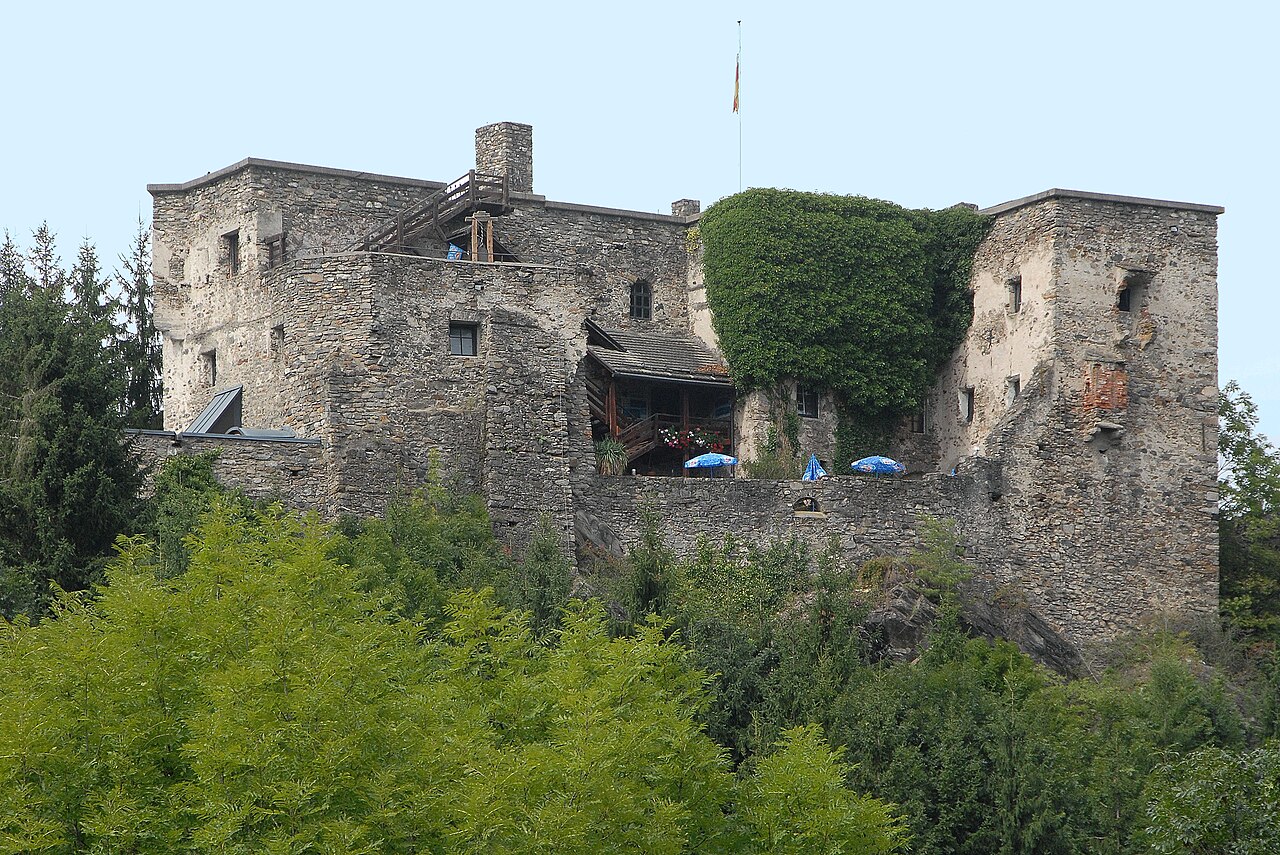
Rothenthurn Castle, whose name translates to 'red tower,' is a historic fortress located in the municipality of Spittal an der Drau in Carinthia, Austria. The castle's origins trace back to the 11th century, making it a significant medieval site with a complex history tied to prominent noble families of the region.

Early history and medieval significance

The earliest records suggest that Rothenthurn Castle existed as an estate of the Counts of Ortenburg. This noble lineage played a crucial role in the political landscape of Carinthia during the high medieval period. Later, the castle came under the possession of the Counts of Celje, a powerful dynasty influential in the region during the late Middle Ages. Documentation from 1478 confirms the castle's presence during the time when the surrounding area was controlled by the Meinhardiner House of Gorizia. This period was marked by territorial disputes and shifting allegiances among noble houses, with Rothenthurn serving as a strategic stronghold.

Renaissance transformation and architectural features

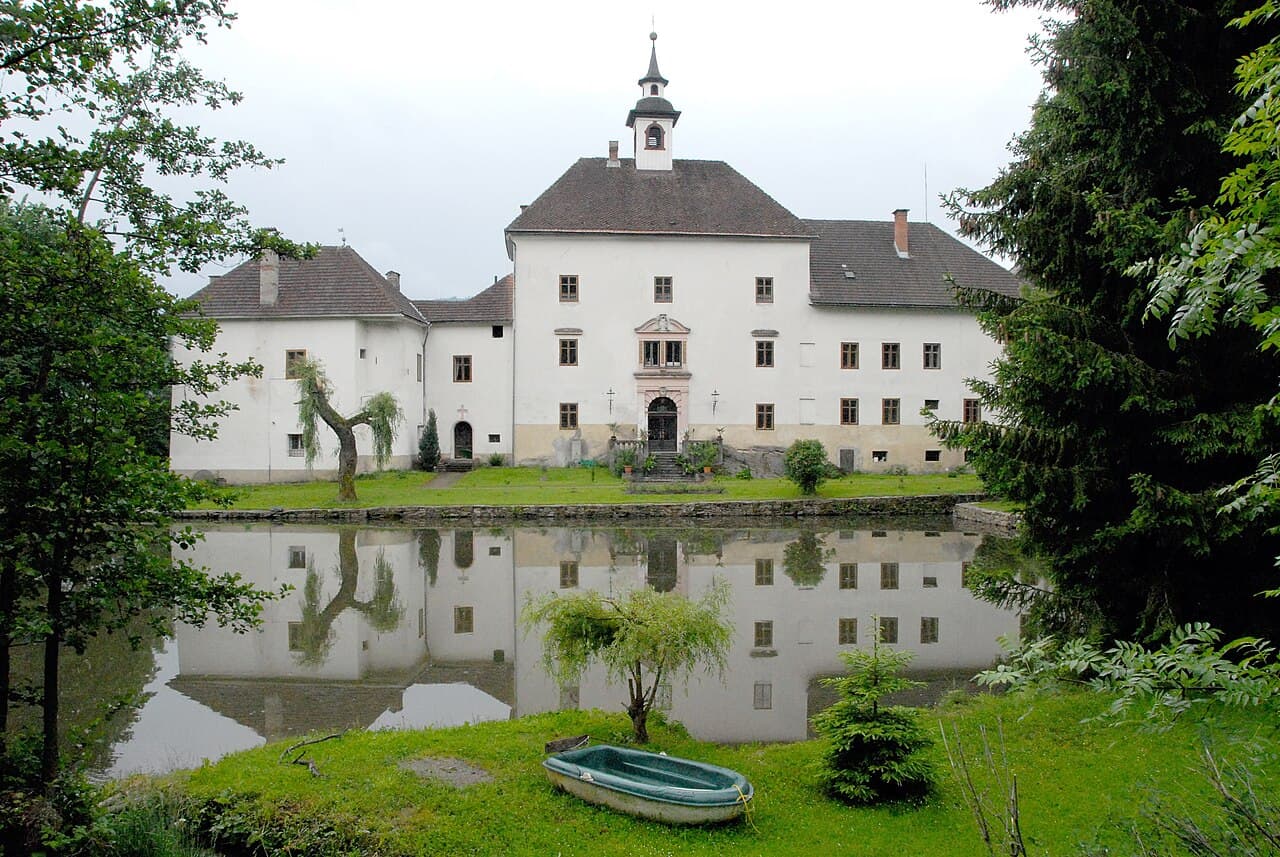
From the early 16th century onwards, Rothenthurn Castle underwent significant architectural modifications, transitioning into a Renaissance-style building. The castle's chapel, a notable feature, was constructed during this period, reflecting the religious and cultural shifts of the Renaissance era. Around 1525, the castle was acquired by Christoph Khevenhüller, a member of a prominent Carinthian noble family known for their patronage of the arts and architecture. The Renaissance renovations introduced elements such as symmetrical layouts, decorative stonework, and enhanced living quarters, distinguishing Rothenthurn from its earlier medieval fortress form.

Architectural layout and defensive structures

Despite its Renaissance transformation, the castle retains elements typical of its medieval origins, including remnants of defensive walls and towers that once provided protection against invaders. The blend of medieval fortifications with Renaissance residential features illustrates the evolution of castle design from purely military to more comfortable noble residences. The chapel within the castle complex is adorned with period-specific details, emphasizing its dual role as a spiritual center and a symbol of status.

Ownership and usage through the centuries

Following Christoph Khevenhüller's acquisition, Rothenthurn Castle passed through the hands of several local noble families. Each owner contributed to the castle's maintenance and modifications, adapting it to the changing needs and tastes of their times. Over the centuries, the castle's military importance diminished, and it increasingly served as a noble residence and estate center.

Modern era and current status

Today, Rothenthurn Castle is privately owned and operates as a lodging establishment, offering visitors a unique opportunity to experience a historic castle setting. The castle's preservation allows guests to appreciate its architectural heritage and the layered history embedded in its walls. While classified as ruins in parts, the main structures remain well-preserved enough to convey the castle's historical significance and architectural evolution.

Cultural and heritage importance

Rothenthurn Castle stands as a testament to the region's medieval and Renaissance history, reflecting the architectural trends and noble lineages that shaped Carinthia. Its continuous use and adaptation over nearly a millennium highlight the dynamic nature of castle architecture and its role in European history.

Frequently asked questions (FAQ)

How do I get to Rothenthurn Castle?
Rothenthurn Castle is located in Spittal an der Drau, Austria, and can be accessed by car or public transportation. If traveling by train, the nearest station is Spittal an der Drau, from which local buses or taxis can take you to the castle.
What is the historical significance of Rothenthurn Castle?
Rothenthurn Castle dates back to the 14th century and has played a significant role in the region's history. It served as a defensive structure and residence for noble families, reflecting the architectural styles of its time.
When was Rothenthurn Castle built?
Construction of Rothenthurn Castle began in the late 1300s, with various renovations and expansions occurring over the centuries. Its historical layers showcase the evolution of architectural styles from medieval times to the present.
Can I visit Rothenthurn Castle?
Yes, Rothenthurn Castle is open to visitors, offering guided tours that delve into its rich history and architecture. Be sure to check the castle's official website for any special events or closures before planning your visit.
Why is Rothenthurn Castle considered an architectural gem?
Rothenthurn Castle is renowned for its stunning medieval architecture, complete with impressive towers and intricate stonework. The castle's design reflects the defensive needs of its era while also showcasing aesthetic beauty, making it a fascinating site for architecture enthusiasts.
Is it possible to access Rothenthurn Castle with mobility challenges?
The castle has made efforts to accommodate visitors with mobility challenges, but accessibility may vary in certain areas due to its historical structure. It is advisable to contact the castle administration in advance to inquire about specific accessibility options and any assistance available.
What are the opening hours for Rothenthurn Castle?
Rothenthurn Castle typically opens to visitors from 10 AM to 5 PM, but hours may vary based on the season and special events. Always check the official website for the most current information on opening hours before your visit.
What is the best time to visit Rothenthurn Castle?
The best time to visit Rothenthurn Castle is during the spring and early autumn months when the weather is mild, and the surrounding landscapes are particularly beautiful. Visiting during these seasons also allows you to enjoy the castle's gardens and outdoor areas.
Are there any nearby attractions to Rothenthurn Castle?
Yes, there are several nearby attractions, including the beautiful Lake Millstatt and the historical town of Spittal an der Drau. Both offer a range of outdoor activities and cultural experiences, making them great additions to your visit to Rothenthurn Castle.
What are the ticket prices for visiting Rothenthurn Castle?
Ticket prices for Rothenthurn Castle are generally affordable, with discounts available for students, seniors, and children. For the most accurate and up-to-date pricing, it's best to consult the castle's official website prior to your visit.

Photo gallery

Rothenthurn Castle
Click to view

Photo by Johann Jaritz•CC BY-SA 3.0 at

1 photo • Click any image to view in full screen

Information

Archaeological Site / Ruins

Current owner

Private owner

Loading map...

Visitor reviews

No reviews yet. Been here? Write the first review and help other travelers!

Write the first review

Visited this castle? Share your experience

Your review helps other travelers and adds first-hand knowledge to our encyclopedia.

Write a review

(5/5)

0/2000 characters

Your review will be visible after admin approval

Nearby castles

8 km

Burg Sommeregg

Seeboden, Austria

Burg Sommeregg is a striking medieval hill castle located near Seeboden in the Austrian state of Carinthia. Perched at an altitude of 749 meters in the foothills of the Nock Mountains, it commands a strategic position overlooking the surrounding landscape. The castle's origins trace back to the 12th century, making it a significant example of High Medieval fortification architecture in the region. The castle was initially constructed by local nobility serving under the powerful Counts of Ortenburg, who controlled extensive estates in Upper Carinthia. Throughout its history, Burg Sommeregg functioned as an administrative seat and residence for various noble families, including the von Graben and Khevenhüller dynasties. These families were ministeriales—knightly officials appointed by the Austrian House of Habsburg—entrusted with military defense and estate management duties. Historic significance and noble lineage The earliest documentary mention of the castle dates to 1187, referencing a noble named Witemarus de Sumereke. This establishes the castle's status as a seat of local power during the High Medieval period. In 1275, the castle gained regional prominence when it hosted the marriage contract between Euphemia of Ortenburg-Hardegg and Count Albert I of Gorizia, underscoring its role in noble alliances and diplomacy. Following the extinction of the Ortenburg family line in 1418, ownership of the castle passed to the Counts of Celje. They delegated stewardship to local noble families such as the von Hallegg and von Graben. In 1442, Andreas von Graben married Barbara von Hallegg and secured the castle's burgraviate as a hereditary fief from Count Frederick II of Celje. This event marked the establishment of the Sommeregg district court's independence from Ortenburg authority. After the assassination of the last Celje count in 1456, the Habsburg dynasty inherited the Ortenburg lands, including Burg Sommeregg. The von Graben family maintained their feudal rights under Habsburg rule, with Virgil von Graben succeeding Andreas in 1463. The castle's strategic importance was highlighted during the Hungarian-Habsburg conflicts, when in 1487, forces led by King Matthias Corvinus captured and destroyed the fortress. Architectural evolution and reconstruction The destruction in 1487 necessitated significant reconstruction under Virgil von Graben. The rebuilding process resulted in an irregular ground plan that reflects adaptations to the terrain and evolving defensive needs. The castle exemplifies typical features of a hill castle in the Millstätter Berge region, positioned prominently on a hilltop above the village of Schloßau. Today, only one original round tower from the medieval structure remains intact, serving as a visual reminder of the castle's fortified past. The rest of the castle has undergone various modifications through the centuries, blending medieval elements with later architectural influences. Layout and defensive features The castle's layout includes terraced lower floors and courtyards adapted to the hillside. Defensive structures such as stone walls, battlements, and strategically placed towers contributed to its resilience against sieges. The irregular shape of the fortress is a result of the reconstruction efforts post-1487 and the need to maximize natural topography for defense. Ownership transitions and social history After the von Graben male line ended, the lordship passed through heiress Rosina von Graben von Rain to the Bavarian Lords of Rain zu Sommeregg in the early 16th century. In 1550, the estate was acquired by Christoph Khevenhüller, whose family held it until 1628. Subsequently, the property changed hands several times, including ownership by the merchant Hans Wittmann. In 1651, Countess Katharina von Lodron took possession of the castle, marking its transition from feudal tenure to private ownership. The Lodron family maintained the estate until 1932. The 1848 peasant emancipation ended the castle's manorial functions, leading to a gradual decline in its administrative importance. Modern use and preservation Despite periods of decline and damage from storms in the 1930s, Burg Sommeregg remained inhabited. Restoration efforts commenced in 1969 to preserve the castle's structural integrity and historical character. Today, the castle serves multiple functions that blend heritage tourism with cultural education. Torture museum and visitor experience The castle's upper floor houses a renowned torture museum featuring approximately 70 historically accurate replicas of medieval and Inquisition-era instruments. Exhibits include thumbscrews, stretching racks, Spanish boots, nail chairs, and pillories. This collection is among the largest of its kind in Central Europe, attracting visitors interested in medieval justice and penal history. The lower floors and terraces have been adapted to accommodate a restaurant, providing a unique dining experience within the historic setting. An external wooden staircase leads visitors to the castle roof, which serves as a viewing platform. From this vantage point, panoramic views extend across the Dobratsch and Karawanks mountain ranges on clear days, enhancing the visitor experience with breathtaking natural scenery. Strategic location and territorial oversight Burg Sommeregg's location was chosen for its commanding oversight of a lordship territory naturally bounded by the Millstätter See, Seebach, Lieser, Pleßnitzgraben, Tschiernock, and Tangerner Bach. The castle's design and positioning reflect its historical role as a fortified administrative center controlling these lands. Its enduring presence offers valuable insight into the medieval feudal system and the architectural adaptations necessary for defense in a mountainous environment. The castle stands today as a well-preserved cultural monument that combines medieval heritage with modern tourist amenities.

High Medieval (11th–13th c.)
Details
9.2 km
Sommeregg Castle — Austria castle

Sommeregg Castle

Seeboden, Austria

Sommeregg Castle is a medieval fortress located near Seeboden in the Austrian state of Carinthia, nestled in the foothills of the Nock Mountains at an altitude of 749 meters. Constructed in the 12th century, it stands as a significant example of High Medieval fortification architecture, reflecting the turbulent feudal history of the region. The castle's strategic position allowed it to serve as a vital administrative and military center throughout the Middle Ages. The origins and medieval significance of Sommeregg Castle The castle was likely erected in the early 12th century by the Lords of Sommeregg, who were ministeriales—unfree knights serving under the authority of Count Otto II of Ortenburg. The Ortenburg family controlled extensive estates in Upper Carinthia, competing for influence with the powerful House of Gorizia and the Archbishops of Salzburg. Sommeregg Castle was a key stronghold in this regional power dynamic, serving both as a defensive fortress and an administrative center. By the 14th century, the Lords of Sommeregg had risen in prominence, achieving knightly status and becoming burgraves and castellans of Ortenburg. This elevated position granted them comprehensive administrative and military responsibilities over the lordship, underscoring the castle's importance as a seat of local governance and defense. Transition of ownership and political shifts The extinction of the Counts of Ortenburg in 1418 led to the transfer of their estates, including Sommeregg Castle, to the Counts of Celje in Carniola. The Celje family, however, managed these remote Upper Carinthian holdings through local stadtholders, maintaining the castle's role as a regional administrative hub. In 1442, the Styrian noble Andreas von Graben inherited the Sommeregg burgraviate through marriage. His feudal rights were confirmed by Count Frederick II of Celje, and the castle became a residence of the House of Graben. The Graben family retained the title of Sommeregg burgraves even after the assassination of the last Celje count, Ulrich II, in 1456. Following a dispute with Count John II of Gorizia, the former Ortenburg possessions, including Sommeregg, were absorbed by the Habsburg emperor Frederick III. The emperor reaffirmed the Graben family's feudal rights, ensuring continuity of local governance under Habsburg sovereignty. Siege, destruction, and reconstruction In 1487, Sommeregg Castle suffered significant damage when it was occupied and devastated by Hungarian forces led by King Matthias Corvinus during his campaign against the Austrian Habsburgs. This military action reflected the broader conflicts between the Habsburgs and Hungary in the late 15th century. After the siege, Virgil von Graben, son of Andreas von Graben, undertook the castle's reconstruction. The fortress was rebuilt in its current form, incorporating architectural features typical of late medieval fortifications designed to withstand artillery and prolonged sieges. This rebuilding phase preserved Sommeregg's strategic and administrative functions for subsequent centuries. Later ownership and decline Through the heiress Rosina, the niece of Virgil von Graben, Sommeregg passed to the Bavarian Lords of Rain. In 1550, the castle was acquired by Christoph Khevenhüller, a member of a prominent Carinthian noble family. The Khevenhüller dynasty maintained possession of Sommeregg until 1628. Following the dissolution of feudal structures during the Revolution of 1848, the Sommeregg manor was dissolved. Over time, the castle fell into ruin, with its remains now classified as archaeological ruins. Despite this, Sommeregg continues to be a site of historical interest, illustrating the feudal and military history of Carinthia. Architectural features and castle layout Sommeregg Castle's original construction reflects typical High Medieval defensive design, featuring robust stone walls, fortified gatehouses, and towers for surveillance and defense. The castle's position in the foothills provided natural protection and strategic oversight of the surrounding territory. The post-1487 reconstruction under Virgil von Graben introduced enhancements to the fortress's defenses, likely including thicker walls and improved battlements to resist artillery attacks. The castle complex would have included a keep or central stronghold, residential quarters, administrative offices, and possibly a chapel, consistent with contemporary castle design. Defensive structures The castle's layout capitalized on the natural terrain, with steep slopes on several sides acting as natural barriers. The main entrance was fortified with a gatehouse and defensive walls designed to repel attackers. Towers placed at strategic points allowed defenders to monitor and control access routes. Residential and administrative areas Within the castle walls, the residential quarters accommodated the burgraves and their retinue, while administrative chambers served as the center for managing the lordship's affairs. The presence of a courtyard would have facilitated daily activities and gatherings. Historical context and regional importance Sommeregg Castle played a significant role in the feudal politics of Upper Carinthia, particularly during the Middle Ages when regional noble families vied for control. Its function as a burgraviate seat meant it was central to the administration of justice, military command, and estate management. The castle's history reflects broader European conflicts, including the rivalry between the Habsburgs and Hungarian kings, and the shifting allegiances among noble houses such as Ortenburg, Celje, Graben, and Khevenhüller. Sommeregg's endurance through these periods highlights its strategic and symbolic importance. Visiting Sommeregg Castle today Today, Sommeregg Castle remains a site of archaeological and historical interest. Visitors can explore the ruins, which offer insight into medieval fortification techniques and regional history. The castle's location provides scenic views of the Nock Mountains and the surrounding Carinthian landscape. While the castle is in a state of ruin, efforts to preserve and study the site contribute to understanding Carinthia's medieval heritage. The site is accessible to the public, often attracting history enthusiasts and tourists interested in Austria's feudal past.

High Medieval (11th–13th c.)
Details
10.2 km

Ortenburg Castle Ruins

Baldramsdorf, Austria

Ortenburg castle ruins stand as a significant historical site on the northern slope of the Gailtal Alps, overlooking the Drava valley in Baldramsdorf, Austria. Built in the late 11th century, this high medieval fortress was established by the ministeriales of the Bavarian Prince-Bishops of Freising, who controlled extensive lands within the Duchy of Carinthia. The castle became the ancestral seat of the noble family who took the name Counts of Ortenburg. Historical origins and early significance The construction of Ortenburg castle was part of the strategic efforts by the Prince-Bishops of Freising to consolidate their power in Carinthia during the high medieval period. The ministeriales, a class of unfree knights serving ecclesiastical lords, were granted authority to build and manage the fortress. The castle's location on a steep hillside provided a commanding view of the surrounding landscape, crucial for defense and control over the Drava valley trade routes. Architectural features and layout The castle complex originally featured typical high medieval fortification elements including a keep (donjon), curtain walls, and defensive towers. The stone masonry construction utilized local materials, with thick walls designed to withstand sieges and natural disasters. The layout included a central courtyard surrounded by residential and service buildings, with battlements and arrow slits for archers. The steep northern slope contributed to the castle's natural defenses, augmented by man-made fortifications. Defensive structures The castle's curtain walls were reinforced with towers at key points to provide overlapping fields of fire. The main gate was likely protected by a gatehouse and possibly a drawbridge, though specific details are scarce due to the ruinous state. A moat or ditch may have been present on the more accessible sides to deter attackers. Impact of the 1348 Friuli earthquake In 1348, the Friuli earthquake caused significant damage to Ortenburg castle, compromising its structural integrity. The earthquake was a major seismic event affecting large parts of the Eastern Alps and northern Italy. Following this natural disaster, the castle's military and administrative importance declined, as repairs were costly and the region's political landscape shifted. Decline and change of ownership The extinction of the Ortenburg family line in 1418 marked a turning point for the castle. The estates passed to Count Hermann II of Celje, a powerful noble who expanded his influence in Carinthia and surrounding territories. Later, in 1456, the castle and its lands were seized by the Imperial House of Habsburg, integrating the property into their growing domains. By 1524, the comital title associated with Ortenburg was transferred to Gabriel von Salamanca, a prominent statesman and financier of the Habsburg court. Gabriel commissioned the construction of Porcia castle in the nearby town of Spittal an der Drau, which became his principal residence, signaling the final decline of Ortenburg castle as a noble seat. Current condition and cultural significance Today, the Ortenburg castle ruins are classified as archaeological ruins. Visitors can explore the remains of the castle's walls, foundations, and defensive structures, which offer insights into high medieval castle architecture and the feudal history of Carinthia. The site is valued for its scenic views and historical context, attracting those interested in medieval fortifications and Austrian heritage. Access and preservation efforts The ruins are accessible to the public, though no modern restoration has returned the castle to a fully preserved state. Preservation efforts focus on stabilizing the remaining structures to prevent further decay. Interpretive signage and guided tours help contextualize the castle's history for visitors.

High Medieval (11th–13th c.)
Details