Rossmore Castle
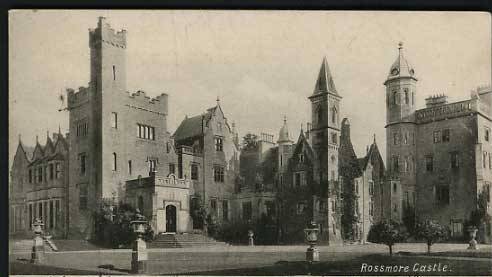
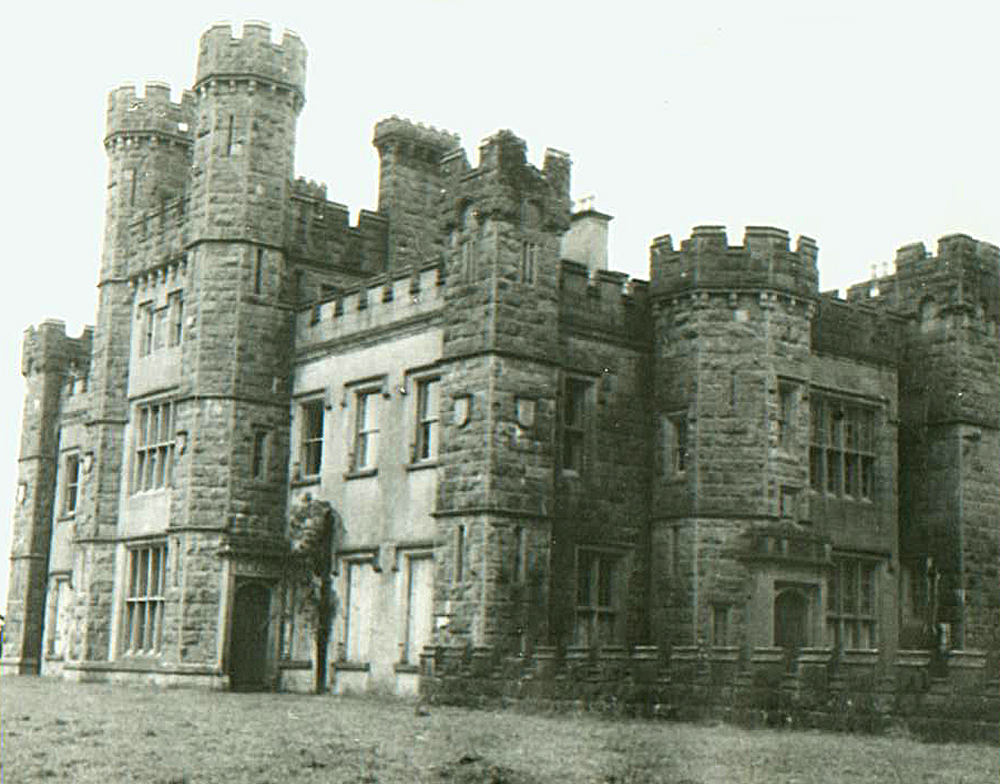
Rossmore Castle was a striking example of early 19th-century Gothic revival architecture located in Corlattan, County Monaghan, Ireland. Built as a grand country residence, it symbolized the wealth and status of the Anglo-Irish aristocracy, specifically the 2nd Baron Rossmore, Warner Westenra. The castle's construction began in 1827 under the direction of the Irish architect William Vitruvius Morrison, who embraced the popular Gothic revival style of the era. This style sought to evoke the grandeur and romanticism of medieval castles, featuring characteristic elements such as towers, turrets, and battlements.
Architectural evolution and expansions
The original design of Rossmore Castle included a prominent large square tower with a turret and crow-stepped battlements, a feature common in medieval Northern European architecture that added a distinctive silhouette to the building. The castle's layout was complex, with a varied arrangement of windows that contributed to its eclectic appearance.
In 1858, the castle underwent significant remodeling and expansion by architect William Henry Lynn. These changes were partly driven by a rivalry between the Rossmore family and the neighboring Shirley family of Lough Fea. The competition centered on possessing the largest drawing room in County Monaghan. As a result, the castle's drawing room was enlarged five times, ultimately becoming the largest room in the county. This expansion not only reflected social ambitions but also showcased the adaptability of the castle's design to evolving tastes and needs.
Additional towers were added during this period, increasing the total to three. Among these were a polygonal tower topped with a dome and a square tower capped by a spire. These features introduced elements of Scottish baronial architecture, known for its ornamental towers and turrets that evoke medieval fortifications. The castle's facade was notable for its remarkable diversity of windows, with over 117 windows in at least 53 different sizes and shapes, contributing to the building's intricate and somewhat eclectic aesthetic.
Historical significance and social role
Throughout the late 19th and early 20th centuries, Rossmore Castle served as a prominent social hub under the stewardship of the 5th Baron Rossmore. He held the position of Lord Lieutenant of Monaghan from 1897 until his death in 1921. His close friendship with Albert Edward, Prince of Wales (later King Edward VII), brought additional prestige to the castle's gatherings and events, making it a center of aristocratic life in the region.
The castle's role extended beyond private residence; it was a symbol of the Rossmore family's influence and a venue for significant social and political interactions. The grandeur of the castle and its extensive grounds reflected the family's status and their connection to the broader Anglo-Irish aristocratic network.
Decline and demolition
Following the upheavals of the 20th century, including World War II, Rossmore Castle suffered from severe dry rot, a form of wood decay that compromised the building's structural integrity. This damage forced the Rossmore family to abandon the castle and relocate to Camla Vale, a Georgian house situated on the same estate. Unfortunately, the castle fell into disrepair and was ultimately demolished in the mid-1970s, either in 1974 or 1975.
Camla Vale itself was sold in 1962 and later demolished, marking the end of the Rossmore family's direct architectural legacy on the estate. However, the remaining lands of the estate, approximately 2,200 acres, were donated in 2021 to An Taisce, an Irish conservation organization dedicated to preserving natural and built heritage.
Architectural remains and legacy
At the time of its demolition, only fragments of Rossmore Castle's walls remained, mostly covered in ivy. These remnants served as faint traces of the once grand residence. No significant architectural elements or archaeological findings have been documented following the demolition.
The castle's original Gothic revival design, combined with later Scottish baronial influences, made it a unique architectural landmark in County Monaghan. Its complex layout, variety of towers, and extensive window designs reflected the tastes and ambitions of the Anglo-Irish aristocracy during the 19th century.
Today, Rossmore Castle is remembered for its architectural grandeur, social significance, and its role in the cultural history of Northern Ireland. The estate's transformation into conservation land ensures that the natural landscape surrounding the former castle site remains protected, preserving a connection to the region's aristocratic past.
Frequently asked questions (FAQ)
- How do I get to Rossmore Castle?
- Rossmore Castle is located in the picturesque countryside of the United Kingdom. You can reach the castle by car or public transport, with several bus routes servicing the nearby area. For those driving, ample parking is available on-site.
- What is the historical significance of Rossmore Castle?
- Rossmore Castle has a rich history dating back to the 19th century, serving as a residence for notable families and a symbol of local heritage. The castle has witnessed numerous historical events and changes in ownership, making it an important landmark in the region. Its architecture reflects the design trends of its time, contributing to its historical value.
- When was Rossmore Castle built?
- Construction of Rossmore Castle began in the early 1800s and was completed in 1815. The castle showcases elements of neoclassical architecture, which was popular during that period. Its design and structure have been preserved, allowing visitors to appreciate its historical ambiance.
- Can I visit Rossmore Castle?
- Yes, Rossmore Castle is open to the public for tours and special events. Visitors can explore the beautiful grounds and learn about the castle’s history through guided tours. It is recommended to check the official website for any specific visiting guidelines or restrictions.
- Why is Rossmore Castle an architectural marvel?
- Rossmore Castle is considered an architectural marvel due to its stunning neoclassical design and well-preserved features. The intricate detailing and scenic surroundings make it a fascinating example of early 19th-century architecture. The castle's grandeur and elegance attract architecture enthusiasts and history buffs alike.
- Is it possible to host events at Rossmore Castle?
- Yes, Rossmore Castle is available for private events such as weddings, corporate gatherings, and special celebrations. The picturesque setting and historical ambiance provide a unique backdrop for any occasion. Interested parties should contact the castle management for more information on availability and services.
- What are the opening hours for Rossmore Castle?
- Rossmore Castle typically opens to visitors from 10 AM to 5 PM, seven days a week. However, hours may vary during holidays or special events, so it is advisable to check the castle’s official website before planning your visit. Early arrival is recommended to fully enjoy the grounds and exhibitions.
- What are the ticket prices for visiting Rossmore Castle?
- Ticket prices for Rossmore Castle are generally around £10 for adults, with discounts available for children and seniors. Family tickets may also be offered at a reduced rate. It’s best to purchase tickets in advance online to ensure availability and to take advantage of any special offers.
- When is the best time to visit Rossmore Castle?
- The best time to visit Rossmore Castle is during the spring and summer months when the gardens are in full bloom and the weather is pleasant for outdoor activities. Additionally, special events and festivals are often scheduled during this period, enhancing the visitor experience. Early autumn also offers beautiful foliage and fewer crowds.
- Are there nearby attractions to explore after visiting Rossmore Castle?
- Yes, there are several nearby attractions worth exploring after your visit to Rossmore Castle. The surrounding countryside offers scenic walking trails and charming villages. Additionally, local museums and historical sites provide further insights into the region's heritage, making it a perfect day trip.
Information
Website
Visit websiteSources & official resources
Verify the information above using these authoritative references.
Loading map...
Visitor reviews
No reviews yet. Been here? Write the first review and help other travelers!
Write the first reviewVisited this castle? Share your experience
Your review helps other travelers and adds first-hand knowledge to our encyclopedia.