Castle Saunderson — Ireland castle

Castle Saunderson

Castle saunderson, county cavan, ireland
Modern (19th–20th c.)
Ruins

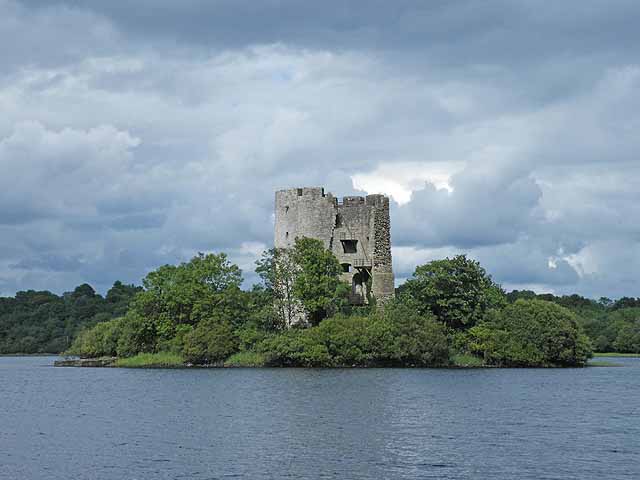
Castle Saunderson is a 19th-century castle located near Belturbet in County Cavan, Ireland. Originally the family seat of the Saunderson family, the castle today stands in a state of ruins, reflecting its long and complex history. The castle's remains lie within the scenic Castle Saunderson Demesne, bordered to the north-east by the Finn River, which flows into a narrow channel of Upper Lough Erne. Its proximity to the small hamlet of Wattlebridge in County Fermanagh situates it near the border between counties, enhancing its historical strategic significance.

Historical background and family legacy

The Saunderson family, who gave the castle its name, were prominent landowners in the region during the 19th century. The castle served as their principal residence and symbol of their status and influence in County Cavan. While the current structure dates from the 19th century, it is believed that earlier fortifications or dwellings may have existed on or near the site, although no definitive archaeological evidence confirms this. The family’s tenure at Castle Saunderson was marked by the typical social and economic shifts of the period, including the challenges of the Irish Land Wars and changing land ownership patterns.

Architectural features and castle layout

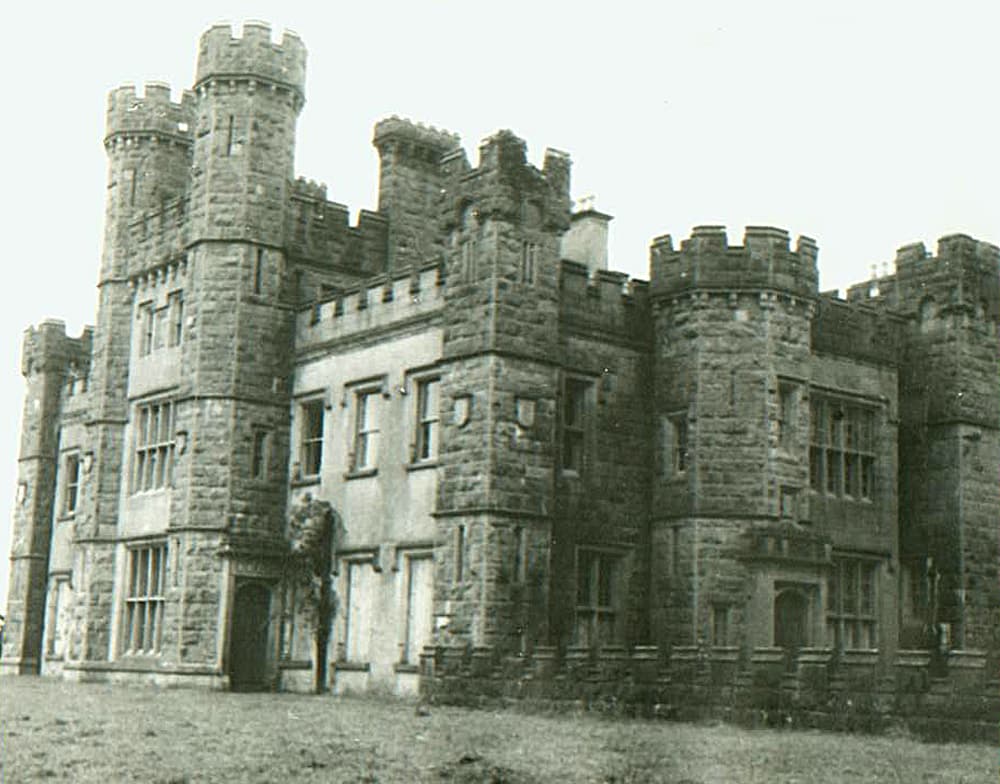
Castle Saunderson was constructed in the 19th century in a style reflecting the tastes and architectural trends of the time, likely incorporating elements of the Gothic Revival or Victorian Gothic styles popular among the Anglo-Irish gentry. Although much of the castle is now in ruins, surviving elements suggest a substantial building with characteristic features such as towers, , and possibly ornate windows and decorative stonework. The castle was part of a larger demesne that included landscaped grounds, gardens, and access to waterways, which would have enhanced its aesthetic and practical appeal.

Demesne and natural surroundings

The castle’s location near the Finn River and Upper Lough Erne provided natural defensive advantages as well as scenic beauty. The demesne likely featured managed parkland and woodland areas, typical of 19th-century estate design, providing a habitat for wildlife and recreational opportunities for the family and their guests. The river and lake access would have been important for transport, fishing, and leisure activities.

Castle saunderson international scouting centre

In recent years, the grounds of Castle Saunderson have taken on a new role as the site of the Castle Saunderson International Scouting Centre, which opened in 2012. This facility is operated by Scouting Ireland and serves as a hub for scouting activities, offering extensive indoor accommodation and campsites spanning 34 acres (14 hectares). The centre welcomes Scouts throughout the year and is also available to non-Scouting groups for most of the year, promoting outdoor education and community engagement.

Significance as a world scouting centre

The centre is recognized as one of the World Scouting Centres, alongside notable locations such as the Cairo International Scout Centre in Egypt. This status highlights its importance in the global scouting movement, providing a venue for international events, training, and cultural exchange. The centre's presence has brought renewed attention and activity to the Castle Saunderson site, linking its historical heritage with contemporary youth development.

Current condition and preservation efforts

Today, Castle Saunderson remains in a state of ruins, with much of the original structure lost to time and neglect. However, the site is maintained as a heritage landmark, with ongoing efforts to preserve what remains and to interpret its history for visitors. The presence of the scouting centre ensures regular use of the grounds, helping to protect the area from further deterioration. Visitors can explore the remnants of the castle and enjoy the natural beauty of the demesne, making it a unique destination for history enthusiasts and outdoor adventurers alike.

Frequently asked questions (FAQ)

How do I get to Castle Saunderson?
Castle Saunderson is located in County Cavan, Ireland, and is easily accessible by car. If you're using public transport, the nearest bus stations are in Belturbet, with local taxis available to bring you to the castle.
What is the historical significance of Castle Saunderson?
Castle Saunderson was built in the 19th century and served as the ancestral home of the Saunderson family. Its historical significance lies in its connection to the local gentry and its role in the socio-political landscape of Ireland during its era.
When was Castle Saunderson built?
Construction of Castle Saunderson began in the early 1800s and was completed in 1856. The castle was designed in the Gothic Revival style, reflecting the architectural trends of that period.
Can I visit Castle Saunderson year-round?
Yes, Castle Saunderson is open for visitors throughout the year, but it's best to check the specific opening hours before your visit. The castle may have special events or maintenance closures during certain times.
Why is the architecture of Castle Saunderson noteworthy?
The architecture of Castle Saunderson is noteworthy due to its distinctive Gothic Revival features, including pointed arches and intricate stonework. It stands out in the landscape and reflects the grandeur of 19th-century castle design.
Is it possible to take guided tours at Castle Saunderson?
Yes, guided tours are available at Castle Saunderson, providing visitors with insights into its history and architecture. These tours are a fantastic way to learn about the castle and its significance in Irish heritage.
What are the best times to visit Castle Saunderson?
The best times to visit Castle Saunderson are during the spring and summer months when the weather is milder and gardens are in full bloom. Additionally, visiting during weekdays can help you avoid large crowds.
Are there any nearby attractions to visit alongside Castle Saunderson?
Yes, visitors to Castle Saunderson can explore nearby attractions such as the scenic River Erne, local hiking trails, and the charming town of Belturbet. These sites offer a wonderful complement to your castle experience.
What are the ticket prices for visiting Castle Saunderson?
Ticket prices for Castle Saunderson vary depending on the type of tour and any special events. It's recommended to check the official website or contact the castle directly for the most current pricing information.
What are the opening hours for Castle Saunderson?
Castle Saunderson typically opens from 10 AM to 5 PM, but hours may vary seasonally. Always verify the current opening hours before your visit to ensure a smooth experience.

Photo gallery

Castle Saunderson
Click to view

Photo by C.A.Saunderson•CC BY-SA 3.0

1 photo • Click any image to view in full screen

Information

Archaeological Site / Ruins

Loading map...

Visitor reviews

No reviews yet. Been here? Write the first review and help other travelers!

Write the first review

Visited this castle? Share your experience

Your review helps other travelers and adds first-hand knowledge to our encyclopedia.

Write a review

(5/5)

0/2000 characters

Your review will be visible after admin approval

Nearby castles

6.8 km

Old Crom Castle

Newtownbutler, United Kingdom

Old Crom Castle, located on the east bank of Upper Lough Erne near Newtownbutler in County Fermanagh, Northern Ireland, is a significant example of an early 17th-century Renaissance tower house with a bawn and defensive round flankers. Built in 1611 by the Scottish planter Michael Balfour, it reflects the plantation-era architecture introduced during the colonization of Ulster. This castle is distinct from the later 19th-century Victorian Crom Castle, which stands some distance to the north. Construction and early history The castle was originally constructed as a fortified residence typical of the plantation period. Its design as a tower house with an enclosing bawn and round flankers provided both domestic accommodation and defensive capabilities. In 1619, ownership passed to Sir Stephen Butler, a notable figure in the region. By 1655, the estate had transferred to Abraham Crichton of Aghalane through marriage to the daughter of the previous tenant, the Bishop of Clogher, marking the start of the Crichton family's long association with the property. Sieges and survival during the 17th century Old Crom Castle endured two attacks during the turbulent period of the Jacobite wars in 1689. Its robust defensive features allowed it to withstand these sieges, underscoring the strategic importance of the castle in the region during this era of conflict. Destruction by fire and subsequent changes In 1764, the castle suffered a devastating fire that gutted the tower house. According to local tradition, the fire was discovered by Abraham Crichton as he returned by boat, alerted by a glow on the horizon. The Crichtons were away at a housewarming party at Florence Court when the accident occurred. Following this event, the castle was left in ruins. Romantic restoration and the new Crom Castle In 1820, the Crichton family constructed a new Victorian-style Crom Castle further north, reflecting the architectural tastes of the 19th century. The ruins of the Old Crom Castle were retained as a picturesque garden feature. Later in the 19th century, additional walls and towers were added to the ruins to enhance their romantic, gothic appeal, a common landscaping trend of the period that celebrated medieval ruins as ornamental elements. Unique features and estate landmarks Opposite the ruins on Gad Island in the lough stands a distinctive round tower. Although it appears medieval, this structure is a stone folly built around 1847 as a famine relief project and served as an observatory, illustrating the estate's layered history beyond the castle itself. Current status and visitor information Today, Old Crom Castle remains private property of the Crichton family, while the surrounding estate and the castle ruins are managed by the National Trust. Visitors can freely explore the estate and the tranquil ruins during daytime hours. The site offers a peaceful setting to appreciate the remains of a Renaissance tower house and the estate's historical landscape. Architectural significance The castle exemplifies the plantation-era architecture of early 17th-century Ulster, combining defensive features like the bawn and round flankers with the residential function of a tower house. Its later transformation into a romantic ruin reflects changing attitudes towards medieval architecture during the Victorian period, when ruins were often enhanced for aesthetic purposes. Historical context Built during the early phase of the Ulster Plantation, Old Crom Castle represents the Scottish and English efforts to establish control over Ulster through fortified settlements. Its survival through the Jacobite conflicts highlights its military and strategic value. The castle's destruction by fire and subsequent replacement with a Victorian mansion illustrate the evolution of aristocratic residences in Ireland from fortified homes to country houses.

Renaissance (15th–17th c.)
Details
7.4 km

Crom Castle

Enniskillen, United Kingdom

Crom Castle stands as a notable example of a Victorian country house built in 1820 near Enniskillen, Northern Ireland. Although constructed before the official start of the Victorian era, the castle exhibits many of the architectural features characteristic of early Victorian style, reflecting the transition from Georgian to Victorian tastes. It has been the ancestral home of the Creighton family, later known as the Crichton family, Earls of Erne, for over two centuries. Historical background and ownership The estate on which Crom Castle sits has a rich history extending far beyond the current house. The Crom Estate includes the ruins of the Old Crom Castle, a tower house dating back to the early 17th century. This earlier castle was originally owned by the Balfour family until it was acquired by the Creighton family in 1609. The old tower house, now a ruin, provides a tangible link to the estate's early modern period history and the turbulent times of the Irish Plantation and local conflicts. Architectural features of the Victorian Crom Castle The present Crom Castle was designed and built in 1820, displaying a blend of Gothic Revival and Victorian architectural elements. The building features a symmetrical façade with battlemented parapets and turrets that evoke the medieval castles of earlier centuries, a popular motif in Victorian country house design. The use of pointed arch windows and decorative stonework reflects the influence of the Gothic Revival movement prevalent in the 19th century. The interior contains large reception rooms and family living spaces arranged around a central hall. The castle's west wing is currently used for hosting weddings and private events, while parts of the castle are available for holiday stays, offering visitors a chance to experience historic grandeur firsthand. Estate grounds and historical features The Crom Estate covers a vast area featuring a variety of historical and functional buildings beyond the main castle. Among these are the old farmyard, a boathouse that once housed the Lough Erne Yacht Club, a tea house, a church, and a schoolhouse. These structures illustrate the self-contained nature of the estate in previous centuries, supporting both the family and estate workers. The estate is managed by the National Trust, ensuring the preservation of its natural beauty and historical buildings. Visitors can explore the grounds, enjoy the scenic views of Lough Erne, and learn about the estate's rich heritage through the visitor centre located in the old farmyard area. Current use and visitor experience Although Crom Castle remains privately owned by the Creighton family, the estate is open to the public in various capacities. The National Trust's management allows visitors to access the grounds and some of the estate's historical features. The castle itself offers exclusive use of the west wing for weddings and private events, while guests can also book stays in this part of the castle for a unique accommodation experience. The estate's combination of natural landscapes, historic architecture, and preserved outbuildings provides a comprehensive glimpse into the lifestyle of an Irish aristocratic family from the 17th century through to the modern day.

Modern (19th–20th c.)
Details
14.5 km
Cloughoughter Castle — Ireland castle

Cloughoughter Castle

Killeshandra, Ireland

Cloughoughter Castle (Irish: Cloch Locha Uachtair, meaning 'stone castle of Loch Uachtair') is a distinctive 13th-century circular castle ruin situated on a small island in Lough Oughter, approximately 4 kilometres east of Killeshandra in County Cavan, Ireland. This isolated fortress exemplifies medieval military architecture adapted to a lacustrine environment, offering a rare example of an island castle in Ireland. Historical context and strategic importance Constructed during the High Medieval period, Cloughoughter Castle was built in the 1200s, a time when Norman influence was expanding across Ireland. The castle's location on an island provided natural defensive advantages, making it a stronghold for controlling the surrounding waterways and land routes. Its strategic position allowed the occupants to monitor and defend the region effectively against rival clans and invaders. The castle played a role in various local conflicts, including those during the turbulent times of Gaelic resurgence and English attempts to consolidate power in Ireland. It was notably involved in the Irish Confederate Wars in the 17th century, where it was used as a garrison and eventually surrendered after a siege. Architectural features and design Unique circular plan Unlike many rectangular or irregularly shaped medieval castles, Cloughoughter Castle is renowned for its circular design, which is relatively uncommon in Irish castle architecture. The circular curtain walls rise directly from the rocky island, enclosing the interior space without the need for corner towers. Defensive structures The castle's walls are thick and robust, designed to withstand attacks and sieges. Although much of the structure is in ruins today, remnants of the battlements and arrow slits are visible, indicating provisions for archers and defenders. The island setting itself acted as a natural moat, complicating direct assaults and making the castle highly defensible. Interior and layout Within the walls, the castle likely contained a hall, living quarters, and storage spaces. The limited size of the island restricted the scale of the interior buildings, emphasizing the fortress's role as a military stronghold rather than a lavish residence. Decline and current condition Following its use in the 17th century conflicts, Cloughoughter Castle fell into disuse and gradually deteriorated. Today, it remains a ruined archaeological site with substantial portions of its circular walls still standing. The castle is accessible by boat, attracting visitors interested in medieval history and Irish heritage. Its preservation as a ruin allows for the study of medieval island fortifications and offers insight into the defensive strategies employed during the High Medieval period in Ireland. Visiting Cloughoughter Castle Visitors to Cloughoughter Castle can explore the scenic surroundings of Lough Oughter, which is part of a complex of lakes and wetlands rich in wildlife. The castle's remote location on an island means access is typically by boat, providing a unique experience for those interested in history and nature. The site is unmanaged, so visitors should prepare accordingly and respect the preservation of the ruins. The castle's evocative setting and historical significance make it a notable destination for enthusiasts of medieval architecture and Irish culture.

High Medieval (11th–13th c.)
Details