Rossend Castle
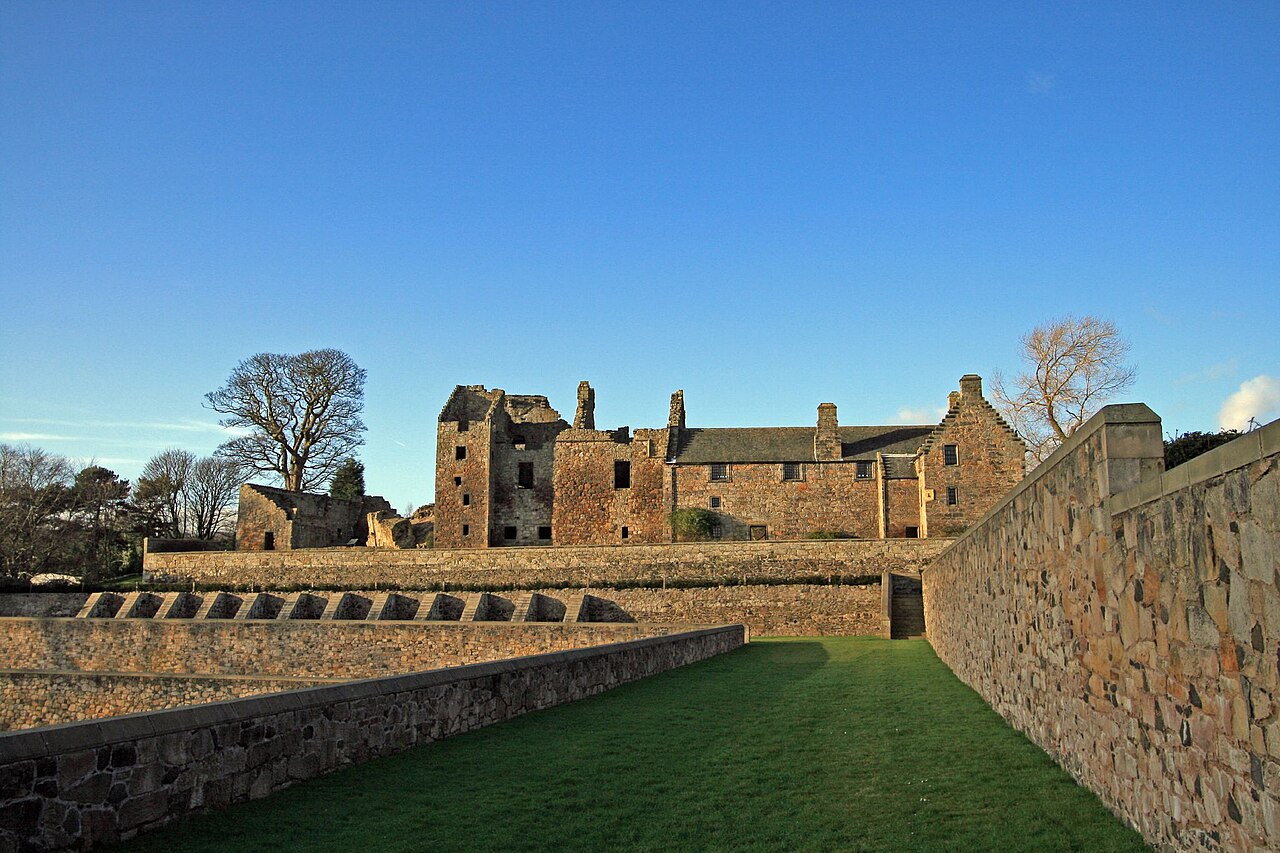
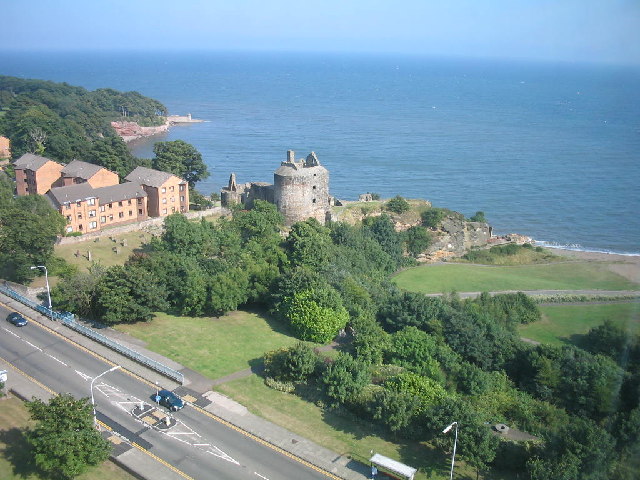
Rossend Castle in Burntisland, Scotland, is a historic fortress with origins dating back to the early 12th century. The site originally hosted a keep known as the Tower of Kingorne Wester from 1119, marking its significance in medieval Scottish history. Over the centuries, the castle evolved through various phases of construction and ownership, reflecting the changing political and architectural landscape of Scotland.
The castle was once referred to as Burntisland Castle and by 1382 was known as Abbot's Hall, serving as the residence of the Abbot of Dunfermline. This ecclesiastical connection is evident in the surviving 13th-century basement, which features lancet windows that likely belonged to a chapel. The structure as it stands today largely dates from the Renaissance period, specifically the mid-16th century, when it was rebuilt by Peter Durie of Durie starting in 1552. The castle's main entrance bears the arms of Abbot George Durie and the date 1554, symbolizing this important phase of reconstruction.
Architectural features and layout
Rossend Castle is primarily a keep with a robust stone construction typical of Renaissance military architecture in Scotland. The castle's 13th-century basement is notable for its lancet windows, which are narrow, tall openings characteristic of Gothic ecclesiastical architecture, suggesting the space functioned as a chapel or sacred area in earlier times.
The castle's exterior reflects the defensive needs of the period, with thick walls and limited openings. The main entrance is adorned with heraldic symbols, including the Durie family arms, which emphasize the castle's status and ownership. Internally, the castle once housed a remarkable early 17th-century painted timber ceiling, discovered in 1957 and now preserved in the National Museum of Scotland in Edinburgh. This ceiling features the initials "SRM" for Sir Robert Melville of Murdocairney and decorative emblems inspired by the Devises Heroïques of Claude Paradin, a collection of emblematic designs popular in Renaissance Europe.
Historical significance and notable events
Rossend Castle played a role in several key historical episodes. During the War of the Rough Wooing (1543–1551), English forces under John Luttrell landed at Burntisland on 28 December 1547. Luttrell burned boats and buildings at the pier, compelling the castle's owners to surrender. This event underscores the castle's strategic importance along the Firth of Forth.
The castle is also linked to Mary, Queen of Scots, who visited during her personal reign from 1561 to 1567. A dramatic incident occurred on 14 February 1562 when the French poet and messenger Chastelard was found hiding under the queen's bed at Rossend, an episode that highlights the castle's place in royal intrigues.
In 1590, Sir Robert Melville hosted the Danish Admiral Peder Munk at Rossend Castle. Munk was en route to Falkland Palace to take possession of lands granted to Anne of Denmark as part of her dowry, illustrating the castle's diplomatic role. Later, in April 1594, James VI came to Rossend with his guard in an unsuccessful attempt to capture supporters of the rebel Earl of Bothwell, further emphasizing the castle's involvement in political conflicts of the era.
Preservation, restoration, and modern use
By the mid-20th century, Rossend Castle had fallen into disrepair. The Burntisland Town Council acquired the property in 1952, but initially allowed it to deteriorate. The discovery of the painted timber ceiling in 1957 brought renewed interest in the castle's historical value. Despite threats of demolition, a public inquiry in 1972 saved the castle from destruction.
In 1975, the architecture firm Robert Hurd & Partners purchased Rossend Castle and undertook a sensitive restoration, preserving its Renaissance character while adapting it for modern use as their offices. This restoration has ensured the castle remains a visible and functional part of Burntisland's heritage.
Architectural restoration approach
The restoration focused on stabilizing the structure and conserving original features such as stonework and the surviving medieval elements. The project balanced historical integrity with contemporary needs, demonstrating a successful example of adaptive reuse of a historic building.
Rossend Castle in cultural heritage
Today, Rossend Castle stands as a significant monument reflecting Scotland's Renaissance architecture and turbulent history. Its connections to religious figures, royalty, and political events make it an important site for understanding the region's past. The castle's preservation and continued use highlight the value placed on maintaining historic buildings within their communities.
Visitors to Burntisland can appreciate Rossend Castle's imposing presence and its layered history, from medieval ecclesiastical origins to Renaissance rebuilding and involvement in national events. Although not generally open to the public as a museum, its exterior and historical context remain accessible to those interested in Scottish heritage.
Information
Loading map...
Visitor reviews
No reviews yet. Been here? Write the first review and help other travelers!
Write the first reviewVisited this castle? Share your experience
Your review helps other travelers and adds first-hand knowledge to our encyclopedia.