Roslin Castle
Roslin Castle, sometimes spelled Rosslyn, is a partially ruined Renaissance hill castle situated near the village of Roslin in Midlothian, Scotland. Perched on a dramatic rocky promontory overlooking a bend in the River North Esk, the castle commands a naturally defensible position with steep cliffs on three sides and a deep defensive ditch carved into the rock on the north. This strategic location has made Roslin Castle a significant fortress since its earliest construction in the early 14th century.
The castle's origins trace back to the early 1300s when the Sinclair family, Norman-origin Earls of Caithness and Barons of Roslin, first fortified the site. The initial fortress was established around the 1330s under Henry I Sinclair, Earl of Orkney, reflecting medieval military architecture designed to control the surrounding landscape and protect the Sinclair family's interests. Over the centuries, Roslin Castle evolved through phases of destruction and rebuilding, adapting to changing military technologies and domestic needs.
Medieval foundations and early architecture
In the late 14th or early 15th century, the castle underwent significant reconstruction under Henry II Sinclair, who replaced the initial structures with a new rectangular tower keep. This keep was notable for its rounded southwest corner, a distinctive architectural feature that enhanced its defensive capabilities. The castle's layout included a fortified courtyard accessed via a drawbridge spanning a man-made ditch, leading into a protected northern entrance passage. These elements reflect typical medieval defensive design, emphasizing protection and controlled access.
Roslin Castle was not only a military stronghold but also a cultural center. During the 15th century, it housed a scriptorium where important manuscripts were produced and preserved. Among these were five St. Clair family manuscripts, including the Rosslyn-Hay manuscript, considered the oldest surviving text in Scots prose. The castle suffered a severe fire in 1452, which threatened these valuable documents, but the chaplain successfully saved them by lowering them from a window, underscoring the site's cultural importance.
Destruction and renaissance rebuilding
The mid-16th century marked a turbulent period for Roslin Castle. In 1544, during the War of the Rough Wooing, the castle was heavily damaged by the forces of the Earl of Hertford. This assault left the fortress largely in ruins, with only a single wall of the original keep surviving. The destruction necessitated extensive rebuilding efforts later in the century.
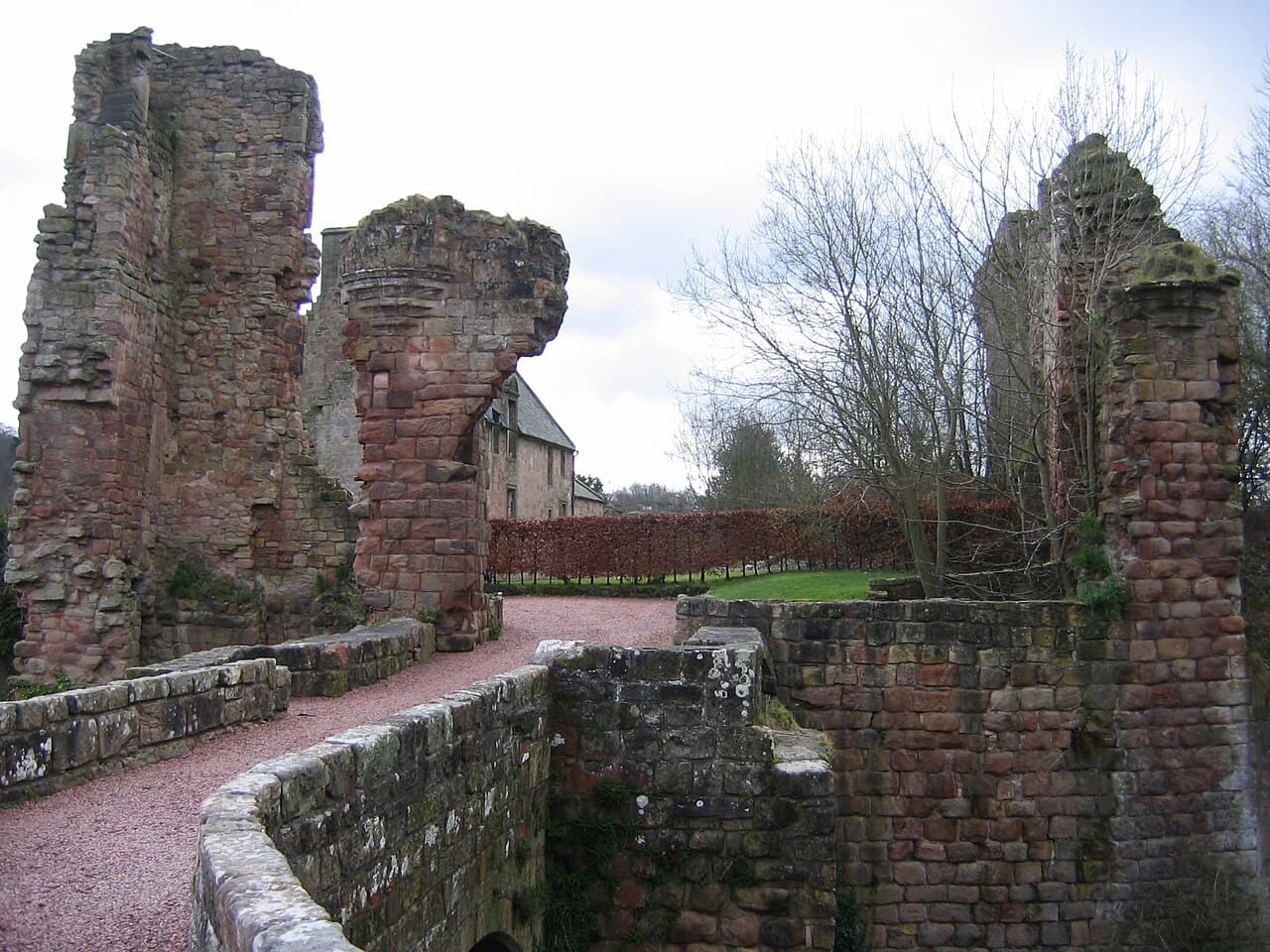
Reconstruction in the late 16th century introduced significant architectural changes. A new five-storey east range was constructed, ingeniously built into the side of the rock face, demonstrating advanced adaptation to the natural landscape. The earlier drawbridge was replaced by a permanent stone bridge, and the gatehouse was rebuilt, enhancing both access and defense. These improvements reflected the evolving requirements of castle architecture during the Renaissance period.
In 1622, under the patronage of Sir William Sinclair, the upper part of the east range was renovated with elaborate Renaissance details. Carved door and window surrounds from this period remain visible, showcasing the blend of defensive functionality and artistic expression. The east range's interior was adapted for residential use, with vaulted service rooms such as a kitchen and bakehouse on the lower floors, and richly paneled chambers with ornate ceilings above.
Later military conflicts and decline
Roslin Castle's military significance continued into the 17th century. In 1650, it sustained further damage from artillery fire during the campaigns of Oliver Cromwell, specifically from General Monck's forces in Scotland. The castle also endured damage during the civil unrest associated with the Glorious Revolution in 1688, when a reforming mob caused additional harm.
By the 18th century, much of the castle had fallen into disrepair. Despite this, the east range remained partially habitable, a testament to the quality of its construction and ongoing maintenance. The castle's ruins, including the surviving curtain walls, gatehouse remnants, and the east range, offer a layered historical narrative of adaptation and resilience.
Architectural features and remains
The castle's defensive features are prominent in its surviving structures. The west curtain wall, largely dating from the 15th century, still stands to a considerable height. It includes six openings, among them a small postern gate for discreet access. Rounded buttresses divide the wall into sections, supporting bartizans—small turrets used for observation and defense—connected by a walkway along the wall's top, allowing defenders to patrol the perimeter.
The ruins of the original main keep lie just south of the west wall. Once rising between 12 and 16 meters with walls nearly 3 meters thick, the keep was crowned by a parapet featuring machicolations, openings through which defenders could attack enemies below. Today, the keep is a mound of collapsed masonry but remains a crucial element in understanding the castle's medieval fortifications.
The east range contrasts with the ruins, as it is largely restored and measures approximately 31 meters long by 10 meters wide. Its pitched roof with crow-step gables and an ornately carved entrance doorway dated 1622 bear the initials of Sir William Sinclair. The range is carved directly into the rock, with the lower floors containing vaulted service rooms and the upper floors hosting the main living chambers. Defensive adaptations include narrow gunloops and shot-holes integrated into the walls, reflecting the transition from medieval to early modern military architecture.
Internally, an early 17th-century staircase connects all five floors of the east range, replacing an earlier winding staircase. The main hall contains a large fireplace carved with the initials of William Sinclair and Jean Edmonstone, dated 1597, linking the space to specific historical inhabitants and illustrating the castle's role as a noble residence.
Modern restoration and current use
In the late 20th century, Roslin Castle underwent significant restoration led by architects Simpson and Brown. These efforts preserved the surviving structures and adapted parts of the castle for modern use. Today, the castle serves as holiday accommodation, allowing visitors to experience its historic ambiance firsthand. Ownership remains with the Sinclair family, who hold the title of Earl of Rosslyn, maintaining the castle's long-standing connection to its founding lineage.
Roslin Castle remains a remarkable example of a Scottish Renaissance hill castle that encapsulates centuries of architectural evolution, military history, and cultural significance. Its dramatic setting, rich historical associations, and blend of ruin and restoration continue to attract historians, architects, and visitors fascinated by Scotland's medieval heritage.
Frequently asked questions (FAQ)
- How do I get to Roslin Castle?
- Roslin Castle is located in Roslin, just a short drive from Edinburgh. The easiest way to reach the castle is by car, but public transport options such as buses are also available from the city center. Once you arrive, you will find signage directing you to the castle entrance.
- What is the historical significance of Roslin Castle?
- Roslin Castle dates back to the 14th century and is steeped in history, particularly associated with the St. Clair family. The castle played a significant role in Scottish history and has ties to various historical events and figures. Its ruins offer a glimpse into the medieval past of Scotland.
- When was Roslin Castle built?
- Roslin Castle was originally constructed in the 14th century, with significant modifications and enhancements made over the centuries. The castle has endured through various historical periods, reflecting the architectural styles and defensive needs of its time. Despite its ruinous state today, the castle's history is rich and intriguing.
- Can I enter the castle grounds?
- Yes, visitors are welcome to explore the castle grounds, which provide stunning views of the surrounding landscape and the nearby Roslin Glen. While the interior of the castle may be restricted due to its condition, the exterior and grounds provide a wonderful opportunity to appreciate its historical context. Be sure to check local guidelines and any restrictions that may apply.
- Why is Roslin Castle a popular tourist destination?
- Roslin Castle attracts visitors due to its captivating history, stunning architecture, and picturesque setting. The castle's links to the famous Rosslyn Chapel, located nearby, also draw many tourists who are interested in the legends and lore surrounding the area. Its scenic location makes it a perfect spot for photography and exploration.
- Is it possible to visit Roslin Castle year-round?
- Yes, Roslin Castle is open to visitors year-round, although access to certain areas may vary depending on the season and weather conditions. It's advisable to check the official website for any seasonal hours or special events that may affect your visit. Planning ahead ensures you have the best experience possible.
- What are the opening hours for Roslin Castle?
- Roslin Castle typically opens to visitors during daylight hours, but specific opening times can vary. It is best to check the official website or contact local tourism offices for the most accurate and up-to-date information regarding opening hours. This helps ensure that you can plan your visit accordingly.
- Are there any nearby attractions to visit?
- Yes, near Roslin Castle, you can explore the famous Rosslyn Chapel, known for its intricate carvings and fascinating history. Additionally, the beautiful Roslin Glen Country Park offers scenic walking trails and nature spots. These attractions make for a perfect day out in the area.
- What are the ticket prices for visiting Roslin Castle?
- Visiting the grounds of Roslin Castle is usually free, but there may be a small fee for guided tours or special events. It’s a good idea to check the official website for any updates on pricing and to see if there are any discounts available for groups or families. This ensures you are well-informed before your visit.
Photo gallery

Information
Website
Visit websiteSources & official resources
Verify the information above using these authoritative references.
Loading map...
Visitor reviews
No reviews yet. Been here? Write the first review and help other travelers!
Write the first reviewVisited this castle? Share your experience
Your review helps other travelers and adds first-hand knowledge to our encyclopedia.