Hawthornden Castle
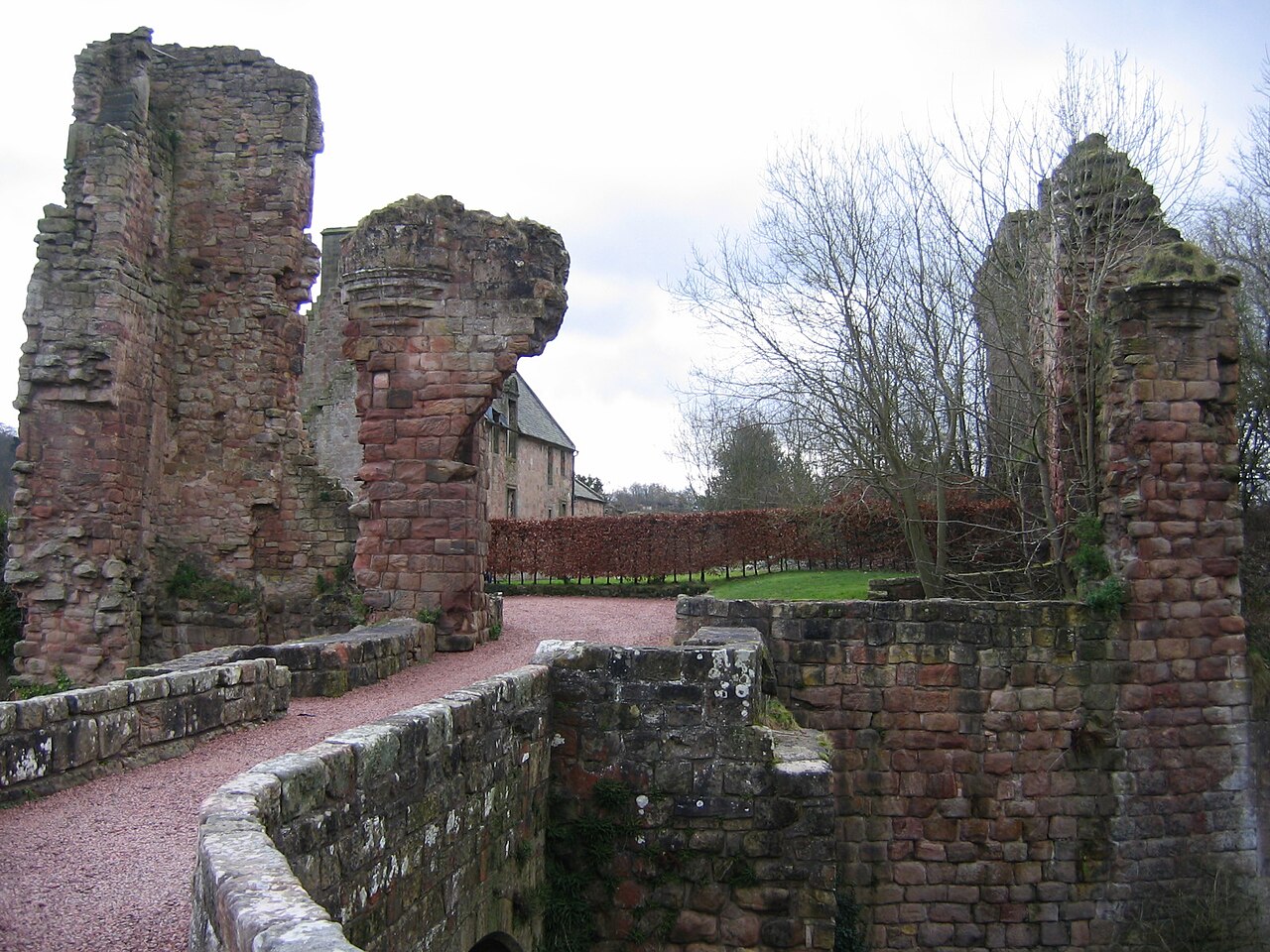
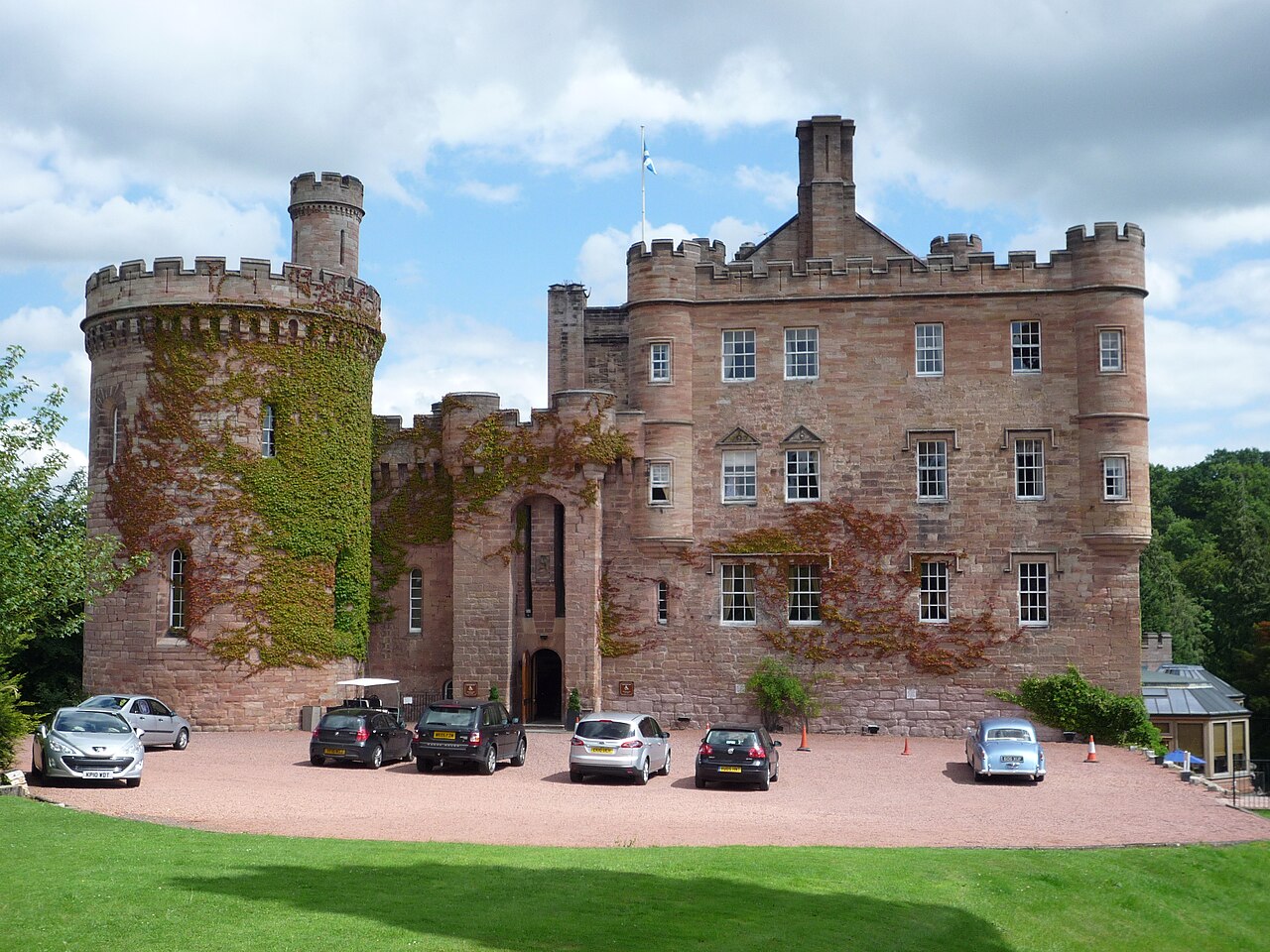
Hawthornden Castle stands prominently on a rocky promontory overlooking the River Esk in Midlothian, Scotland. This historic site combines the remnants of a 15th-century tower with a 17th-century L-plan house, reflecting architectural evolution through the Renaissance period. The castle's strategic position and complex structure reveal its defensive and residential roles over centuries.
Architectural layout and defensive features
The castle is arranged around a roughly triangular courtyard approximately 24 meters long and 12 meters wide at its broadest point, projecting northwest along the rocky outcrop. The 15th-century tower, located at the southeast corner, measures about 8 meters square. Though now in ruins, this tower was a key defensive element, featuring a rib-vaulted pit prison beneath it, indicative of the castle's role in local justice and security.
The courtyard once housed a range of buildings along the south curtain wall, evidenced by surviving window openings, though these structures have not survived. A well at the west end of the courtyard provided vital water supply, essential for sustaining the castle's inhabitants during sieges or isolation.
The 16th-century range to the north, connected to the tower by a defensive wall with the main entrance, is a three-storey structure with an attic, originally finished with harling, a traditional Scottish exterior plaster. The entrance features a renaissance-style doorway of later date, adorned with an iron knocker bearing the initials of Sir William Drummond and his wife, Dame Barbara Scott, linking the castle to notable historical figures.
Defensive gunports are strategically placed around the entrance and tower, with three flanking the doorway and a fourth in the tower, illustrating adaptations for artillery use during the castle's active period.
Historical significance and literary connections
Hawthornden Castle is not only significant for its military architecture but also for its cultural heritage. The Drummond family, particularly Sir William Drummond, son of the renowned poet William Drummond of Hawthornden, resided here. The castle has long been associated with literary pursuits and intellectual activity.
In modern times, the castle has been restored and repurposed as a writer's retreat, continuing its tradition as a place of creative inspiration. This adaptation preserves the castle's historical fabric while giving it a contemporary cultural function.
Subterranean features and earlier human activity
Below the castle, a series of man-made caves carved into the rock predate the castle itself, indicating the site's long-standing human use. These caves may have served various purposes, from storage to refuge, and add a layer of archaeological interest to the site.
Later additions and preservation
The last structural addition to Hawthornden Castle was a single-storey range built in the late 18th or early 19th century, located to the west of the main courtyard. This addition reflects the castle's continued use and adaptation beyond its original defensive and residential functions.
Today, the castle is a partially preserved historic site, with the 17th-century house restored to serve its current role. The combination of ruins and restored buildings offers visitors insight into the castle's layered history and architectural evolution.
Loading map...
Visitor reviews
No reviews yet. Been here? Write the first review and help other travelers!
Write the first reviewVisited this castle? Share your experience
Your review helps other travelers and adds first-hand knowledge to our encyclopedia.