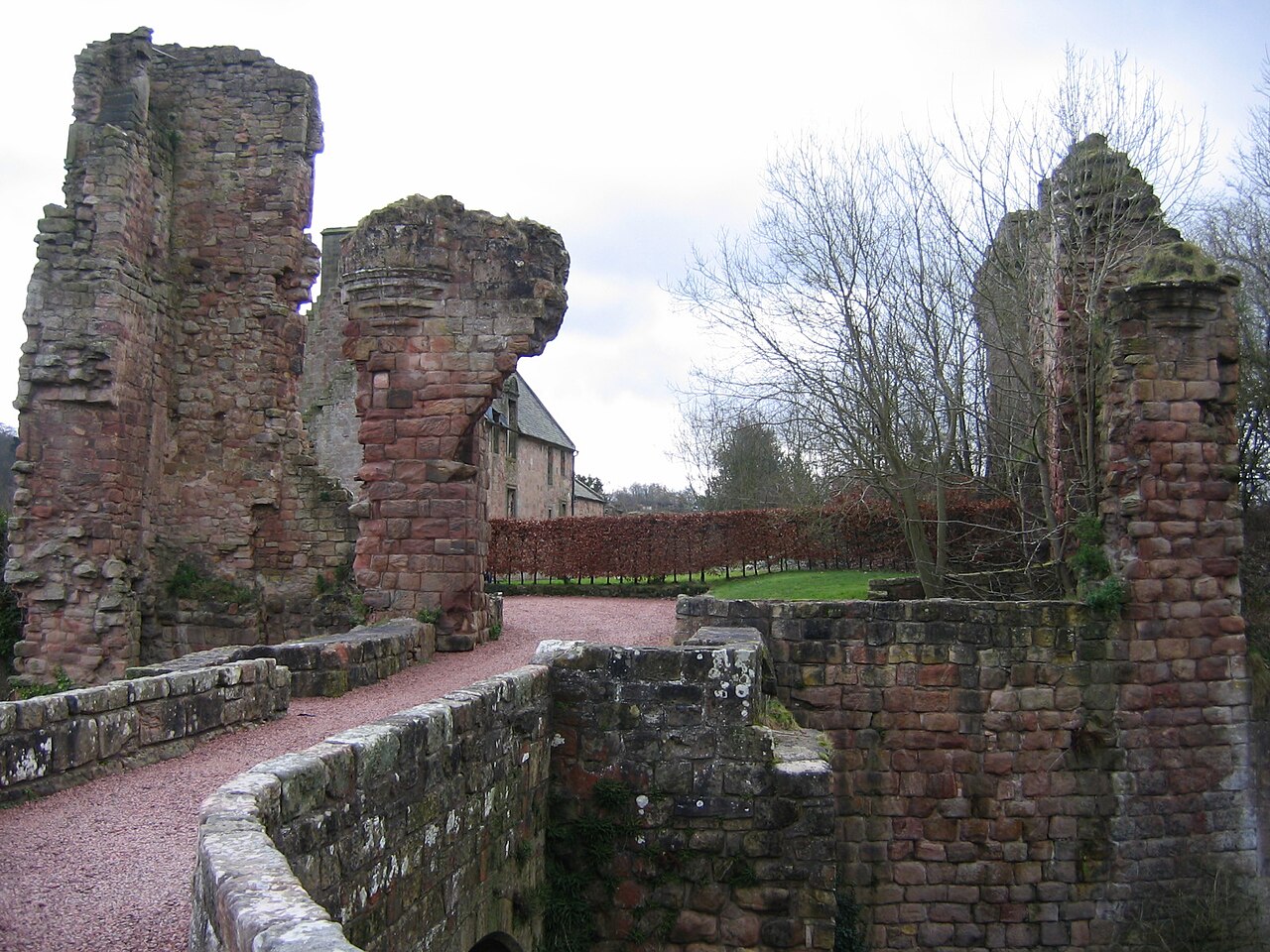
Castle Law
Castlelaw hill fort is a prominent Iron Age earthwork stronghold located in Fairmilehead, Scotland. The site represents a significant example of prehistoric defensive architecture in the region, characterized by its complex system of three earthwork ramparts, ditches, and timber palisades. These fortifications were designed to protect the inhabitants from external threats and demonstrate the strategic importance of the location.
Architectural features and layout
The fort's defensive structures include multiple concentric ramparts constructed with a core of clay and timber, faced externally with stone revetments. Excavations led by V. Gordon Childe in 1932–33 revealed the sophisticated construction techniques used in the ramparts, highlighting the combination of natural materials to create a sturdy barrier. The presence of ditches further enhanced the fort's defenses by creating obstacles for potential attackers.
Within the fort, a notable feature is the souterrain, an underground passage or chamber used primarily for the storage of agricultural produce. This reflects the dual function of the site as both a defensive position and a place of habitation and resource preservation.
Historical context and significance
Dating to the Iron Age, Castlelaw hill fort was strategically placed to command extensive views over the Firth of Forth and the surrounding Lothian landscape. From this vantage point, other important contemporary sites such as Traprain Law and Berwick Law are visible, both of which were significant centers of power during the same period. This visual connection suggests a network of fortified sites that likely played roles in regional control and communication.
The site provides valuable insights into Iron Age settlement patterns, defensive strategies, and social organization in Scotland. Its preservation allows archaeologists and historians to study the construction methods and lifestyle of the communities that occupied it.
Archaeological investigations
The 1930s excavations conducted by V. Gordon Childe, a pioneering archaeologist, focused on understanding the composition and structure of the ramparts. His work demonstrated that the ramparts were not merely earthen mounds but carefully engineered fortifications with a timber framework and stone facings. These findings have contributed significantly to the understanding of Iron Age fort construction techniques in Britain.
Further archaeological interest in the site continues to provide data on Iron Age life, including the use of the souterrain for storage, which is a characteristic feature of many hill forts in the region.
Current condition and access
Today, Castlelaw hill fort is preserved as a scheduled monument under the care of Historic Environment Scotland. The site remains largely archaeological ruins with visible earthworks and ditches that mark the original fort's layout. Visitors can explore the area freely, although the site is situated within an active sheep pasture, requiring dog owners to keep animals under control to protect the landscape.
Additionally, the fort is adjacent to an army firing range, and visitors must heed warning signs and avoid entering restricted zones marked by red flags for safety reasons. Despite these considerations, the site offers a valuable opportunity to experience a well-preserved example of Iron Age fortifications in Scotland.
Geographical and cultural importance
Castlelaw's elevated position not only provided defensive advantages but also served as a landmark within the ancient landscape of Lothian. Its proximity to other hill forts like Traprain Law and Berwick Law underscores its role within a network of significant prehistoric sites that collectively illustrate the social and political landscape of Iron Age Scotland.
As a cultural heritage site, Castlelaw hill fort contributes to the understanding of early Scottish history and prehistoric architecture, attracting interest from historians, archaeologists, and visitors interested in ancient fortifications and Iron Age society.
Frequently asked questions (FAQ)
- How do I access Castlelaw hill fort?
- Castlelaw hill fort is accessible to the public free of charge. Visitors should be aware that the site lies within an active sheep pasture, so dogs must be kept under control. Additionally, the nearby army firing range requires visitors to avoid areas marked with red flags for safety.
- What is the historical significance of Castlelaw hill fort?
- Castlelaw hill fort is an Iron Age defensive site featuring multiple earthwork ramparts and a souterrain, reflecting the settlement and defensive strategies of prehistoric Scotland. It offers important insights into regional power networks, visible in its views of Traprain Law and Berwick Law.
- When was Castlelaw hill fort built?
- The fort dates back to the Iron Age, a period roughly spanning from 800 BCE to 100 CE in Scotland, rather than the previously suggested 1000 BCE.
- Can I visit the archaeological remains at Castlelaw?
- Yes, the archaeological remains of Castlelaw hill fort are open to the public. Visitors can observe the earthwork ramparts, ditches, and the surrounding landscape that highlight the fort's strategic location.
- Why is the souterrain important at Castlelaw hill fort?
- The souterrain at Castlelaw was used for the storage of agricultural produce, indicating the site's role not only as a defensive stronghold but also as a place of resource management and habitation during the Iron Age.
Information
Current owner
Historic Environment Scotland
Loading map...
Visitor reviews
No reviews yet. Been here? Write the first review and help other travelers!
Write the first reviewVisited this castle? Share your experience
Your review helps other travelers and adds first-hand knowledge to our encyclopedia.