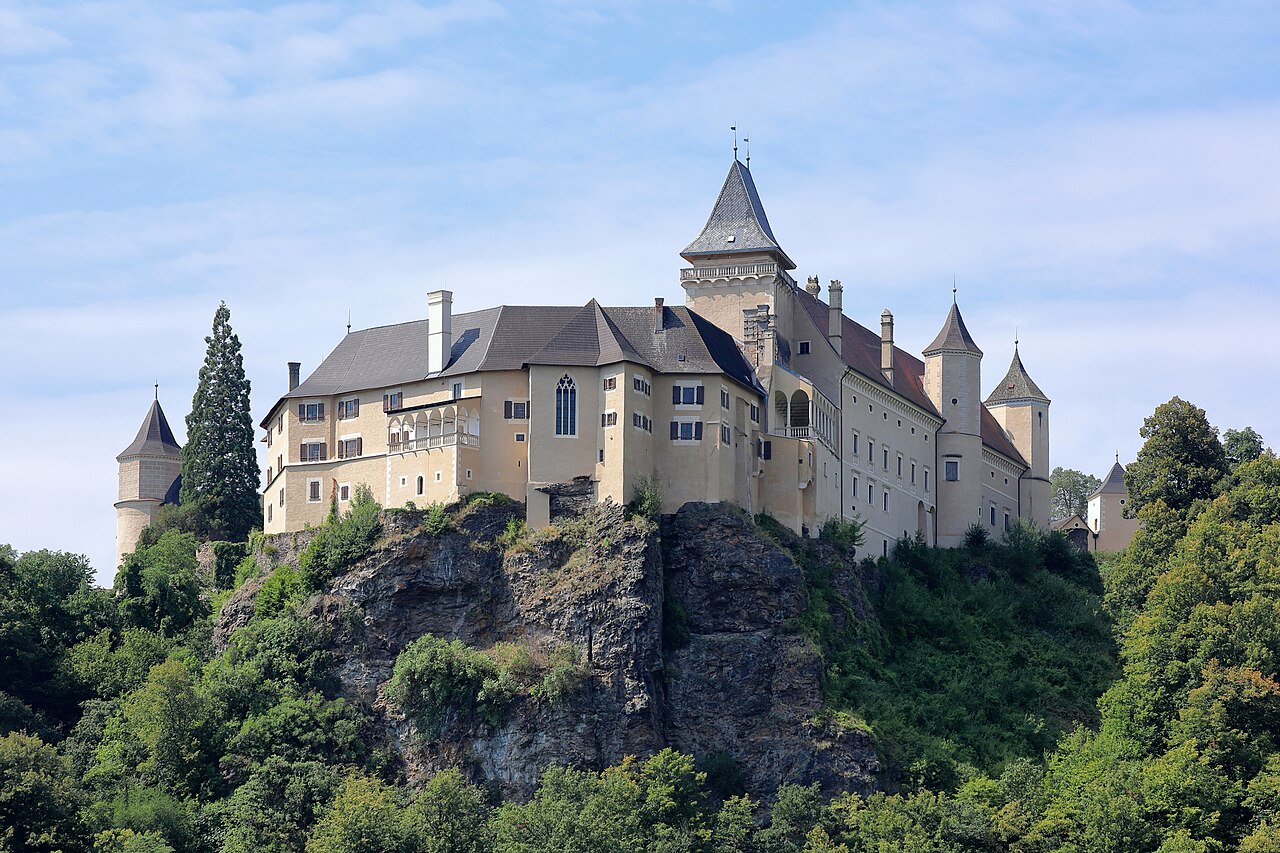
Rosenburg
Rosenburg Castle is a striking fortress perched on a cliffside overlooking the scenic valley of the River Kamp at an elevation of 345 metres above sea level. This high medieval castle, originally constructed in the 12th century, has evolved through centuries into one of Austria's most visited and well-preserved Renaissance castles. Its commanding position not only offered strategic defense advantages but also stunning panoramic views that have captivated visitors for generations.
Located within the heart of the Naturpark Kamptal, a protected nature reserve park, Rosenburg Castle benefits from a lush and tranquil natural setting that enhances its historical ambiance. The castle's integration with the surrounding landscape reflects the medieval practice of situating fortifications in naturally defensible locations, combining military utility with aesthetic appeal.
Historical development and significance
The origins of Rosenburg trace back to the high medieval period, with its initial construction dating to the 12th century. Over the centuries, the castle underwent significant modifications, particularly during the Renaissance era, which contributed to its current architectural grandeur. The castle's name, "Rosenburg," is shared with several other castles in Austria and Germany, but this particular site in Lower Austria is the most renowned and commonly referenced when the name is mentioned without further specification.
Rosenburg played a pivotal role in regional defense and administration throughout the Middle Ages and into the early modern period. Its strategic location allowed control over important trade routes along the Kamp valley. The castle's fortifications were designed to withstand sieges and attacks, featuring robust walls, towers, and gatehouses that exemplify medieval military architecture.
Architectural features and style
Rosenburg Castle is a fine example of a hill castle that combines high medieval fortification elements with later Renaissance architectural enhancements. The castle complex includes multiple defensive structures such as curtain walls, bastions, and a fortified gate. The main keep and several towers dominate the silhouette, reflecting the castle's original military purpose.
During the Renaissance, the castle saw the addition of elegant residential quarters and decorative elements that softened its martial appearance. These enhancements included ornate window frames, arcades, and frescoed interiors, showcasing the transition from purely defensive architecture to a more comfortable noble residence.
Defensive structures
- Curtain walls: Thick stone walls that encircle the castle, providing the first line of defense against invaders.
- Towers: Strategically placed towers offered vantage points for surveillance and archery.
- Gatehouse: The main entrance was heavily fortified with portcullises and murder holes to repel attackers.
Residential and ceremonial spaces
Inside the walls, the castle contains spacious halls, chambers, and courtyards designed for noble living and official functions. The Renaissance influence is evident in the refined architectural details and the adaptation of spaces for comfort and status display.
Cultural importance and legends
Rosenburg Castle holds a cherished place in Austrian cultural heritage. It is often associated with the popular Austrian folk song "Es liegt ein Schloss in Österreich" ("There is a castle in Austria"), which many assume refers to this very castle. This connection has helped cement Rosenburg's identity in the national imagination as a symbol of medieval and Renaissance grandeur.
The castle's location within the Naturpark Kamptal also makes it a focal point for cultural tourism, blending natural beauty with historical exploration. Visitors can enjoy not only the architectural marvels but also the surrounding landscapes that have remained relatively untouched.
Visitor experience and preservation
Today, Rosenburg Castle is well preserved and open to the public, offering guided tours that highlight its architectural features and historical narratives. The castle hosts various cultural events, medieval reenactments, and exhibitions that enrich the visitor experience.
The castle's management prioritizes conservation efforts to maintain its structural integrity and historical authenticity. Its status as a major tourist attraction in Lower Austria ensures ongoing investment in preservation and educational programs.
Visitors are encouraged to explore the castle's towers, halls, and courtyards while enjoying the panoramic views of the Kamp valley and the surrounding nature park. The site also provides facilities such as a museum, a café, and event spaces that cater to diverse interests.
Accessibility and amenities
- Accessible by road from nearby towns including Rosenburg-Mold.
- On-site guided tours available in multiple languages.
- Facilities include a museum showcasing medieval artifacts, a café, and gift shops.
- Seasonal events and medieval festivals enhance the cultural atmosphere.
Frequently asked questions (FAQ)
- What is the historical significance of Rosenburg Castle?
- Rosenburg Castle, dating back to the 12th century, is one of Austria's most important medieval castles. It played a crucial role in the defense of the region and has a rich history tied to noble families, making it a fascinating site for those interested in Austria's heritage.
- When was Rosenburg Castle built?
- Construction of Rosenburg Castle began in the 12th century, with significant renovations and expansions occurring over the centuries. Its architectural features reflect various styles, showcasing the evolution of castle design from the medieval period to the Renaissance.
- How do I get to Rosenburg Castle?
- Rosenburg Castle is located in Rosenburg-Mold, Austria, and is accessible by car and public transport. The nearest major city is Krems, from which you can take local buses or taxis to reach the castle.
- What are the opening hours for Rosenburg Castle?
- Rosenburg Castle typically opens to visitors from March to October, with varied hours depending on the season. It’s advisable to check the official website for specific opening times before your visit, especially during holidays or special events.
- Can I take guided tours of Rosenburg Castle?
- Yes, guided tours are available at Rosenburg Castle, providing visitors with insights into its history and architecture. These tours are usually conducted in multiple languages, ensuring a rich experience for all guests.
- Is it possible to visit Rosenburg Castle with children?
- Absolutely, Rosenburg Castle is family-friendly and offers activities suitable for children, including interactive exhibits and guided tours designed to engage young visitors. The grounds also provide ample space for children to explore safely.
- What are the ticket prices for visiting Rosenburg Castle?
- Ticket prices for Rosenburg Castle vary by age and group size, with discounts available for students and families. It's best to check the official website for the most current pricing information and any available promotions.
- When is the best time to visit Rosenburg Castle?
- The best time to visit Rosenburg Castle is during the spring and fall when the weather is mild, and the surrounding landscapes are particularly beautiful. Additionally, visiting during weekdays can help you avoid larger crowds.
- Are there nearby attractions to explore after visiting Rosenburg Castle?
- Yes, after exploring Rosenburg Castle, visitors can enjoy nearby attractions such as the charming village of Krems and the stunning Wachau Valley, known for its scenic beauty and vineyards. These locations offer further insight into the cultural and natural heritage of the area.
Information
Website
Visit websiteSources & official resources
Verify the information above using these authoritative references.
Loading map...
Visitor reviews
No reviews yet. Been here? Write the first review and help other travelers!
Write the first reviewVisited this castle? Share your experience
Your review helps other travelers and adds first-hand knowledge to our encyclopedia.