Roman Walls of Lugo
The Roman walls of Lugo are a remarkable example of ancient Roman military architecture, located in the city of Lugo, in the autonomous community of Galicia, Spain. These defensive walls were constructed in the 3rd century AD to protect the Roman colonia of Lucus Augusti, a significant settlement in the Roman province of Hispania Tarraconensis. Spanning approximately 2,120 metres (6,960 feet), the walls form a continuous circuit around the historic center of Lugo, making them one of the most complete and best-preserved Roman fortifications in Europe.
Historical context and construction
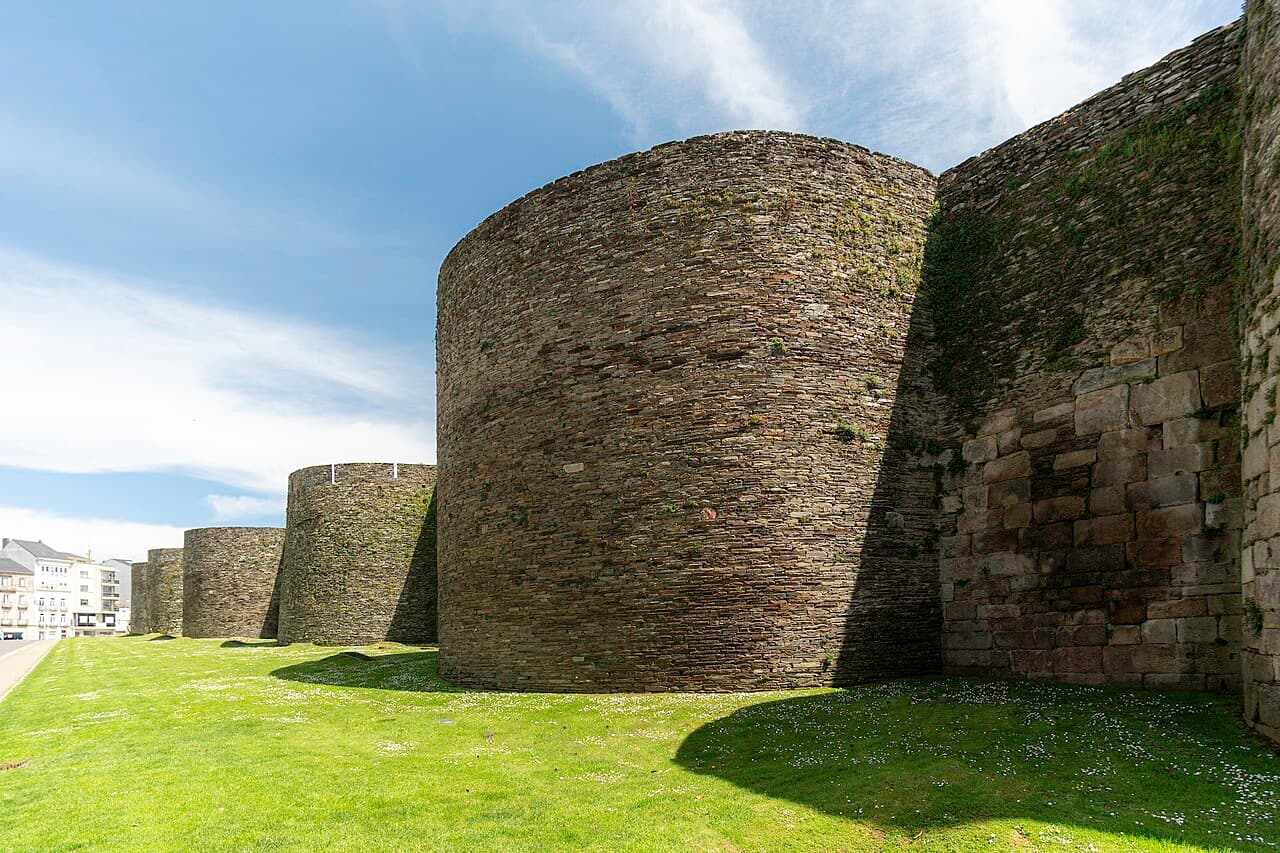
The walls were built during a period of increasing instability in the Roman Empire, when external threats and internal turmoil necessitated robust urban defenses. Constructed primarily of granite blocks sourced locally, the walls feature a bastioned fortress design that includes 71 towers spaced at regular intervals to provide defensive vantage points and flanking fire. The walls enclose an area of about 34 hectares (84 acres), encompassing the ancient urban fabric of Lucus Augusti.
The construction techniques used reflect advanced Roman engineering skills, with a core of rubble and mortar faced by carefully cut stone blocks. The walls originally stood around 10 to 15 metres high and were topped by a walkway for guards. The gates of the walls, including the Porta Miña and Porta de San Pedro, were fortified entrances allowing controlled access to the city.
Architectural features and preservation
The Roman walls of Lugo are notable for their exceptional preservation. Unlike many Roman fortifications that have been lost or heavily altered, Lugo's walls remain largely intact and continuous. The bastions project outward from the main wall line, creating defensive angles that were innovative for their time and improved the fortification's effectiveness.
The walls also include a walkway along the top, which visitors today can traverse, offering panoramic views of the city and surrounding landscape. The structure’s thickness varies but is generally around 2 to 3 metres, providing substantial defensive strength. The walls have undergone various restorations over the centuries, especially in the medieval and modern periods, to maintain their integrity.
Cultural significance and unesco designation
In recognition of their outstanding state of preservation and historical importance, the Roman walls of Lugo were designated a UNESCO World Heritage Site in 2000. This status highlights their value as a cultural monument and a tangible link to the Roman past of the Iberian Peninsula.
The walls are a major tourist attraction in Lugo, drawing visitors interested in Roman history, military architecture, and heritage conservation. The continuous circuit of the walls offers a unique opportunity to experience ancient fortifications in a living urban environment.
Visitor experience and accessibility
Today, the walls are accessible to the public, with a well-maintained walkway that allows visitors to walk along the entire circuit. This elevated path provides excellent views of Lugo’s historic center and the surrounding Galician countryside. Interpretative signage along the route offers insights into the walls’ history and construction.
The city of Lugo itself offers additional attractions, including Roman ruins, medieval churches, and traditional Galician culture, making it a rich destination for cultural tourism.
Frequently asked questions (FAQ)
- How do I get to the Roman Walls of Lugo?
- The Roman Walls of Lugo are located in the city center of Lugo, Spain, making them easily accessible by foot from various points in the city. If you are traveling by car, there are several parking options nearby. Public transportation, including buses, also serves the area, providing convenient access for visitors.
- What is the historical significance of the Roman Walls of Lugo?
- The Roman Walls of Lugo are a UNESCO World Heritage site and are one of the best-preserved examples of Roman military architecture in the world. Built in the late 3rd century AD, the walls served to protect the city and showcase the power of the Roman Empire. They stand as a testament to Roman engineering and the historical importance of Lugo as a strategic location.
- When was the Roman Walls of Lugo built?
- The construction of the Roman Walls of Lugo began around 263 AD and was completed in the late 3rd century. They were built to fortify the city during the Roman Empire's expansion and have remained remarkably intact through the centuries. The walls are a significant feature of Lugo's historical landscape.
- Can I walk along the Roman Walls of Lugo?
- Yes, visitors can walk along the top of the Roman Walls of Lugo, which offers stunning views of the city and surrounding area. The walk is approximately 2 kilometers long and is a popular activity for tourists and locals alike. It’s a unique way to experience the historical significance of the walls while enjoying the scenery.
- Why is the Roman Walls of Lugo considered an architectural marvel?
- The Roman Walls of Lugo are considered an architectural marvel due to their impressive size and well-preserved state. They stretch for over 2 kilometers and stand up to 10 meters tall, showcasing the engineering prowess of the Romans. The walls feature 71 towers and four main gates, illustrating the strategic design and construction techniques of the era.
- Is it possible to visit the Roman Walls of Lugo year-round?
- Yes, the Roman Walls of Lugo are open to visitors year-round, allowing everyone to explore this historical site. However, it's advisable to check for any special events or maintenance closures that may occur. Visiting outside the peak tourist season can provide a more peaceful experience.
- What are the opening hours for the Roman Walls of Lugo?
- The Roman Walls of Lugo are typically open to the public from 10 AM to 8 PM, but these hours may vary depending on the season or special occasions. It's best to confirm the exact hours before your visit to ensure you have ample time to explore. Guided tours may also have different schedules.
- Are there any nearby attractions to visit after exploring the Roman Walls?
- Yes, after visiting the Roman Walls, you can explore other nearby attractions such as the Lugo Cathedral, which is just a short walk away. The city also features several parks, museums, and local markets that showcase the rich culture and history of Lugo. These sites provide a great opportunity to further immerse yourself in the local heritage.
- What are the ticket prices for visiting the Roman Walls of Lugo?
- Entry to the Roman Walls of Lugo is generally free, making it an affordable attraction for visitors. However, certain guided tours or specific events may have associated costs. Check local resources for any updates on pricing or special access opportunities.
Photo gallery

Information
Loading map...
Visitor reviews
No reviews yet. Been here? Write the first review and help other travelers!
Write the first reviewVisited this castle? Share your experience
Your review helps other travelers and adds first-hand knowledge to our encyclopedia.