Roman Theatre of Jableh
The Roman theatre of Jableh is an ancient architectural monument located in the coastal city of Jableh, in the Syrian Arab Republic. This historic structure is a significant example of Roman theatre architecture in the Eastern Mediterranean, reflecting the cultural and social life of the Roman period in this region.
Constructed in the 2nd century AD, during the height of the Roman Empire, the theatre was designed to host various public performances, including plays, musical events, and possibly gladiatorial contests. Its location on a gentle slope allowed for an optimal arrangement of the seating area, or cavea, which was built in a semi-circular form to provide excellent acoustics and visibility for the audience.
Architectural design and features
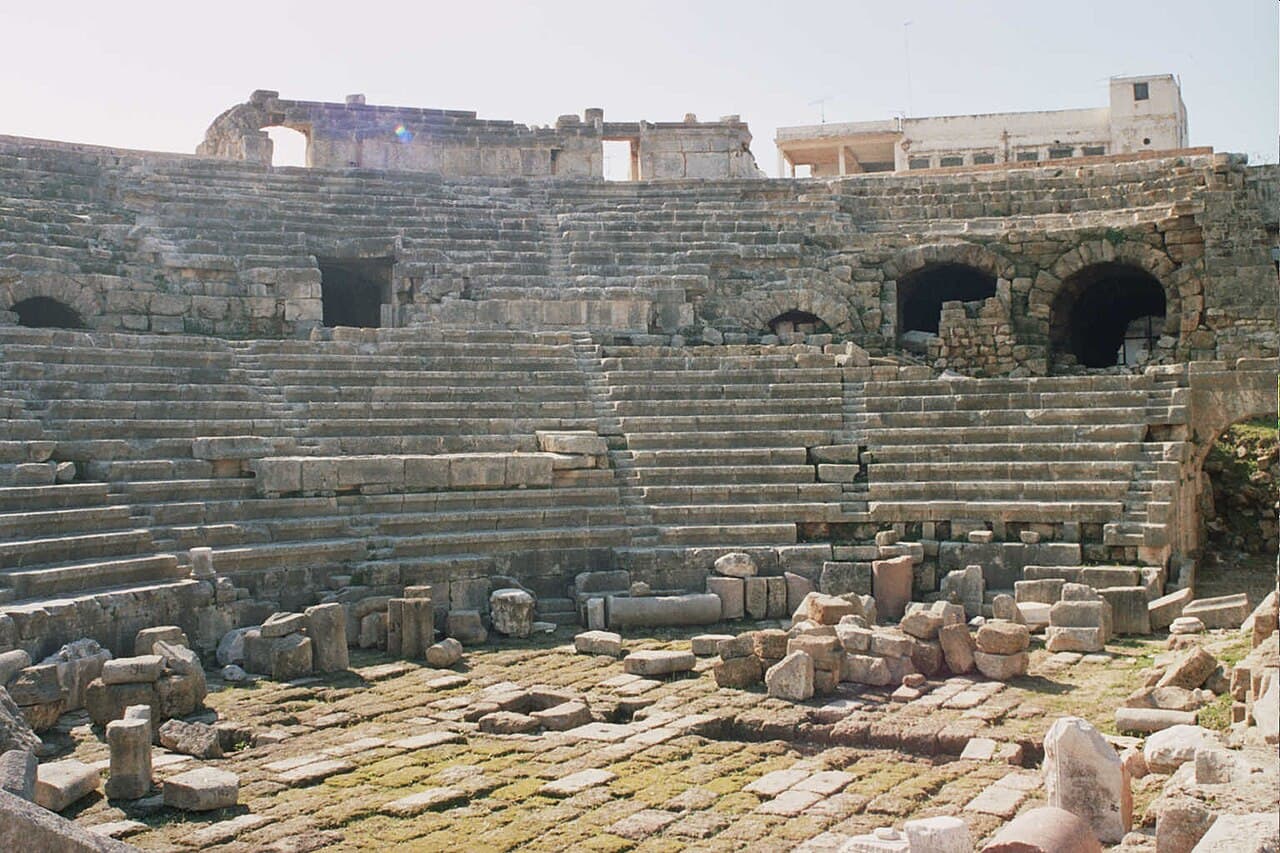
The theatre's cavea is carved into the hillside, typical of Roman theatres, and originally accommodated thousands of spectators. The seating was divided into sections by staircases, allowing for organized access and movement. The orchestra area, a semicircular space at the bottom of the seating, was used for performances and ceremonies.
The scenae frons, or stage building, was an elaborate architectural backdrop for the performances. Although much of the original decoration has been lost over time, remnants of columns, niches, and decorative elements hint at the theatre's former grandeur. The stage itself was raised and connected to backstage areas, which included rooms for performers and storage.
Materials and construction techniques
The theatre was primarily constructed using local limestone, a common building material in the region, which was carefully cut and assembled to create the robust structure. Roman engineering techniques ensured the stability of the cavea and stage, incorporating vaulted corridors and stairways for audience access.
Historical context and significance
Jableh was an important city in the Roman province of Syria, and the theatre served as a cultural hub for its inhabitants. The presence of such a monumental theatre indicates the city's prosperity and the influence of Roman culture in the area. The theatre was not only a place for entertainment but also a social gathering spot, reflecting the civic life of Roman urban centers.
Over the centuries, the theatre experienced periods of neglect and damage, particularly during later conflicts and natural decay. Despite this, it remains a valuable archaeological site that offers insights into Roman architectural practices and urban planning in the Eastern Mediterranean.
Preservation and current status
Today, the Roman theatre of Jableh is classified as an archaeological site. Efforts have been made to protect and study the ruins, although the site faces challenges from environmental factors and regional instability. The theatre attracts scholars and visitors interested in ancient history and Roman architecture.
Access to the site allows visitors to appreciate the scale and design of the theatre, with visible remains of the seating, stage area, and some decorative elements. Interpretive signage and guided tours may be available to enhance the educational experience.
Architectural legacy and influence
The theatre exemplifies the Roman approach to public entertainment architecture, combining functionality with artistic expression. Its design influenced subsequent theatre constructions in the region and contributes to our understanding of Roman cultural dissemination.
As part of Syria's rich archaeological heritage, the Roman theatre of Jableh stands as a testament to the city's historical importance and the enduring legacy of Roman architectural innovation in the Eastern Mediterranean.
Frequently asked questions (FAQ)
- What is the historical significance of the Roman theatre of Jableh?
- The Roman theatre of Jableh is a key cultural monument from the 2nd century AD, reflecting Roman architectural and social influence in the Syrian coastal region.
- Can visitors explore the Roman theatre of Jableh today?
- Yes, the theatre is accessible as an archaeological site where visitors can view the remains of the cavea, stage, and other structural elements.
- What architectural features characterize the Roman theatre of Jableh?
- It features a semi-circular cavea carved into a hillside, a raised stage with remnants of the scenae frons, and vaulted corridors for audience access.
- When was the Roman theatre of Jableh constructed?
- The theatre was constructed in the 2nd century AD during the Roman Empire's peak in the region.
- Is the Roman theatre of Jableh well preserved?
- The theatre is classified as an archaeological site with partial ruins, reflecting centuries of exposure to natural and human factors.
Photo gallery

Information
Loading map...
Visitor reviews
No reviews yet. Been here? Write the first review and help other travelers!
Write the first reviewVisited this castle? Share your experience
Your review helps other travelers and adds first-hand knowledge to our encyclopedia.