Margat Castle
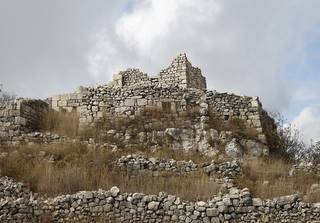
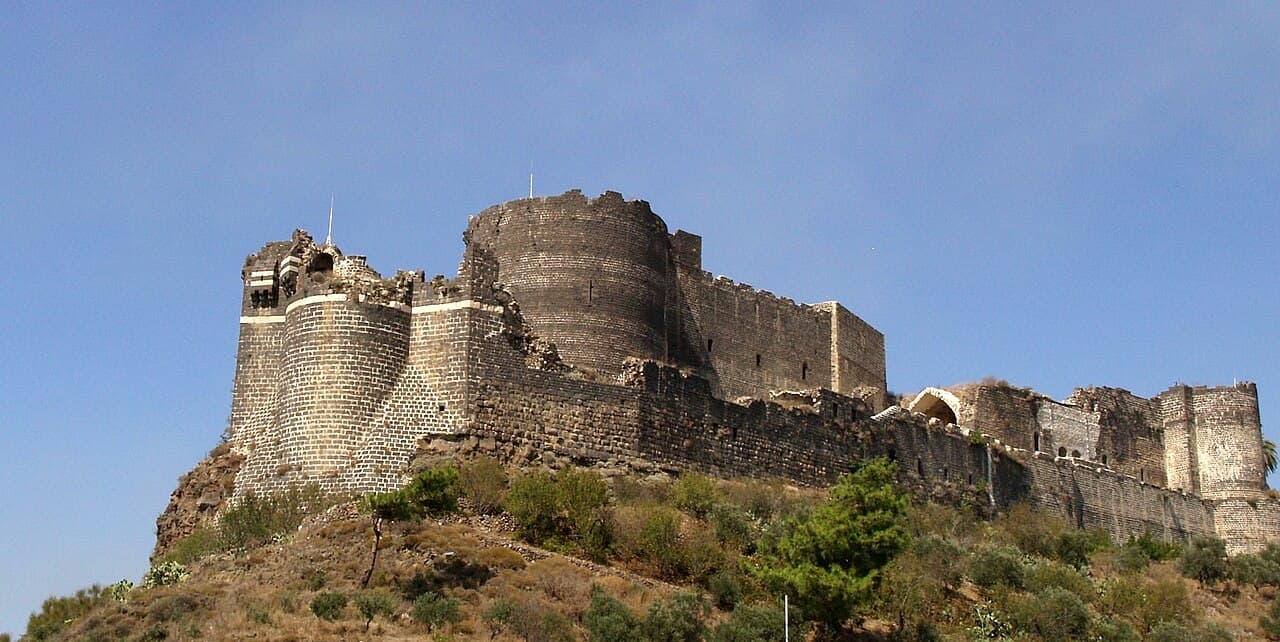
Margat Castle, also known as Qalaat al-Marqab, is a monumental hill castle located near the city of Baniyas in the Syrian Arab Republic. Perched on a volcanic spur of the Jebel al-Ansariye mountains, it stands just 2 kilometers from the Mediterranean coast, commanding a strategic position that controlled the vital coastal road between Tartus and Latakia. This location was crucial in guarding the frontier between the Principality of Antioch and the County of Tripoli during the High Medieval period.
The castle's origins date back to 1062, when a local Muslim landlord first fortified the hilltop. The site changed hands several times during the early 12th century, including brief Byzantine control under Admiral Kantakuzenos in 1104. Soon after, it was seized by Crusader forces under Tancred, Prince of Galilee, integrating it into the Principality of Antioch.
Medieval history and crusader significance
From 1116, the castle was granted as a fief to Reynald Mazoir, a nobleman from Antioch, who began transforming the fortress into a formidable stronghold constructed from distinctive black basalt. Despite falling briefly to Muslim forces in 1133, the Mazoir family regained control by 1140. The castle endured significant damage from a series of earthquakes in 1157, 1170, and 1186, which strained the resources of its owners.
Due to the high cost of repairs and maintenance, the Mazoir family sold Margat to the Knights Hospitaller in 1186. This transfer marked a pivotal moment, as the Hospitallers undertook extensive rebuilding efforts between 1186 and 1205, converting Margat into a massive fortress resembling a ship in shape. Its robust fortifications and strategic location allowed it to withstand the Battle of Hattin aftermath in 1187, remaining one of the few Christian strongholds in the region.
The knights hospitaller era
Under the Hospitallers, Margat became a key military and administrative center. The order controlled the surrounding territory and lucrative trade routes, profiting from pilgrims and travelers. The castle also served as a prison for notable captives, including Isaac Comnenus of Cyprus, captured by Richard I of England during the Third Crusade. The nearby bishop of Valenia used Margat as his headquarters from around 1240. Margat ranked second only to the famed Krak des Chevaliers in size and military importance among Hospitaller fortresses.
The castle endured multiple sieges by Mamluk Sultan Baibars in 1269, 1270, and 1281, all unsuccessful. However, in 1285, Sultan Al Mansur Qalawun launched a determined siege employing trebuchets and sappers who undermined the north wall. After five weeks, Margat fell but was spared destruction out of respect for its defenders. The Mamluks restored the fortress and garrisoned it, integrating it into their provincial administration.
Architectural features and fortifications
Margat Castle occupies a roughly triangular plateau covering about 5.7 hectares atop the volcanic hill. The fortress is enclosed by massive outer walls reinforced with numerous defensive towers. The castle complex included a large fortified suburb that housed diverse communities such as European settlers, Syrian Christians, and Armenians, complete with churches and a hospital. Remarkably, some buildings remained inhabited until the mid-20th century.
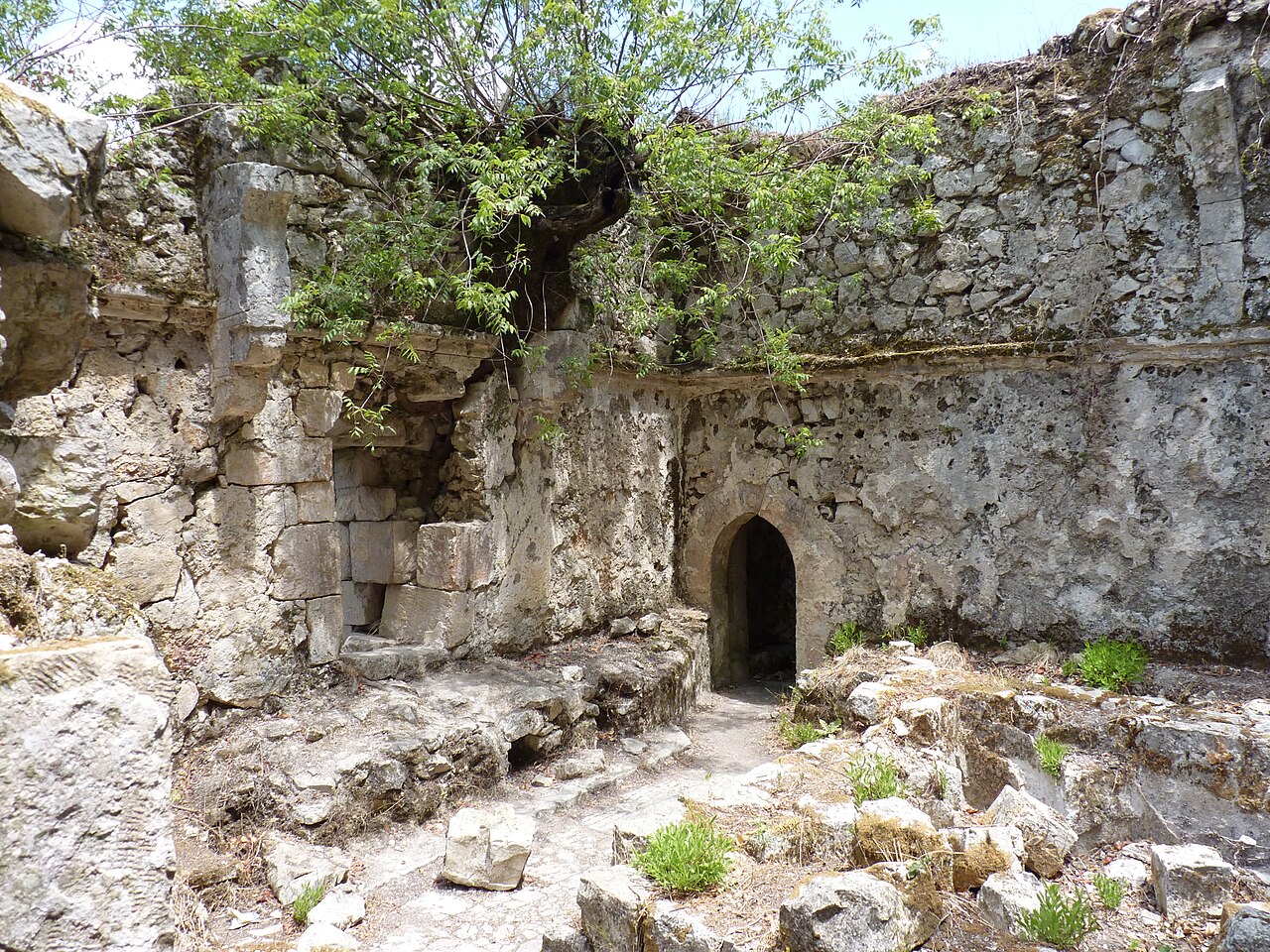
The inner castle, controlled by the Hospitallers, sits at the southern tip of the hilltop and features double curtain walls. The inner walls are taller than the outer, allowing defenders to provide overlapping fields of fire. The castle's rooms form a vaulted ring around the hilltop, creating a continuous defensive circuit.
The donjon and palace wing
The centerpiece of Margat is its imposing circular donjon, positioned on the most vulnerable southern side. Its walls are up to six meters thick, providing exceptional defense. Inside, the donjon contains square rooms, including the commander’s quarters on the first floor, accessed via a protected internal staircase embedded within the walls.
Connected to the donjon is the palace wing, which housed reception rooms for official functions and audiences. Adjacent to this is the castle chapel, built on the site of an earlier Mazoir family residential tower, symbolizing the transition from secular to religious authority under the Hospitallers.
The chapel and crusader frescoes
The chapel features a two-nave layout with cross vaults and a raised apse at the eastern end. It contains the largest known cycle of Crusader frescoes in the region, depicting vivid scenes of Heaven and Hell. The Hell scene spans approximately nine square meters and shows sinners undergoing various punishments across three horizontal registers. The Heaven scene includes four registers illustrating the saved engaged in prayer. These frescoes reflect strong European artistic influences and are unique among Crusader sites.
Living quarters and amenities
East of the chapel lies the dormitory, initially part of the early castle but expanded by 1202 into a grand complex with vaulted rooms, luxurious living quarters for knights, baths, kitchens, and two latrines equipped with early flushing mechanisms. To the west of the donjon is the two-story refectory, with the upper floor reserved for knights and the lower for sergeant brothers. The kitchen features advanced water drainage and sewage systems.
Water management and sanitation
Margat's water management was highly sophisticated. Ceramic pipes channeled rainwater into large vaulted cisterns carved into the basalt rock beneath the central courtyard. These cisterns functioned as a water trap, ensuring a secure supply during sieges or dry spells.
Chapter hall and ceremonial spaces
The chapter hall, where knights held councils, was rebuilt after an earthquake in 1202. The replacement was a large cross-vaulted stone hall supported by two rows of pillars, measuring roughly 12 by 36 meters. Although partially ruined, architectural remains allow reconstruction of its original grandeur. Nearby is the Two-Column Hall, the castle's most ornately decorated room, likely used for important gatherings.
Outer defenses and gate tower
The western edge of the castle is sealed by a fortified outer gate tower overlooking the sea, a critical point for controlling access and monitoring maritime approaches.
Post-crusader history and archaeological efforts
After the Mamluk conquest, Margat became part of the province of Tripoli and later the Ottoman Empire. It continued to serve administrative and military functions until the early 20th century, occupied by Ottoman and later Turkish soldiers. Following this period, the castle gradually fell into ruin.
Recent archaeological excavations by a Syrian-Hungarian team have uncovered invaluable insights into Margat's military, religious, and daily life during the Crusader period. These include the preservation of the exceptional frescoes in the chapel and the restoration of key architectural elements.
Legend speaks of a tunnel connecting Margat Castle to the nearby Boy's Tower, a watchtower lower on the hill, which may have been used to supply the castle during sieges. Visitors today can explore the extensive ruins and marvel at the castle's impressive fortifications and artistic heritage, making Margat Castle a must-see historical site in the region.
Frequently asked questions (FAQ)
- How do I get to Margat Castle?
- Margat Castle is located in Baniyas, Syria, and can be accessed by car or public transportation from nearby cities. The castle is situated on a hilltop, offering stunning views of the surrounding landscape. It is advisable to check local transit schedules or consider hiring a taxi for a more convenient visit.
- What is the historical significance of Margat Castle?
- Margat Castle, built in the 12th century by the Crusaders, played a crucial role in the region's military history. It served as a strategic fortress during the Crusades and was later controlled by various powers, including the Mamluks and Ottomans. The castle's rich history reflects the tumultuous conflicts of the time and is a symbol of medieval architecture in the region.
- When was Margat Castle built?
- Construction of Margat Castle began in 1116 and was completed in the early 12th century. It was initially established as a Crusader fortress to protect the region and facilitate military operations. The castle's design and structure have remained largely intact, offering visitors a glimpse into its historical origins.
- Can I take guided tours of Margat Castle?
- Yes, guided tours of Margat Castle are available and highly recommended for an enriching experience. Knowledgeable guides provide insights into the castle's history, architecture, and significance. Tours typically last around an hour and allow visitors to explore the main structures and learn about the fascinating stories behind them.
- Why is the architecture of Margat Castle unique?
- Margat Castle features a mix of Crusader and Arab architectural styles, showcasing thick walls, towers, and intricate stonework. Its strategic location on a hilltop was chosen for defense, and the layout includes impressive battlements and a well-preserved inner courtyard. This blend of styles and defensive design makes it a remarkable example of medieval military architecture.
- Is it possible to visit Margat Castle year-round?
- Yes, Margat Castle is open to visitors throughout the year, although accessibility may vary depending on seasonal weather conditions. The site can be particularly enjoyable in the spring and fall when temperatures are milder. It is advisable to check for any local holidays or events that may affect visiting hours.
- What are the opening hours of Margat Castle?
- Margat Castle typically opens at 9 AM and closes at sunset, but these hours may vary seasonally. It is best to confirm the current opening times before your visit to ensure you have ample time to explore. Keep in mind that last entry is usually an hour before closing time.
- Are there any nearby attractions to visit while at Margat Castle?
- Yes, there are several nearby attractions, including the ancient city of Baniyas and the beautiful beaches along the Mediterranean coast. Visitors can also explore the historical sites of Tartus, which is not far from the castle. Combining these attractions with a visit to Margat Castle makes for a rich cultural experience.
- What are the ticket prices for visiting Margat Castle?
- The ticket prices for Margat Castle are generally affordable, making it accessible for most visitors. Special rates may apply for students, children, or groups, so it's worth inquiring on-site. Tickets can usually be purchased at the entrance, and it’s advisable to carry cash for convenience.
Photo gallery

Information
Loading map...
Visitor reviews
No reviews yet. Been here? Write the first review and help other travelers!
Write the first reviewVisited this castle? Share your experience
Your review helps other travelers and adds first-hand knowledge to our encyclopedia.