Rojas Castle
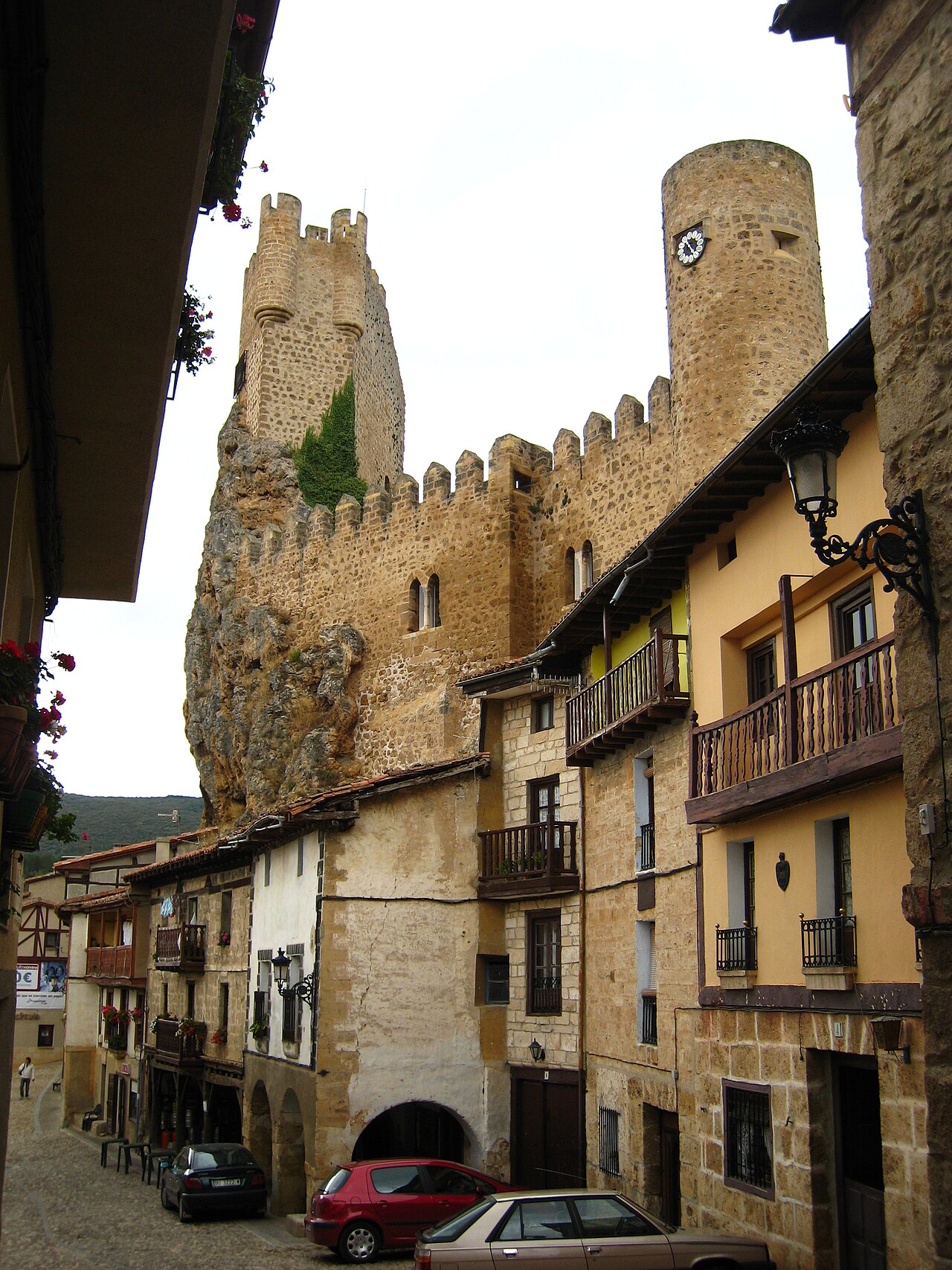
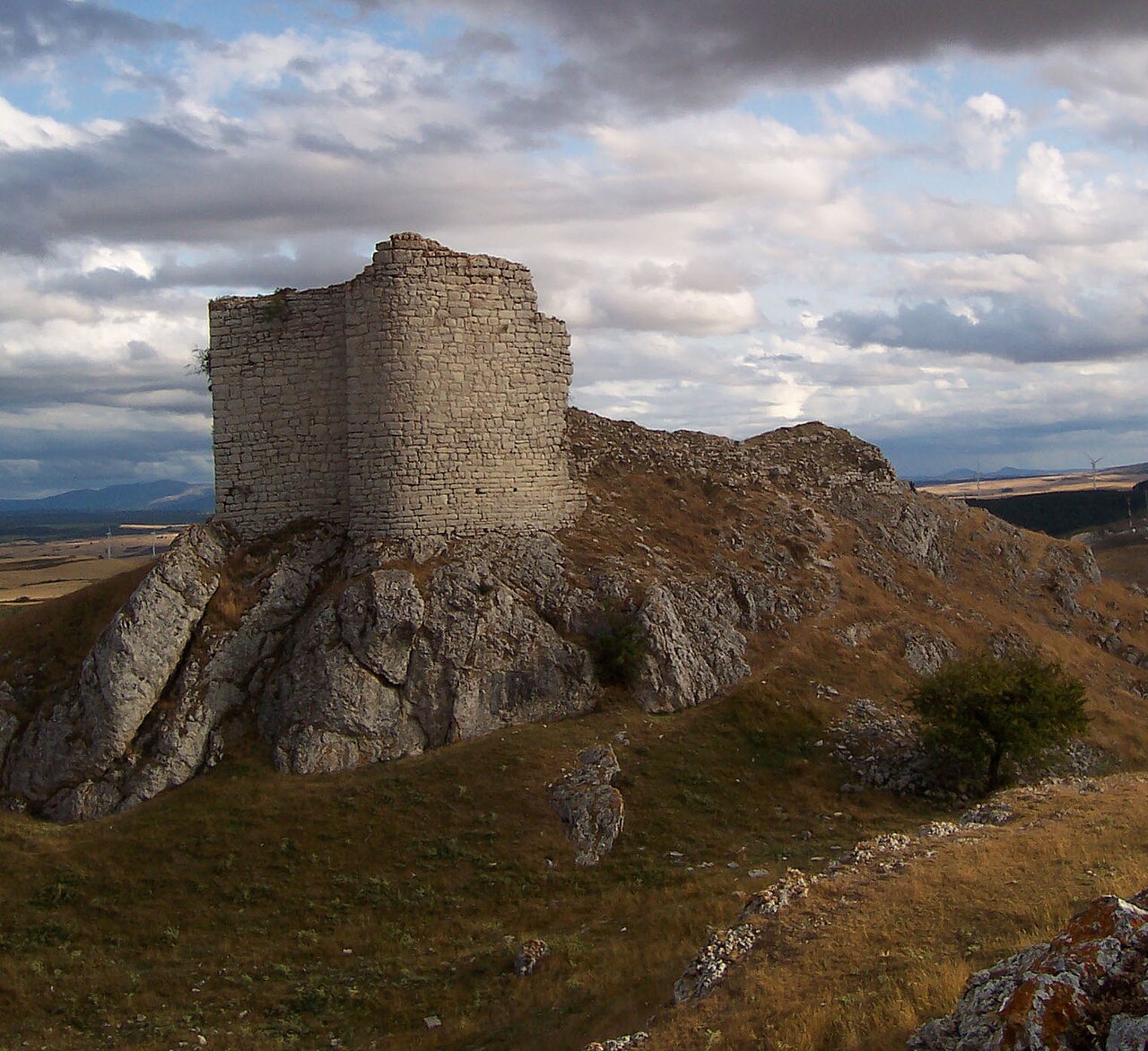
Rojas Castle stands prominently atop a steep rocky hill overlooking the town of Poza de la Sal in northern Spain. This hill castle traces its origins to the late 9th century, when Count Diego Rodríguez Porcelos established the initial fortress as part of a strategic effort to repopulate and secure the territory following the Christian reconquest movements in the Iberian Peninsula. The castle was integral in defending the newly reclaimed lands against Muslim incursions, alongside contemporaneous fortifications such as the Pancorbo fortress and the foundation of the city of Burgos in 884. Its location on a vertical rock outcrop provided a naturally formidable defensive advantage, enhanced by man-made fortifications.
Early medieval origins and strategic significance
The original structure built in the 9th century was likely a simple keep encircled by basic curtain walls and barbicans, typical of early medieval military architecture designed for rapid defense and control of key routes. The fortress served as a military and administrative center during a turbulent era marked by frequent conflicts between Christian and Muslim forces on the northern frontier of the Iberian Peninsula. The castle’s position enabled surveillance over the surrounding plains and nearby settlements, playing a crucial role in asserting control over the region.
14th-century reconstruction by the rodríguez de rojas family
In the 14th century, the castle underwent significant rebuilding under the auspices of the Rodríguez de Rojas family, who transformed the earlier fortifications into a more robust and enduring stone castle. This reconstruction introduced the main features visible today, including strengthened curtain walls that run along the summit of the rocky hill in a north-south orientation. The southern wall retains a well-preserved section with a narrow doorway cut from the rock, which provided internal access within the fortress’s core. The rebuilding effort reflected the evolving military architecture of the late medieval period, emphasizing stronger defensive capabilities and improved living quarters.
Architectural features and defensive layout
The castle’s design capitalized on the natural topography, with a stairway carved directly into the rock ascending approximately 36 meters to the entrance. At the base, two surviving columns likely supported an archway marking the original gateway, controlling access to the fortress. The main tower, or keep, formed the heart of the castle, surrounded by curtain walls and barbicans that created layered defenses against attackers. The strategic use of vertical space and natural rock formations exemplifies medieval military engineering adapted to rugged terrain.
Historical roles and notable events
Throughout its history, Rojas Castle served multiple roles beyond military defense. In the early 16th century, it functioned as a prison, notably detaining Juan Rodríguez de Rojas by order of Charles I of Spain from January to April 1528, highlighting its importance in local governance and judicial matters during the Habsburg era.
During the Peninsular War (1808–1814), the castle regained military significance as a strategic observation post. French troops occupied and partially restored the fortress in 1808 under General Palombini’s command. However, it endured continuous attacks from Spanish partisan forces led by Francisco Longa and Juan de Mendizábal, supported by garrisons from nearby Burgos. These engagements underscored the castle’s enduring tactical value in controlling the surrounding region during the war of independence against Napoleonic France.
Preservation and current condition
Today, Rojas Castle is recognized as a protected historic site under Spanish heritage law, safeguarded since a 1949 decree aimed at preserving castles of cultural and historical importance. The castle remains in a partially preserved state, with significant sections of the curtain walls and foundational structures intact, offering valuable insights into medieval fortification techniques and regional history.
Visitors to the site can observe the dramatic stairway carved into the rock, the remnants of the entrance arch supported by two columns, and the rugged defensive walls that once secured the fortress. The castle’s elevated position affords expansive views over the surrounding plains, forests, and the town of Poza de la Sal, emphasizing its historical role as both a military stronghold and a symbol of territorial control.
The castle’s landscape and surrounding environment
The castle overlooks a landscape historically dotted with rural settlements and agricultural lands, which the fortress helped protect. The adjacent plateau is partially forested, enhancing the natural defenses and providing a scenic backdrop that complements the castle’s imposing silhouette. This integration of natural and constructed defenses exemplifies the strategic considerations of medieval castle builders in northern Spain.
Architectural and cultural significance
Rojas Castle exemplifies the evolution of medieval military architecture from simple early medieval keeps to more complex stone fortifications characteristic of the late medieval period. Its layered defenses, use of natural rock formations, and adaptation to the steep hilltop terrain illustrate advanced defensive planning. The castle also reflects the socio-political dynamics of its era, from frontier defense and noble family power to its role in regional conflicts and governance.
As a cultural landmark, the castle embodies the historical narrative of Poza de la Sal and the broader Burgos province, serving as a tangible link to the region’s medieval past and its strategic importance in the shaping of northern Spain’s territorial boundaries.
Frequently asked questions (FAQ)
- How do I get to Rojas Castle in Poza de la Sal?
- Rojas Castle is located on a steep hill near Poza de la Sal, accessible by a stairway carved into the rock. Visitors should prepare for a climb and wear suitable footwear for the rocky terrain.
- What is the historical significance of Rojas Castle?
- Rojas Castle dates back to the 9th century and played a key role in defending the northern Iberian frontier. It was rebuilt in the 14th century and used during the Peninsular War, reflecting its longstanding military importance.
- Can I visit the interior of Rojas Castle?
- The castle is partially preserved with some accessible sections like the curtain walls and the stairway. However, visitors should note that many parts are ruins and access may be limited for safety reasons.
- When is the best time to visit Rojas Castle?
- The best time to visit is during spring and autumn when the weather is mild. Summers can be hot and winters cold, which might make the climb more challenging.
- Are there guided tours available at Rojas Castle?
- Currently, there is no official guided tour service at Rojas Castle. Visitors can explore the site independently, but local tourist information centers may offer additional historical context.
Information
Loading map...
Visitor reviews
No reviews yet. Been here? Write the first review and help other travelers!
Write the first reviewVisited this castle? Share your experience
Your review helps other travelers and adds first-hand knowledge to our encyclopedia.