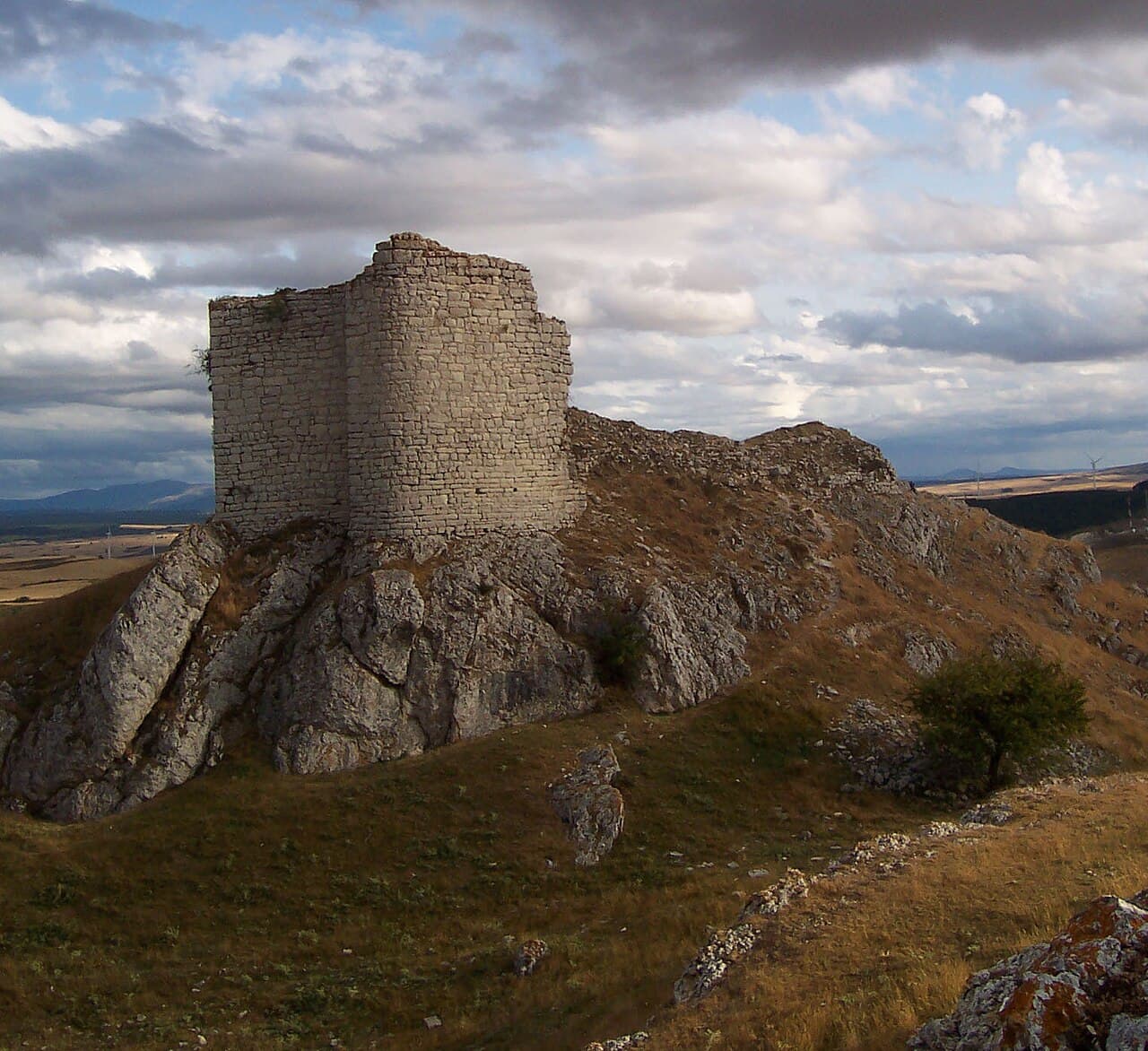
Monasterio de Rodilla Castle
The castle of Monasterio de Rodilla stands as a significant early medieval fortress in the municipality of Monasterio de Rodilla, Spain. Constructed around 884 AD by Count Diego Porcelos, it was part of a strategic network of fortifications designed to protect newly reclaimed Christian territories during the Reconquista. Positioned on a rocky ridge, the castle overlooks the expansive La Bureba region, providing commanding views and control over the surrounding plains.
Historical background and strategic importance
The castle's foundation in the late 9th century marked an important phase in the Christian kingdoms' efforts to consolidate control over lands previously contested by Muslim forces. Alongside other fortresses such as Úrbel and Pancorbo, Monasterio de Rodilla played a critical role in securing the Burgos frontier. The earliest documentary evidence of the castle dates to 1011, underscoring its recognized military and administrative significance by the early 11th century.
Following the assassination of Count García Sánchez de Castilla in 1028, the castle passed into the hands of Sancho III the Great, King of Navarra, through dynastic marriage. During Navarrese control, the fortress was overseen by officials such as Lope Fortunionis in 1048. The castle's ownership shifted again after the Battle of Atapuerca in 1054, when Navarrese forces ceded it back to Castilian rule, reflecting the turbulent political landscape of medieval Spain.
In the late 12th century, the castle's ownership was closely tied to royal alliances. It was included in the dowry of Leonor Plantagenet in 1170 by King Alfonso VIII and later in 1188 as part of the dowry of Doña Berenguela. Throughout the 14th century, the castle changed hands multiple times amid shifting noble power dynamics. By 1398, it became part of the estates of the influential Velasco family, marking a decline in its military importance as the region stabilized.
On April 22, 1949, both the castle and the adjacent Monasterio de Rodilla monastery complex were officially declared Bien de Interés Cultural, recognizing their cultural and historical value and ensuring their protection as heritage sites.
Architectural features and defensive design
The castle's layout is distinctive for its pentagonal plan, which closely follows the natural contours of the rocky ridge it occupies. This design maximizes the use of the terrain for defense, with a natural cliff protecting one flank, integrating the landscape into its fortifications. The elevated position provided extensive visibility over the approaches, crucial for early warning and defense.
Originally, the fortress included a main tower, often referred to as the keep or tower of homage, which served both as a final defensive refuge and the lord's residence. The castle was fortified with three square towers placed strategically around the walls to provide overlapping fields of fire and enhance defense.
The principal entrance was located on the northern side, designed to control access and likely fortified with defensive mechanisms typical of the period. On the southern side, a walled terrace or balcony completed the enclosure, offering an additional platform for defense and surveillance.
Construction materials and Roman influences
The castle was constructed using materials sourced locally, including stones repurposed from the nearby Roman settlement of Tritium Autrigonum. This reuse of Roman masonry is evidenced by a carved stone slab bearing a Latin inscription, once embedded in the castle walls. Although the original slab was stolen, photographic archives preserve its image, highlighting the continuity of occupation and the adaptation of Roman elements in medieval fortifications.
Current condition and preservation
Today, the castle of Monasterio de Rodilla survives primarily as ruins. Significant portions of the main tower and the foundations of the surrounding walls remain visible, offering insights into the original structure and defensive layout. The site also contains a 20th-century mural painting, reflecting later artistic interventions that add a layer of cultural interest beyond the medieval period.
The castle's ruins, combined with the adjacent monastery complex, provide a valuable glimpse into the region's medieval past and the evolution of military architecture during the early medieval period. Its designation as a protected cultural heritage site ensures ongoing efforts to preserve and study this historic fortress.
The castle's role in regional history
Monasterio de Rodilla castle was a key component in the defense and administration of the Burgos frontier during the Reconquista. Its control shifted among powerful rulers and noble families, reflecting broader political changes in medieval Spain. The castle's strategic location and robust fortifications made it a valuable asset in controlling the surrounding territory and securing vital communication and trade routes.
Although its military significance waned after the 14th century, the castle remained a symbol of regional power and heritage. Its association with prominent historical figures and events, including royal marriages and battles, underscores its importance in the medieval history of Castile and Navarra.
Visiting the site
Visitors to the castle can explore the ruins and enjoy panoramic views of the La Bureba region. The site offers a tangible connection to the early medieval period and the complex history of the Reconquista. While only partial remains exist, the castle's layout and surviving architectural elements provide a compelling glimpse into medieval fortification techniques and landscape integration.
The adjacent Monasterio de Rodilla monastery complements the visit, enriching the cultural experience with its religious and historical significance. The site's protected status helps maintain its condition and accessibility for educational and tourism purposes.
Frequently asked questions (FAQ)
- What is the historical significance of Monasterio de Rodilla Castle?
- Monasterio de Rodilla Castle, located in Spain, dates back to the medieval period and is a prime example of Romanesque architecture. It played a crucial role in the defense of the region and reflects the historical importance of the area during the Middle Ages.
- When was Monasterio de Rodilla Castle built?
- The construction of Monasterio de Rodilla Castle began in the 11th century, with significant renovations occurring in subsequent centuries. This long history has contributed to its unique architectural features and cultural heritage.
- Can I visit Monasterio de Rodilla Castle?
- Yes, visitors are welcome to explore Monasterio de Rodilla Castle. It is advisable to check the opening hours and any specific visiting guidelines prior to your trip to ensure a smooth experience.
- What are the opening hours for Monasterio de Rodilla Castle?
- Monasterio de Rodilla Castle typically opens to the public from 10 AM to 6 PM during the tourist season. However, hours may vary, so it is recommended to verify the current schedule before planning your visit.
- Is it possible to access Monasterio de Rodilla Castle with a wheelchair?
- Monasterio de Rodilla Castle has some accessibility features, but due to its historical architecture, certain areas may be challenging for wheelchair users. It is best to contact the castle management for detailed information on accessibility options.
- What is the best time to visit Monasterio de Rodilla Castle?
- The best time to visit Monasterio de Rodilla Castle is during the spring and fall when the weather is mild and pleasant. These seasons also tend to attract fewer tourists, allowing for a more peaceful experience.
- Are there any nearby attractions to visit while at Monasterio de Rodilla Castle?
- Yes, there are several nearby attractions, including the picturesque village of Monasterio de Rodilla and other historical sites in the region. Exploring these areas can enrich your visit and provide a deeper understanding of the local culture.
- What are the ticket prices for Monasterio de Rodilla Castle?
- Ticket prices for Monasterio de Rodilla Castle are generally affordable, with discounts available for students and seniors. For the most accurate and updated pricing information, it is recommended to check the castle's official website before your visit.
Photo gallery

Photo by Ipintza•Public domain
Information
Website
Visit websiteSources & official resources
Verify the information above using these authoritative references.
Loading map...
Visitor reviews
No reviews yet. Been here? Write the first review and help other travelers!
Write the first reviewVisited this castle? Share your experience
Your review helps other travelers and adds first-hand knowledge to our encyclopedia.


