Rohtas Fort
Rohtas Fort is a monumental 16th-century bastioned fortress located near the city of Dina in the Jhelum district of the Punjab province, Pakistan. Commissioned by the Sur emperor Sher Shah Suri in the early 1540s, the fort was constructed under the supervision of his finance minister, Raja Todar Mal. It was built as a strategic military stronghold to suppress the local Gakhar tribes and to defend the empire's northwestern frontier against the Mughal forces. Today, Rohtas Fort stands as one of the largest and most formidable forts in the Punjab region, notable for its imposing defensive architecture and extensive fortifications.
Historical context and strategic importance
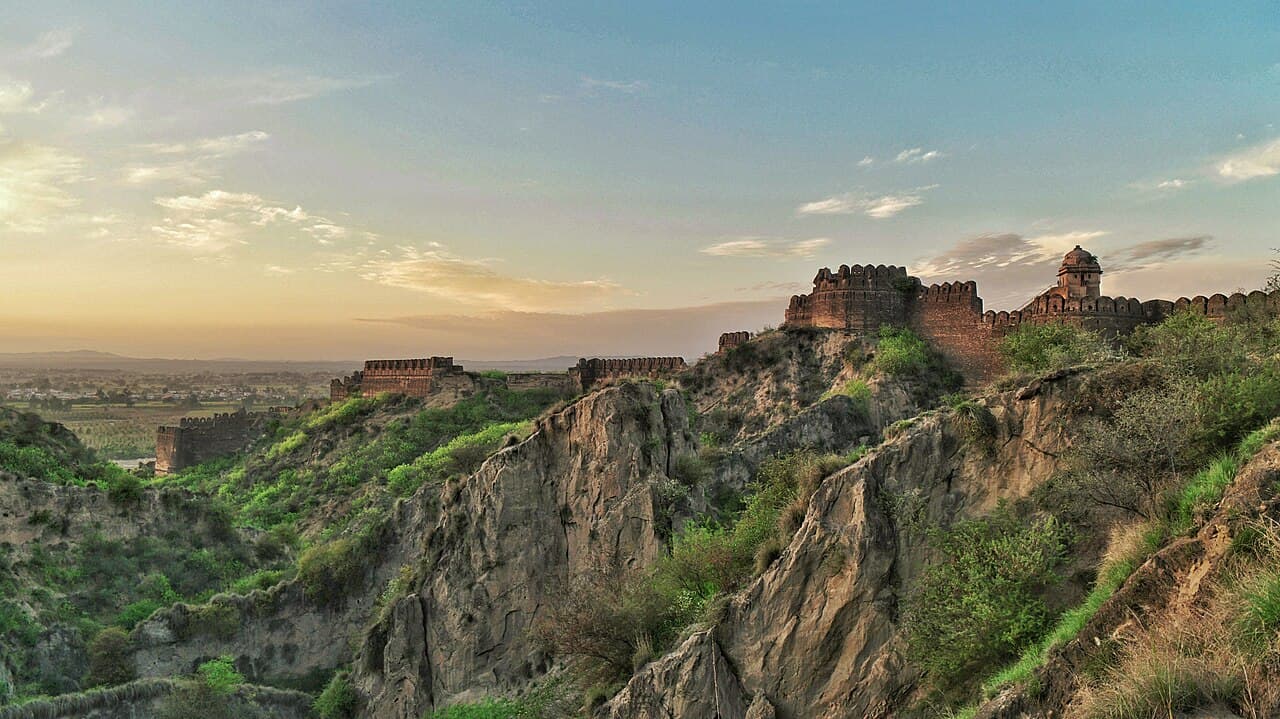
The fort was constructed between 1541 and 1548 during the reign of Sher Shah Suri, who briefly interrupted Mughal rule in northern India. Rohtas Fort's location was carefully chosen on the Pothohar Plateau to control the critical passage between the Punjab plains and the Khyber Pass, a key gateway to the Indian subcontinent. This strategic positioning allowed the fort to serve both as a military base and as a checkpoint for trade and troop movements.
Unlike many forts built primarily for royal residence, Rohtas was designed with a strong emphasis on military defense, reflecting the turbulent period of the mid-16th century. It was intended to prevent the return of Mughal emperor Humayun and to secure Sher Shah Suri's hold on the region.
Architectural features and fortifications
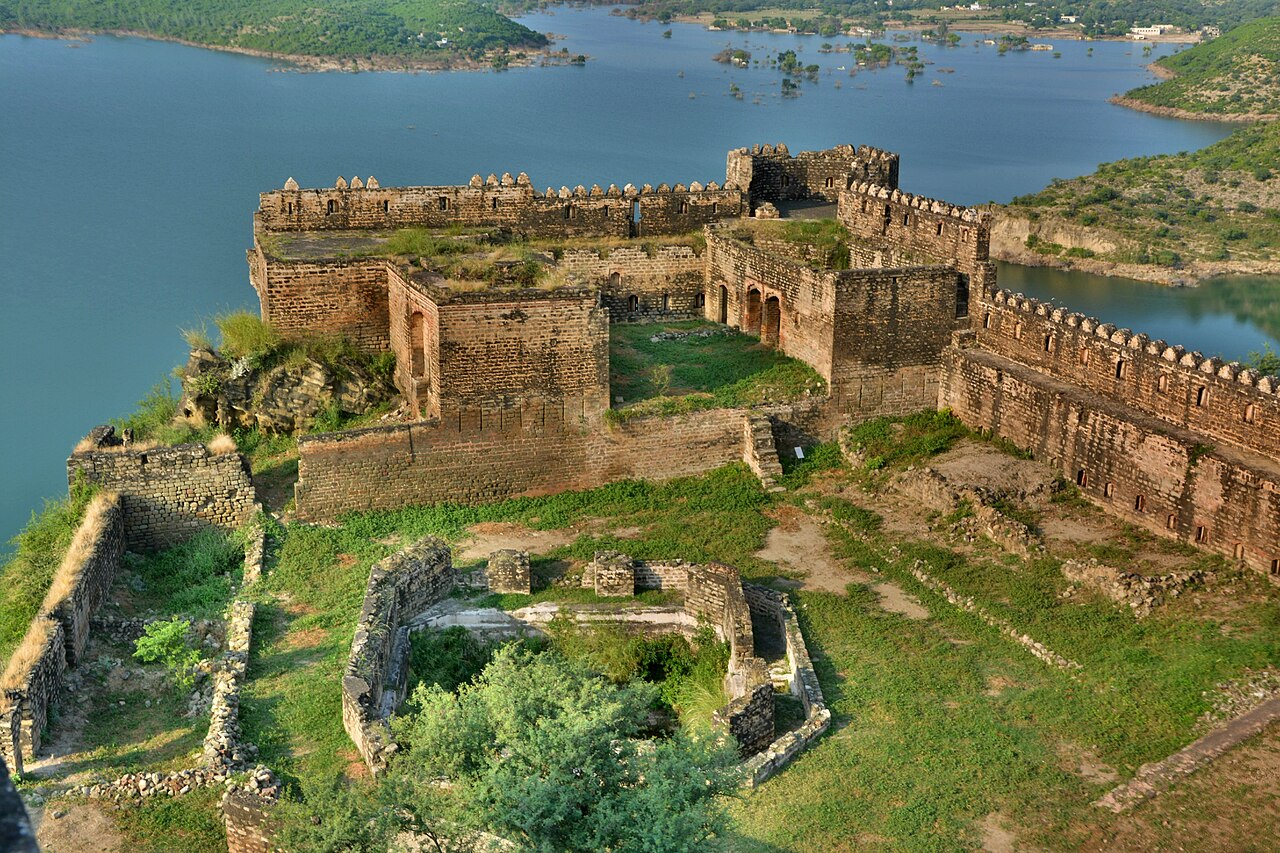
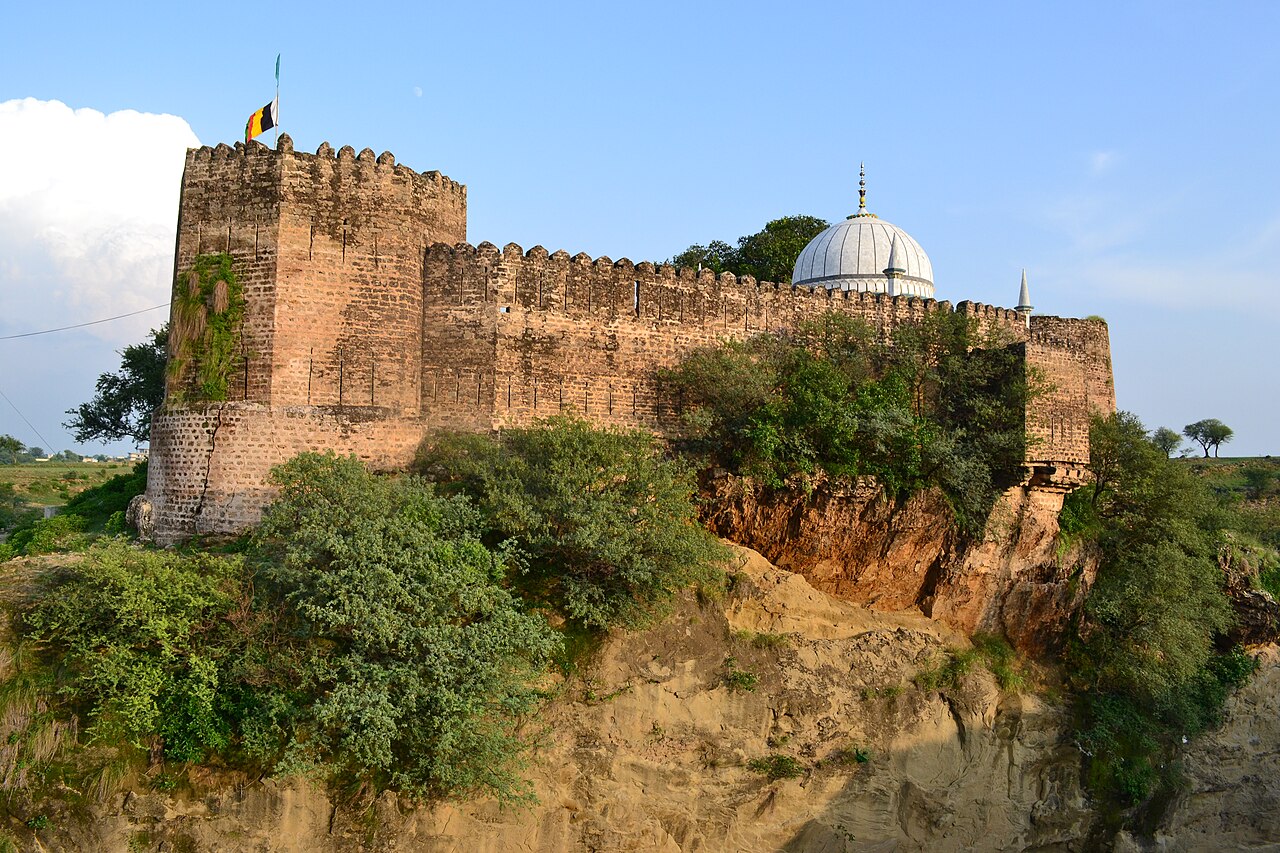
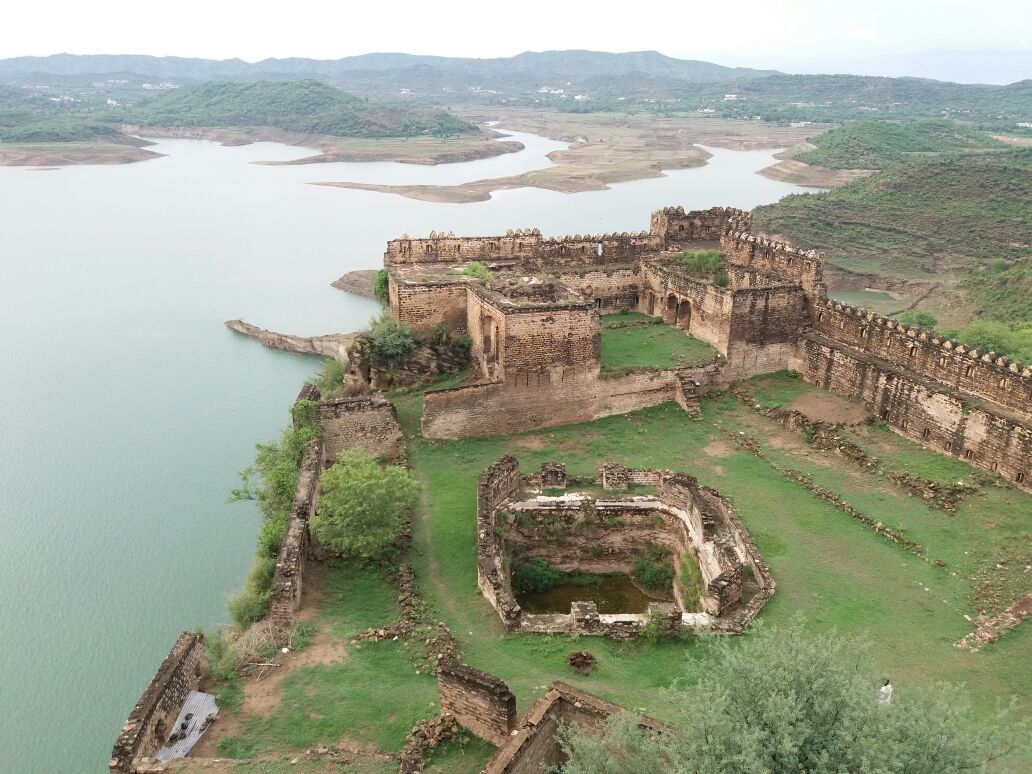
Rohtas Fort is an outstanding example of Muslim military architecture in South Asia, blending influences from Afghan, Persian, and Indian styles. The fortress covers approximately 70 hectares (about 173 acres) and is enclosed by massive walls that stretch over 4 kilometers in length. These walls are punctuated by 68 bastions and 12 monumental gates, each designed with specific defensive purposes.
The walls are built from local stone and lime mortar, with a thickness ranging from 4 to 6 meters, making them exceptionally robust. The fort's design incorporates multiple layers of defense, including ramparts, battlements, and arrow slits, enabling defenders to repel attackers effectively.
Key gates and bastions
- Shah Chandwali Gate: The main entrance, featuring a massive arched gateway with intricate stone carvings and defensive machicolations.
- Langar Khani Gate: Known for its robust construction and strategic position overseeing the approach roads.
- Baradari Gate: Named after the nearby pavilion, it served both defensive and ceremonial functions.
- Bastions: The bastions are semi-circular or rectangular towers projecting from the walls, equipped with embrasures for artillery and archers.
Internal structures and layout
Inside the fort, there are remains of various structures including barracks, a mosque, a hammam (bathhouse), and residential quarters. The fort's layout is irregular, adapting to the natural topography of the plateau, which enhances its defensive capabilities.
The mosque within the fort is a fine example of early Islamic architecture in the region, featuring simple yet elegant arches and domes. The hammam illustrates the importance of hygiene and comfort for the garrison stationed at the fort.
One unique aspect of Rohtas Fort is the presence of Rohtas village within its walls, which has been continuously inhabited since the 16th century. This makes Rohtas one of the few living forts in the world, where modern life coexists with centuries-old military architecture.
Preservation and UNESCO recognition
Rohtas Fort is remarkably well-preserved, retaining much of its original structure and defensive features. It was declared a UNESCO World Heritage Site in 1997, recognized as an "exceptional example of Muslim military architecture of Central and South Asia." The fort's preservation offers valuable insights into the military engineering and architectural practices of the 16th century.
Ongoing conservation efforts aim to protect the fort from environmental damage and urban encroachment, ensuring that its historical and cultural significance endures for future generations.
Visiting Rohtas Fort
Visitors to Rohtas Fort can explore its extensive walls, gates, and internal ruins. The fort's vast area provides opportunities for walking tours that reveal the complexity of its design and the scale of its defensive works. The presence of the living village inside the fort adds a unique cultural dimension to the visit.
While the fort is accessible to the public, visitors are encouraged to respect the site and the residents who live within its walls. Interpretive signage and guided tours are available to enhance understanding of the fort's history and architecture.
Frequently asked questions (FAQ)
- What is the best time to visit Rohtas Fort?
- The best time to visit Rohtas Fort is during the cooler months from October to March when the weather is pleasant for exploring the extensive grounds.
- How do I get to Rohtas Fort from Islamabad?
- Rohtas Fort is approximately 110 kilometers from Islamabad. Visitors can reach the fort by car or bus via the Grand Trunk Road, with a travel time of around two hours.
- Is Rohtas Fort accessible for people with limited mobility?
- Due to its historic nature and uneven terrain, Rohtas Fort has limited accessibility for people with mobility challenges. Visitors should be prepared for walking on rough surfaces and steps.
- Are there guided tours available at Rohtas Fort?
- Yes, guided tours are available at Rohtas Fort, providing detailed historical and architectural information to enhance the visitor experience.
- Can I visit the living village inside Rohtas Fort?
- The village inside Rohtas Fort is inhabited and private. While visitors can observe the village from certain points, respectful behavior and privacy considerations are important.
Photo gallery

Information
Current owner
Government of Pakistan
Loading map...
Visitor reviews
No reviews yet. Been here? Write the first review and help other travelers!
Write the first reviewVisited this castle? Share your experience
Your review helps other travelers and adds first-hand knowledge to our encyclopedia.