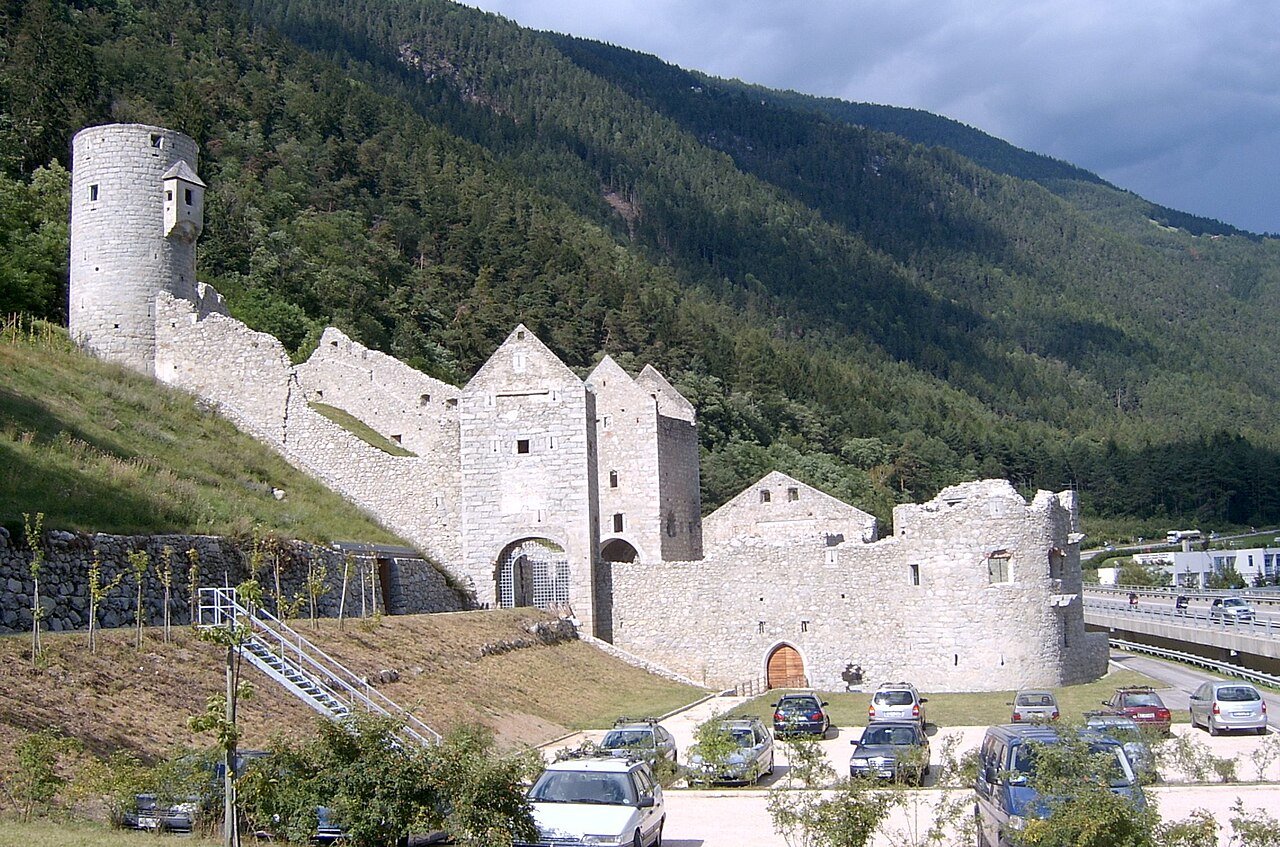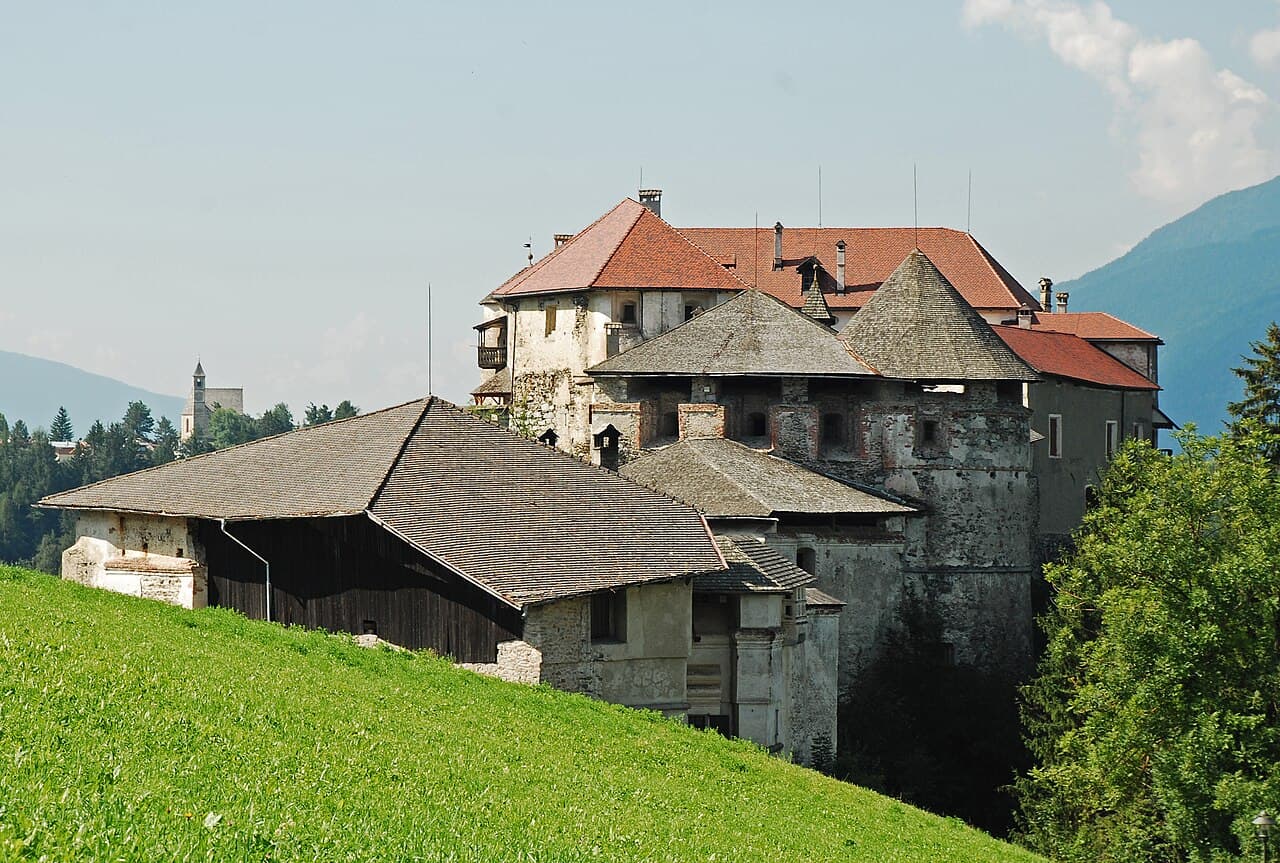
Rodenegg Castle
Rodenegg Castle (Italian: Castel Rodengo) stands as a striking example of a high medieval hill castle perched on a narrow rocky outcrop overlooking the Rienza river gorge in the municipality of Rodengo, South Tyrol, Italy. Founded around 1140 by Friedrich I of Rodank, the castle was originally built as a fortified residence for the Lords of Rodank, a prominent ministerial family of the region. Its commanding position between Sciaves and Rio di Pusteria in the Valle Isarco offered natural defenses with steep cliffs on three sides, making it a formidable stronghold during the high medieval period.
The castle's architecture reflects its evolution from a medieval fortress to a Renaissance residence, with expansions carried out notably in the 16th century by the Counts of Wolkenstein-Rodenegg, descendants of the famous minnesinger Oswald von Wolkenstein. These modifications transformed Rodenegg into a majestic building combining defensive features with refined living quarters, including a chapel dedicated to Saint Michael. The castle remains partially inhabited by the Wolkenstein-Rodenegg family to this day, preserving its continuous noble lineage.
Medieval origins and early history
The initial construction of Rodenegg Castle in the early 12th century was typical of hill castles designed for strategic control of important valley routes. The original complex included a residential tower (donjon) and a palas or great hall, which served both as defensive strongpoints and as domestic spaces for the ruling family. The castle's location on a rock outcrop above the Pustertal road between Schabs and Mühlbach provided excellent surveillance and protection.
The Rodank family held the castle until their extinction around 1300, after which the fortress was administered by local Tyrolean authorities for approximately two centuries. Documents from 1384 refer to the castle as "vest ze Rodenkchen," indicating its recognized status within the regional lordship. This period saw the castle functioning as a territorial administrative center rather than a noble residence.
Renaissance transformation under the wolkenstein-rodenegg family
In 1491, ownership passed to the barons of Wolkenstein-Rodenegg, a noble family notable for their cultural contributions, including the minnesinger Oswald von Wolkenstein. The 16th-century renovations under their stewardship expanded and refined the castle's structure, adding elements that enhanced its residential comfort while maintaining its defensive character.
The castle's layout was extended to include a small palace, an additional tower, and the chapel of Saint Michael, which remains a key architectural and spiritual feature. These additions reflected Renaissance architectural influences and the family's status, blending fortification with the aesthetics and functions of a noble residence.
Notable historical events
Among the castle's darker historical episodes was the witchcraft trial of 1645, when Matthias Perger, nicknamed "Lauterfresser," was accused and executed by burning. His imprisonment in the castle's dungeon, specifically the narrow cell known as the "Lauterfresserloch," remains a tangible reminder of this grim chapter.
Unique artistic heritage: the iwein fresco cycle
One of Rodenegg Castle's most significant cultural treasures is the Iwein cycle, a series of 11 frescoes painted between 1200 and 1220 that depict the medieval epic poem Iwein by Hartmann von Aue. These murals, located in the castle's tap room, are the oldest known secular wall paintings in the German-speaking world, offering invaluable insight into medieval art and literature.
The discovery of the Iwein frescoes in 1972 brought international recognition to Rodenegg Castle, highlighting its importance not only as a military and residential site but also as a center of medieval cultural expression. The frescoes vividly narrate the legend of Iwein, one of the twelve knights of King Arthur's court, and are exceptional for their age, preservation, and narrative detail.
Castle architecture and layout
Rodenegg Castle's defensive design capitalizes on its natural setting, with steep cliffs forming a natural moat on three sides. The castle's core includes the original donjon and palas, surrounded by fortified walls and battlements. The 16th-century expansions introduced Renaissance architectural elements, such as larger windows and more comfortable living spaces, while the chapel added a religious dimension to the complex.
The castle also contains an armory hall, a bakery, and various storerooms and cellars, reflecting its self-sufficiency and the daily life of its inhabitants. The courtyard and garden areas provide open space within the fortified enclosure, offering panoramic views over the Rodengo alpine plateau at approximately 1800 meters elevation.
Modern history and preservation
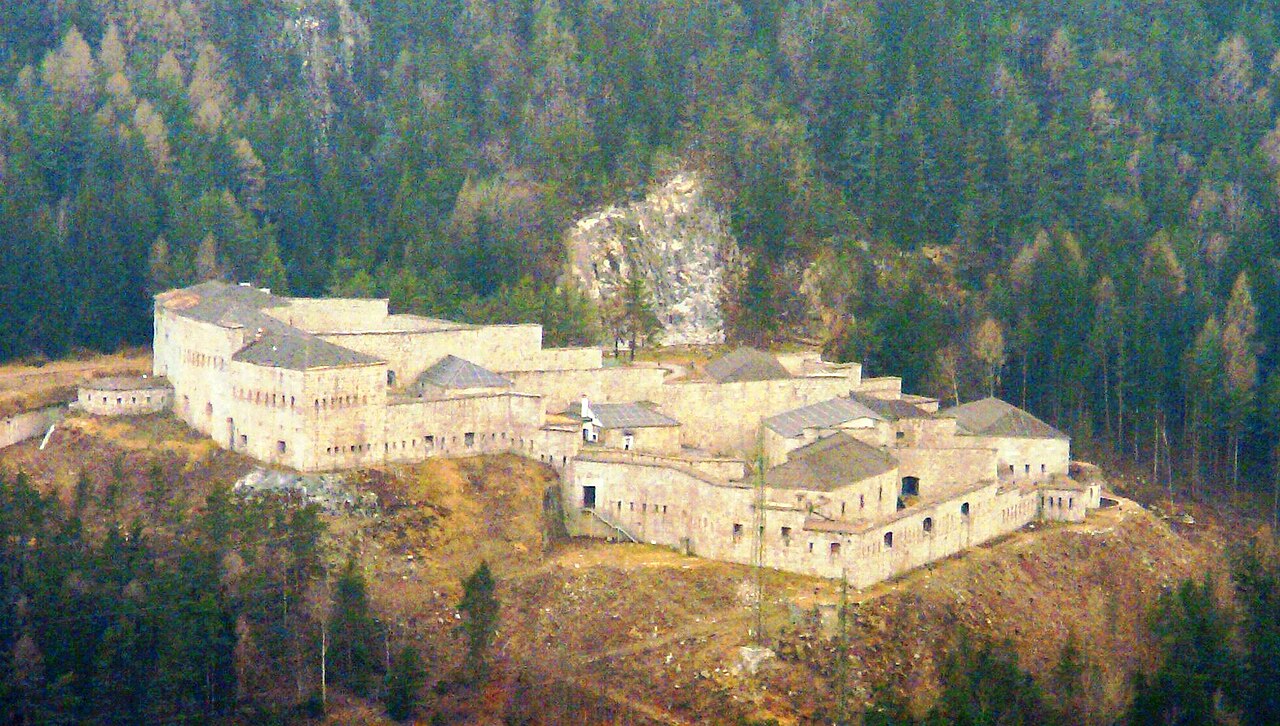
In addition to its medieval and Renaissance heritage, Rodenegg Castle has a modern historical layer in the form of a World War II-era bunker, known as Opera 28, situated at the castle's base. Built between 1939 and 1943 as part of Italy's Alpine Wall defenses, this concrete fortification underscores the site's enduring strategic importance.
Today, Rodenegg Castle is well preserved and partially inhabited by descendants of the Wolkenstein-Rodenegg family. It includes a museum showcasing its rich history, with much of the furniture dating to the late Renaissance period. Visitors can explore the castle's historic rooms, the chapel, and the remarkable Iwein frescoes, gaining a comprehensive understanding of its architectural and cultural evolution over nearly nine centuries.
The castle's combination of natural fortification, architectural development, and cultural treasures makes it a significant heritage site in South Tyrol. Its continuous noble ownership and careful preservation contribute to its status as one of the most majestic and historically rich castles in the region.
Frequently asked questions (FAQ)
- How do I get to Rodenegg Castle?
- Rodenegg Castle is located in Rodengo, Italy, and can be accessed by car or public transportation. If you're traveling by car, there is parking available nearby. The nearest train station is in Bressanone, from which you can take a bus or taxi to the castle.
- What is the historical significance of Rodenegg Castle?
- Rodenegg Castle dates back to the 12th century and played an important role in the region's feudal history. It served as a residence for the noble families of Tyrol and has witnessed numerous historical events over the centuries. Its well-preserved structure offers visitors insight into medieval architecture and life.
- When was Rodenegg Castle last restored?
- Rodenegg Castle underwent significant restoration in the early 21st century, with efforts focused on preserving its historical features while making it accessible to visitors. The restoration work has helped maintain the castle's beauty and structural integrity, allowing it to be enjoyed by future generations.
- Can I take guided tours of Rodenegg Castle?
- Yes, guided tours are available for visitors who wish to learn more about the castle's history and architecture. These tours are typically offered in multiple languages and provide a deeper understanding of the site. It's recommended to check the schedule and book in advance during peak tourist seasons.
- Why is Rodenegg Castle a popular tourist attraction?
- Rodenegg Castle is popular due to its stunning views, rich history, and beautifully preserved architecture. Visitors are drawn to its picturesque setting and the opportunity to explore its grounds and interiors. The castle also hosts various cultural events throughout the year, enhancing its appeal.
- Is it possible to host events at Rodenegg Castle?
- Yes, Rodenegg Castle offers facilities for hosting private events, such as weddings and corporate gatherings. The unique backdrop of the castle provides a memorable setting for any occasion. Interested parties should contact the castle's administration for more details on availability and services.
- What are the opening hours for Rodenegg Castle?
- Rodenegg Castle is typically open to visitors from April to October, with varying hours depending on the season. During peak months, the castle may have extended hours to accommodate more visitors. It's advisable to check the official website for the most current opening times before planning your visit.
- What are the ticket prices for visiting Rodenegg Castle?
- Ticket prices for Rodenegg Castle vary depending on age and the type of tour selected. Generally, discounts are available for children, seniors, and groups. Visitors can purchase tickets on-site or through the official website, where special offers may also be listed.
- What is the best time to visit Rodenegg Castle?
- The best time to visit Rodenegg Castle is during the spring and early autumn months when the weather is mild and the surrounding landscapes are beautiful. These seasons also coincide with fewer crowds, allowing for a more enjoyable experience. Summer can be popular, but expect larger crowds and warmer temperatures.
- Are there any nearby attractions to Rodenegg Castle?
- Yes, Rodenegg Castle is located near several other attractions, including the charming town of Bressanone and the stunning Plose mountain range. Visitors can enjoy hiking, dining, and exploring local culture in the area. Additionally, other historical sites and castles are within a short drive, making it an excellent base for exploration.
Photo gallery

Information
Website
Visit websiteSources & official resources
Verify the information above using these authoritative references.
Loading map...
Visitor reviews
No reviews yet. Been here? Write the first review and help other travelers!
Write the first reviewVisited this castle? Share your experience
Your review helps other travelers and adds first-hand knowledge to our encyclopedia.