Fortezza Fortress
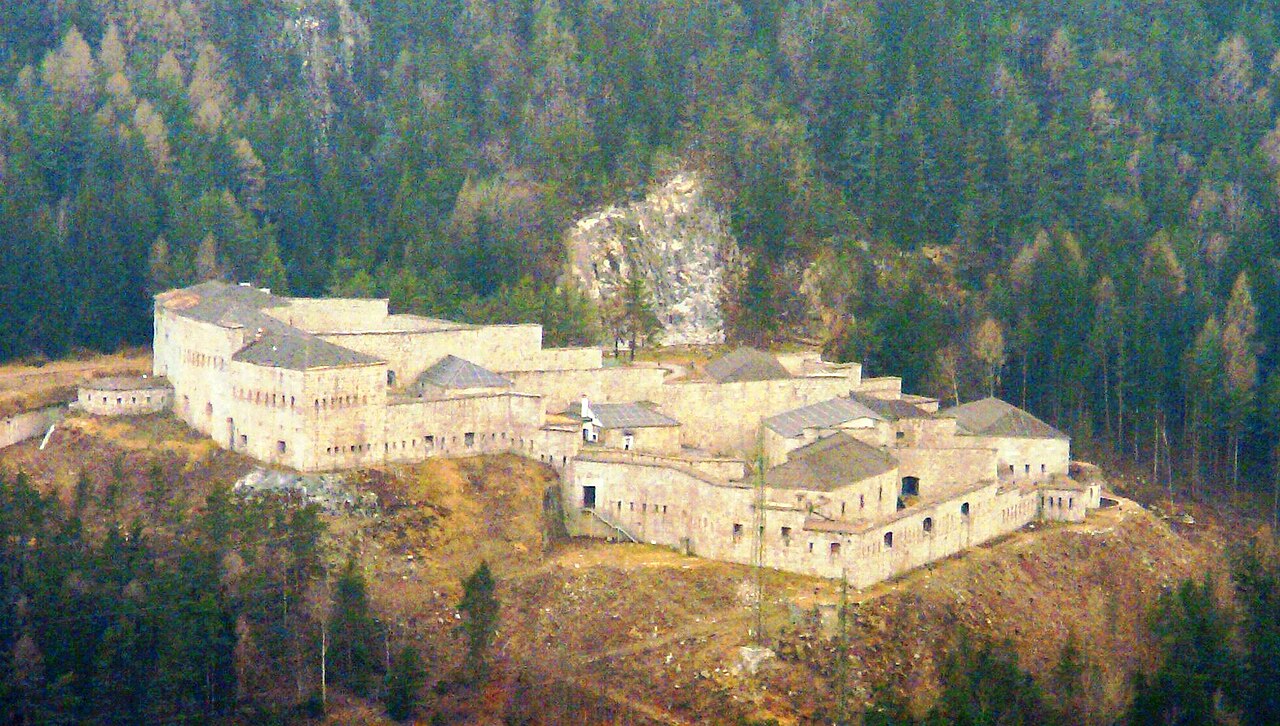
Fortezza Fortress, also known by its German name Franzensfeste, stands as one of the most imposing military fortifications in the Alpine region. Constructed between 1833 and 1838 under the reign of Ferdinand I of Austria, this fortress was designed to control and safeguard the vital traffic connection across the Alta Valle Isarco via the Brenner Pass. Spanning an extensive area of approximately 20 hectares, it represents a monumental example of 19th-century military architecture in a strategically significant mountain pass.
Architectural design and structure
The fortress is a complex labyrinth of rooms, corridors, and stairways, ingeniously integrated into the Alpine terrain. Its design reflects the military engineering principles of the early modern period, focusing on defense and control over the surrounding landscape. The fortress is divided into two main parts: the upper section, which houses the ammunition caverns carved into the rock, and the lower section, which contains the barracks for the garrison. These two parts are connected by a remarkable stone stairway consisting of 433 steps, hewn directly from the mountain rock, illustrating the fortress's vertical integration with the natural environment.
Defensive features
Fortezza Fortress was designed as a stronghold to withstand sieges and control the Brenner Pass, one of the most important Alpine transit routes. The fortress features thick stone walls, ramparts, and strategically placed bastions that allowed defenders to cover all approaches. The extensive network of underground passages and chambers provided secure storage for munitions and shelter for troops. Although built for war, the fortress was never directly involved in combat, serving primarily as a deterrent and control point.
Historical context and significance
The fortress was commissioned by Ferdinand I of Austria during a period of heightened military tension in Europe. Its construction mobilized a workforce of between 3,000 to 4,000 men simultaneously, reflecting the scale and urgency of the project. The name Franzensfeste honors Emperor Francis I of Austria, under whose rule the fortress was planned and built.
Strategically, the fortress was intended to protect the Austrian Empire's southern borders and to secure the crucial Brenner Pass, a key transit route between northern and southern Europe. This role underscored its importance in the broader network of Alpine fortifications designed to control mountain passes and trade routes.
20th-century developments
In the 1930s, the Italian army reinforced the area surrounding Fortezza Fortress by constructing several pillboxes and additional fortifications. These additions aimed to bolster the fortress's defensive capabilities in the context of evolving military technology and geopolitical threats leading up to World War II. During the war, Fortezza Fortress was reputedly considered as a possible hiding place for the hoard of gold belonging to the Italian National Bank, highlighting its perceived security and strategic value.
Current status and cultural role
Today, Fortezza Fortress is well preserved and accessible to the public through guided tours. The fortress houses a museum that offers a permanent exhibition detailing its history, architectural features, and the broader historical context of the region. The exhibition also connects the fortress's past with present-day cultural and historical narratives, providing visitors with a comprehensive understanding of its significance.
Beyond its historical and military importance, Fortezza Fortress serves as a venue for contemporary cultural events, including the European Biennial of Contemporary Art Manifesta7. It hosts various cultural activities that bring new life to this historic site, blending its military heritage with modern artistic expression.
Visitor experience
Visitors to Fortezza Fortress can explore its extensive network of rooms, corridors, and stairways, gaining insight into 19th-century military life and engineering. The guided tours provide detailed explanations of the fortress's construction, strategic purpose, and historical context. The museum's exhibitions enrich the visit with artifacts, photographs, and interpretive displays.
The fortress's location in the scenic Alta Valle Isarco offers additional opportunities for exploring the natural beauty of the Alpine region. Its commanding position overlooking the Brenner Pass allows visitors to appreciate the strategic importance that shaped its construction.
Frequently asked questions (FAQ)
- How do I get to Fortezza Fortress?
- Fortezza Fortress is located in Franzensfeste, Italy, easily accessible by car or public transport. The nearest train station is Franzensfeste, from where you can walk to the fortress in about 15 minutes. There is also ample parking available for visitors who choose to drive.
- What is the historical significance of Fortezza Fortress?
- Fortezza Fortress, built in the 19th century, served as a critical military fortification during the Austro-Hungarian Empire. Its strategic location allowed it to control the vital transit routes through the Alps. Today, it stands as a testament to military architecture and the region's rich history.
- When was Fortezza Fortress constructed?
- Construction of Fortezza Fortress began in 1833 and was completed in 1838. Its design was influenced by the need for modern defense mechanisms during a time of military innovation. The fortress has preserved its historical features, making it a fascinating site for history enthusiasts.
- Can I enter the fortress and explore its interiors?
- Yes, visitors can enter Fortezza Fortress and explore its interiors. Guided tours are available, providing insights into the fortress's history and architecture. Some areas may have restricted access, but there are plenty of open spaces to enjoy.
- Why is Fortezza Fortress considered an architectural marvel?
- Fortezza Fortress showcases a blend of military functionality and aesthetic design, featuring thick stone walls and bastions. Its unique star-shaped layout is designed for optimal defense, reflecting the architectural trends of the 19th century. The fortress's preservation allows visitors to appreciate its structural ingenuity.
- Is it possible to visit Fortezza Fortress year-round?
- Yes, Fortezza Fortress is open to visitors year-round, although specific hours may vary by season. It is advisable to check the official website for the latest information on opening hours and any seasonal events. Visiting in spring and autumn offers pleasant weather and fewer crowds.
- What are the ticket prices for visiting Fortezza Fortress?
- Tickets for Fortezza Fortress are reasonably priced, with discounts available for students and seniors. Children under a certain age may enter for free, making it a great family-friendly destination. Be sure to check for any special events that may offer reduced or waived admission fees.
- What are some nearby attractions to visit after exploring the fortress?
- After visiting Fortezza Fortress, you can explore the beautiful landscapes of the surrounding South Tyrol region. Nearby attractions include the charming town of Bressanone and the scenic Plose Mountain, perfect for hiking and outdoor activities. The area is rich in culture and offers numerous opportunities for sightseeing and relaxation.
- What is the best time to visit Fortezza Fortress?
- The best time to visit Fortezza Fortress is during the spring and fall months when the weather is mild and the crowds are smaller. Summer can be hot, while winter may bring snow, providing a different but beautiful atmosphere. Each season offers a unique perspective on the fortress and its surroundings.
Information
Loading map...
Visitor reviews
No reviews yet. Been here? Write the first review and help other travelers!
Write the first reviewVisited this castle? Share your experience
Your review helps other travelers and adds first-hand knowledge to our encyclopedia.