Rockingham Castle
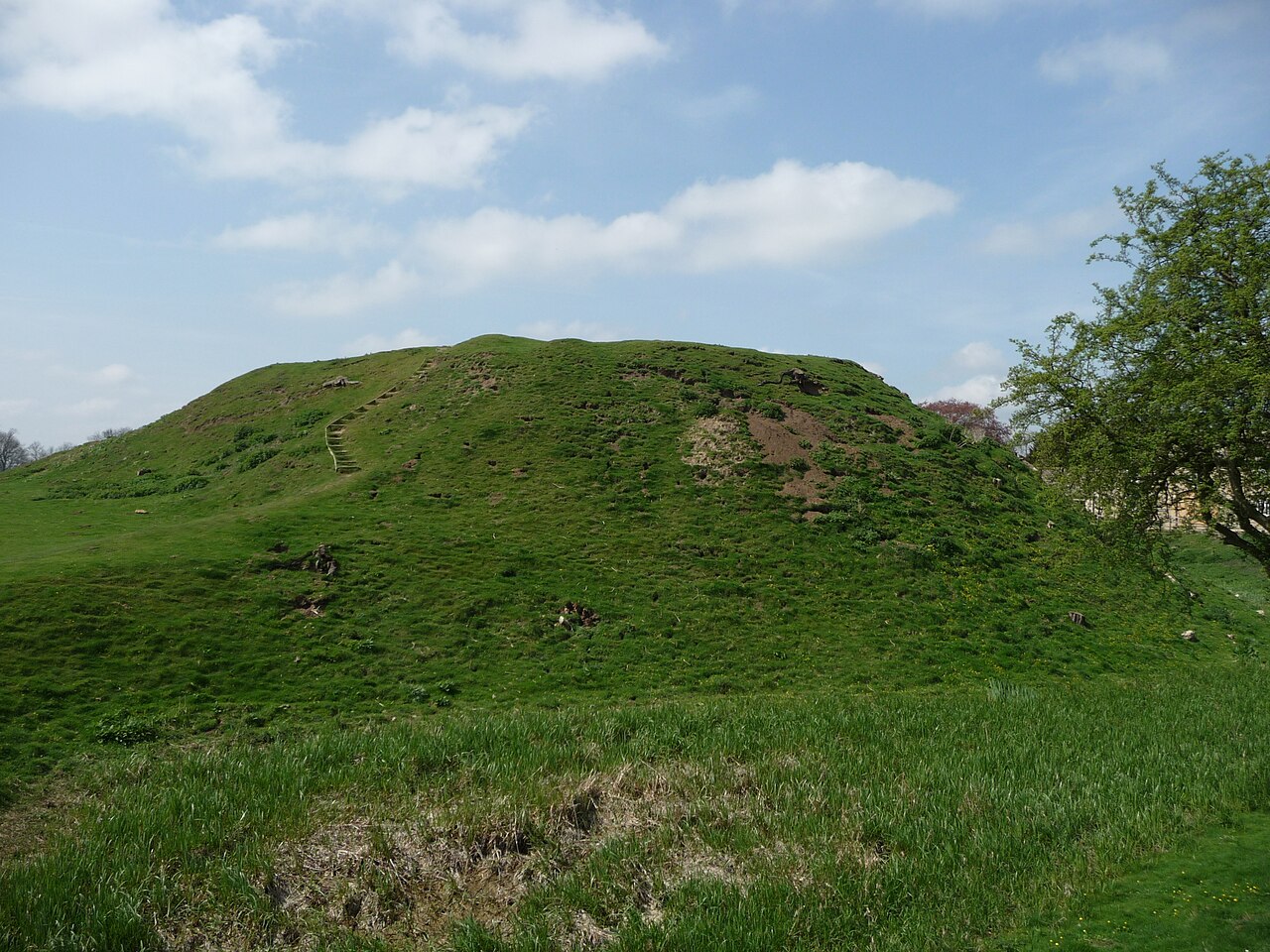
Rockingham Castle stands as a remarkable example of a Norman hill castle in the historic county of Northamptonshire, England. Established shortly after the Norman Conquest in the 11th century, it has evolved from a wooden Motte and Bailey fortress into a fortified stone stronghold and later a Tudor noble residence. The castle's strategic location atop a raised earthwork mound overlooking the Welland Valley and adjacent to the vast Rockingham Forest made it an important royal hunting lodge and defensive site throughout the medieval period.
The initial construction began under William the Conqueror as a wooden fortification typical of early Norman military architecture. Within three decades, his son, William II (William Rufus), replaced the timber structures with a sturdy stone keep atop the motte and surrounded the outer bailey with thick stone curtain walls. This transition from wood to stone reflected the castle's growing significance as a royal stronghold and administrative center.
Medieval origins and royal significance
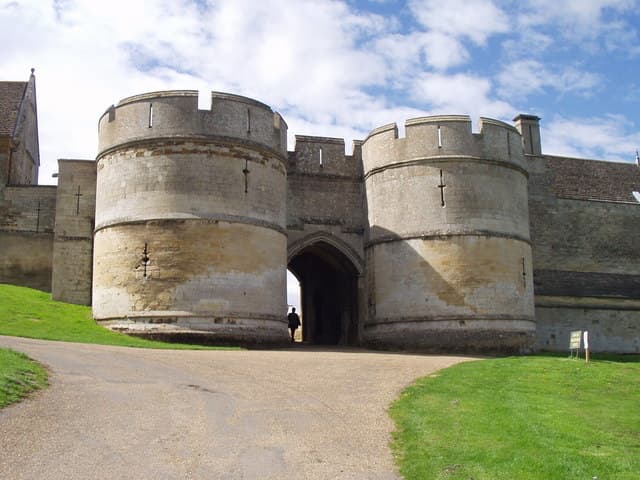
The castle's early history is closely tied to the Norman monarchy. In 1095, it hosted an important council involving King William II and Archbishop Anselm of Canterbury to discuss ecclesiastical appointments, underscoring its role as a venue for high-level political and religious negotiations. During the 13th century, under the reign of King Henry III, the castle's defenses were notably enhanced with the construction of a distinctive twin D-shaped tower gatehouse. This gatehouse, with its semicircular towers and fortified entrance passage, exemplifies medieval military architecture designed to repel attackers and control access.
Edward III was the last monarch to visit Rockingham while it remained a royal possession, after which the castle's importance as a royal fortress declined. By the late 15th century, the castle had fallen into partial disrepair, reflecting the shifting political and military landscape of England.
Tudor transformation and private ownership
During the reign of Henry VIII, the castle transitioned from a military fortress to a noble residence. It was leased to Sir Edward Watson, who undertook significant renovations to convert parts of the medieval structure into a comfortable Tudor home, complete with gardens. This transformation illustrates the broader Tudor trend of adapting castles for domestic and aesthetic purposes rather than purely defensive roles.
Sir Edward Watson's grandson, Lewis Watson, eventually purchased Rockingham Castle from the Crown, establishing a hereditary lineage that would see the family rise through the ranks of the British aristocracy, acquiring titles such as baronet, baron, earl, and marquess associated with the estate. The Watson family's stewardship has continued into modern times, with the current owner, James Saunders Watson, maintaining the castle as a private residence and venue for events.
Role in the english civil war and aftermath
Rockingham Castle played a role in the turbulent events of the English Civil War in the 1640s. Occupied by Royalist forces, it was the site of skirmishes and ultimately captured in 1643 by Parliamentarian troops under Henry Grey, 1st Earl of Stamford. Following its capture, the castle was deliberately slighted in 1646 to prevent further military use, resulting in damage to its walls and fortifications.
Despite this damage, significant portions of the castle, including the 13th-century gatehouse and curtain walls, have survived, preserving much of its medieval character. The castle was restored and adapted for peaceful residential use in the late 17th and 18th centuries, reflecting the changing fortunes of English castles in the post-medieval era.
Architectural features and layout
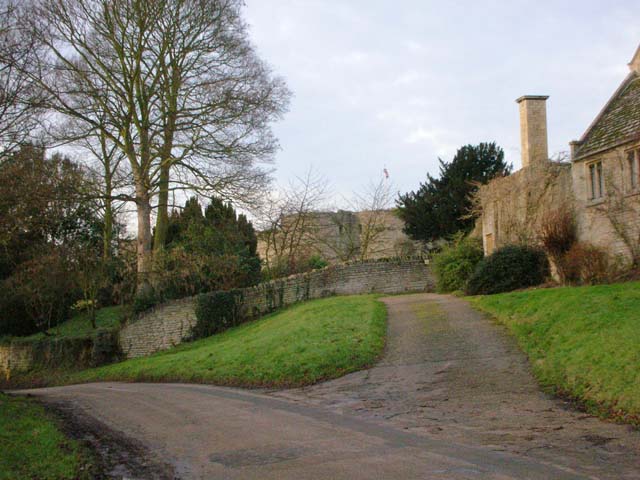
Rockingham Castle is laid out on a rectangular plan surrounded by robust stone curtain walls that enclose a variety of buildings, including halls, chambers, and living quarters. The castle's elevated position on a motte provides commanding views over the surrounding Welland Valley, an important feature for both defense and hunting.
The most striking architectural element is the east-facing twin D-shaped tower gatehouse, constructed in the 13th century. This gatehouse features two large semicircular towers flanking a central entrance passage secured by a rounded drop arch. Originally, the entrance was protected by a portcullis and heavy wooden doors, with internal chambers and doorways providing defensive positions and control points. The gatehouse exemplifies medieval fortification design intended to withstand sieges and control access effectively.
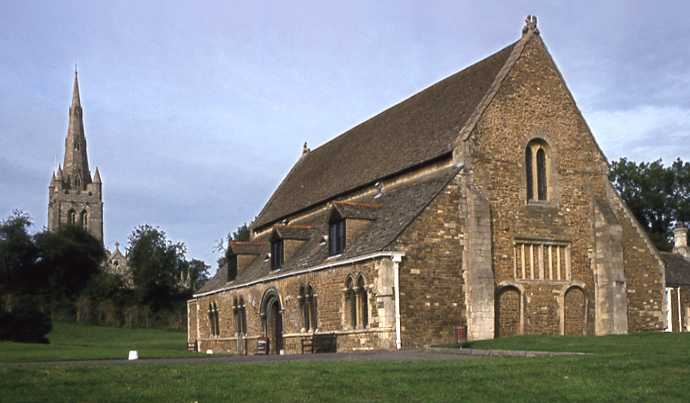
Within the castle grounds, Tudor-era modifications introduced a residential wing and formal gardens, demonstrating the shift from military fortress to noble estate. The estate today also includes a cricket pitch, home to the Old Eastonians Cricket Club, blending traditional leisure activities with the historic landscape.
Cultural significance and modern use
Beyond its architectural and historical importance, Rockingham Castle holds cultural significance. It is linked to the celebrated author Charles Dickens, who is believed to have drawn inspiration from the castle for the fictional Chesney Wold in his novel Bleak House. This literary connection adds a layer of cultural heritage to the site.
In recent decades, the castle and its grounds have served as filming locations for various television and film productions, showcasing its well-preserved medieval and Tudor features to a broad audience. The castle remains a private residence but is occasionally opened for public events, allowing visitors to experience its rich history and architectural grandeur.
Frequently asked questions (FAQ)
- When was Rockingham Castle originally built?
- Rockingham Castle was originally built in the 11th century by the Normans shortly after their conquest of England.
- What are the key architectural features of Rockingham Castle?
- Key features include the 13th-century twin D-shaped tower gatehouse, stone curtain walls, a stone keep atop the motte, and Tudor residential additions.
- What role did Rockingham Castle play in the English Civil War?
- During the English Civil War, Rockingham Castle was occupied by Royalist forces and captured by Parliamentarians in 1643, after which its walls were deliberately damaged to prevent further military use.
- Is Rockingham Castle open to the public?
- Rockingham Castle remains a private residence but is occasionally open for special events and filming, so public access is limited and should be checked in advance.
- Why is Rockingham Castle historically significant?
- The castle is historically significant for its origins as a Norman royal fortress, its role in medieval politics, its Tudor transformation, and its involvement in the English Civil War.
Photo gallery

Information
Sources & official resources
Verify the information above using these authoritative references.
Loading map...
Visitor reviews
No reviews yet. Been here? Write the first review and help other travelers!
Write the first reviewVisited this castle? Share your experience
Your review helps other travelers and adds first-hand knowledge to our encyclopedia.