Rock of Cashel
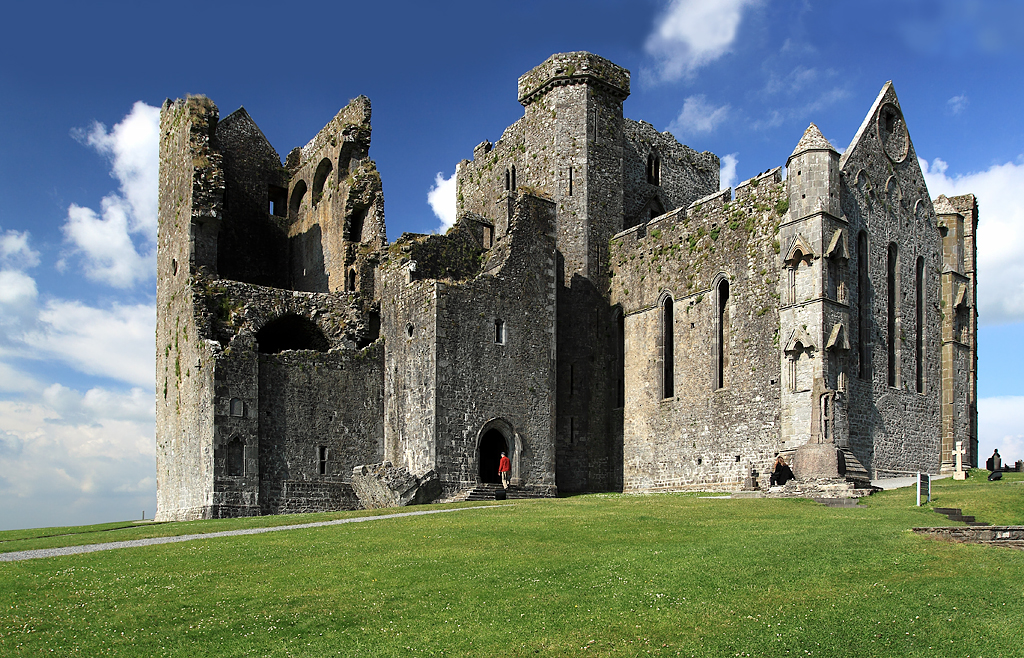
The Rock of Cashel, also known as St. Patrick's Rock or Carraig Phádraig in Gaelic, is a remarkable hill castle located on a 65-meter-high limestone plateau in County Tipperary, Ireland. This iconic site was the traditional seat of the kings of Munster for several centuries prior to the Norman invasion and remains one of the most significant collections of Celtic art and medieval architecture in Europe. The castle complex is renowned for its rich historical legacy, architectural diversity, and cultural importance, making it a must-visit destination for those interested in Irish history and heritage.
The Rock of Cashel's origins trace back to at least the 5th century, when it served as the fortress of the Eóganachta clan, who established their dominance over much of southern Ireland from this strategic location. According to local legend, the rock itself was formed when St. Patrick banished Satan from a cave in the nearby Devil's Bit mountain, causing the rock to fall and land at Cashel. This legend is intertwined with the site's spiritual significance, as Cashel is reputed to be the place where St. Patrick converted the King of Munster, marking the beginning of its role as a religious center.
Historical significance and royal heritage
For centuries, the Rock of Cashel was the political and royal heart of Munster. It was here that Brian Boru, one of Ireland's most famous High Kings, was crowned in 977. Brian Boru used Cashel as his capital before ascending as High King of Ireland around 1005. His descendants, the powerful O'Brien clan, continued to rule from Cashel, maintaining its importance as a royal stronghold.
The site's royal era came to a turning point in 1101 when King Muirchertach Ua Briain gifted the fortress to the Church. This transfer marked the transformation of Cashel from a royal seat into a prominent ecclesiastical center, becoming the residence of the Archbishop of Cashel. The castle complex then took on a new religious significance that lasted through the medieval period.
Architectural features and medieval structures
Defensive layout and round tower
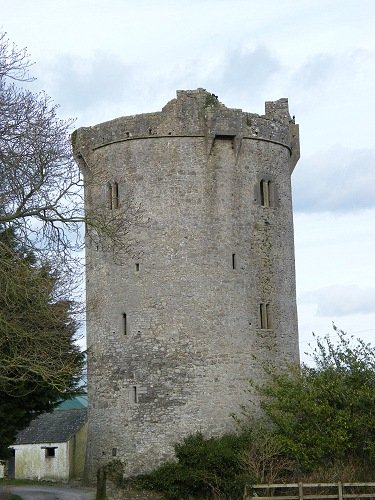
The Rock of Cashel complex is enclosed by a substantial defensive wall that outlines the perimeter of the limestone plateau. Among the oldest and most striking structures is the round tower, constructed around 1100. This tower stands approximately 28 meters tall with an entrance raised 3.6 meters above ground level, a typical defensive feature to deter invaders. Originally built using dry stone techniques, modern conservation efforts have reinforced it with mortar for stability. The tower's shallow foundation, about one meter deep, anchors it securely to the rocky hill.
Cormac’s chapel: a romanesque masterpiece
Cormac’s Chapel, begun in 1127 and consecrated in 1134, is a highlight of the complex and one of Ireland’s finest examples of Romanesque architecture. Constructed mainly from sandstone, the chapel features a nave and chancel that are slightly misaligned, a design choice influenced by Germanic architecture brought by carpenters from Regensburg. The chapel is notable for its barrel-vaulted roof, vaulted ceilings, wide arches, and interior and exterior arcading. Its twin towers mark the junction between nave and chancel, and the building includes the oldest known stairs in Ireland.
The chapel's decorative elements include intricately carved tympana above both doorways and an ogive-arched chancel, an early Gothic feature. Inside, it houses Ireland's only surviving Romanesque frescoes, although these have suffered water damage over time. Recent preservation work has enclosed the chapel within a protective structure to safeguard these invaluable paintings from further deterioration.
The gothic cathedral and vicars choral hall
The cathedral, constructed between 1235 and 1270, represents the Gothic architectural style with its cruciform, aisleless design and central tower. Attached to its west side is a large residential castle, underscoring the site's dual role as both a religious and administrative center.
The Hall of the Vicars Choral, built in the 15th century and restored in 1975, serves as the main entrance to the complex. This hall originally housed eight lay singers who supported the cathedral's liturgical functions. The upper floor contained their living quarters, reflecting the social organization of ecclesiastical communities in medieval Ireland. The hall also displays the impressive St. Patrick’s Cross, a heavily weathered 12th-century stone cross depicting Christ and a bishop figure, standing over seven feet tall.
Notable historical events and decline
The Rock of Cashel was the site of significant historical events, including the homage paid to Henry II of England in 1172, symbolizing the growing influence of English rule in Ireland. In 1647, the castle was besieged by English Parliamentarian forces under Murrough O’Brien, Earl of Inchiquin, resulting in a massacre that marked a dark chapter in its history.
Later, in the mid-18th century, the site suffered further decline when the cathedral roof was deliberately destroyed by Anglican Archbishop Arthur Price. This act contributed to the ruinous state of the cathedral and diminished the site's religious prominence.
Modern conservation and visitor experience
Today, the Rock of Cashel is one of Ireland’s most visited archaeological sites, attracting tourists from around the world. Extensive restoration and conservation efforts have been undertaken to preserve its architectural treasures. Notably, the Hall of the Vicars Choral was restored in 1975, and ongoing work continues to protect Cormac’s Chapel and its fragile frescoes.
The complex offers visitors a compact but rich experience, with its defensive walls, high crosses, and a variety of medieval stonework that illustrate Ireland’s cultural and historical evolution. The graveyard surrounding the complex contains several high crosses, including the weathered Scully’s Cross, originally erected in 1860.
Visitors can explore the imposing round tower, the solemn Romanesque chapel, the soaring Gothic cathedral, and the historic vicars choral hall, all set against the dramatic backdrop of the Irish countryside. The Rock of Cashel remains a testament to the enduring legacy of Ireland’s medieval past and its Celtic heritage.
Frequently asked questions (FAQ)
- How do I get to the Rock of Cashel?
- The Rock of Cashel is easily accessible by car or public transport. If traveling by car, it is located just off the M8 motorway between Dublin and Cork. There are also bus services that connect Cashel with major cities, making it convenient for visitors.
- What is the historical significance of the Rock of Cashel?
- The Rock of Cashel is one of Ireland's most important historical sites, known for its association with St. Patrick, who is said to have converted the King of Munster here in the 5th century. The site features a stunning collection of medieval architecture, including a round tower, Cormac's Chapel, and a high cross, reflecting its importance as a religious center.
- When was the Rock of Cashel built?
- The structures at the Rock of Cashel were built over several centuries, with the earliest constructions dating back to the 12th century. The site has undergone various renovations and restorations, preserving its significance and architectural beauty for future generations.
- Can I take guided tours at the Rock of Cashel?
- Yes, guided tours are available at the Rock of Cashel, providing visitors with in-depth knowledge of the site's history and architecture. These tours are led by knowledgeable guides who can share fascinating stories and insights about the site's significance.
- Why is the architecture at the Rock of Cashel so unique?
- The architecture at the Rock of Cashel is unique due to its blend of different styles, including Romanesque and Gothic elements. The site features notable structures like Cormac's Chapel, which showcases intricate stone carvings, and the impressive round tower, making it a remarkable example of medieval ecclesiastical architecture.
- Is it possible to visit the Rock of Cashel year-round?
- Yes, the Rock of Cashel is open to visitors year-round, though opening hours may vary by season. It's advisable to check the official website for the most up-to-date information on visiting hours, especially during holidays or special events.
- What are the ticket prices for the Rock of Cashel?
- Ticket prices for the Rock of Cashel vary depending on age and status, with discounts available for students and seniors. Children under a certain age often enjoy free admission, making it accessible for families. It's best to check the official website for current pricing and any special offers.
- When is the best time to visit the Rock of Cashel?
- The best time to visit the Rock of Cashel is during the spring and summer months when the weather is pleasant and the site is in full bloom. Visiting during weekdays can also help avoid larger weekend crowds, allowing for a more enjoyable experience.
- Are there any nearby attractions to visit while at the Rock of Cashel?
- Yes, several nearby attractions complement a visit to the Rock of Cashel, including the medieval Cahir Castle and the charming town of Cashel itself, which offers shops, cafes, and historical sites. Exploring these additional sites can enrich your experience and provide deeper insights into the region's history.
Information
Website
Visit websiteSources & official resources
Verify the information above using these authoritative references.
Loading map...
Visitor reviews
No reviews yet. Been here? Write the first review and help other travelers!
Write the first reviewVisited this castle? Share your experience
Your review helps other travelers and adds first-hand knowledge to our encyclopedia.