Loughmoe Castle — Ireland castle

Loughmoe Castle

Loughmoe Castle: historic Purcell family ruins in County Tipperary
Loughmore, Ireland
Late Medieval (14th–15th c.)
Ruins

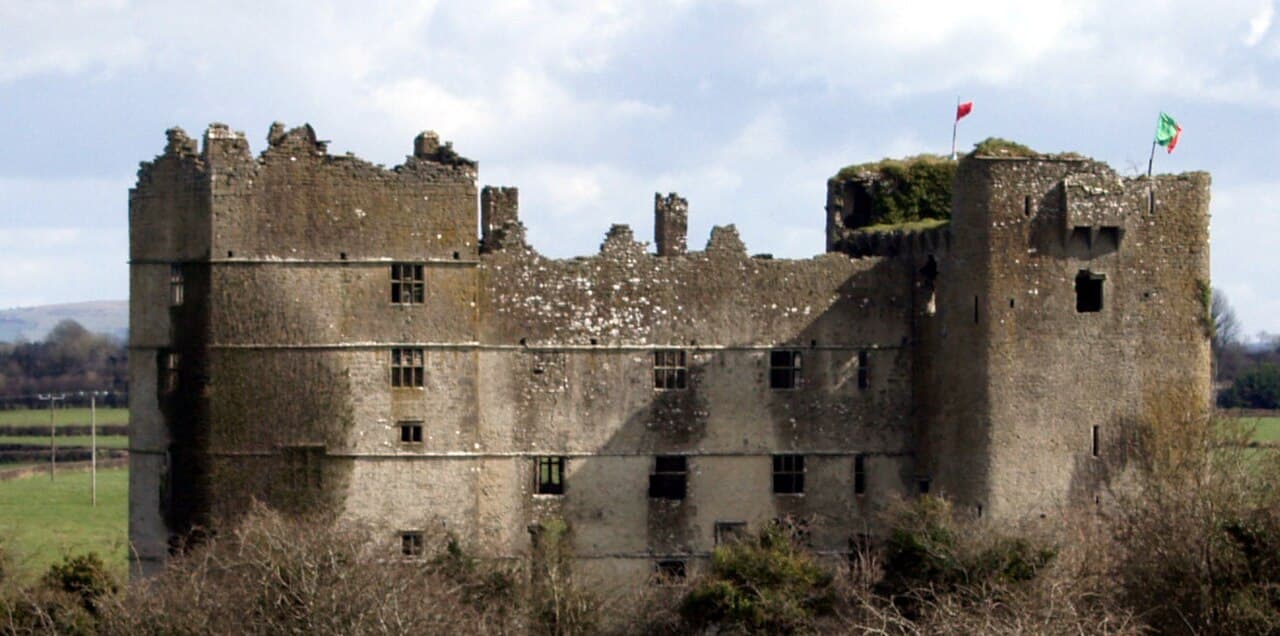
Loughmoe Castle (Irish: Caisláin Luach Magh, also spelt Loughmore Castle) stands as a significant medieval ruin located near the village of Loughmore, approximately 4 kilometers south of Templemore in County Tipperary, Ireland. This castle was the ancestral seat of the Purcell family, who held the title of Barons of Loughmoe, and played a prominent role in the region's history from the late medieval period onward.

Historical background and ownership

The origins of Loughmoe Castle date back to the 15th century, with construction attributed to the Purcell family, an Anglo-Norman lineage that established itself in Ireland following the Norman invasion. The castle served as the principal residence and stronghold for the Purcells, who were influential landowners and local lords in County Tipperary. Over the centuries, the castle witnessed various historical events, including local conflicts and shifts in political power during the Tudor and Stuart eras.

Architectural features and layout

Loughmoe Castle is characterized by its tower house design, which was a common form of fortified residence in Ireland during the late medieval period. The structure originally comprised a multi-storey rectangular tower with thick stone walls designed for defense. The castle's elevated position near Loughmore village provided strategic oversight of the surrounding lands.

The castle included features typical of tower houses: narrow slit windows for archers, battlements along the parapet, and a strong entrance protected by a heavy wooden door and iron fittings. Inside, the castle contained several floors with vaulted ceilings, including a great hall used for gatherings and domestic purposes, private chambers for the family, and storage areas. The remains also suggest the presence of ancillary buildings and defensive walls forming a small bawn or courtyard.

Defensive elements

Defensive architecture at Loughmoe Castle included thick curtain walls and battlements designed to repel attackers. The castle's location near natural terrain features added to its defensibility. While no moat survives today, the castle's fortifications were typical of Irish tower houses, combining residential comfort with military utility.

Decline and current condition

By the 18th century, the castle fell into disuse as the Purcell family moved to more modern residences. Over time, Loughmoe Castle deteriorated and was eventually abandoned, leaving it in its current state of ruins. The remaining walls and tower fragments provide valuable insight into medieval Irish castle construction and the lifestyle of the Anglo-Norman gentry.

Today, the castle is recognized as an important archaeological site, attracting visitors interested in medieval architecture and Irish history. Its ruins are accessible to the public, though care must be taken due to the fragile condition of the stonework.

Significance and cultural heritage

Loughmoe Castle holds cultural importance as a symbol of the Norman influence in Ireland and the feudal history of County Tipperary. The Purcell family's legacy is intertwined with the castle, which reflects the architectural and social developments of late medieval Ireland. The site contributes to understanding the regional power structures and defensive strategies employed during a turbulent period in Irish history.

Visitor information

Visitors to Loughmoe Castle can explore the ruins and appreciate the castle's historical context. Although no formal visitor center exists, the site is open year-round, and local guides or informational signage may be available in the nearby village of Loughmore. The castle's proximity to Templemore makes it accessible for those interested in exploring Ireland's medieval heritage.

Frequently asked questions (FAQ)

How do I get to Loughmoe Castle?
Loughmoe Castle is located in the village of Loughmore, Ireland, easily accessible by car. There are also bus services available from nearby towns, making it convenient for visitors traveling without a vehicle.
What is the historical significance of Loughmoe Castle?
Loughmoe Castle dates back to the 15th century and is a prime example of medieval architecture in Ireland. It played a significant role in the local history, serving as a stronghold for the Butler family and witnessing various historical events throughout the centuries.
When was Loughmoe Castle built?
Loughmoe Castle was constructed in the late 15th century, with its origins tracing back to around 1480. This makes it one of the notable remnants of the medieval period in this region of Ireland.
Can I explore the interior of Loughmoe Castle?
Currently, the interior of Loughmoe Castle is not open to the public due to ongoing preservation efforts. However, visitors can enjoy the exterior views and the surrounding grounds, which offer a fantastic glimpse into its historical significance.
Why is Loughmoe Castle a popular attraction?
Loughmoe Castle attracts visitors due to its striking architecture and rich history that provides insight into Ireland's past. The castle's picturesque setting and the stories associated with the Butler family add to its allure for history enthusiasts and tourists alike.
Is it possible to access Loughmoe Castle year-round?
Loughmoe Castle is accessible year-round, but visitors should check local conditions and any potential restrictions before planning their visit. The best time to see the castle is during the spring and summer months when the weather is typically more favorable for outdoor activities.
What are the opening hours for Loughmoe Castle?
Loughmoe Castle does not have formal opening hours as it is primarily an outdoor site. Visitors can explore the area at any time, but it is advisable to visit during daylight hours for safety and the best experience.
Are there any nearby attractions to visit?
Yes, Loughmoe Castle is near several attractions, including the picturesque village of Loughmore and the scenic landscapes of County Tipperary. Additionally, you can explore other historical sites and natural parks within a short driving distance.
What are the ticket prices for Loughmoe Castle?
Entry to Loughmoe Castle is free, making it an accessible destination for all visitors. However, any guided tours or special events may have associated fees, so it’s best to check in advance for specific details.

Photo gallery

Loughmoe Castle
Click to view

Photo by Rigger30•Public domain

1 photo • Click any image to view in full screen

Information

Archaeological Site / Ruins

Current owner

Private owner

Loading map...

Visitor reviews

No reviews yet. Been here? Write the first review and help other travelers!

Write the first review

Visited this castle? Share your experience

Your review helps other travelers and adds first-hand knowledge to our encyclopedia.
Write a review

(5/5)

0/2000 characters

Your review will be visible after admin approval

Nearby castles

7.7 km
Ballynahow Castle — Ireland castle

Ballynahow Castle

, Ireland

Ballynahow Castle is a notable 16th-century Renaissance tower house located in County Tipperary, Ireland. Recognized as a National Monument, it represents a significant example of Irish fortified residences from the late medieval period transitioning into the Renaissance era. The castle stands as a testament to the architectural and social changes occurring in Ireland during the 16th century. Historical context and significance Constructed in the 16th century, Ballynahow Castle was built during a period when tower houses were commonly erected by the Irish gentry and Anglo-Irish lords. These structures served both as fortified residences and symbols of status. The Renaissance influence in Ireland, although more subtle than on the continent, began to appear in architectural details and the layout of such castles, reflecting changing tastes and the desire for greater comfort alongside defense. Ballynahow Castle's designation as a National Monument underscores its importance in Irish heritage. It provides valuable insight into the living conditions, defensive strategies, and architectural trends of the time. The tower house form was widespread across Ireland, but each example has unique features that relate to its local context and the specific needs of its builders. Architectural features of Ballynahow Castle Structure and design The castle is primarily a tower house, a type of fortified residence characterized by a vertical emphasis and compact footprint. Ballynahow Castle rises several stories, with thick stone walls designed to withstand attack. The building's footprint is rectangular, typical of tower houses, with defensive features integrated into its design. Key architectural elements include narrow slit windows used for archery defense, a crenellated parapet at the roofline for protection during sieges, and a strong entrance door reinforced for security. Inside, the castle would have contained a great hall, living quarters, and storage areas, arranged vertically across floors connected by a spiral staircase. Defensive features Ballynahow Castle's defensive design reflects the turbulent political and social environment of 16th-century Ireland. The thick stone walls and limited window openings minimized vulnerabilities. The elevated entrance, often accessed by removable ladders or stairs, added an extra layer of security. Additionally, the castle likely included features such as murder holes above the main entrance to defend against attackers, and possibly a bawn or walled courtyard for livestock and additional protection, although specific details about these are not well documented. The Renaissance influence in Irish tower houses While primarily functional, Ballynahow Castle exhibits elements influenced by Renaissance architectural trends. This includes more refined stonework and possibly decorative features around windows and doorways, signaling a shift towards aesthetics alongside military utility. This period saw Irish noble families adopting continental styles to demonstrate their sophistication and align themselves with broader European cultural movements. However, the Renaissance influence in Ireland was often blended with traditional Gothic and medieval forms, creating a distinctive hybrid style evident in Ballynahow Castle. Preservation and current condition Today, Ballynahow Castle is classified as a well-preserved example of a Renaissance tower house. Its status as a National Monument ensures protection and recognition by the Irish government. Visitors can observe the castle's stone walls, defensive features, and overall structure, which remain largely intact despite centuries of exposure to weather and historical events. Efforts to maintain the castle focus on preserving its structural integrity and preventing further decay. The site is accessible to the public, offering a tangible connection to Ireland's medieval and Renaissance past. Visiting Ballynahow Castle Located in County Tipperary, Ballynahow Castle can be reached by road from nearby towns. While specific visitor facilities may be limited due to its rural setting, the castle provides a compelling destination for those interested in Irish history, medieval architecture, and Renaissance influences. Visitors should prepare for outdoor walking and bring appropriate footwear. The castle's remote location offers a peaceful environment to explore the remnants of Ireland's fortified residences. Architectural and cultural legacy Ballynahow Castle contributes to the broader understanding of tower houses in Ireland, which number in the thousands but vary widely in form and preservation. Its Renaissance features mark it as part of an important transitional phase in Irish castle architecture. The castle also reflects the social history of the Irish gentry during the 16th century, illustrating how architecture served both defensive needs and social aspirations. Ballynahow Castle remains a valuable cultural asset, linking modern Ireland with its complex medieval and early modern heritage.

Renaissance (15th–17th c.)
Details
14.6 km

Rock of Cashel

Cashel, United Kingdom

The Rock of Cashel, also known as St. Patrick's Rock or Carraig Phádraig in Gaelic, is a remarkable hill castle located on a 65-meter-high limestone plateau in County Tipperary, Ireland. This iconic site was the traditional seat of the kings of Munster for several centuries prior to the Norman invasion and remains one of the most significant collections of Celtic art and medieval architecture in Europe. The castle complex is renowned for its rich historical legacy, architectural diversity, and cultural importance, making it a must-visit destination for those interested in Irish history and heritage. The Rock of Cashel's origins trace back to at least the 5th century, when it served as the fortress of the Eóganachta clan, who established their dominance over much of southern Ireland from this strategic location. According to local legend, the rock itself was formed when St. Patrick banished Satan from a cave in the nearby Devil's Bit mountain, causing the rock to fall and land at Cashel. This legend is intertwined with the site's spiritual significance, as Cashel is reputed to be the place where St. Patrick converted the King of Munster, marking the beginning of its role as a religious center. Historical significance and royal heritage For centuries, the Rock of Cashel was the political and royal heart of Munster. It was here that Brian Boru, one of Ireland's most famous High Kings, was crowned in 977. Brian Boru used Cashel as his capital before ascending as High King of Ireland around 1005. His descendants, the powerful O'Brien clan, continued to rule from Cashel, maintaining its importance as a royal stronghold. The site's royal era came to a turning point in 1101 when King Muirchertach Ua Briain gifted the fortress to the Church. This transfer marked the transformation of Cashel from a royal seat into a prominent ecclesiastical center, becoming the residence of the Archbishop of Cashel. The castle complex then took on a new religious significance that lasted through the medieval period. Architectural features and medieval structures Defensive layout and round tower The Rock of Cashel complex is enclosed by a substantial defensive wall that outlines the perimeter of the limestone plateau. Among the oldest and most striking structures is the round tower, constructed around 1100. This tower stands approximately 28 meters tall with an entrance raised 3.6 meters above ground level, a typical defensive feature to deter invaders. Originally built using dry stone techniques, modern conservation efforts have reinforced it with mortar for stability. The tower's shallow foundation, about one meter deep, anchors it securely to the rocky hill. Cormac’s chapel: a romanesque masterpiece Cormac’s Chapel, begun in 1127 and consecrated in 1134, is a highlight of the complex and one of Ireland’s finest examples of Romanesque architecture. Constructed mainly from sandstone, the chapel features a nave and chancel that are slightly misaligned, a design choice influenced by Germanic architecture brought by carpenters from Regensburg. The chapel is notable for its barrel-vaulted roof, vaulted ceilings, wide arches, and interior and exterior arcading. Its twin towers mark the junction between nave and chancel, and the building includes the oldest known stairs in Ireland. The chapel's decorative elements include intricately carved tympana above both doorways and an ogive-arched chancel, an early Gothic feature. Inside, it houses Ireland's only surviving Romanesque frescoes, although these have suffered water damage over time. Recent preservation work has enclosed the chapel within a protective structure to safeguard these invaluable paintings from further deterioration. The gothic cathedral and vicars choral hall The cathedral, constructed between 1235 and 1270, represents the Gothic architectural style with its cruciform, aisleless design and central tower. Attached to its west side is a large residential castle, underscoring the site's dual role as both a religious and administrative center. The Hall of the Vicars Choral, built in the 15th century and restored in 1975, serves as the main entrance to the complex. This hall originally housed eight lay singers who supported the cathedral's liturgical functions. The upper floor contained their living quarters, reflecting the social organization of ecclesiastical communities in medieval Ireland. The hall also displays the impressive St. Patrick’s Cross, a heavily weathered 12th-century stone cross depicting Christ and a bishop figure, standing over seven feet tall. Notable historical events and decline The Rock of Cashel was the site of significant historical events, including the homage paid to Henry II of England in 1172, symbolizing the growing influence of English rule in Ireland. In 1647, the castle was besieged by English Parliamentarian forces under Murrough O’Brien, Earl of Inchiquin, resulting in a massacre that marked a dark chapter in its history. Later, in the mid-18th century, the site suffered further decline when the cathedral roof was deliberately destroyed by Anglican Archbishop Arthur Price. This act contributed to the ruinous state of the cathedral and diminished the site's religious prominence. Modern conservation and visitor experience Today, the Rock of Cashel is one of Ireland’s most visited archaeological sites, attracting tourists from around the world. Extensive restoration and conservation efforts have been undertaken to preserve its architectural treasures. Notably, the Hall of the Vicars Choral was restored in 1975, and ongoing work continues to protect Cormac’s Chapel and its fragile frescoes. The complex offers visitors a compact but rich experience, with its defensive walls, high crosses, and a variety of medieval stonework that illustrate Ireland’s cultural and historical evolution. The graveyard surrounding the complex contains several high crosses, including the weathered Scully’s Cross, originally erected in 1860. Visitors can explore the imposing round tower, the solemn Romanesque chapel, the soaring Gothic cathedral, and the historic vicars choral hall, all set against the dramatic backdrop of the Irish countryside. The Rock of Cashel remains a testament to the enduring legacy of Ireland’s medieval past and its Celtic heritage.

High Medieval (11th–13th c.)
Details
22.3 km
Roscrea Castle — Ireland castle

Roscrea Castle

Roscrea, Ireland

Roscrea Castle is a prominent 13th-century motte-and-bailey castle located in the historic town of Roscrea, Ireland. This medieval fortress exemplifies the typical defensive architecture of the High Medieval period in Ireland, constructed to assert Norman control and protect the surrounding lands. The castle's design features a walled courtyard, a gate block, and distinctive angled towers that provided strategic vantage points for defense and surveillance. Historical context and construction Roscrea Castle was built during the 13th century, a time when Norman influence was expanding across Ireland. The castle's motte-and-bailey structure reflects the early Norman approach to fortification, combining a raised earthwork (the motte) topped with a wooden or stone keep, and an enclosed courtyard (the bailey) protected by palisades and ditches. Over time, the wooden elements were replaced with stone, enhancing the castle's durability and defensive capabilities. The castle played a significant role in the control of the region, serving as a military stronghold and administrative center. Its position on a natural rise provided commanding views of the surrounding landscape, allowing defenders to monitor movement and respond quickly to threats. Architectural features Defensive structures The castle's walled courtyard is enclosed by robust stone walls designed to withstand siege warfare. The gate block served as the main entrance and was heavily fortified to control access. The angled towers flanking the walls allowed defenders to cover multiple angles and eliminate blind spots, a common feature in Norman military architecture. Interior layout Within the courtyard, the remains of various buildings would have included living quarters, storage facilities, and possibly a chapel. The layout was practical, focusing on defense and the needs of the garrison stationed there. Roscrea Heritage Centre and Damer House Today, Roscrea Castle is part of the Roscrea Heritage Centre, which also includes the nearby 18th-century Damer House and its gardens. This complex offers visitors a glimpse into the layered history of the area, from medieval fortifications to Georgian domestic architecture. The heritage centre provides educational resources and hosts cultural events, promoting the preservation and appreciation of Roscrea's historical assets. Significance and preservation Roscrea Castle remains a well-preserved example of a High Medieval motte-and-bailey castle in Ireland. Although parts of the original structure have deteriorated over the centuries, the castle's stone fortifications survive prominently, offering insight into medieval military engineering and Norman colonization strategies. The site's integration with Damer House enhances its appeal, combining military and residential historical narratives. Visitors to Roscrea can explore the castle grounds and learn about the castle's role in Irish history, Norman architecture, and the evolution of fortifications. The castle's preservation as part of the heritage centre ensures ongoing maintenance and public engagement with this significant cultural landmark.

High Medieval (11th–13th c.)
Details