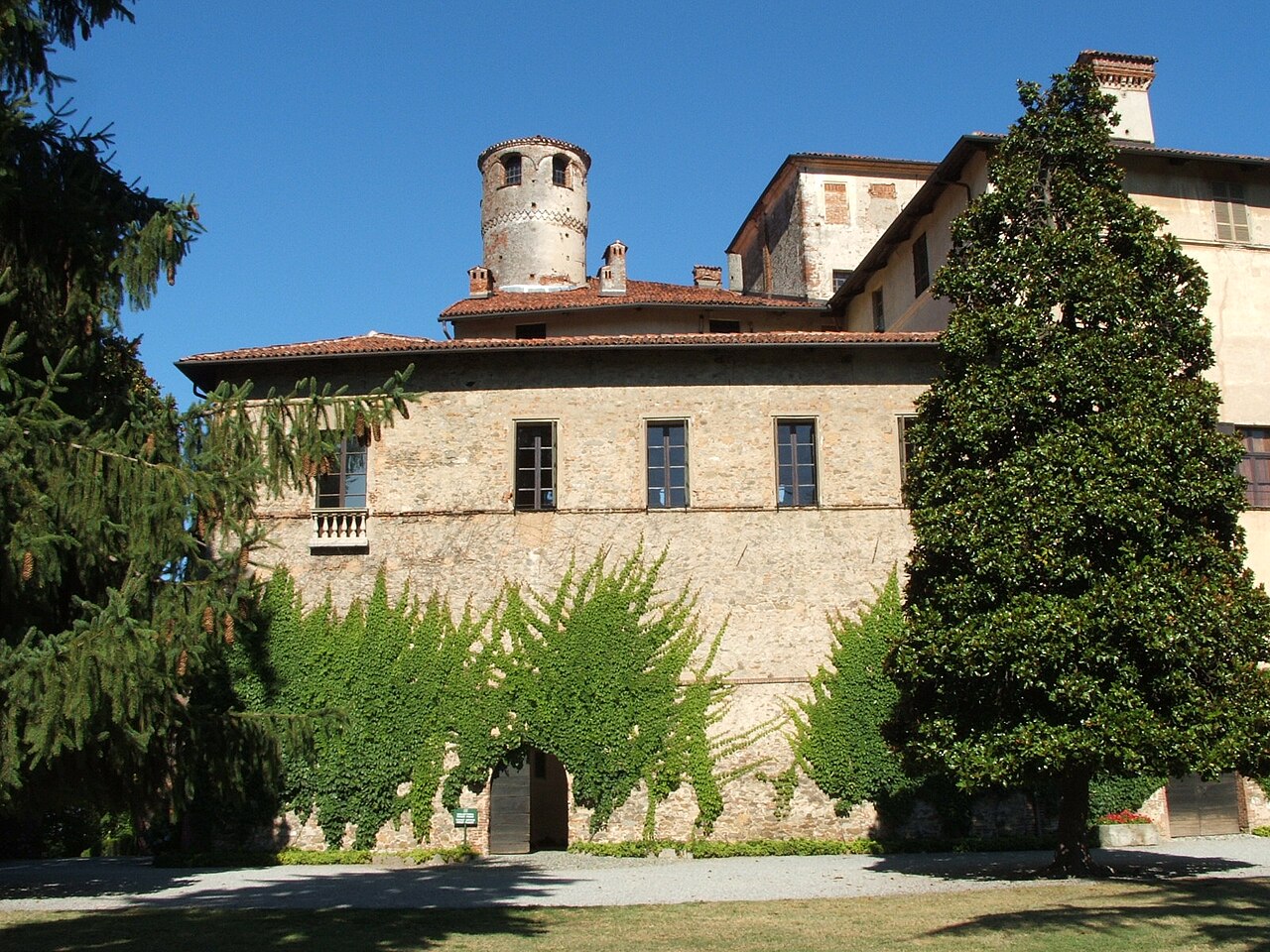
Roccolo Castle
Roccolo Castle stands as a remarkable example of 19th-century Romantic architecture in the Italian region of Piedmont. Situated in the municipality of Busca, this hill castle was commissioned by the aristocratic Taparelli d’Azeglio family, specifically Marquis Roberto Taparelli d’Azeglio and his wife Costanza Alfieri di Sostegno, beginning construction in 1831. The castle served as a seasonal retreat, primarily used during the summer and autumn months until 1862, reflecting the era's fascination with medieval revivalism and aristocratic leisure estates.
The name "Roccolo" is derived from the local term "roccoli," referring to traditional netted bird traps used in the surrounding countryside. This etymology connects the castle not only to its physical landscape but also to the cultural practices of the region, embedding the estate within the local heritage.
Architectural style and design features
Roccolo Castle exemplifies the neo-medieval revival style popular in the 19th century, combining elements inspired by medieval fortifications with eclectic artistic influences. The castle's layout is dominated by a main façade flanked by two cylindrical towers, which rise prominently above the tree line. A distinctive feature is the tall tower adorned with Ghibelline battlements, characterized by swallow-tailed crenellations typical of medieval Italian military architecture. This battlement style imparts a fortified and romantic silhouette to the castle, aligning with the period's aesthetic preferences.
The interior courtyard is richly decorated with terracotta elements that bear Moorish stylistic influences, showcasing the eclectic tastes of the castle's patrons. The interiors feature elaborate trompe-l’oeil paintings that create optical illusions of depth and three-dimensional scenes, enhancing the visual experience. Stucco work embellishes ceilings and walls, while numerous landscape views are depicted in the decorative schemes, reinforcing the connection between the interior spaces and the surrounding natural environment.
Light plays a significant role inside Roccolo Castle, with stained glass windows constructed using lead cames filtering colorful light into the rooms, adding to the castle's artistic ambiance. A notable architectural highlight is the double staircase known as the "scalone a tenaglia" (pincer staircase), which serves as a grand and elegant means of access to the upper floors, emphasizing the castle’s refined design and aristocratic character.
The furnishings throughout the castle were primarily crafted by cabinetmaker Gabriele Capello, whose work contributed to a cohesive and sophisticated interior atmosphere. The furniture complements the castle’s stylistic blend of medieval revival and 19th-century artistic trends.
Historical significance and notable visitors
Roccolo Castle was more than a private retreat; it was a hub of aristocratic and political activity during a critical period in Italian history. The castle hosted several distinguished guests, including members of the House of Savoy such as King Umberto I and Queen Margherita, underscoring its importance within Italian high society. The presence of such royal visitors reflects the castle’s status as a favored noble residence.
In addition to royalty, Roccolo Castle welcomed prominent political figures including Silvio Pellico, a notable Italian writer and patriot; the Count of Cavour, a leading architect of Italian unification; and British Prime Ministers Lord Palmerston and Lord Gladstone. These visits highlight the castle’s role as a center for political discourse and cultural exchange during the turbulent 19th century.
Chapel and religious artifacts
Within the castle grounds lies a chapel containing significant historical furnishings. The choir stalls date back to the 16th century and were relocated to Roccolo Castle by the marchioness. These stalls originally belonged to the marquisate chapel of Revello and are associated with Margherita di Foix-Candale, a noblewoman from earlier centuries. This relocation reflects the owners’ dedication to preserving religious heritage and integrating it into the castle’s environment.
The extensive park and garden design
Roccolo Castle is set within an expansive park covering approximately 50 hectares, designed to complement the castle’s romantic aesthetic. The landscaping includes a Romanesque garden located behind the main building, characterized by formal plantings and architectural elements inspired by medieval garden traditions. In front of the castle, classical terraces provide structured outdoor spaces that blend natural beauty with geometric design.
Between 1846 and 1850, a greenhouse was constructed within the park, reflecting the 19th century’s burgeoning interest in botany and the cultivation of exotic plants. The park also features a variety of ornamental and architectural elements typical of Romantic landscape design, including grottos, waterfalls, bridges, fountains, balustrades, and garden niches. These features create a picturesque environment that harmonizes natural and man-made beauty.
Architectural and cultural legacy
Today, Roccolo Castle remains a well-preserved example of 19th-century aristocratic architecture and garden planning. Its blend of medieval revival, Moorish artistic influences, and classical garden design encapsulates the eclectic tastes of the Romantic era. The castle’s architectural details, from the Ghibelline battlements to the scalone a tenaglia, and its richly decorated interiors provide insight into the cultural aspirations of the Italian nobility during a period of significant social and political transformation.
Roccolo Castle’s historical associations with prominent political figures and royalty further enhance its importance as a cultural landmark. The preservation of its chapel artifacts and the extensive landscaped park contribute to its status as a heritage site that reflects the intertwined history of aristocratic life, art, and politics in 19th-century Italy.
Visitors to Roccolo Castle can experience not only the architectural grandeur of a neo-medieval hill castle but also the lush, thoughtfully designed gardens that surround it. The castle and its grounds offer a unique window into the Romantic period’s fascination with history, nature, and aristocratic culture, making it a significant destination for those interested in architecture, history, and landscape design.
Frequently asked questions (FAQ)
- How do I visit Roccolo Castle?
- Roccolo Castle is located in Busca, Piedmont, Italy. Visitors should check local tourism websites or contact the castle's management for current visiting hours and tour availability, as it is privately owned and may have limited public access.
- What is the architectural style of Roccolo Castle?
- Roccolo Castle is designed in the neo-medieval revival style, featuring Ghibelline battlements, cylindrical towers, and Moorish-inspired terracotta decorations, reflecting 19th-century Romantic tastes.
- When was Roccolo Castle built?
- Construction of Roccolo Castle began in 1831, commissioned by Marquis Roberto Taparelli d’Azeglio and his wife Costanza Alfieri di Sostegno as a seasonal aristocratic retreat.
- Can I explore the gardens at Roccolo Castle?
- Yes, the castle is surrounded by an extensive 50-hectare park with Romanesque gardens, classical terraces, grottos, waterfalls, and a greenhouse built in the mid-19th century, offering a picturesque landscape to explore.
- Who were some notable visitors to Roccolo Castle?
- Notable guests included King Umberto I and Queen Margherita of the House of Savoy, political figures like Silvio Pellico and the Count of Cavour, and British Prime Ministers Lord Palmerston and Lord Gladstone.
- What unique interior features does Roccolo Castle have?
- The castle's interiors feature a double staircase called the "scalone a tenaglia," trompe-l’oeil paintings, stucco decorations, stained glass windows with lead cames, and finely crafted furnishings by cabinetmaker Gabriele Capello.
Information
Sources & official resources
Verify the information above using these authoritative references.
Loading map...
Visitor reviews
No reviews yet. Been here? Write the first review and help other travelers!
Write the first reviewVisited this castle? Share your experience
Your review helps other travelers and adds first-hand knowledge to our encyclopedia.