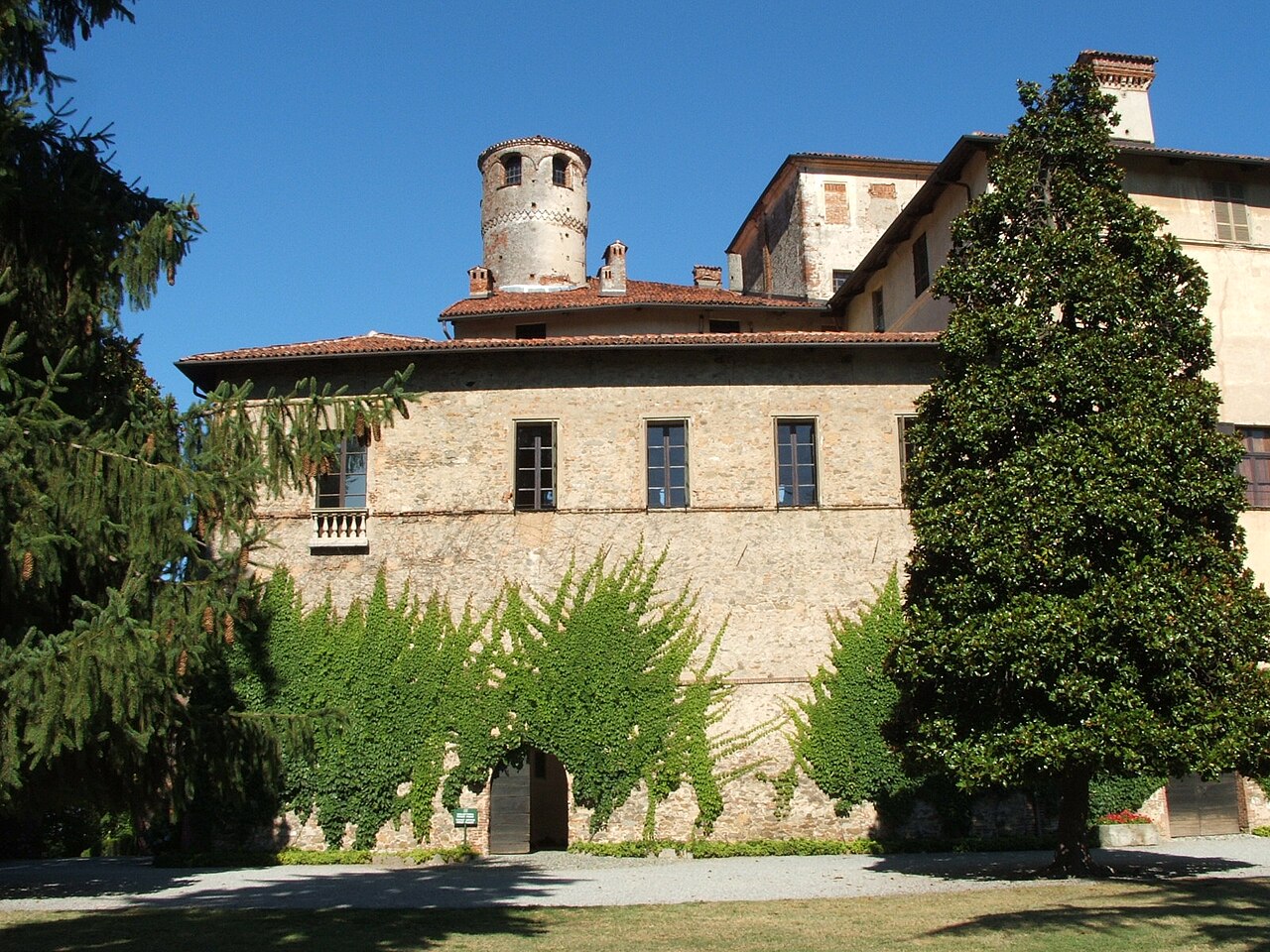
La Castiglia, Saluzzo
La Castiglia castle stands prominently on the highest point of Saluzzo, a town in the Piedmont region of Italy. This hill castle was originally constructed in the late 13th century as a fortified residence for the ruling Marquisate of Saluzzo, a significant medieval lordship that controlled the surrounding lands. Its strategic location offered commanding views over the territory, combining natural defensive advantages with the imposing architecture of a military fortress.
The origins and medieval construction
The earliest known fortification on the site was a medieval castle called Castel Soprano, which was replaced by the current structure during the reign of Marquis Tommaso I between 1271 and 1286. The new fortress was designed to serve both as a military stronghold and a noble residence, reflecting the dual needs of defense and governance in a turbulent border region. The initial construction featured robust defensive elements such as four towers connected by thick bastions and surrounded by a broad moat, emphasizing its role as a secure refuge.
Architectural design and fortifications
The fortress's defensive design included a drawbridge that controlled access across the moat, enhancing its security against potential invaders. The towers and walls were built with durable local stone, designed to withstand siege warfare typical of the High and Late Medieval periods. Over time, the complex was expanded and reinforced to meet evolving military challenges, particularly during the 14th and 15th centuries when the region experienced frequent conflicts.
Transformation during the Renaissance
By the 15th century, the fortress began a significant transformation from purely military use to a more residential and representational function. Under Marquis Tommaso III, renovations were initiated to adapt the castle for noble living, introducing more comfortable and decorative interiors while maintaining its defensive capabilities.
The circular tower and artistic enhancements
A major addition came in 1492 under Marquis Ludovico II, who commissioned the construction of a large circular tower that remains the most prominent feature of La Castiglia today. This tower served both defensive and residential purposes, symbolizing the marquisate's power and prestige. Alongside architectural improvements, Ludovico II also ordered richly decorated rooms adorned with frescoes, celebrating his marriage to Margherita di Foix-Candale. These artistic works reflected Renaissance tastes and the desire to project cultural refinement.
Political changes and varied uses
Following the extinction of the Saluzzo ruling family in 1548, the castle's ownership and function changed multiple times. It came under French control before being transferred to the Duchy of Savoy in 1601. These shifts led to diverse uses including a military garrison, government offices, and a hospital. In the 19th century, La Castiglia was converted into a prison, a role it fulfilled until 1992.
Damage and restoration efforts
The 19th century also brought partial demolition and significant damage, especially to the 15th-century frescoes and some structural elements. However, beginning in the early 2000s, comprehensive restoration projects have aimed to stabilize and preserve the remaining architecture. These efforts have focused on adapting the fortress for cultural and museum purposes, allowing visitors to appreciate its historical and architectural significance.
Architectural layout and notable features
La Castiglia is organized as a fortified complex centered on a rocca or stronghold, with its defensive perimeter marked by stone walls, bastions, and the moat. The surviving circular tower dominates the skyline and exemplifies late 15th-century military architecture blended with Renaissance residential design.
Surrounding structures and public works
Near the fortress, several noble residences once stood, including the Palazzo Malacarne and the Palazzetto della Zecca, the latter likely serving as a storage building rather than a mint. The castle's entrance is marked by the historic Drancia fountain, originally built in 1481. Although relocated in the 18th century, its original sculpture is preserved indoors at the Casa Cavassa loggia, underscoring the site's cultural heritage.
Interior decoration and cultural significance
The interior of La Castiglia once featured elaborate frescoes commissioned in the late 1400s, which illustrated the artistic ambitions of the marquisate. Despite suffering damage over centuries, remnants of these frescoes remain, offering insights into the castle's past grandeur and the Renaissance aesthetic influences. The fortress today serves as a museum and cultural venue, hosting exhibitions that celebrate the history of Saluzzo and its architectural legacy.
Historical documentation and preservation
Historical lithographs and detailed descriptions from the 19th century provide valuable records of La Castiglia's original appearance and layout. These documents have guided restoration efforts and help visitors understand the castle's evolution from a medieval stronghold to a Renaissance noble residence and beyond.
Frequently asked questions (FAQ)
- When was La Castiglia castle originally built?
- La Castiglia castle was originally constructed between 1271 and 1286 under Marquis Tommaso I, replacing an earlier medieval fortification called Castel Soprano.
- What are the main architectural features of La Castiglia?
- La Castiglia features a fortified complex with four towers, bastions, a broad moat, and a prominent circular tower built in 1492, combining military and residential functions.
- How did La Castiglia evolve during the Renaissance?
- In the 15th century, La Castiglia was transformed from a military fortress into a noble residence with renovations including a large circular tower and richly decorated frescoed rooms commissioned by Marquis Ludovico II.
- Can visitors see the frescoes inside La Castiglia?
- While many of the original 15th-century frescoes were damaged in the 19th century, some remnants remain and restoration efforts aim to preserve these historical artworks for visitors.
- What was La Castiglia used for after the Saluzzo marquisate ended?
- After 1548, La Castiglia served various roles including a military garrison, government offices, a hospital, and later a prison until 1992.
Information
Website
Visit websiteSources & official resources
Verify the information above using these authoritative references.
Loading map...
Visitor reviews
No reviews yet. Been here? Write the first review and help other travelers!
Write the first reviewVisited this castle? Share your experience
Your review helps other travelers and adds first-hand knowledge to our encyclopedia.