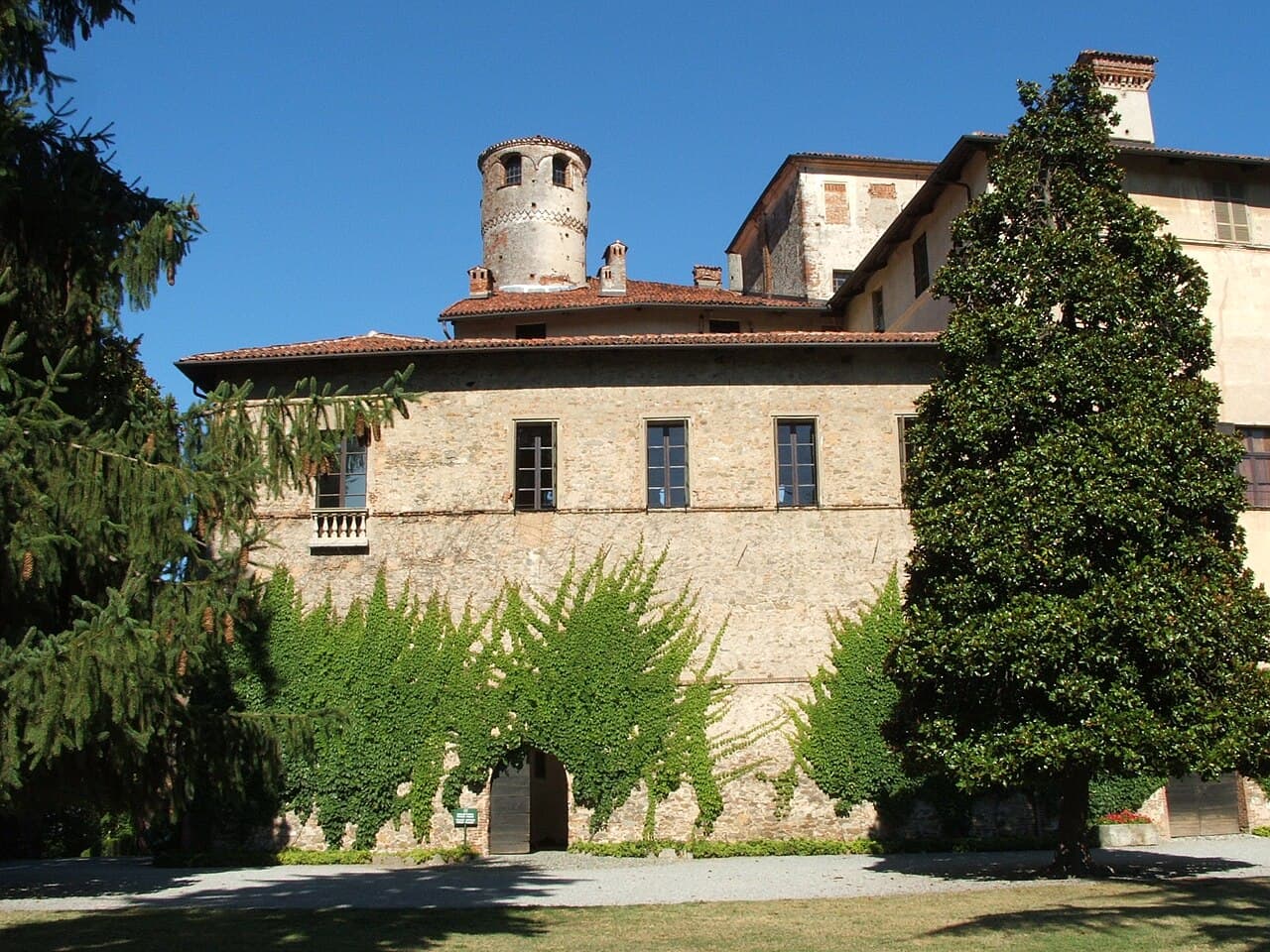
Castello della Manta
Castello della Manta stands prominently on the hills near the town of Manta, Italy, embodying centuries of regional history and architectural evolution. Originally constructed in the 12th century, the castle was built atop the site of an earlier fortification, marking it as a strategic defensive stronghold within the Marquisate of Saluzzo. Its location along the Alpine foothills made it a vital component in the territorial defense network, securing the region against external threats during the medieval period.
Medieval origins and strategic importance
The castle's early history is closely tied to the military and political ambitions of the Marquisate of Saluzzo, which formally acquired the fortress in 1175. This acquisition underscored the castle's role as a frontier defense point in the turbulent landscape of northern Italy. The original medieval fortress featured typical defensive elements of the era, including robust walls, a commanding position on elevated terrain, and a round tower that still survives today as a testament to its martial past.
Transformation into a noble residence
Between the late 13th and early 15th centuries, the castle underwent significant modifications under the stewardship of the Saluzzo della Manta family, descendants of Valerano, the illegitimate son of Marquis Tommaso III of Saluzzo. This family transformed the stronghold from a purely military fortress into a refined noble residence. The architectural changes included expansions that accommodated aristocratic living, blending defensive functionality with residential comfort. By the early 1500s, the castle had evolved into a complex that reflected both its defensive origins and its new status as a noble domicile.
Architectural features and layout
The castle complex retains much of its medieval character, with structures dating back to the 13th century. Key surviving elements include the medieval kitchen and the Baronial Chapel (Sala Baronale), both largely unchanged since the 15th century. The layout reflects a harmonious blend of military architecture and residential design, featuring fortified walls, courtyards, and living quarters arranged to suit noble life while maintaining defensive readiness.
Artistic heritage: the baronial hall frescoes
One of Castello della Manta's most celebrated features is the Baronial Hall's cycle of frescoes, dating from around 1420. These frescoes are attributed to the enigmatic "Master of Castello della Manta", with some scholars proposing identities such as Jacquemart de Hesdin or Jacopo Jacquerio. The cycle depicts 18 larger-than-life figures, representing nine legendary male heroes alongside nine renowned women drawn from classical mythology, biblical narratives, and medieval legend. These figures also serve as symbolic portraits of the rulers of the Marquisate of Saluzzo and their consorts.
The frescoes unfold within a formal garden setting, richly detailed with luxurious clothing, heraldic symbols, and a central fountain reminiscent of the mythical fountain of youth. This artistic program offers a vivid testimony to 15th-century courtly art and the cultural aspirations of the Saluzzo nobility, making the castle a significant site for the study of medieval and early Renaissance mural painting in northern Italy.
Renaissance influences and later modifications
In the mid-16th century, the castle's interiors saw further artistic enhancement, notably in the Sala delle Grottesche, redecorated around 1560 by Michele Antonio della Manta. This room features an elaborate decorative scheme combining frescoes and stuccoes that depict fanciful landscapes, ruins, and Renaissance architectural motifs. The style draws inspiration from the rediscovered frescoes of Emperor Nero's Domus Aurea in Rome, showcasing the influence of Mannerism and Renaissance artistic trends on the castle's evolution.
The chapel of santa maria al castello
Adjacent to the main castle buildings stands the 14th-century chapel of Santa Maria al Castello, which houses frescoes illustrating episodes from the life of Jesus Christ. These paintings date from the same period as the Baronial Hall frescoes, reinforcing the castle's rich artistic heritage. The chapel complex also includes a funerary chapel, adorned with stucco work and Mannerist paintings from the mid-1500s, further enriching the site's religious and cultural significance.
Decline, restoration, and preservation efforts
After the extinction of the Saluzzo della Manta family in the late 18th century, the castle passed through several noble families, including the Radicati, Provana, and finally the de Rege Thesauro family. Post-1793, the castle fell into disrepair, and many of its outer defenses were demolished around 1860, significantly altering its original medieval fabric.
The 20th century brought renewed interest in preserving this historic monument. In 1984, Countess Elisabetta de Rege Thesauro di Donato Provana del Sabbione donated the castle to the Fondo Ambiente Italiano (FAI), Italy's National Trust. Since then, extensive restoration efforts have been undertaken to conserve both the architectural and artistic elements of the castle, ensuring its survival as a cultural landmark and tourist attraction.
The castle in its regional context
Castello della Manta was part of a strategic network of fortresses defending the region, including nearby castles at Revello, Verzuolo, Costigliole, and Busca. This interconnected system was designed to control and protect key routes across the Alpine foothills, reflecting the military and political complexities of medieval northern Italy.
Castle grounds and surviving fortifications
The castle grounds include a 16th-century park that complements the noble residence, providing a landscaped setting that reflects Renaissance tastes. The surviving round tower remains a prominent feature of the original medieval fortifications, offering insight into the castle's defensive capabilities and architectural evolution over centuries.
Today, Castello della Manta stands as a remarkable example of a medieval hill castle that successfully transitioned into a noble residence, enriched by exceptional artistic heritage. Its preservation allows visitors to explore a site where military history, aristocratic life, and Renaissance art intersect, making it a unique cultural treasure in the Piedmont region of Italy.
Frequently asked questions (FAQ)
- When was Castello della Manta originally built?
- Castello della Manta was originally constructed in the 12th century on the site of an earlier fortification.
- What is the significance of the frescoes in the Baronial Hall?
- The Baronial Hall features a cycle of frescoes from around 1420 depicting legendary heroes and noble figures, representing the rulers of the Marquisate of Saluzzo and their consorts.
- Can visitors tour the chapel of Santa Maria al Castello?
- Yes, visitors can explore the 14th-century chapel of Santa Maria al Castello, which contains frescoes illustrating episodes from the life of Jesus Christ.
- Who currently owns and manages Castello della Manta?
- Since 1984, Castello della Manta has been owned and managed by the Fondo Ambiente Italiano (FAI), Italy's National Trust.
- What architectural styles are represented in Castello della Manta?
- The castle primarily exhibits Gothic architectural features, with later Renaissance influences visible in interior decorations such as the Sala delle Grottesche.
Photo gallery

Information
Sources & official resources
Verify the information above using these authoritative references.
Loading map...
Visitor reviews
No reviews yet. Been here? Write the first review and help other travelers!
Write the first reviewVisited this castle? Share your experience
Your review helps other travelers and adds first-hand knowledge to our encyclopedia.



