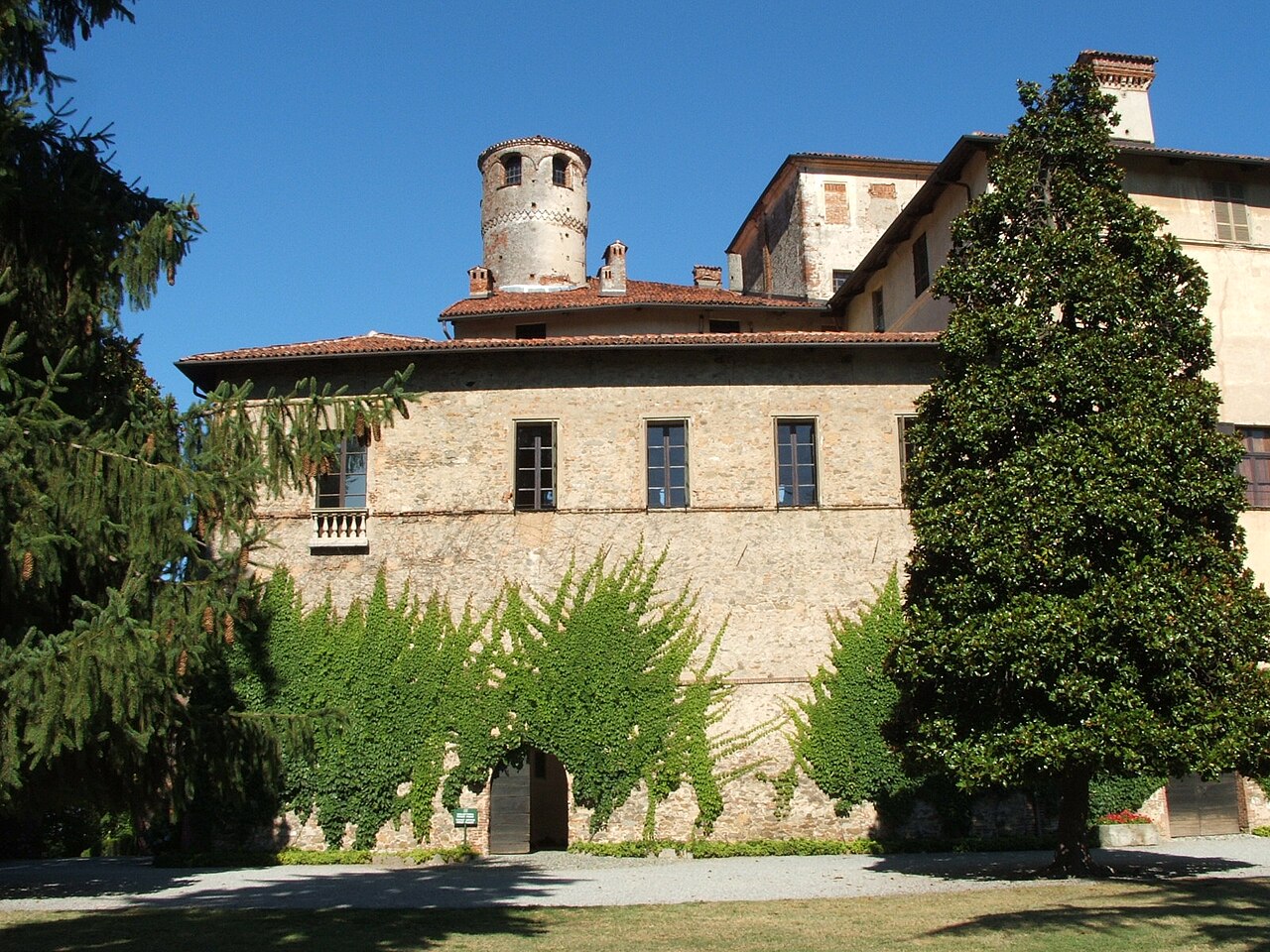
Castle of Verzuolo
The Castle of Verzuolo stands as a significant historical monument near the town of Verzuolo in the Piedmont region of Italy. Originally constructed in the 11th century, this hill castle was built by medieval inhabitants as a fortified stronghold designed to protect the surrounding lands and assert regional control. Its strategic location on elevated terrain provided commanding views, essential for defense and surveillance during the turbulent medieval period.
Throughout its history, the castle has undergone multiple phases of construction, destruction, and transformation, reflecting the shifting political and military landscapes of Piedmont. The castle's evolution from a purely military fortress to a noble residence encapsulates the broader architectural and social changes that occurred in northern Italy from the Middle Ages through the early modern era.
Medieval origins and strategic importance
The initial construction of the Castle of Verzuolo in the 11th century coincided with a period of feudal fragmentation and frequent territorial conflicts in the Piedmont region. The castle was established primarily as a defensive bastion to secure the lands controlled by local lords and to oversee important routes through the area.
Its original design featured robust defensive elements typical of early medieval fortifications, including thick stone walls and rectangular towers. These structures served dual purposes: as lookout points to monitor enemy movements and as strongholds to repel attacks. The castle’s elevated position enhanced its defensive capabilities, making it a formidable obstacle for any invading force.
Reconstruction and expansion under the marquesses of saluzzo
In 1377, the castle underwent a significant rebuilding ordered by Frederick II, Marquess of Saluzzo. This reconstruction was motivated by the need to strengthen the castle’s defenses amid ongoing regional conflicts and power struggles. The project involved demolishing parts of the original structure and erecting a larger, more imposing fortress.
The rebuilt castle incorporated enhanced fortifications, including the construction of two prominent rectangular towers and a Belvedere tower. These towers played critical roles in both surveillance and defense, allowing defenders to spot approaching enemies from a distance and mount effective resistance. The castle's walls were likely reinforced, and its internal layout adapted to accommodate a larger garrison and more complex defensive operations.
This period marked the castle’s peak as the main fortress within the Marquisate of Saluzzo, underscoring its strategic and military importance in the region.
Political significance and use as a prison
The castle's role extended beyond military defense; it also functioned as a political prison. In 1529, Giovanni Ludovico, Marquess of Saluzzo, was imprisoned within its walls during a period of internal conflict. This episode highlights the castle’s dual function as both a fortress and a site of political control.
Transition to a noble residence in the early modern period
By around 1600, the castle began a notable transformation reflecting broader changes in architectural tastes and social functions. The facade was remodeled to shift its appearance from a purely military fortress to an elegant mansion. This renovation aimed to provide a more comfortable and aesthetically pleasing residence suitable for noble occupants.
During this period, the castle served as a luxurious summer residence for prominent figures such as Charles Emmanuel I, Duke of Savoy, and the renowned typographer Giambattista Bodoni. The adaptation from fortress to stately home involved modifications to interior spaces, likely including the addition of refined living quarters, reception halls, and decorative elements, although specific details on these changes are scarce.
Decline, damage, and modern developments
Following the extinction of the counts of Verzuolo family line in the early 20th century, ownership transferred to Amedeo Mola di Larissé. The castle subsequently entered a period of neglect and decline. A catastrophic event occurred on June 18, 1916, when one of the two original rectangular towers collapsed. This collapse caused significant structural damage and destroyed a large portion of the castle’s archives, resulting in the loss of invaluable historical documents related to Piedmont’s regional history.
Further structural losses occurred in 1938, when the remaining rectangular tower and the Belvedere tower were demolished. These demolitions drastically altered the castle’s silhouette and reduced its medieval defensive features.
Despite these losses, the castle’s remaining structures still evoke its layered history, bearing witness to its medieval origins, military significance, and later role as a noble residence. In July 2022, the castle was sold to Om.e.g Srl, a property development company with plans to convert the historic site into a hotel or tourist facility. This development marks a new chapter in the castle’s long and varied history, promising restoration and renewed public engagement.
Architectural features and remaining structures
The original Castle of Verzuolo featured a defensive complex characteristic of medieval fortifications, including two rectangular towers and a Belvedere tower. These towers were integral to the castle’s defense strategy, providing vantage points for observation and platforms for archers or artillery.
The collapse of one rectangular tower in 1916 and the subsequent demolition of the remaining towers in 1938 have left limited visible traces of the castle’s original fortified profile. However, the castle’s facade, remodeled around 1600, reflects the transition from a military fortress to a noble mansion, indicating adaptations in style and function over time.
Today, visitors to the site can observe remnants that recall the castle’s medieval and early modern phases. These remains serve as tangible links to the region’s history and the castle’s evolving role in Piedmont’s cultural heritage.
Frequently asked questions (FAQ)
- What is the historical significance of the Castle of Verzuolo?
- The Castle of Verzuolo is historically significant as a medieval fortress and later a noble residence in Piedmont, Italy. It served as a key defensive stronghold and political prison during the Middle Ages and underwent transformations reflecting changing architectural styles and social functions.
- When was the Castle of Verzuolo originally built?
- The castle was originally constructed in the 11th century by medieval inhabitants of the Piedmont region to protect the surrounding lands and control strategic routes.
- What notable changes occurred to the castle around 1600?
- Around 1600, the castle's facade was remodeled to transition from a military fortress to an elegant mansion, marking its use as a luxurious summer residence for nobility such as Charles Emmanuel I, Duke of Savoy.
- Can visitors see the original towers of the Castle of Verzuolo today?
- No, the original rectangular towers and the Belvedere tower were either collapsed or demolished in the 20th century. Only limited remains of the castle’s medieval and early modern structures are visible today.
- Who currently owns the Castle of Verzuolo?
- As of July 2022, the castle is owned by Om.e.g Srl, a property development company planning to convert the site into a hotel or tourist facility.
Information
Sources & official resources
Verify the information above using these authoritative references.
Loading map...
Visitor reviews
No reviews yet. Been here? Write the first review and help other travelers!
Write the first reviewVisited this castle? Share your experience
Your review helps other travelers and adds first-hand knowledge to our encyclopedia.