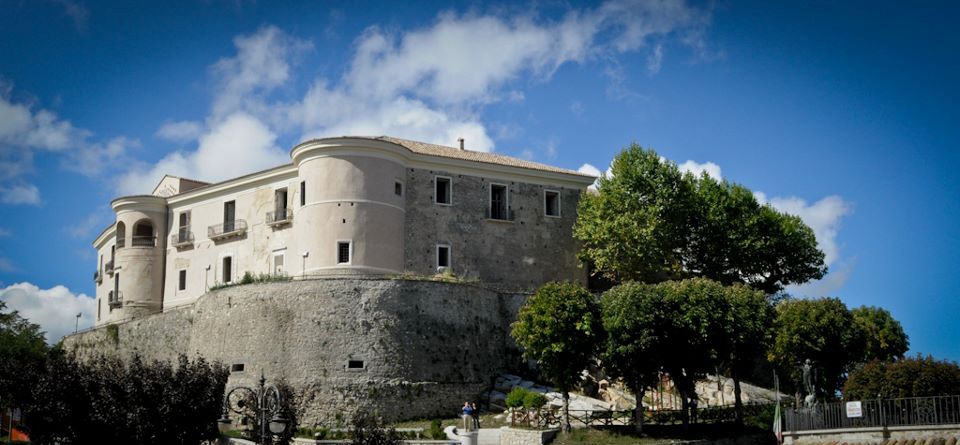
Rocca San Felice Castle
Rocca San Felice Castle stands as a remarkable example of a 12th-century hill castle built by the Lombards on a rocky spur overlooking the Irpinian village of Rocca San Felice in southern Italy. This fortress was originally constructed as a strategic defensive outpost to monitor and protect the Duchy of Benevento during the turbulent conflicts with the Byzantine Empire and the shifting territorial disputes that characterized the region in the early medieval period. The castle's location atop a rocky ridge at approximately 723 to 750 meters above sea level provided commanding views of the surrounding Valle d'Ansanto, making it an ideal site for surveillance and military control.
The castle's architecture reflects its dual role as both a military stronghold and a noble residence. Over the centuries, Rocca San Felice Castle underwent numerous modifications and expansions, adapting to changing political circumstances and technological advancements. Originally, the fortress emphasized defensive features, such as the construction of a southern bastion and robust curtain walls. Later developments introduced residential elements, including the addition of a Palatium and other living quarters, illustrating the castle's evolution from a purely martial installation to a noble dwelling.
The origins and early history of Rocca San Felice Castle
The initial construction of Rocca San Felice Castle is attributed to the Lombards around the mid-9th century, approximately 850 AD, during a period of intense conflict over control of southern Italy. The castle was part of a broader defensive network designed to secure the Duchy of Benevento against Byzantine incursions. Its strategic placement on a rocky outcrop allowed for effective monitoring of enemy movements and communication with neighboring fortifications.
Following the Norman conquest of southern Italy, the castle came under Norman control and experienced significant restoration and expansion beginning in 1076. The Normans enhanced the castle's fortifications to consolidate their hold on the region. The first documented mention of the fortress appears in the Catalogus baronum between 1150 and 1160 under the name "Castellum Sancti Felicis". At that time, it was owned by Ruggiero de Castelvetere, a vassal of the local noble Elia Gesualdo.
Architectural features and layout
The donjon: the heart of the fortress
The most prominent surviving feature of Rocca San Felice Castle is its donjon, or keep, a cylindrical tower approximately 10 meters in diameter built in the 12th century using the a sacco construction technique. This method involved creating two stone curtain walls forming the inner and outer façades, which were then filled with rubble and mortar, resulting in thick, sturdy walls about 2.5 meters wide. The donjon rises over four distinct levels, each serving specialized functions essential to the castle's operation.
The lowest level contains a cistern for collecting and storing rainwater, a critical feature for sustaining the castle during sieges. The second level functioned as a kitchen, equipped with a well and an oven or fireplace for cooking. The third and fourth floors served as residential chambers, with the third level featuring facilities for personal hygiene, including a washbasin and latrines, indicating a sophisticated approach to medieval sanitation. The uppermost floor was the main living area, accessible via an external stone staircase.
Defensive structures and walls
The castle was originally enclosed by a curtain wall with two towers marking the perimeter of the medieval village adjacent to the fortress. The southern bastion was a key defensive addition, emphasizing the fortress's military role. While much of the curtain wall has been lost or altered due to natural disasters and later modifications, significant portions remain visible today, providing insight into the castle's defensive layout.
The main entrance to the castle was through a gateway, parts of which have been preserved and are now incorporated into the entrance of the De Antonellis-Villani Palace on Piazza San Felice. This gateway would have served as a controlled access point, integral to the castle's security.
Historical significance and notable events
Throughout its history, Rocca San Felice Castle played a pivotal role in the power struggles of southern Italy. In 1236, it gained particular historical notoriety as the site where Henry II, son of the Holy Roman Emperor Frederick II of Swabia, was imprisoned. This event has been immortalized in local legend, which tells of Henry's wife, Margaret of Austria, haunting the castle ruins on full moon nights in search of her lost husband.
The castle changed hands among various noble families, including the Aquino, Saraceno, Caracciolo, Reale, and Capobianco families. The earthquake of 1456 caused significant damage, particularly under Saraceno stewardship, necessitating repairs and restorations, notably by Baron Francesco Reale in 1603. These efforts reflect the castle's continued importance as a noble residence and administrative center well into the early modern period.
Later uses and current condition
By the 19th century, the castle's military and residential functions had diminished. It was repurposed as a blacksmith's workshop before eventually being abandoned. Despite this decline, the castle's key architectural elements, especially the donjon and portions of the curtain wall, remain standing. These remnants offer valuable insights into medieval castle construction and the region's history.
Today, Rocca San Felice Castle is a well-preserved hill castle that continues to dominate the landscape, symbolizing the historical legacy of the Irpinian region. Its integration of defensive and residential architecture, combined with its strategic location, makes it a significant cultural and historical landmark in southern Italy.
Visiting Rocca San Felice Castle
Visitors to Rocca San Felice can explore the surviving structures, including the donjon with its multiple levels and the surrounding walls. The castle's elevated position offers panoramic views of the Valle d'Ansanto and the village below, providing a tangible connection to the medieval past. While some areas may be restricted due to preservation efforts, the site remains accessible for those interested in medieval architecture and history.
The castle's rich history, architectural features, and picturesque setting make it a compelling destination for scholars, tourists, and enthusiasts of medieval fortifications. Its story encapsulates the complex interplay of military strategy, noble residence, and regional politics that shaped southern Italy during the Middle Ages.
Frequently asked questions (FAQ)
- What is the historical significance of Rocca San Felice Castle?
- Rocca San Felice Castle was a strategic Lombard fortress built in the 12th century to defend the Duchy of Benevento and later served as a noble residence. It is notable for imprisoning Henry II, son of Emperor Frederick II, in 1236, and for its role in regional medieval conflicts.
- What architectural features are notable at Rocca San Felice Castle?
- The castle features a cylindrical 12th-century donjon built using the 'a sacco' technique, thick stone walls, a cistern, kitchen facilities, residential chambers, and remnants of curtain walls and a southern bastion.
- Can visitors access Rocca San Felice Castle today?
- Yes, visitors can explore the surviving donjon and portions of the curtain walls. The castle offers panoramic views of the Valle d'Ansanto and the village, making it a popular site for those interested in medieval architecture and history.
- When was Rocca San Felice Castle built and by whom?
- The castle was originally constructed by the Lombards around the mid-9th century, with significant expansions and restorations carried out by the Normans in the 11th and 12th centuries.
- What happened to Rocca San Felice Castle after the medieval period?
- After serving as a noble residence, the castle was damaged by an earthquake in 1456, restored in the early 17th century, later used as a blacksmith's workshop, and eventually abandoned. Today it remains a well-preserved historical monument.
Information
Loading map...
Visitor reviews
No reviews yet. Been here? Write the first review and help other travelers!
Write the first reviewVisited this castle? Share your experience
Your review helps other travelers and adds first-hand knowledge to our encyclopedia.