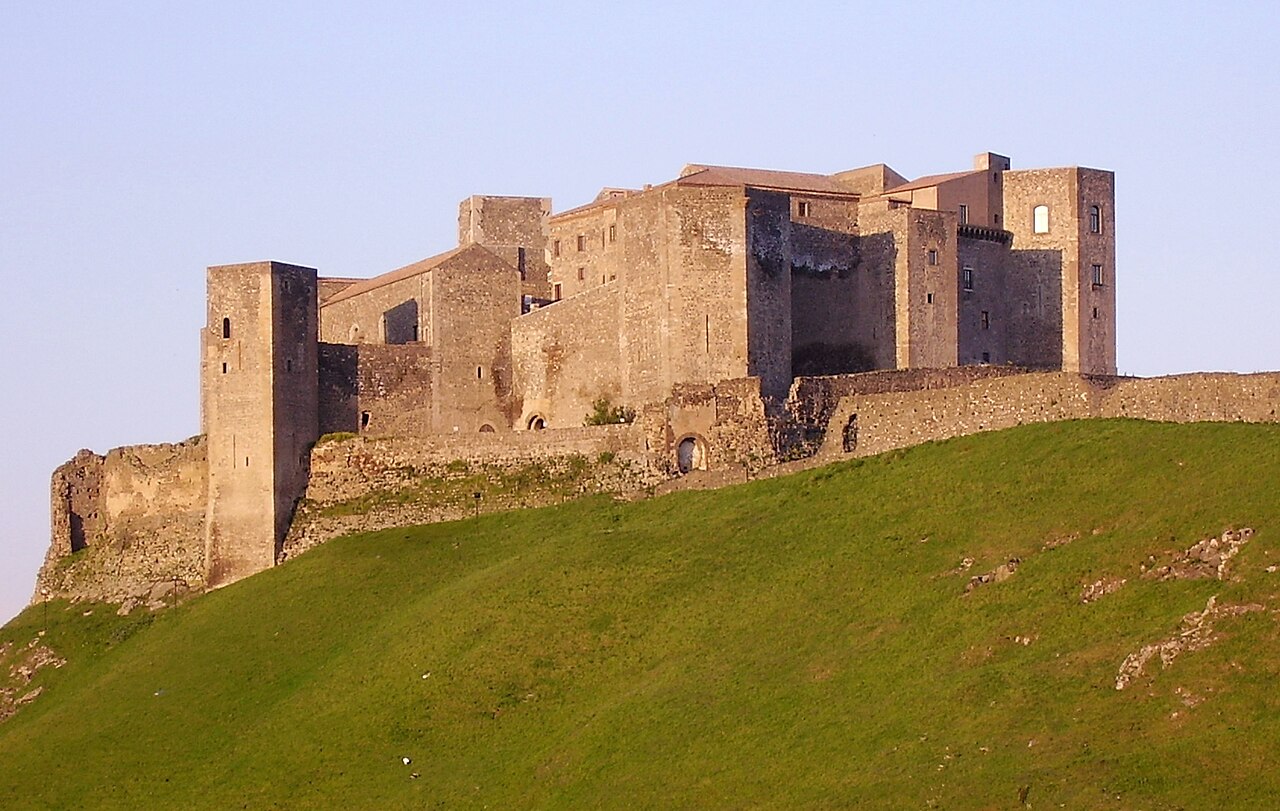
Ducal Castle of Bisaccia
The Ducal Castle of Bisaccia is a prominent medieval fortress located on a strategic spur of Mount Calvario in Bisaccia, Italy. Originally constructed by the Lombards around the middle of the 8th century, this castle has undergone significant transformations reflecting the region's turbulent history and evolving defensive needs. Its primary role was to serve as a stronghold controlling a vital defensive line, safeguarding the territories of western and northern Puglia.
Early construction and lombard origins
The initial construction of the castle dates back to the early medieval period, specifically the 8th century, when the Lombards sought to fortify their holdings in southern Italy. The choice of the castle's location on Mount Calvario was strategic, providing commanding views over the surrounding valley and enabling control over key routes. The original structure was likely a simple fortification, built using local materials, including large river stones and squared limestone blocks bonded with a very hard mortar, which contributed to the castle's enduring strength.
Remodelling under frederick ii and medieval fortifications
Following the devastating earthquake of 1198, the castle underwent significant remodelling under the orders of Frederick II of Swabia, a ruler known for his architectural patronage and military acumen. This period saw the strengthening of the castle's defensive features, including the construction of the imposing square donjon tower, which rises approximately 12 metres high. Originally, the donjon was equipped with a drawbridge, a common medieval defensive element designed to control access and enhance security.
The castle's walls, composed of robust masonry, were designed to withstand sieges and attacks. The combination of large river stones and limestone blocks set in hard mortar created formidable fortifications that have largely survived to the present day. The castle's defensive layout allowed it to dominate the surrounding landscape, providing a vantage point for surveillance and defense.
Transition to a noble residence in the renaissance
By the 16th century, the military importance of the castle diminished, and it was transformed into a fortified noble residence. This change reflected broader shifts in warfare and political stability in the region. The castle became the home of the first Duke of Bisaccia, Ascanio Pignatelli, whose family coat of arms is still visible on the main door, symbolizing the Pignatelli family's long tenure until the early 19th century.
The interior was adapted to accommodate residential needs, with the castle featuring 42 rooms. The ground floor opens into a paved courtyard accessed through a large entrance portal and a short hallway. A stone staircase, highlighted by an elegant artistic loggia, leads visitors to the main floor where several rooms have been restored, including a notable hall now used as a conference room.
On the upper floor, visitors can admire a remarkable loggia consisting of twenty-eight arches supported by small columns made from locally carved stone. This architectural feature offers panoramic views of the valley, blending aesthetic appeal with the castle's defensive origins.
Cultural significance and notable guests
The Ducal Castle of Bisaccia holds cultural and historical significance beyond its architectural features. Tradition holds that the renowned literary scholar Torquato Tasso stayed at the castle in 1588 as a guest of Giovan Battista Manso, the then feudal lord. This connection adds a layer of literary heritage to the castle's history.
The civic archaeological museum and archaeological finds
Within the castle complex, the recently established Civic Archaeological Museum houses important artifacts that shed light on the region's ancient past. Among the most notable exhibits is the Tomb of the Princess, dating back to the Iron Age (late 9th to 7th century BC). This tomb is distinguished by a well-defined stone enclosure containing a rich assemblage of valuable vases, jewelry, and other items, indicating the presence of a noble individual in the area's early history.
Architectural features and visitor experience
The castle's architecture is characterized by its massive defensive walls, the square donjon tower, and the elegant loggias. The use of local carved stone in the columns and arches reflects the craftsmanship of the region. The castle's elevated position offers visitors sweeping views of Bisaccia and the surrounding valley, enhancing its appeal as a historical and tourist site.
Visitors enter through a large portal into a courtyard that serves as a central organizing space. The stone staircase leading to the upper floors is a highlight, especially with the artistic loggia that crowns it. The restored rooms on the main floor provide a glimpse into the castle's noble past, while the upper loggia's arches create a striking visual rhythm and a place for contemplation and observation.
Location and surroundings
Situated near the Co-Cathedral of the Nativity of Mary, the Ducal Castle dominates the town of Bisaccia. Its prominent position makes it a landmark visible from many vantage points in the area. The castle not only offers architectural interest but also serves as a cultural hub through its museum and event spaces.
Frequently asked questions (FAQ)
- What is the historical significance of the Ducal Castle of Bisaccia?
- The Ducal Castle of Bisaccia, dating back to the 11th century, served as a crucial stronghold in the region and has witnessed many historical events over the centuries. Its strategic location allowed it to play a vital role in the defense against invasions and as a residence for nobility, showcasing the rich history of Bisaccia.
- When is the best time to visit the Ducal Castle of Bisaccia?
- The best time to visit the Ducal Castle of Bisaccia is during the spring and early autumn months when the weather is mild and pleasant. This allows visitors to enjoy the beautiful surroundings and the stunning views from the castle without the discomfort of extreme temperatures.
- What are the opening hours of the Ducal Castle of Bisaccia?
- The Ducal Castle of Bisaccia is typically open to visitors from 10 AM to 6 PM, Tuesday through Sunday. It is advisable to check the official website or contact local tourism offices for any seasonal changes or special closures.
- Can I take guided tours of the Ducal Castle of Bisaccia?
- Yes, guided tours are available at the Ducal Castle of Bisaccia. These tours provide in-depth information about the castle’s history, architecture, and significance, offering a richer experience for visitors.
- Is it possible to access the Ducal Castle of Bisaccia with mobility issues?
- While the Ducal Castle of Bisaccia is a historic site with some uneven terrain, efforts have been made to improve accessibility. However, visitors with mobility issues should contact the castle management in advance to inquire about specific accessibility options and any potential limitations.
- What are the ticket prices for the Ducal Castle of Bisaccia?
- Tickets for the Ducal Castle of Bisaccia are generally priced around €5 for adults, with discounts available for students and seniors. Family packages and group rates may also be offered, so it’s best to check in advance for the most current pricing information.
- Are there any nearby attractions to visit while in Bisaccia?
- Yes, there are several nearby attractions worth visiting, including the historic town center of Bisaccia, which features charming streets and local eateries. Additionally, the surrounding countryside offers beautiful hiking trails and scenic views of the Campania region.
- How do I get to the Ducal Castle of Bisaccia?
- The Ducal Castle of Bisaccia is accessible by car and public transport, with local buses connecting to nearby towns. For those driving, there is parking available near the castle, making it convenient for visitors traveling from different regions.
Information
Loading map...
Visitor reviews
No reviews yet. Been here? Write the first review and help other travelers!
Write the first reviewVisited this castle? Share your experience
Your review helps other travelers and adds first-hand knowledge to our encyclopedia.