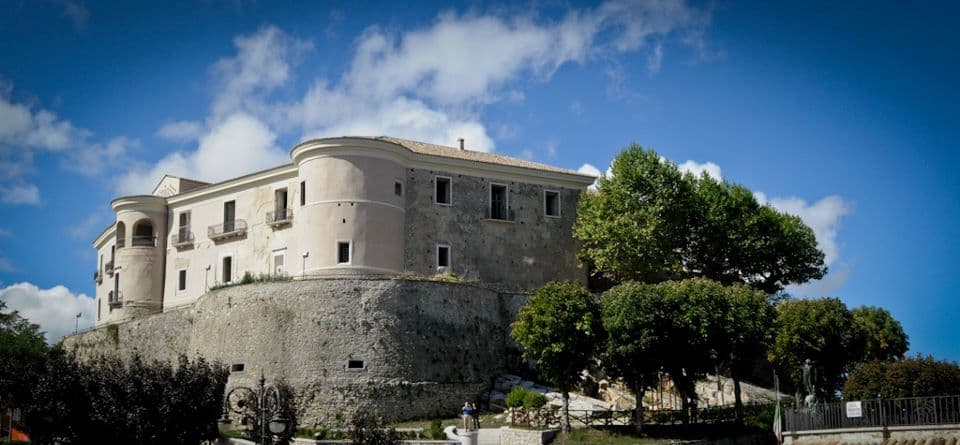
Gesualdo Castle
Gesualdo Castle stands as a remarkable example of a late medieval hill castle in southern Italy, embodying centuries of history, architectural evolution, and cultural significance. Its origins trace back to the early Middle Ages, with foundations possibly laid during the Lombard conquests in the 7th century, making it a site of strategic military importance from the outset. The castle's location in Gesualdo, Italy, atop a naturally defensible hill, underscores its initial role as a fortress designed to protect the region against external threats, particularly from Byzantine forces.
The castle's documented history begins in the 12th century under Norman rule, when it was governed by William d’Altavilla and his family. This long Norman-Swabian tenure, lasting nearly five centuries, cemented the castle's status as a feudal stronghold and administrative center. Over time, the fortress evolved from a purely military installation into a residence and cultural venue, especially during the Renaissance period under the patronage of Prince Carlo Gesualdo.
Early history and medieval fortifications
The initial construction of Gesualdo Castle is attributed to either the legendary knight Sessualdo, tutor to Romuald I, Duke of Benevento, or to Radelchis I, Prince of Benevento, in the 7th or 9th century respectively. The castle was strategically positioned to guard against Byzantine incursions and to secure the southern borders of the Lombard principality. Its early medieval origins are reflected in the robust defensive design, including four large circular towers connected by thick curtain walls, and additional ravelins—triangular fortifications that enhanced its protection against siege warfare.
During the Norman-Swabian era, the castle gained prominence as a military and administrative hub. The lords of the Altavilla family maintained control, overseeing the castle’s defenses and the surrounding lands. The fortress was a focal point in regional conflicts and power struggles, underscoring its importance in southern Italy’s medieval history.
Renaissance transformation under carlo gesualdo
The late 16th century marked a significant turning point for the castle under Prince Carlo Gesualdo, a nobleman famed not only for his aristocratic status but also for his pioneering contributions to polyphonic music. Gesualdo transformed the medieval fortress into a Renaissance mansion, reflecting the era’s cultural and artistic ideals. Renovations included the addition of new residential buildings and a theater, intended to host musical and theatrical performances, highlighting Gesualdo’s passion for the arts.
This period saw the castle shift from a defensive stronghold to a symbol of Renaissance culture and sophistication. The interior spaces were adapted to accommodate courtly life and artistic pursuits, blending Gothic architectural elements with Renaissance stylistic details. The castle’s evolution during this time illustrates the broader transition of many European fortresses into multifunctional residences and cultural centers.
19th-century restorations and architectural modifications
By the mid-19th century, Gesualdo Castle had fallen into a state of disrepair. In 1855, the Caccese family acquired the property and initiated extensive restoration efforts. These renovations introduced 19th-century architectural features, including a refreshed façade and the unusual addition of iron railings, which are atypical for medieval or Renaissance castles. The restorations also physically connected the castle to the nearby Piazza Neviera, integrating it more closely with the urban fabric of the town.
The 19th-century interventions reflect a period of renewed interest in historic preservation and adaptation of heritage sites for contemporary use. While these changes altered some of the castle’s medieval character, they also ensured its survival and continued relevance within the community.
Damage, restoration, and current use
The castle suffered severe damage during the 1980 Irpinia earthquake, which impacted much of the region. Following this, restoration efforts commenced in the early 21st century with the goal of stabilizing and preserving the castle’s structural and artistic heritage. These ongoing works have focused on safeguarding the medieval walls, Renaissance additions, and 19th-century modifications.
Today, Gesualdo Castle is partially open to the public and serves as a cultural venue hosting events that celebrate its rich history and particularly the legacy of Carlo Gesualdo. Plans are underway to establish a polyphony education high school within its premises, further cementing the castle’s role as a center for music and cultural education.
Architectural features and layout
Gesualdo Castle’s layout is characteristic of a hill castle with a strong military design adapted over centuries. The fortress is enclosed by four large circular towers connected by formidable curtain walls, creating a defensible perimeter. The addition of ravelins enhances the defensive capabilities, providing layered protection against attackers.
Within the walls lies a central courtyard, which historically served as the heart of the castle’s daily life and administration. The interior spaces reveal a complex layering of styles, from the original medieval fortifications to Renaissance residential quarters and 19th-century decorative elements.
The castle’s exterior façade, shaped significantly by 19th-century restorations, exhibits architectural features uncommon in earlier periods, such as the iron railings and the integration with Piazza Neviera. Inside, visitors can observe the blend of Gothic and Renaissance art and architecture, including the notable theater built by Carlo Gesualdo, which stands as a testament to the castle’s cultural transformation.
Frequently asked questions (FAQ)
- What is the historical significance of Gesualdo Castle?
- Gesualdo Castle, built in the late 16th century, is notable for its association with the noble family of Gesualdo and its rich history tied to the Italian Renaissance. The castle is famous for its unique architecture and for being the residence of Carlo Gesualdo, a notable composer of the late Renaissance. It stands as a testament to the cultural and artistic heritage of the region.
- When was Gesualdo Castle constructed?
- Gesualdo Castle was constructed between 1560 and 1570, during the reign of the Gesualdo family. It reflects the architectural styles of that era, combining defensive features with Renaissance aesthetics. The castle has undergone various restorations, preserving its historical integrity for visitors to enjoy today.
- Can I visit Gesualdo Castle? How do I get there?
- Yes, Gesualdo Castle is open to visitors, allowing you to explore its fascinating history and stunning architecture. It is located in the town of Gesualdo, easily accessible by car or public transport from nearby cities. Check local transportation options for the best routes.
- What are the opening hours of Gesualdo Castle?
- Gesualdo Castle typically opens to visitors from 10 AM to 6 PM, but hours may vary depending on the season or special events. It is advisable to check the official website or contact local tourism offices for the most current information before planning your visit. Arriving early can enhance your experience with fewer crowds.
- Is it possible to take guided tours of the castle?
- Yes, guided tours are available at Gesualdo Castle, offering visitors in-depth insights into its history and architecture. These tours are often conducted by knowledgeable guides who can provide context about the castle's significance and its former inhabitants. Check the schedule in advance to secure your spot.
- What are the ticket prices for visiting Gesualdo Castle?
- Ticket prices for Gesualdo Castle are generally affordable, with discounts available for students and seniors. Prices may vary based on the type of tour or special exhibitions being held. It is recommended to purchase tickets in advance to avoid long lines during peak visiting times.
- When is the best time to visit Gesualdo Castle?
- The best time to visit Gesualdo Castle is during the spring and fall when the weather is mild and pleasant. These seasons provide an excellent backdrop for exploring the castle and its surrounding landscapes. Visiting during weekdays may also help you avoid the larger crowds often present on weekends.
- Are there any nearby attractions to visit while in Gesualdo?
- Yes, while visiting Gesualdo Castle, you can also explore nearby attractions such as the beautiful Santuario di Sant'Antonio and the picturesque town of Gesualdo itself, known for its charming streets and local cuisine. The surrounding area is rich in natural beauty and historical sites, making it a worthwhile day trip. Plan your itinerary to make the most of your visit.
- Is Gesualdo Castle accessible for individuals with mobility challenges?
- Gesualdo Castle has made efforts to improve accessibility for visitors with mobility challenges, including ramps and designated pathways. However, some areas may still pose challenges due to the castle's historical layout and structure. It is advisable to contact the castle administration beforehand to inquire about specific accessibility features and accommodations.
Photo gallery

Photo by Gopes77•Public domain
Information
Website
Visit websiteSources & official resources
Verify the information above using these authoritative references.
Loading map...
Visitor reviews
No reviews yet. Been here? Write the first review and help other travelers!
Write the first reviewVisited this castle? Share your experience
Your review helps other travelers and adds first-hand knowledge to our encyclopedia.



