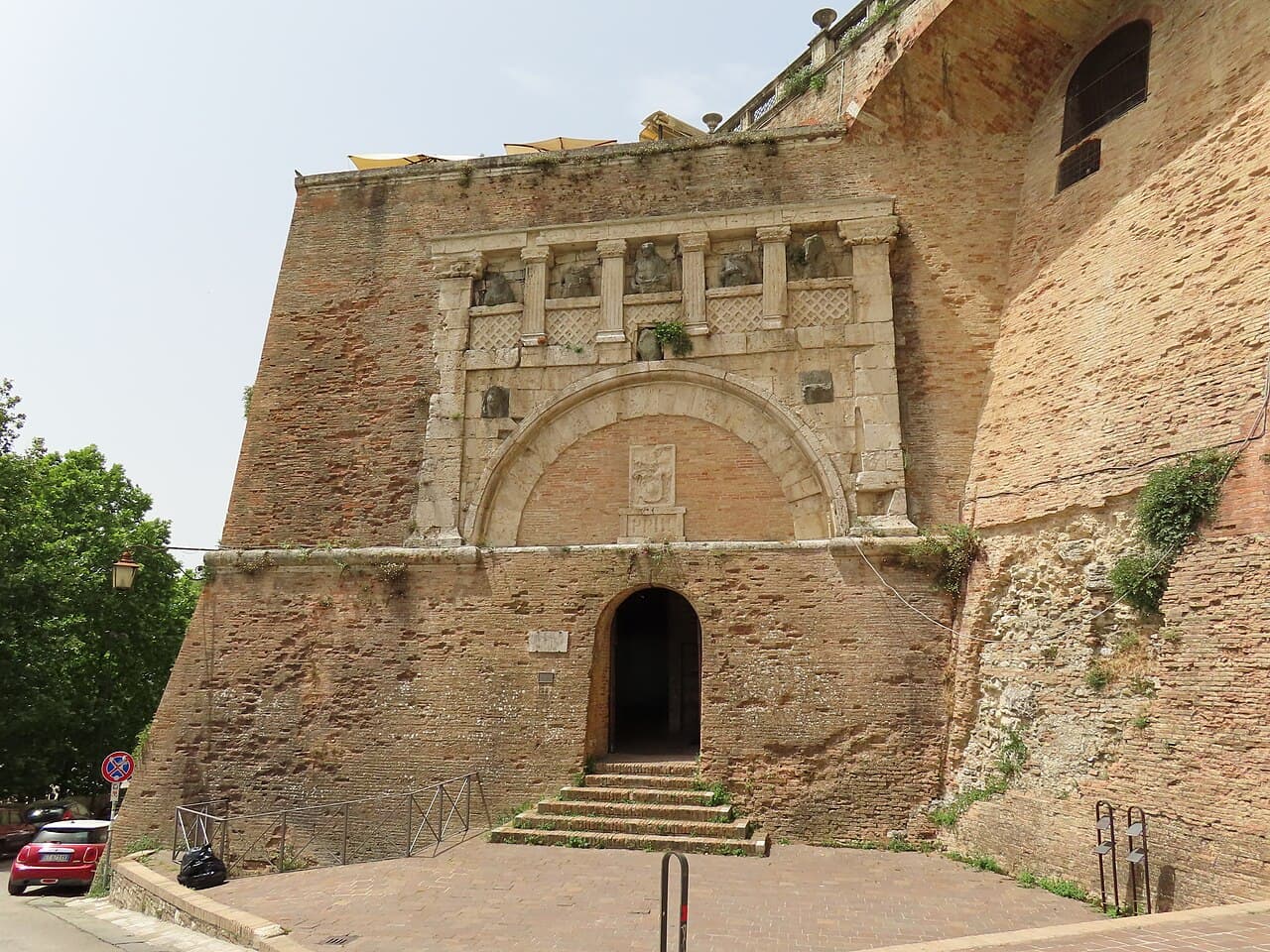
Rocca Paolina
Rocca Paolina is a significant Renaissance fortress located in Perugia, Italy, constructed between 1540 and 1543 by order of Pope Paul III. The fortress was designed by the renowned architect Antonio da Sangallo the Younger, whose plans reflected the military architectural advancements of the period. Its construction dramatically altered the urban landscape of Perugia, involving the demolition of a large portion of the city's historic fabric, including Etruscan, Roman, and medieval structures.
Historical context and construction
The fortress was built as a symbol of papal authority following the papacy's efforts to consolidate control over the region. The site chosen for Rocca Paolina was strategically important, situated on a hill to dominate the city and surrounding territory. The construction required the destruction of the Baglioni family residences in the burgh of Santa Giuliana, alongside over a hundred tower-houses, gates, churches, and monasteries. This extensive demolition was part of a deliberate strategy to suppress local noble power and prevent future rebellions.
Architectural design and features
Antonio da Sangallo the Younger incorporated advanced defensive features typical of the Renaissance military architecture, including thick bastioned walls and a complex system of ramparts. The fortress was designed to withstand artillery bombardment, reflecting the evolving nature of warfare in the 16th century. The original city streets were transformed into underground passageways beneath the fortress, which today are accessible to visitors and reveal layers of Perugia's urban history.
Destruction and restoration phases
Rocca Paolina's history includes periods of conflict and transformation. It was partially destroyed during the 1848 uprisings against papal rule, a reflection of the turbulent political climate of the time. Pope Pius IX ordered its reconstruction in 1860, but the fortress was ultimately demolished in 1861 after Perugia was annexed by the Kingdom of Italy. The demolition aimed to erase the symbol of papal oppression and restore the city's autonomy.
Modern rediscovery and preservation
In 1932, restoration efforts uncovered the underground via Bagliona and remnants of the medieval quarter beneath the fortress. Further restoration work took place in 1965, enhancing public access and preservation. Today, visitors can explore the extensive underground network that preserves the memory of the city's medieval past. Visible remains of the fortress include a supporting wall on viale Indipendenza and a bastion on via Marzia, which has been repurposed as an exhibition space and museum, providing cultural and historical insights.
Cultural and architectural significance
Rocca Paolina represents a critical example of Renaissance military architecture and urban transformation. Its construction marked a decisive moment in Perugia's history, symbolizing the shift from local noble dominance to centralized papal control. The fortress's underground passages offer a unique glimpse into the layering of urban development, showcasing how military needs reshaped the city's medieval fabric.
Today, Rocca Paolina serves not only as a historical monument but also as a cultural venue, hosting exhibitions and events that connect visitors with Perugia's complex past. The site's preservation highlights the challenges of maintaining such structures in modern urban environments while providing educational opportunities about Renaissance fortifications and Italian history.
Frequently asked questions (FAQ)
- What is Rocca Paolina?
- Rocca Paolina is a historic fortress located in Perugia, Italy, known for its impressive architecture and rich history. Built in the 16th century by Pope Paul III, the castle symbolizes the papal power over the region and offers a glimpse into the Renaissance era.
- When was Rocca Paolina built?
- Construction of Rocca Paolina began in 1540 and was completed in 1543. The fortress was designed by the architect Antonio da Sangallo the Younger and was part of a larger strategy to assert papal authority in Perugia.
- Can I visit Rocca Paolina?
- Yes, Rocca Paolina is open to visitors, allowing you to explore its impressive structures and underground passages. Visitors can walk through the fortress and enjoy views of the surrounding city and landscape.
- What are the opening hours for Rocca Paolina?
- Rocca Paolina is generally open to the public every day, but opening hours may vary seasonally. It's advisable to check the official website or local tourist information for the most current visiting hours before planning your trip.
- Is there an admission fee for Rocca Paolina?
- There is no admission fee to enter Rocca Paolina, making it an accessible attraction for all visitors. However, some special exhibitions or guided tours may have a separate charge, so be sure to inquire on-site.
- What is the best time to visit Rocca Paolina?
- The best time to visit Rocca Paolina is during the spring and fall when the weather is mild and pleasant. These seasons also tend to have fewer tourists, allowing for a more enjoyable experience as you explore the castle and its surroundings.
- How accessible is Rocca Paolina for visitors with disabilities?
- Rocca Paolina is partially accessible to visitors with disabilities, with some areas being easier to navigate than others. It's recommended to contact the site in advance for detailed information regarding accessibility options and assistance available on-site.
- What nearby attractions can I visit after Rocca Paolina?
- After visiting Rocca Paolina, you can explore other nearby attractions such as the historic Palazzo dei Priori and the beautiful Etruscan Arch. The charming streets of Perugia also offer numerous cafes, shops, and art galleries to enjoy.
Photo gallery

Information
Loading map...
Visitor reviews
No reviews yet. Been here? Write the first review and help other travelers!
Write the first reviewVisited this castle? Share your experience
Your review helps other travelers and adds first-hand knowledge to our encyclopedia.



