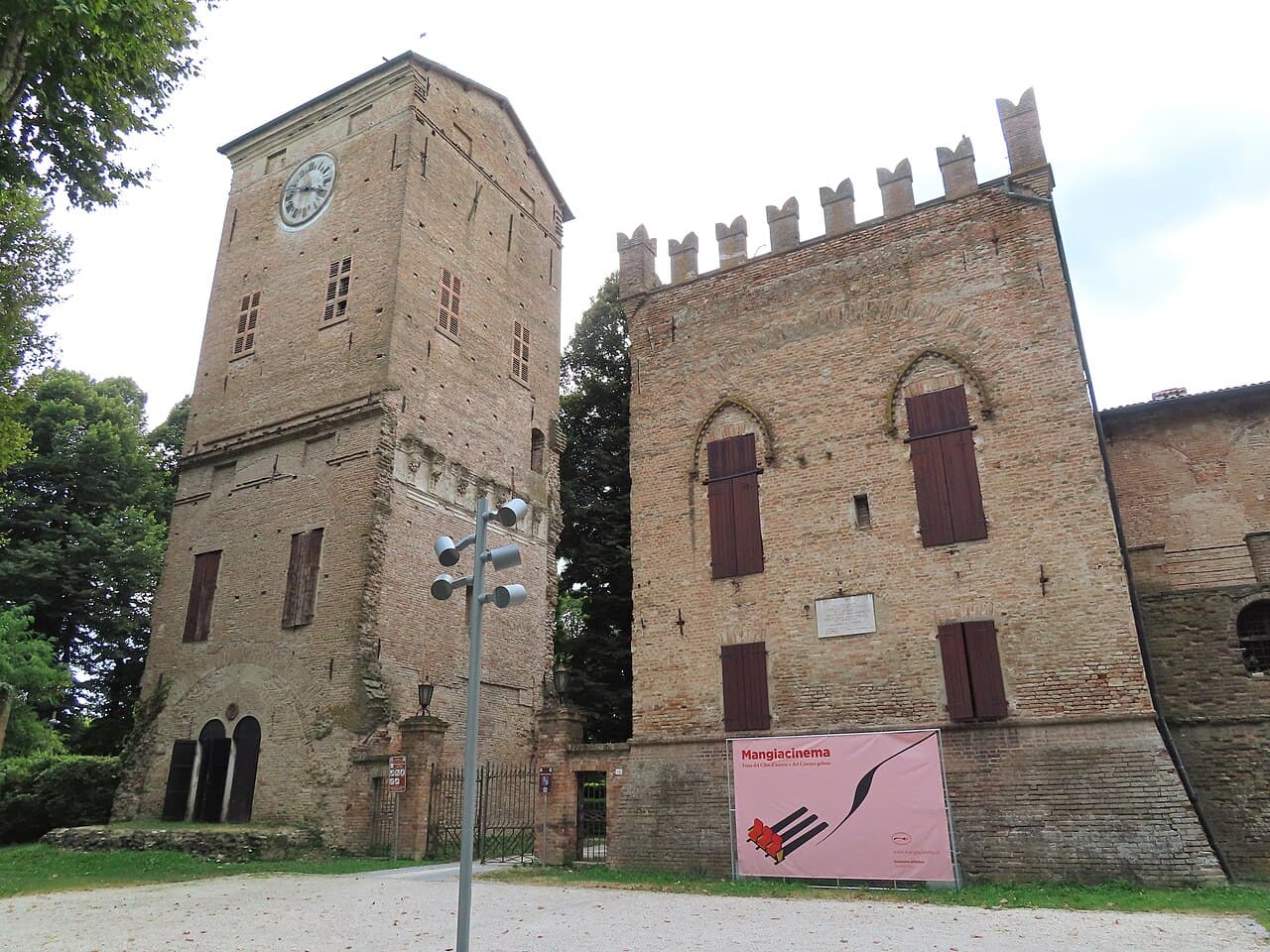
Rocca dei Rossi
Rocca dei Rossi is a remarkable hill castle located in the Emilia-Romagna region of Italy, steeped in centuries of history and architectural evolution. Originally, the first fortress defending the territory where the modern town of Roccabianca now stands was established in the 12th century near the present hamlet of Fossa, then known as Rezinoldo or Arzenoldo. This early castle was under the control of Oberto Pallavicino, who was granted the fief by Holy Roman Emperor Frederick Barbarossa in 1189. The region was a contested ground between powerful noble families, notably the Pallavicino and Rossi families, the latter lords of San Secondo.
In the early 15th century, the castle and surrounding lands were awarded to the Rossi family by Emperor Sigismund of Luxembourg in 1413. However, the Pallavicino family retook and destroyed the fortress in 1416, which led to prolonged disputes over the territory. To resolve this conflict, Duke Francesco Sforza of Milan officially awarded the fief to Pier Maria Rossi in 1449. Construction of the new fortress began in 1450 and was completed around 1465. This new structure was named Roccabianca, possibly in honor of Bianca Pellegrini, Pier Maria's lover, who received the castle in 1467. Alternatively, some historians suggest the name derives from the white plaster that covered the facades.
Historical conflicts and ownership changes
During the late 15th century, political tides shifted dramatically with Ludovico il Moro's rise to power in Milan. Aligning with the Pallavicino and Sanvitale families, Ludovico opposed the Rossi family. In 1482, during the "War of the Rossis," the fortress was besieged and surrendered without major damage, marking a change in ownership to Marquis Gian Francesco Pallavicino. Subsequent attempts by the Rossi family to reclaim the castle were unsuccessful. In the 16th century, the castle passed to the Rangoni counts, who held it for over two centuries before it returned to the Pallavicino family in the late 18th century. Later, in the 19th and 20th centuries, the castle changed hands several times, including ownership by Duchess Marie-Louise of Parma and private families such as the Facchi and Scaltriti families.
Architectural features and layout
Rocca dei Rossi is built on a rectangular layout centered around a spacious central courtyard. The courtyard features a massive two-story bergfried (keep), slightly off-center opposite the main entrance, offering commanding views of the surrounding plains. The castle is encircled by a moat and fortified with two large corner towers at the north and south ends. Portions of the outer brick walls survive, including a sloped base or talus on the southeast and south sides, integrated into nearby private residences.
The exterior walls are primarily brick with whitewashed sections, displaying defensive features such as machicolations supported by corbels and battlements, some of which remain intact. The main entrance is protected by an ancient ravelin, a detached defensive outwork, and originally had a drawbridge, now replaced by a small brick bridge. Evidence of the drawbridge remains visible through bolt slots in the walls. Above the pointed-arch main portal is a white marble medallion bearing the combined coats of arms of the Rangoni and Pallavicini families.
Interior and decorative elements
Inside the courtyard, the walls are covered with dense green vines, interrupted by windows added in different eras. The tops of the walls are crowned by massive projecting cornices. On the eastern side lies the Honor Portico, a broad brick colonnade supported by square capitals resting on columns, featuring three large rounded arches. The portico walls and groin vaults are adorned with 15th-century frescoes displaying intertwined coats of arms of Pier Maria II de’ Rossi and Bianca Pellegrini, surrounded by plant motifs and medlar fruits symbolizing fidelity. The frescoes include the motto "Although unripe, now sweeter than ripe," reinforcing the theme of love and loyalty.
The castle’s southeast tower houses the Sala di Griselda, named after a cycle of frescoes illustrating the story of Griselda from Boccaccio’s Decameron. These frescoes are precise modern reconstructions of originals removed in 1897 and preserved in Milan’s Castello Sforzesco. The vaulted ceiling above depicts an astrological cycle, interpreted either as Pier Maria II de’ Rossi’s horoscope or a Mesopotamian star map.
Several rooms on the ground floor feature exceptional painted wooden beam ceilings with 17th-century frescoed friezes commissioned by the Rangoni family. These depict fortified towns, cherubs (putti), caryatids, ecclesiastical banners, and noble coats of arms. Other chambers illustrate real and imaginary landscapes alongside angels and the Rangoni Farnese coats of arms. Walls are decorated with portraits of dukes, kings, and noblewomen connected to the Farnese and allied families.
The Sala Rangoni in the northwest corner contains 16th- and 17th-century stucco decorations shaped like shells and landscape frescoes. A lunette above a large window shows the Madonna and Child with a donor figure, likely dating from the early 1500s.
Upper floors and vaulted cellars
The upper floor contains four chambers furnished with antique pieces and wooden coffered ceilings, enhancing the castle's historical ambiance. The Salone del Camino, once a court theater, centers around a large terracotta fireplace and houses three early 18th-century paintings, probably by Stefano Maria Legnani, depicting scenes from the story of Judith and Holofernes.
Additional rooms feature wooden beam ceilings painted in the 16th or 17th-century style and collections of antique copper kitchen utensils. Beneath the castle, extensive vaulted cellars originally built as stables now serve practical purposes such as aging culatello, a prized cured meat, balsamic vinegar, and spirits stored in oak barrels. Large barrels occupy the vat room within the bergfried’s cellars.
Later history and cultural significance
Throughout its history, Rocca dei Rossi has undergone numerous alterations and expansions, reflecting changing military, residential, and symbolic functions. The castle’s robust defensive character is fused with refined decorative elements, showcasing the layered history and cultural heritage of this enduring fortress. In the 20th century, restoration efforts uncovered original frescoes hidden beneath layers of paint, leading to the castle’s reopening to the public in 2003.
Today, the castle is part of a network of regional castles hosting cultural events and museums, including the Distillery Museum housed within its walls. It remains a significant historical monument, illustrating the complex feudal dynamics of northern Italy and the artistic achievements of its noble patrons.
Frequently asked questions (FAQ)
- What is the historical significance of Rocca dei Rossi?
- Rocca dei Rossi is a remarkable example of a 15th-century fortress that showcases the architectural style and military strategies of the time. It played a crucial role in the defense of the region during various conflicts and reflects the socio-political dynamics of Renaissance Italy.
- When was Rocca dei Rossi built?
- The construction of Rocca dei Rossi began in the late 15th century, specifically around 1470, under the direction of the Rossi family. Over the years, it underwent several modifications and restorations, contributing to its architectural richness.
- What are the opening hours for visiting Rocca dei Rossi?
- Rocca dei Rossi is typically open to visitors from Tuesday to Sunday, with hours varying by season. It is advisable to check the official website for the most current opening times to plan your visit accordingly.
- Can I purchase tickets in advance for Rocca dei Rossi?
- Yes, tickets for Rocca dei Rossi can often be purchased in advance through the official website or at nearby ticket offices. This can help you avoid long queues and ensure a smooth entry on your visit day.
- Is Rocca dei Rossi accessible for visitors with disabilities?
- Rocca dei Rossi strives to be accessible for all visitors, with some facilities in place for those with mobility challenges. However, due to the historical nature of the castle, some areas may have limitations, so it's best to inquire ahead of your visit.
- What is the best time to visit Rocca dei Rossi?
- The best time to visit Rocca dei Rossi is during the spring and early autumn months, when the weather is mild and the landscape is particularly beautiful. Additionally, these periods tend to have fewer crowds, allowing for a more enjoyable experience.
- What nearby attractions can I explore after visiting Rocca dei Rossi?
- After visiting Rocca dei Rossi, you can explore the charming town of Roccabianca, which offers quaint shops and local eateries. Additionally, nearby attractions include the beautiful landscapes of the Po Valley and other historical sites such as the Castle of Torrechiara.
- How do I get to Rocca dei Rossi?
- Rocca dei Rossi is conveniently located in Roccabianca, Italy, and can be accessed by car or public transportation. There are regional buses that connect Roccabianca to nearby cities, making it easy to include in your travel itinerary.
- What are the ticket prices for Rocca dei Rossi?
- Ticket prices for Rocca dei Rossi vary based on age and special discounts, with reduced rates for children, students, and seniors. It is recommended to check the official website for the latest pricing information and any special offers available during your visit.
Photo gallery

Information
Website
Visit websiteSources & official resources
Verify the information above using these authoritative references.
Loading map...
Visitor reviews
No reviews yet. Been here? Write the first review and help other travelers!
Write the first reviewVisited this castle? Share your experience
Your review helps other travelers and adds first-hand knowledge to our encyclopedia.



