Rocca Borromeo di Angera
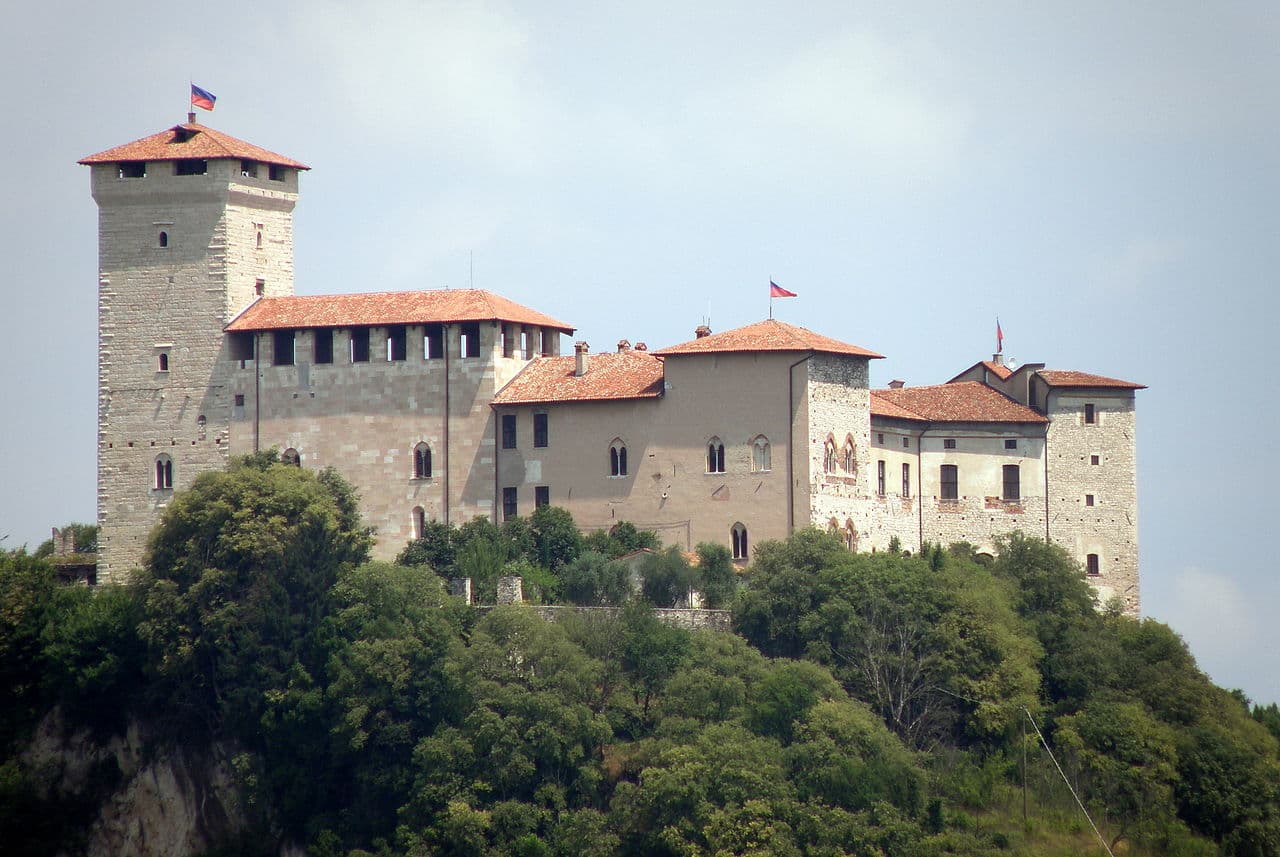
The Rocca Borromeo di Angera, also known as Rocca d'Angera or Borromeo Castle, is a prominent hill castle situated above the town of Angera in the Province of Varese, northern Italy. Perched strategically on a rocky promontory overlooking the southern shores of Lago Maggiore, the fortress offers commanding views across the lake and the surrounding landscape. It has a rich history dating back to the medieval period, reflecting the military and residential architecture of northern Italy through several centuries.
The castle originally belonged to the Archbishop of Milan, an indication of its importance in the ecclesiastical and political landscape of the region during the Middle Ages. Subsequently, control passed to the powerful Visconti family, rulers of Milan, who enhanced its fortifications and residential quarters. In the late medieval period, the castle came into the possession of the Borromeo family, one of the most influential noble families in Lombardy, who have maintained ownership to the present day, preserving the castle as a cultural and historical monument.
Architectural layout and defensive features
The Rocca Borromeo di Angera is composed of four main sections constructed during different periods, which together form a cohesive defensive complex around a central internal courtyard. The castle's design exemplifies the evolution of medieval military architecture, combining robust fortifications with residential spaces.
On the northeastern side, a fortified wall extends beyond the main structure, featuring corner turrets that enhance the castle's defensive capabilities. This wall curves toward the lake, terminating at the edge of a cliff where it encloses a garden. The garden area provides a rare blend of military and leisure functions within the fortress, reflecting the transition of castles from purely defensive strongholds to noble residences.
Historical significance and ownership
The castle's history is closely intertwined with the political dynamics of northern Italy. Initially under the Archbishopric of Milan, the fortress served as a strategic point of control over the southern shores of Lago Maggiore. The transfer to the Visconti family marked a period of expansion and fortification, as the Visconti sought to consolidate their power in the region.
From the late 14th century onward, the Borromeo family took possession of the castle. The Borromeos were instrumental in maintaining and restoring the fortress, adapting it to changing military technologies and residential needs. Their stewardship ensured the castle's preservation through turbulent periods, including wars and political upheaval in Lombardy.
Relationship with rocca di arona
The Rocca Borromeo di Angera is prominently visible from across Lago Maggiore, particularly from the town of Arona. There, the ruins of the Rocca di Arona stand, another fortress historically linked to the same lineage of ownership, passing through the archbishopric, Visconti, and Borromeo families. This geographical and historical connection underscores the strategic importance of controlling both shores of the lake for defense and regional influence.
Cultural heritage and current status
Today, the Rocca Borromeo di Angera remains under the ownership of the Borromeo family and functions as a cultural landmark. The castle is well preserved, allowing visitors to explore its medieval architecture, including the towers, walls, and courtyards. It hosts exhibitions, cultural events, and offers panoramic views of Lago Maggiore, making it an important tourist destination.
The castle's preservation reflects the ongoing commitment to maintaining Italy's medieval heritage and provides insight into the architectural and social history of the region. Its combination of military and residential features illustrates the multifaceted role of castles in northern Italy during the Middle Ages and Renaissance.
Photo gallery

Information
Loading map...
Visitor reviews
No reviews yet. Been here? Write the first review and help other travelers!
Write the first reviewVisited this castle? Share your experience
Your review helps other travelers and adds first-hand knowledge to our encyclopedia.