Massino Visconti Castle
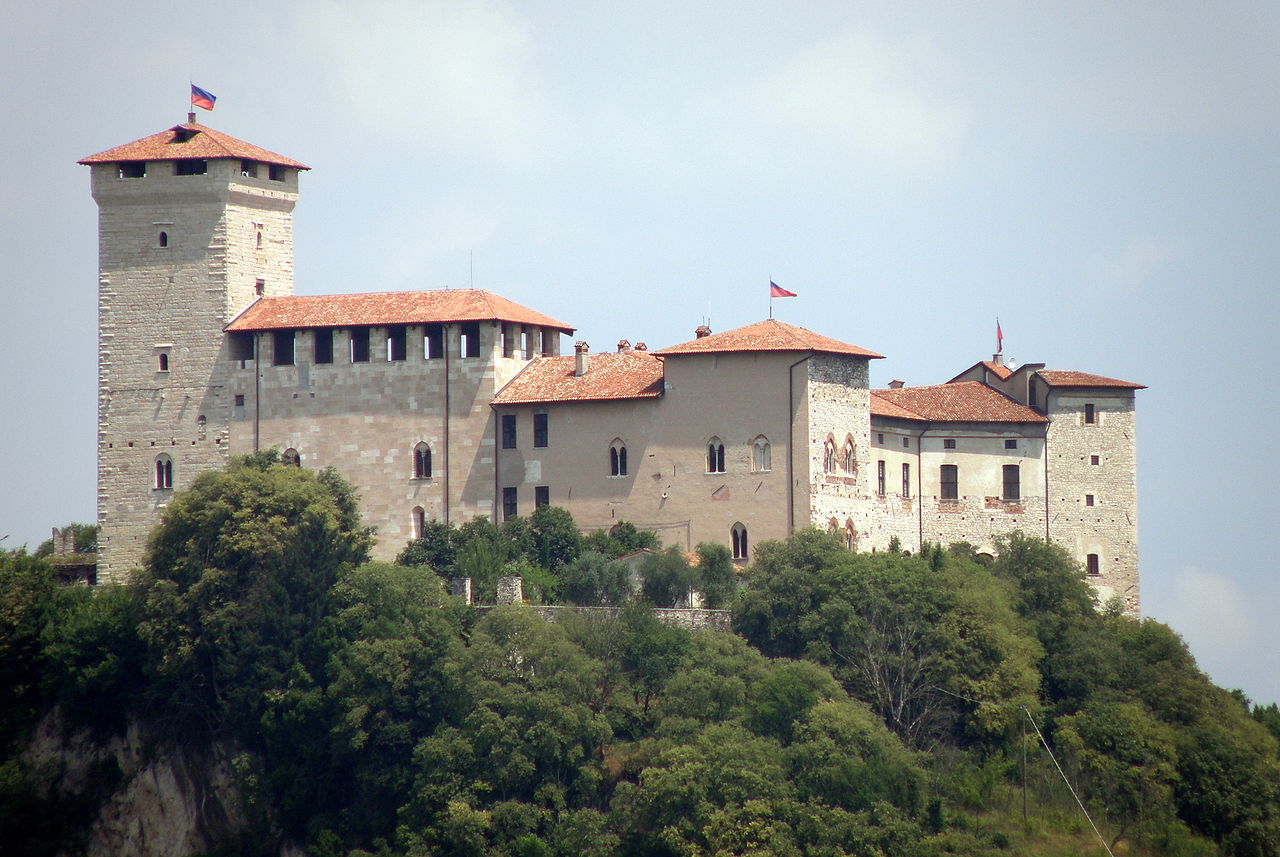
Massino Visconti Castle stands prominently on the Vergante hills overlooking the municipality of Massino Visconti in the Province of Novara, Piedmont, northern Italy. This hill castle has been a significant stronghold and residence of the Visconti family since the 12th century, serving as one of their preferred homes and a symbol of their regional power. The castle's strategic location offers commanding views over Lake Maggiore and the surrounding territories, a feature that likely attracted the Visconti to acquire the site in 1134 from the Abbey of Saint Gall.
The earliest known mention of a fortification at Massino dates back to the 9th century, when the settlement was under the prerogative of Engelberga, wife of Emperor Louis II of Italy. At that time, the estate was donated to the monastery of San Sisto in Piacenza and later transferred to the Abbey of Saint Gall. In 1134, Guido Visconti, son of Ottone, was invested by the monks of Saint Gall with their properties and rights in Massino, a grant confirmed by King Conrad III in 1142. Since then, the castle has remained in the possession of various branches of the Visconti lineage, transitioning from the original Visconti di Massino to the Visconti d'Aragona in the 19th century, and later to the Visconti di San Vito.
Historical significance and lineage
The castle's history is deeply intertwined with the fortunes of the Visconti family, who were powerful lords and dukes of Milan. The site was frequented by the family ancestors and served as a symbol of their territorial control in the region. The castle's acquisition from the Abbey of Saint Gall marked a significant expansion of Visconti influence in northern Italy during the high medieval period.
In 1823, the castle passed from the Visconti di Massino cadet branch, descended from Ottone, to the Visconti d'Aragona. Later, in 1863, it was purchased by Pietro Pallestrini, a scholar and mayor of Massino, who undertook restoration efforts before transferring ownership to the Visconti di San Vito branch. Some furnishings and archival materials from the Visconti d'Aragona were relocated to the Visconti Castle of Somma Lombardo, another estate linked to the Visconti di San Vito.
Architectural features and layout
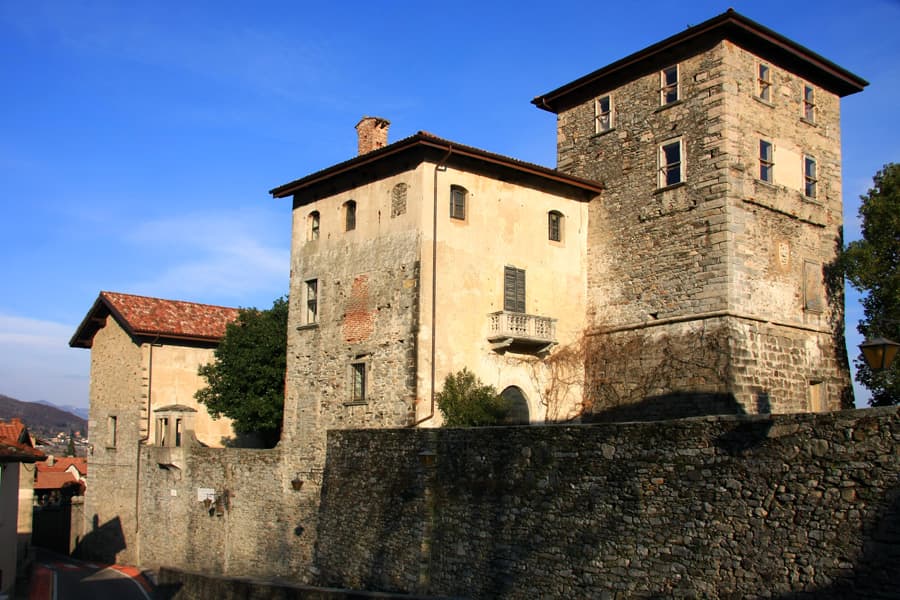
The castle is characterized by its imposing medieval architecture, typical of a hill castle built for defense and residence. It retains three main towers: two flank the southern gate, which is believed to be the original entrance, and are topped by the iconic Biscione emblem, a heraldic serpent associated with the Visconti family. The central tower stands prominently within the castle complex, serving as the main keep or donjon.
The castle's courtyard concludes with a terrace offering expansive views over the village and Lake Maggiore. On this side, an open loggia was constructed for public announcements, reflecting the castle's role in local governance and community engagement.
Defensive structures
The castle's fortifications include thick stone walls and battlements designed to withstand sieges common in the medieval period. The positioning on the hill provided natural defensive advantages, with steep slopes limiting access and visibility over the surrounding landscape allowing early warning of approaching threats.
Residential and administrative spaces
Within the walls, the castle housed residential quarters for the Visconti family and their retainers, as well as administrative chambers for managing the estate and local affairs. The presence of a loggia for public proclamations underscores the castle's dual role as a noble residence and administrative center.
Cultural and regional importance
The castle's significance extends beyond its military function. It has played a central role in the history of Massino Visconti, so much so that the municipality adopted the Visconti name in the early 20th century, acknowledging the castle's influence on local identity. The castle remains a landmark of cultural heritage in the region, attracting visitors interested in medieval architecture and the history of the Visconti family.
Access to the castle is convenient via the Genova Voltri-Gravellona Toce highway, with the nearest exit at Meina. The castle is situated near the church of Santa Maria, further embedding it in the historical fabric of the town.
Preservation and current status
Today, Massino Visconti Castle is well preserved, maintaining much of its medieval structure and appearance. Restoration efforts, particularly those undertaken in the 19th century by Pietro Pallestrini, have helped conserve the castle's architectural integrity. The castle continues to be owned by the Visconti di San Vito family, who have maintained its historical legacy.
The castle's condition and accessibility make it a valuable site for historical study and tourism, offering insights into medieval fortification techniques, noble residence layouts, and the regional history of northern Italy.
Visitor experience
Visitors to Massino Visconti Castle can explore its towers, courtyard, and terrace, enjoying panoramic views of Lake Maggiore and the surrounding hills. The castle's architecture provides a tangible connection to the medieval era and the enduring legacy of the Visconti family in the region.
Frequently asked questions (FAQ)
- What is the historical significance of Massino Visconti Castle?
- Massino Visconti Castle, dating back to the 13th century, is a remarkable example of medieval architecture in Italy. It played a crucial role in the defense strategies of the Visconti family and has witnessed significant historical events throughout the centuries.
- When was Massino Visconti Castle built?
- The construction of Massino Visconti Castle began in the 13th century, making it a notable structure of the medieval period. Over the years, it has undergone various renovations, but many of its original features remain intact.
- Can I visit Massino Visconti Castle?
- Yes, visitors are welcome to explore Massino Visconti Castle and its grounds. Guided tours are often available, providing insights into the castle’s rich history and architectural features.
- What are the opening hours for Massino Visconti Castle?
- Massino Visconti Castle typically opens to visitors from Tuesday to Sunday, with specific hours that may vary by season. It is advisable to check the castle’s official website or contact them directly for the most current opening times before planning your visit.
- Is it possible to access the castle with limited mobility?
- While Massino Visconti Castle has some accessibility features, the historic nature of the site may present challenges for visitors with limited mobility. It is recommended to contact the castle in advance to inquire about specific accommodations and accessibility options.
- When is the best time to visit Massino Visconti Castle?
- The best time to visit Massino Visconti Castle is during the spring and early autumn months when the weather is mild and pleasant for outdoor exploration. Additionally, visiting during these seasons often allows guests to enjoy various events and activities hosted at the castle.
- What are the ticket prices for Massino Visconti Castle?
- Ticket prices for Massino Visconti Castle usually range from a nominal fee for adults to discounted rates for children, students, and seniors. Special family packages may also be available, so it’s best to check the official website for up-to-date pricing information.
- Are there nearby attractions to visit after exploring the castle?
- Yes, there are several nearby attractions, including beautiful lakeside promenades along Lake Maggiore and other historic sites in the region. Visitors can also enjoy hiking trails and local cuisine in the charming town of Massino Visconti.
Photo gallery

Information
Loading map...
Visitor reviews
No reviews yet. Been here? Write the first review and help other travelers!
Write the first reviewVisited this castle? Share your experience
Your review helps other travelers and adds first-hand knowledge to our encyclopedia.