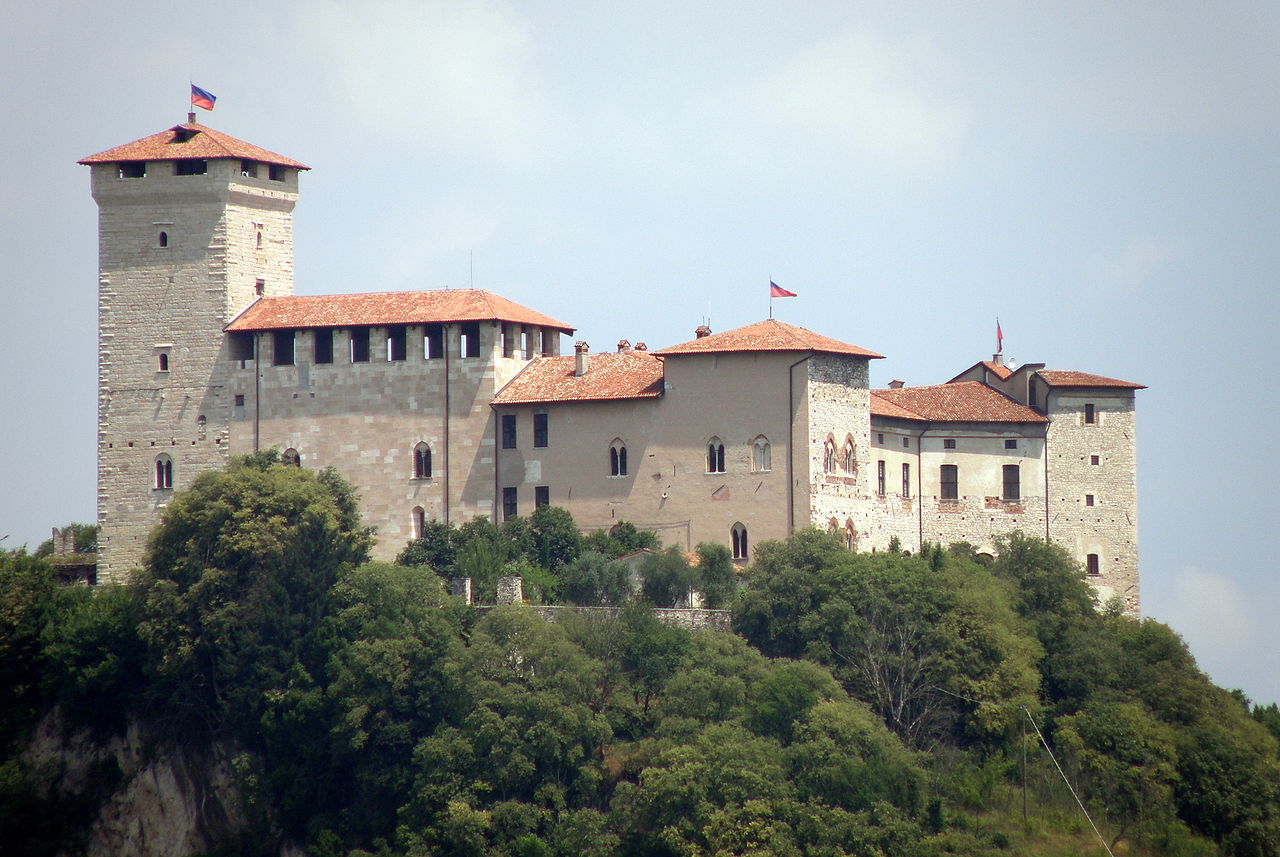
Arona Castle
Arona Castle, also known locally as Rocca di Arona or Rocca Borromeo di Arona, is a significant medieval fortress located in the town of Arona, within the Novara province in the Piedmont region of Italy. Strategically positioned on a limestone spur on the western shore of Lake Maggiore, the castle dominates the surrounding landscape, offering commanding views of the lake and nearby areas. Its location was carefully chosen to control the lake's traffic and defend the region during the turbulent Middle Ages.
Early history and strategic importance
The origins of Arona Castle date back to shortly before the 11th century, during a period when the region was under the influence of the Lombards. Initially constructed as a purely defensive stronghold, the castle played a crucial role in securing the western approaches to Lake Maggiore. It formed part of a defensive network alongside Angera Castle, situated on the opposite shore of the lake, which was built a few decades later. Together, these fortresses controlled the vital waterway and the surrounding territories.
During the 11th and 12th centuries, the castle's role evolved from a military fortress to a fortified refuge. At this time, it came under the ownership of the episcopal authorities, serving as a secure shelter rather than an active military base. This transition reflects the changing political and social dynamics of the region during the High Middle Ages.
The visconti and borromeo eras
In 1277, following the Battle of Desio, Arona Castle was reclaimed by the powerful Visconti family of Milan. Prior to this, it had suffered extensive damage during sieges and occupations by the rival Della Torre family. The Visconti restored the castle and reasserted their control over the area. This period marked the beginning of the castle's association with some of northern Italy's most influential ruling families.
The castle's ownership changed hands again in 1439 when Filippo Maria Visconti granted it as a fief to Vitaliano I Borromeo. The Borromeo family maintained possession of Arona Castle for the next four centuries, significantly shaping its history and legacy. One of the most notable figures connected to the castle is Saint Charles Borromeo, a cardinal and important religious reformer, who was born within its walls in 1538.
Decline and destruction
By the turn of the 19th century, control of the region had shifted to the Austrian Empire. The castle's strategic importance had diminished, and it became a target during the Napoleonic Wars. Following peace agreements between the Austrians and Napoleon Bonaparte, the Napoleonic army deliberately destroyed Arona Castle to prevent its future military use. The fortress was never rebuilt, leaving only ruins that hint at its former grandeur.
Architectural features and current condition
Arona Castle was originally a high medieval fortress featuring typical defensive elements such as thick stone walls, battlements, and towers adapted to the rocky outcrop on which it stood. The castle's layout was designed to maximize natural defenses provided by the limestone spur, with steep cliffs on several sides making direct assault difficult.
Today, the castle remains as ruins, with only portions of the walls and foundations surviving. While the physical remnants may not be extensive, the site offers visitors a valuable glimpse into medieval military architecture and the historical significance of the fortress. The castle grounds have been converted into a public park, accessible during daylight hours, where visitors can enjoy panoramic views of Lake Maggiore and the surrounding landscape.
Cultural and historical significance
Arona Castle holds an important place in the history of northern Italy due to its strategic location and association with prominent families such as the Visconti and Borromeo. The birth of Saint Charles Borromeo within its walls adds religious and cultural significance to the site. Despite its destruction, the castle continues to attract visitors interested in medieval history, architecture, and the scenic beauty of the Piedmont region.
The castle's history reflects broader themes of medieval power struggles, feudal ownership, and the impact of warfare on architectural heritage. Its ruins stand as a testament to the changing political landscape of Italy from the early Middle Ages through to the Napoleonic era.
Frequently asked questions (FAQ)
- What is the historical significance of Arona Castle?
- Arona Castle, built in the 10th century, holds great historical significance as it was a strategic fortification during various conflicts in the region. It played a crucial role in the defense against invasions and has witnessed numerous historical events that shaped the area.
- When is the best time to visit Arona Castle?
- The best time to visit Arona Castle is during the spring and early autumn months when the weather is mild and pleasant. These seasons also feature fewer crowds, allowing for a more enjoyable experience while exploring the castle and its surroundings.
- Can I access Arona Castle with a wheelchair?
- Unfortunately, Arona Castle has limited accessibility for visitors with mobility challenges. The castle's historic structure includes steep paths and uneven surfaces, which may pose difficulties for wheelchair users.
- What are the opening hours for Arona Castle?
- Arona Castle is typically open to visitors from March to October, with hours from 9 AM to 7 PM. During the off-peak season, the hours may vary, so it is advisable to check the official website or contact the site directly before your visit.
- Is it possible to take guided tours of Arona Castle?
- Yes, guided tours are available at Arona Castle, providing visitors with in-depth historical insights and stories about the castle's architecture and significance. These tours are led by knowledgeable guides and can enhance your understanding of the site.
- What are the ticket prices for Arona Castle?
- Ticket prices for Arona Castle generally range from €5 to €10, with discounts available for students, seniors, and groups. Children under a certain age often receive free admission, making it a family-friendly destination.
- Are there any nearby attractions to visit after Arona Castle?
- Yes, after visiting Arona Castle, you can explore nearby attractions such as the beautiful Lake Maggiore and the charming town of Arona itself. Other points of interest include the Sanctuary of Santa Rita and the Borromean Islands, which are just a short boat ride away.
Information
Address
Via alla Rocca, Italy
Loading map...
Visitor reviews
No reviews yet. Been here? Write the first review and help other travelers!
Write the first reviewVisited this castle? Share your experience
Your review helps other travelers and adds first-hand knowledge to our encyclopedia.