Angera Castle
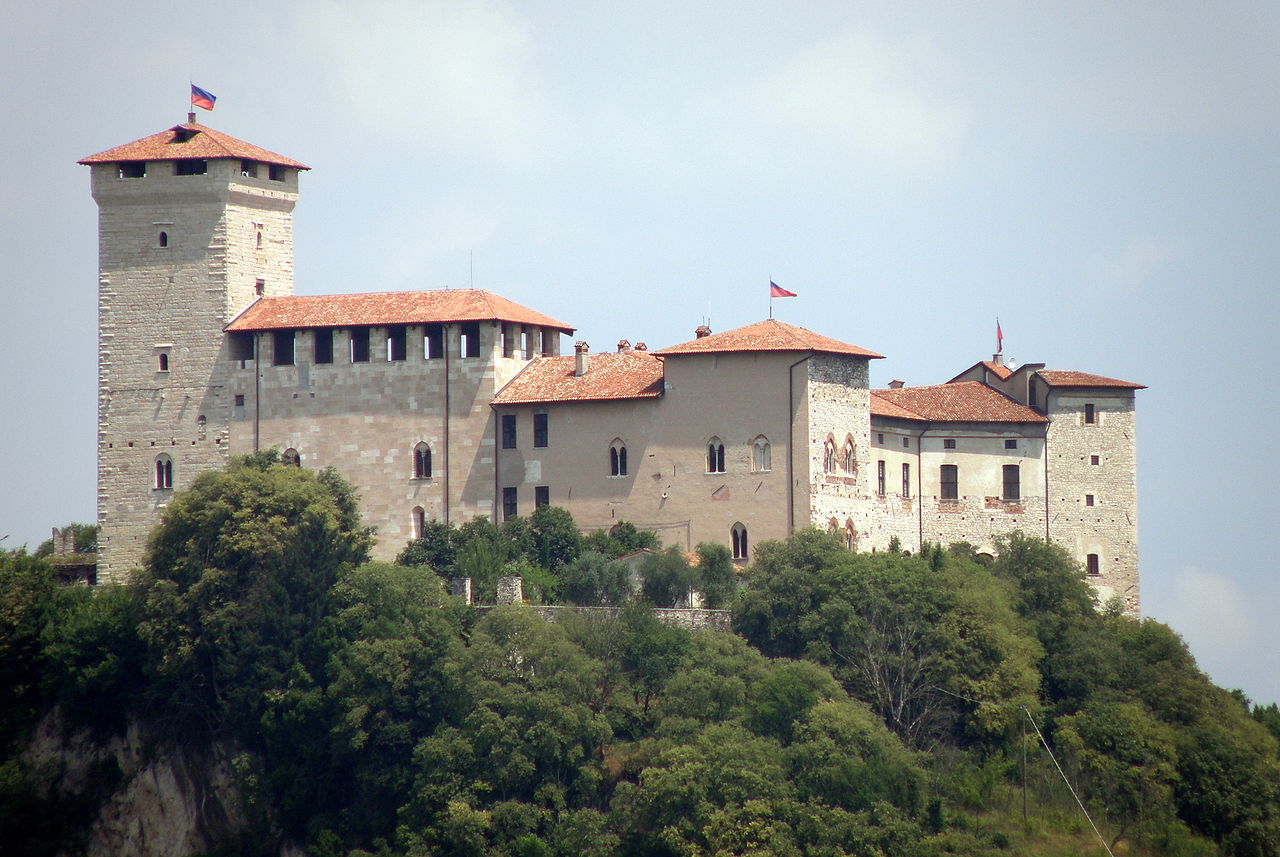
Angera Castle, also known as Rocca di Angera or Rocca Borromea di Angera, is a majestic fortress located in the town of Angera in the Varese province within the Lombardy region of northern Italy. Overlooking the southern end of Lake Maggiore, the castle stands prominently on a limestone spur on the lake's eastern bank, commanding strategic views of the surrounding landscape and waterway. This hill castle dates back to the 11th century and has undergone numerous expansions and restorations, making it a remarkable example of medieval military and residential architecture that reflects the complex history of the region.
Early origins and medieval significance
The origins of Angera Castle can be traced to the early medieval period, with some elements possibly dating back to the Lombard era. Initially, the fortress served as a watchtower and defensive stronghold under the ownership of the archbishops of Milan. Its strategic position allowed it to control access to the southern part of Lake Maggiore, a vital waterway for trade and military movements.
During the 11th century, the powerful Visconti family of Milan took possession of the castle, building upon its earlier structures to establish a formidable fortification. Alongside the Arona Castle located on the opposite shore of Lake Maggiore, Angera Castle played a key role in controlling the lake and the surrounding territory. The Visconti viewed Angera as a symbolic birthplace of their lineage, incorporating it into their expanding dominions.
Conflicts and architectural evolution in the high medieval period
Throughout the 13th century, Angera Castle was a focal point of regional power struggles, notably between the Visconti and the rival Della Torre family. The castle was besieged multiple times during these conflicts, sustaining considerable damage. Following the decisive Battle of Desio in 1277, the Visconti regained control, and Archbishop Ottone Visconti initiated significant expansions, including the construction of the Ottonian wing. This wing, built entirely of smoothly cut local stone blocks arranged in squared courses, exemplifies 13th-century residential building techniques with its narrow ground-floor windows and vertically divided upper windows by stone mullions.
The Hall of Justice within this wing preserves rare 13th-century frescoes depicting Archbishop Ottone Visconti’s life, his victory over the Della Torre family, and the establishment of peace in Milan. These frescoes uniquely combine Christian iconography, the twelve signs of the zodiac, and a partially surviving Wheel of Fortune motif symbolizing the fluctuating fortunes of ruling families.
Between 1375 and 1385, Bernabò Visconti further expanded the fortress by adding the Ala Scaligera (Della Scala wing), named in honor of his wife, Regina Della Scala. This addition reflects the castle's continued importance as a noble residence and military bastion.
The borromeo era and renaissance transformations
In the mid-15th century, the castle changed hands when the Borromeo family acquired it in 1447. The Borromeos undertook extensive refurbishments and expansions over the following centuries, transforming the fortress into a grand residence that combined defensive features with Renaissance artistic and architectural elements.
From 1564 to 1631, the Borromeos remodeled the existing Visconti-built fourth wing, enhancing the castle’s residential and ceremonial spaces. The interiors were richly decorated with frescoes by notable artists such as the Santagostino brothers, Antonio Busca, and Filippo Abbiati, who contributed to the castle’s artistic heritage with works that blend late Gothic and early Baroque styles.
The Sala dei Fasti Borromeo houses 15th-century frescoes by Michelino da Besozzo, originally painted for the Borromeo Palace in Milan and relocated to Angera after World War II bombings. This room exemplifies the castle's role as a repository of Lombardy’s cultural and artistic legacy.
Additional notable rooms include the Sala delle Cerimonie, adorned with 15th-century frescoes salvaged from Milan, and the Sala della Mitologia, which contains an extensive collection of over 300 maiolica ceramics from European and Asian workshops, reflecting the Borromeo family's wealth and cosmopolitan tastes.
Medieval gardens and modern cultural significance
In recent decades, Angera Castle has evolved into a vibrant center for medieval history interpretation and cultural tourism. The castle grounds include meticulously reconstructed medieval gardens based on historical manuscripts and botanical studies. These gardens feature three main sections: Il Giardino dei Principi (the princes’ garden), Il Verziere (the orchard), and Il Giardino delle Erbe Piccole (the herb garden), planted with medicinal and aromatic plants as well as ornamental species arranged according to medieval horticultural principles.
The gardens are situated on a large esplanade overlooking Lake Maggiore, creating a serene and historically immersive environment. The Borromeo family’s master gardeners continue to expand and maintain these gardens, striving to recreate the medieval concept of a "lost paradise" through precise geometric layouts and authentic plant varieties.
Museum and visitor experience
Since 1988, the castle has housed the Museo della Bambola e del Giocattolo (Doll and Toy Museum), founded by Princess Bona Borromeo Arese. This museum features a collection of over a thousand dolls and toys dating from the 18th century to contemporary times, making it a unique cultural attraction that complements the castle’s historical and architectural significance.
Visitors to Angera Castle can explore its well-preserved medieval keep, the internal courtyard known as the Corte Nobile, and the various wings that showcase the castle’s architectural evolution from the Lombard period through the Renaissance. The castle’s strategic hilltop location offers panoramic views of Lake Maggiore and the surrounding landscape, enhancing the visitor experience.
The castle also features a large medieval winepress housed in the former stables, notable for being one of the largest of its kind in Europe. This artifact highlights the castle’s historical role not only as a military fortress but also as a center of agricultural production and noble estate management.
Architectural highlights and preservation
Angera Castle comprises five main sections: the Ala Scaligera, the Ala Viscontea (Ottonian wing), the ancient Torre di Giovanni Visconti keep, the Borromean wing, and the surrounding defensive walls with corner turrets enclosing the medieval garden. These components collectively illustrate the castle’s layered history and architectural adaptations over centuries.
The castle’s restored condition allows for comprehensive public access and educational programs. Its preservation as a cultural heritage site ensures that the architectural and artistic treasures it houses remain protected for future generations.
Frequently asked questions (FAQ)
- How do I visit Angera Castle and what are the opening hours?
- Angera Castle is open daily from 10:00 to 18:00. Visitors can purchase tickets on-site, with prices typically around €10 for adults and €5 for children.
- What historical periods are represented in Angera Castle's architecture?
- Angera Castle features architectural elements from the Lombard period through the High Medieval era and Renaissance, reflecting centuries of expansions and renovations.
- What is special about the frescoes inside Angera Castle?
- The castle houses 13th-century frescoes in the Hall of Justice depicting Archbishop Ottone Visconti's life and victory, as well as 15th-century frescoes by Michelino da Besozzo relocated from Milan.
- Can I explore the medieval gardens at Angera Castle?
- Yes, Angera Castle features reconstructed medieval gardens based on historical manuscripts, including medicinal and aromatic plants arranged in authentic medieval layouts.
- Is there a museum within Angera Castle?
- Since 1988, the castle hosts the Museo della Bambola e del Giocattolo, showcasing over a thousand dolls and toys from the 18th century to modern times.
Information
Opening hours
10:00-18:00, daily
Ticket prices
€10 adult, €5 child
Current owner
Borromeo family
Address
Via Rocca Castello 2, Angera, Italy
Loading map...
Visitor reviews
No reviews yet. Been here? Write the first review and help other travelers!
Write the first reviewVisited this castle? Share your experience
Your review helps other travelers and adds first-hand knowledge to our encyclopedia.