Rize Castle
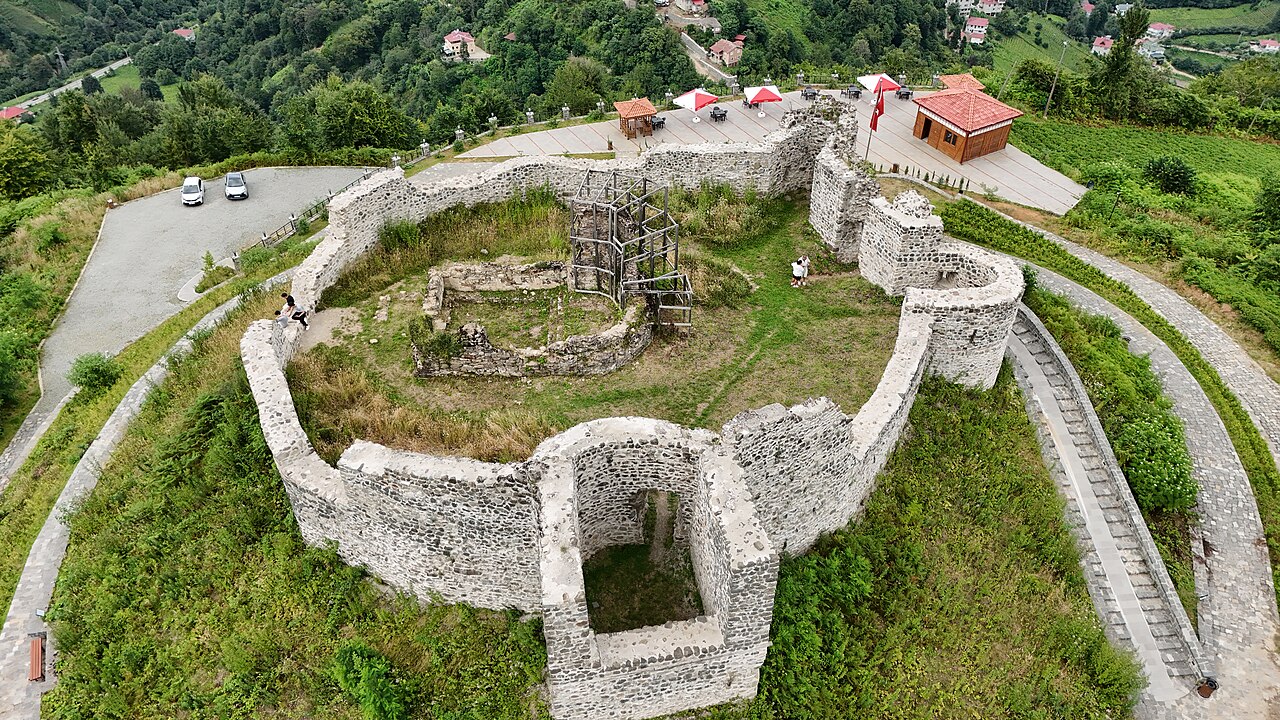
Rize Castle, locally known as Rize Kalesi, is a partly-ruined medieval fortress perched on a hill southwest of the city center of Rize in northeastern Turkey. The castle commands a panoramic view of the city and the surrounding landscape, occupying a strategic position about 150 meters above sea level.
Historical origins and early construction
The origins of Rize Castle are closely tied to the ancient settlement of Rhizaion, a town founded by Greek settlers in the region. The town is first mentioned in the 2nd century AD, marking the earliest known historical reference to the site. However, the castle itself is generally believed to have been constructed during the reign of the Byzantine emperor Justinian I (r. 527–565), placing its primary construction in the 6th century. This period saw extensive fortification efforts across the Byzantine Empire, and Rize Castle likely served as a crucial defensive stronghold overseeing the Black Sea coast and the surrounding territory.
The castle originally consisted of an upper citadel, which forms the core of the present-day ruins, and a lower citadel. These two parts were connected by city walls that extended down to the sea shore, enclosing the settlement and providing layered defenses.
Architectural features and fortifications
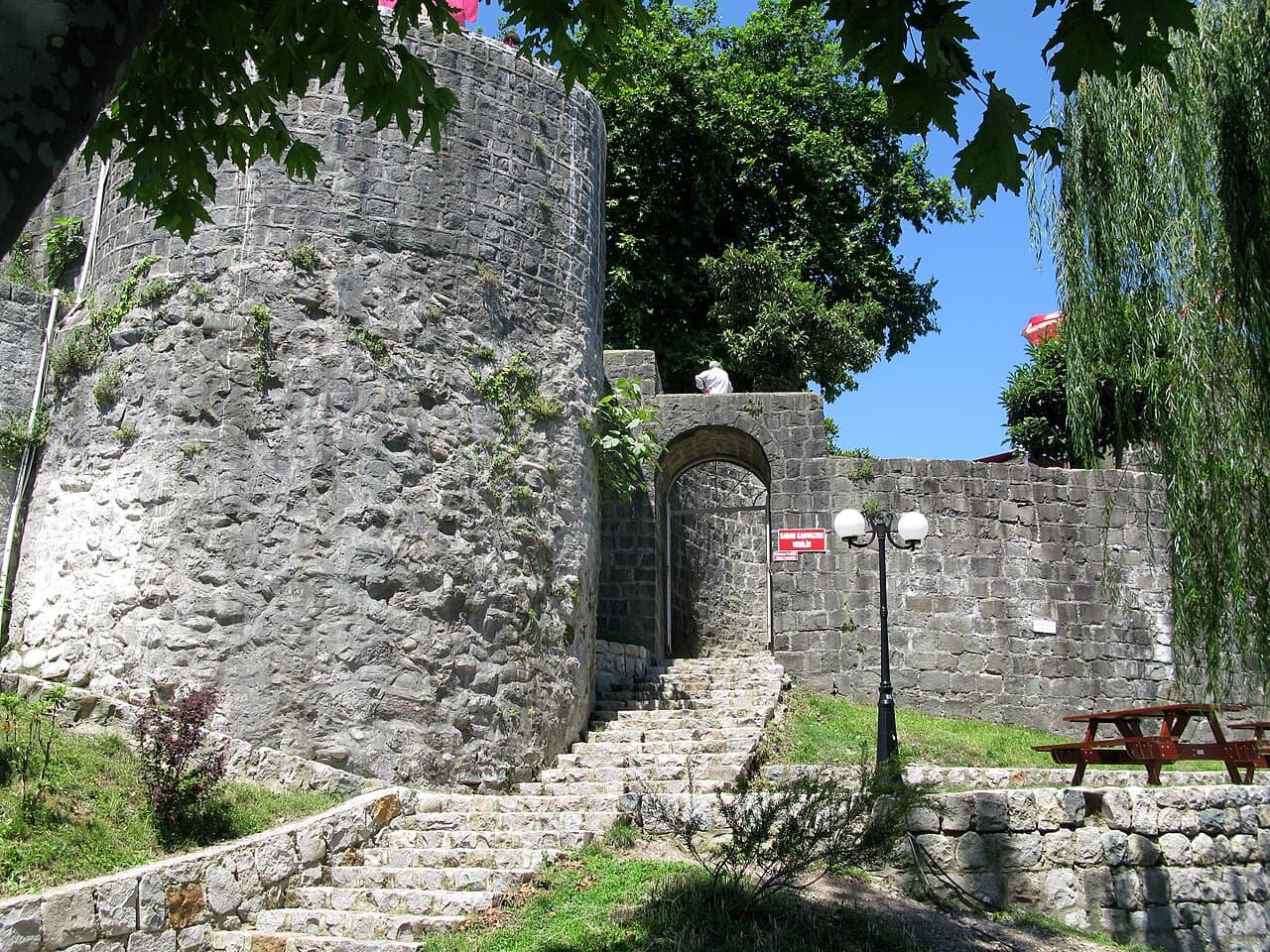
The fortification walls of Rize Castle are constructed primarily of ashlar masonry bonded with mortar. The walls vary in height from approximately 2 meters to 20 meters and are between 2 and 3 meters thick, demonstrating robust defensive engineering. The castle's defensive system includes cylindrical bastions interspersed with overhung support towers of various shapes, including square, rectangular, and round forms. These towers provided vantage points for defenders and enhanced the castle's ability to repel attackers.
The castle covers an area of about 480 square meters (5,200 square feet), a relatively modest size that reflects its role as both a military fortification and a local administrative center.
Later developments and restorations
During the 13th and 14th centuries, when the region was part of the Empire of Trebizond, the castle and its city walls underwent significant restoration and reinforcement. Architectural comparisons suggest that these medieval modifications adapted the fortress to the changing military technologies and political realities of the period.
In the 14th century, the area around Rize became part of the historic Georgian province of Chaneti. Subsequently, from 1547 onwards, the region was incorporated into the Ottoman Empire. It is likely that the castle gradually fell out of military use during Ottoman rule, as the strategic importance of the site diminished and the fortress was no longer maintained as a primary defensive structure.
Present condition and conservation efforts
Today, Rize Castle stands as partly-ruined archaeological remains. Some sections of the castle walls, particularly in the southern part, were restored in 1989. However, parts of the ruins have been affected by modern urban development, with some castle walls buried beneath reinforced concrete buildings and streets.
The Ministry of Culture and Tourism of Turkey initiated a restoration project in 2011 to preserve and stabilize the remains of the castle. The upper citadel area has been converted into a small public park, which includes a tearoom, providing visitors with a place to enjoy the historic ambiance and the views over Rize.
Visiting Rize Castle
Rize Castle is freely accessible during daytime hours, allowing visitors to explore the ruins and appreciate the panoramic vistas of the city and the Black Sea coastline. While the interior of the upper citadel now serves as a recreational area, the castle's historic atmosphere remains evident in its surviving walls, towers, and fortifications.
Architectural significance
The castle is a notable example of Byzantine military architecture adapted and expanded during the medieval period. Its combination of ashlar masonry, cylindrical bastions, and diverse tower shapes reflects evolving defensive strategies over centuries. The layered citadel system and the connection to the city walls highlight the integration of urban defense and military fortification.
Historical context
Rize Castle's history illustrates the complex political and cultural shifts in the Black Sea region, from ancient Greek colonization through Byzantine rule, the Empire of Trebizond, Georgian influence, and Ottoman incorporation. Each period left architectural and historical marks on the fortress, making it a valuable site for understanding regional history.
Frequently asked questions (FAQ)
- When was Rize Castle originally built?
- Rize Castle was primarily constructed during the reign of Byzantine emperor Justinian I in the 6th century, although the site was first mentioned in the 2nd century AD.
- What architectural features does Rize Castle have?
- The castle features robust ashlar masonry walls, cylindrical bastions, and various overhung towers including square, rectangular, and round shapes, reflecting Byzantine and medieval military architecture.
- Is Rize Castle open to visitors?
- Yes, Rize Castle is freely accessible during daytime hours. Visitors can explore the ruins and enjoy panoramic views of the city and the Black Sea coast.
- What restoration efforts have been made at Rize Castle?
- Parts of the castle walls were restored in 1989, and the Turkish Ministry of Culture and Tourism launched a restoration project in 2011 to preserve the ruins and improve visitor facilities.
- What historical periods influenced Rize Castle?
- The castle was built in the Byzantine period, restored during the Empire of Trebizond in the 13th-14th centuries, and later incorporated into the Ottoman Empire in the 16th century.
Photo gallery

Information
Opening hours
Daytime, freely accessible
Ticket prices
Free
Current owner
Ministry of Culture and Tourism
Loading map...
Visitor reviews
No reviews yet. Been here? Write the first review and help other travelers!
Write the first reviewVisited this castle? Share your experience
Your review helps other travelers and adds first-hand knowledge to our encyclopedia.