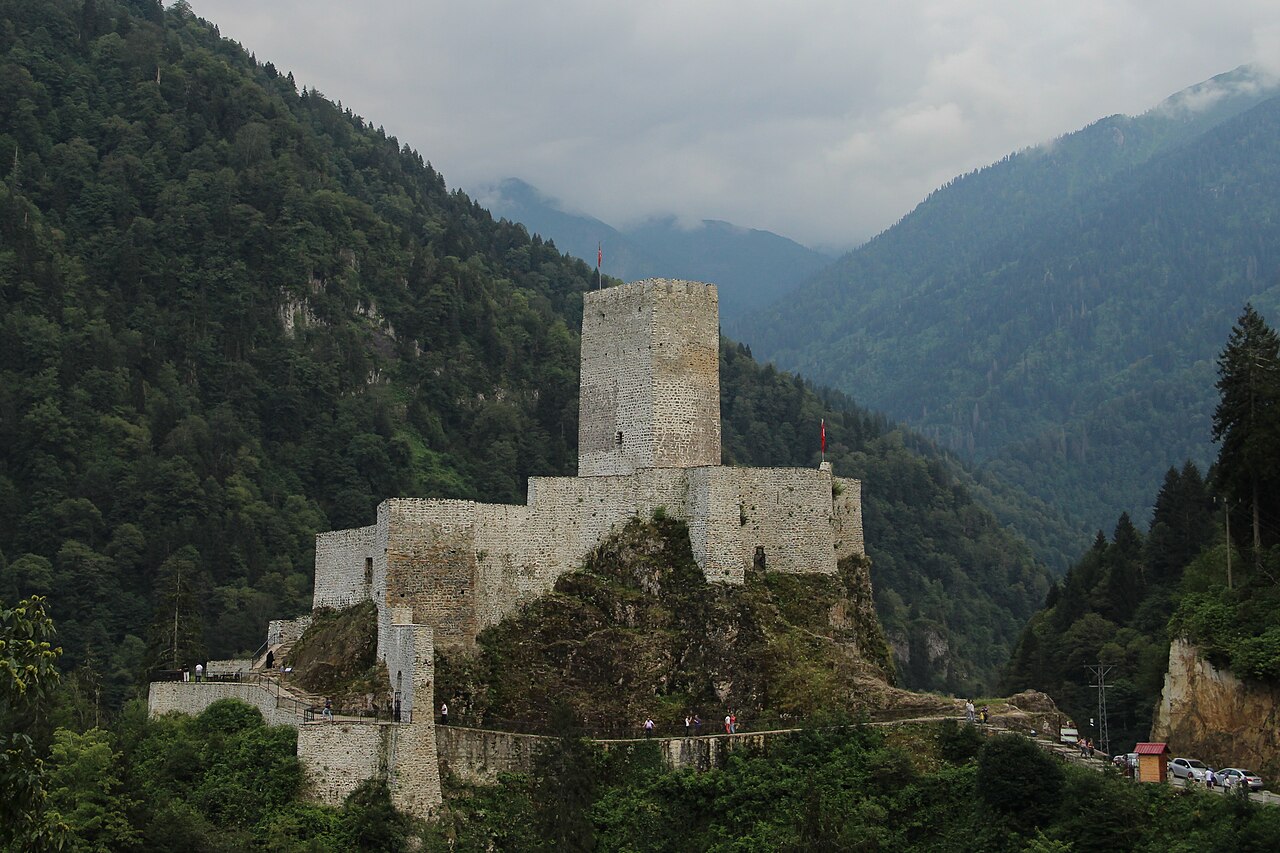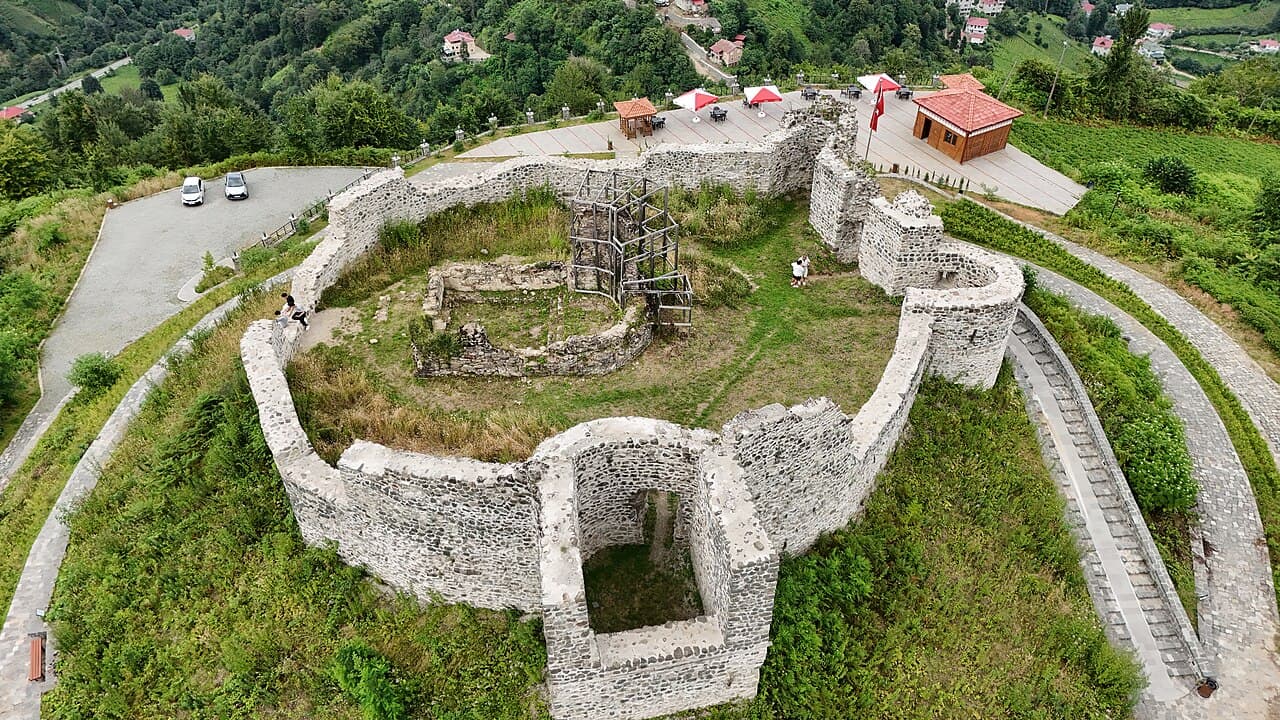
The fortress is characterized by its robust bastions, which are angular projections from the main walls intended to provide defensive fire in multiple directions. This design was a response to the increasing use of artillery and gunpowder weapons, marking a transition from earlier medieval fortifications to more modern defensive structures. The bastions allowed defenders to cover the curtain walls and adjacent bastions with overlapping fields of fire, reducing blind spots and making direct assaults more difficult.
The Fortress of Jikha likely served as a strategic military stronghold controlling key routes or territories in the region. Its location in Turkey places it within a crossroads of various historical empires and cultures, including Byzantine, Seljuk, and Ottoman influences, although the fortress itself is primarily a product of the late medieval period. The architectural style reflects practical military needs rather than ornamental design, focusing on durability and defense.
Architectural features and defensive design
The fortress's bastioned layout is its defining feature, with thick stone walls reinforced by angular bastions that project outward. These bastions were constructed to allow defenders to fire upon attackers approaching the walls, creating a deadly crossfire zone. The walls themselves are built from locally sourced stone, carefully cut and fitted to withstand bombardment.
Inside the fortress, there would have been essential military and support structures such as barracks, armories, storage rooms, and possibly a keep or central stronghold. The design prioritizes functionality, with limited ornamental elements, emphasizing the fortress's role as a defensive installation.
Historical context and significance
Built during the 14th century, the Fortress of Jikha was constructed at a time when the region experienced significant political and military upheaval. The late medieval period in Anatolia saw the decline of the Seljuk Sultanate and the rise of the Ottoman Empire, alongside various local powers. Fortresses like Jikha played crucial roles in controlling territories and defending against invasions.
While specific historical records about the Fortress of Jikha are limited, its architectural features align with the military needs of the era, reflecting the broader trends in fortress construction across the Mediterranean and Near East. The bastioned design indicates an adaptation to gunpowder weaponry, which was becoming increasingly prevalent in warfare during this time.
Preservation and current condition
The fortress today remains a valuable archaeological site, with many of its bastions and walls still standing, though the overall structure may be partially preserved or in ruins due to centuries of exposure and conflict. Preservation efforts, if any, would focus on stabilizing the existing masonry and preventing further deterioration.
Visitors to the site can observe the fortress's imposing defensive features and gain insight into the military architecture of the late medieval period in Turkey. The Fortress of Jikha offers a tangible connection to the region's complex history and the evolution of fortification design.
Frequently asked questions (FAQ)
- What is the historical significance of the Fortress of Jikha?
- The Fortress of Jikha represents a key example of late medieval bastioned fortress design in Turkey, reflecting military adaptations to gunpowder warfare in the 14th century.
- Can visitors explore the Fortress of Jikha today?
- Yes, the fortress remains partially preserved and accessible as an archaeological site, allowing visitors to view its bastions and defensive walls.
- What are the main architectural features of the Fortress of Jikha?
- The fortress features thick stone walls reinforced by angular bastions designed to provide overlapping fields of defensive fire against attackers.
- When was the Fortress of Jikha constructed?
- The fortress was built in the 14th century during the late medieval period, a time of significant military and political changes in Anatolia.
- Is the fortress associated with any particular historical empire?
- While specific records are scarce, the fortress's location in Turkey suggests it was influenced by the military needs of the late medieval Anatolian powers, including the Seljuks and emerging Ottomans.
Photo gallery

Information
Loading map...
Visitor reviews
No reviews yet. Been here? Write the first review and help other travelers!
Write the first reviewVisited this castle? Share your experience
Your review helps other travelers and adds first-hand knowledge to our encyclopedia.