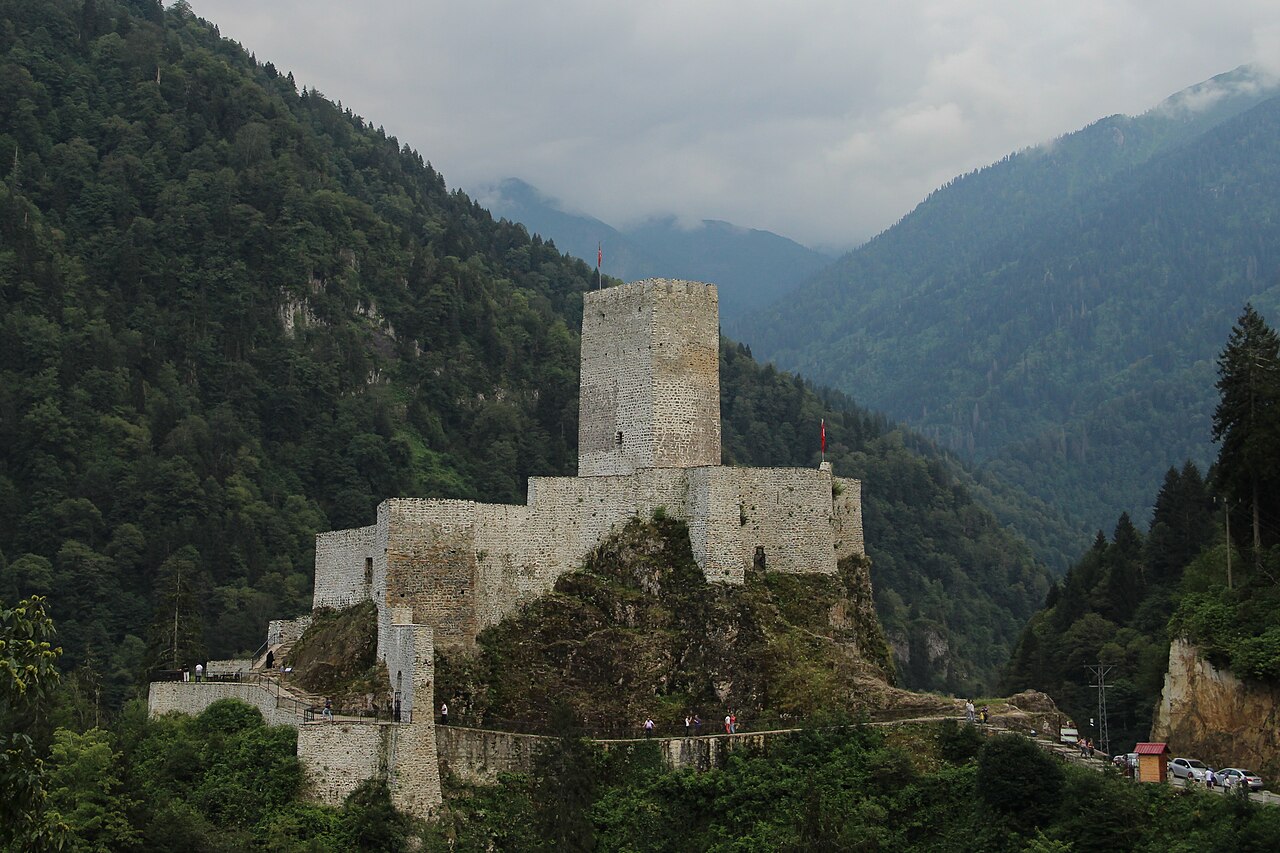
Kız Tower

Kız Tower (Kız Kulesi) in Rize, Turkey
Pazar, Turkey
Late Medieval (14th–15th c.)
Restored

Kız Tower, also known locally as Kız Kulesi or sometimes as Kız Kalesi, is a distinctive late medieval tower located just off the shore of the Black Sea near the town of Pazar in the province of Rize, Turkey. This square tower stands prominently on an isolated rock only a few meters from the coast, making it a striking landmark against the backdrop of the sea and sky.

Historical background and origins

The precise origins of Kız Tower remain somewhat obscure due to limited historical records. Architectural analysis and construction techniques suggest that the tower was built during the 13th or 14th century, placing it firmly in the late medieval period. This dating aligns with the era when the Republic of Genoa held significant influence along the Black Sea coast, having received extensive trading rights from the Byzantine Emperor Michael VIII Palaiologos in 1261.

Local tradition attributes the tower's construction to the Genoese, which is plausible given their maritime and commercial presence in the region during that time. However, there are alternative claims that the tower's origins date back to Roman times, possibly as early as the 1st century AD, though these assertions lack strong archaeological evidence.

Architectural features and design

Kız Tower is characterized by its square plan, a somewhat uncommon shape for coastal fortifications in the Black Sea region, where round towers were often preferred for their defensive advantages. The tower's walls are built of stone, employing construction techniques typical of the medieval period. Its isolated position on a rock in the sea suggests a strategic purpose, likely serving as a watchtower or defensive outpost to monitor maritime activity and protect coastal settlements.

The tower's modest size and robust construction indicate it was designed primarily for observation and signaling rather than prolonged defense. Its location allowed for excellent visibility across the Black Sea, making it an important point for controlling trade routes and warning of approaching threats.

Legends and local traditions

The name Kız Tower translates to "Maiden Tower" or "Girl's Tower" in Turkish, and several local legends attempt to explain this evocative name. One popular story claims the tower was built as a summer residence for the daughter of a Genoese ruler. According to this tale, she fell in love with a local man, which supposedly inspired the tower's name. While romantic, this narrative is regarded as folklore without historical substantiation.

Later history and restoration

During the final years of Ottoman rule, Kız Tower had fallen into disuse and was reportedly occupied by local pirates who used it as a hideout. The Ottoman authorities eventually dislodged these pirates by bombarding the tower with cannon fire, reflecting its continued strategic value even in decline.

By the 20th century, the tower was in a state of considerable ruin. A significant restoration project was undertaken in 2014 to stabilize and preserve the structure. This restoration helped protect the tower from further decay and allowed it to remain a visible historical monument on the Black Sea coast.

Current status and accessibility

Today, Kız Tower remains inaccessible to visitors due to its isolated position on a rocky outcrop surrounded by water. Its proximity to the recently constructed Rize-Artvin Airport has affected the visual aesthetics of the site, as modern infrastructure encroaches upon the historic setting.

Despite these challenges, the tower continues to attract interest for its unique location, medieval architecture, and the intriguing blend of history and legend it represents. It stands as a testament to the complex maritime history of the Black Sea region and the cultural interactions that shaped it.

Significance in regional history

Kız Tower exemplifies the strategic importance of coastal fortifications during the medieval period in the Black Sea area. Its probable Genoese origins highlight the extensive trade networks and political influence exerted by maritime republics such as Genoa. The tower's enduring presence offers insights into the defensive and commercial priorities of the era.

The tower also contributes to the cultural heritage of Rize Province, linking local communities to a broader historical narrative involving Byzantine, Genoese, and Ottoman periods. As such, it holds value not only as an architectural monument but also as a symbol of the layered history of the eastern Black Sea coast.

Frequently asked questions (FAQ)

What is Kız Tower?
Kız Tower, also known as the Maiden's Tower, is a historic structure located in Pazar, Turkey. It has served various purposes throughout its history, including as a lighthouse and a fortress, and it is steeped in local legends and cultural significance.
When was Kız Tower built?
Kız Tower dates back to ancient times, with its origins believed to be in the Byzantine period. Over the centuries, it has undergone several renovations and restorations, contributing to its unique architectural style.
How do I get to Kız Tower?
Kız Tower is easily accessible by car or public transport from the center of Pazar. Visitors can also enjoy scenic walks along the coastline leading to the tower, making the journey both enjoyable and picturesque.
What are the opening hours for Kız Tower?
Kız Tower is open to visitors every day, typically from 9 AM to 7 PM. However, it's advisable to check for seasonal variations in hours or special closures before planning your visit.
Can I enter Kız Tower?
Yes, visitors can enter Kız Tower and explore its interior, which includes exhibitions on its history and architecture. There may be a small entrance fee, so it's best to have some cash on hand for tickets.
Is Kız Tower accessible for people with disabilities?
Kız Tower has limited accessibility due to its historic nature and the presence of stairs. Visitors with mobility challenges may find it difficult to navigate the tower, but the surrounding area offers beautiful views that can be enjoyed from the outside.
When is the best time to visit Kız Tower?
The best time to visit Kız Tower is during the spring and fall months when the weather is mild and pleasant. This allows visitors to enjoy the outdoor scenery and historical insights without the summer crowds.
What are some nearby attractions to Kız Tower?
Nearby attractions include the scenic coastline of Pazar and various local cafes and restaurants that offer traditional Turkish cuisine. Visitors can also explore the charming streets of Pazar, which are rich in history and culture.
What are the ticket prices for Kız Tower?
The ticket prices for Kız Tower are quite affordable, typically ranging from a small fee for adults and reduced prices for children and students. It's recommended to check the official website or local information for the most accurate and updated pricing.

Information

Water Castle

Address

11. Sk. No:71, Turkey

Loading map...

Visitor reviews

No reviews yet. Been here? Write the first review and help other travelers!

Write the first review

Visited this castle? Share your experience

Your review helps other travelers and adds first-hand knowledge to our encyclopedia.
Write a review

(5/5)

0/2000 characters

Your review will be visible after admin approval

Nearby castles

9 km
Fortress of Jikha — Turkey castle

Fortress of Jikha

, Turkey

The Fortress of Jikha is a significant example of late medieval bastioned fortress architecture located in Turkey. Constructed in the 14th century, this fortress reflects the military engineering advancements of the period, designed to withstand the evolving siege warfare tactics of the late Middle Ages.The fortress is characterized by its robust bastions, which are angular projections from the main walls intended to provide defensive fire in multiple directions. This design was a response to the increasing use of artillery and gunpowder weapons, marking a transition from earlier medieval fortifications to more modern defensive structures. The bastions allowed defenders to cover the curtain walls and adjacent bastions with overlapping fields of fire, reducing blind spots and making direct assaults more difficult.The Fortress of Jikha likely served as a strategic military stronghold controlling key routes or territories in the region. Its location in Turkey places it within a crossroads of various historical empires and cultures, including Byzantine, Seljuk, and Ottoman influences, although the fortress itself is primarily a product of the late medieval period. The architectural style reflects practical military needs rather than ornamental design, focusing on durability and defense.Architectural features and defensive designThe fortress's bastioned layout is its defining feature, with thick stone walls reinforced by angular bastions that project outward. These bastions were constructed to allow defenders to fire upon attackers approaching the walls, creating a deadly crossfire zone. The walls themselves are built from locally sourced stone, carefully cut and fitted to withstand bombardment.Inside the fortress, there would have been essential military and support structures such as barracks, armories, storage rooms, and possibly a keep or central stronghold. The design prioritizes functionality, with limited ornamental elements, emphasizing the fortress's role as a defensive installation.Historical context and significanceBuilt during the 14th century, the Fortress of Jikha was constructed at a time when the region experienced significant political and military upheaval. The late medieval period in Anatolia saw the decline of the Seljuk Sultanate and the rise of the Ottoman Empire, alongside various local powers. Fortresses like Jikha played crucial roles in controlling territories and defending against invasions.While specific historical records about the Fortress of Jikha are limited, its architectural features align with the military needs of the era, reflecting the broader trends in fortress construction across the Mediterranean and Near East. The bastioned design indicates an adaptation to gunpowder weaponry, which was becoming increasingly prevalent in warfare during this time.Preservation and current conditionThe fortress today remains a valuable archaeological site, with many of its bastions and walls still standing, though the overall structure may be partially preserved or in ruins due to centuries of exposure and conflict. Preservation efforts, if any, would focus on stabilizing the existing masonry and preventing further deterioration.Visitors to the site can observe the fortress's imposing defensive features and gain insight into the military architecture of the late medieval period in Turkey. The Fortress of Jikha offers a tangible connection to the region's complex history and the evolution of fortification design.

Late Medieval (14th–15th c.)
Details
25.9 km
Zil Castle — Turkey castle

Zil Castle

Şenköy, Turkey

Zil Castle, also known locally as Zil Kale, is a significant late medieval bastioned fortress situated north of Şenköy in the Rize Province of Turkey. Perched on a rocky outcrop at approximately 750 meters above sea level, it commands a strategic position overlooking the canyon of the Fırtına River, a vital watercourse flowing through the Pontic Mountains in the Black Sea Region. This castle is a remarkable example of the military architecture adapted to the rugged terrain of northeastern Anatolia. Historical context and strategic importance The origins of Zil Castle date back to the 14th or early 15th century, a period when the region was under nominal Byzantine control, primarily limited to the coastal zones. Inland mountainous areas, including the Fırtına Valley, were largely autonomous territories governed by local lords such as the Lord Arhakel of the Hemshin people. The Hemshin, an Armenian-origin community, exerted considerable influence in this rugged landscape, and it is believed they were responsible for constructing both Zil Castle and the nearby Kale-i Bala Castle (Upper Castle). The castle's location above the Fırtına River canyon was strategically chosen to oversee and protect a critical medieval trade route that traversed the valley, leading to a mountain pass towards Erzurum. This route was essential for commerce and military movements, linking the Black Sea coast with the interior Anatolian plateau. Architectural features and layout Zil Castle is characterized by its robust bastioned fortress design, adapted to the steep and rocky terrain. The fortress is divided into multiple defensive layers including outer walls, middle walls, and an inner castle or keep. The castle's walls are constructed from locally sourced stone, with battlements and towers positioned to maximize defensive coverage of the surrounding valley and river below. The castle includes garrison quarters that housed a modest force of soldiers, estimated between 25 and 40 during the Ottoman period in the 16th century. There is also evidence of a chapel within the castle grounds, indicating its dual function as both a military stronghold and a place of worship. A prominent head tower or donjon stands as the central defensive structure, offering commanding views and serving as the last refuge during sieges. Ottoman period and later history In the late 15th century, the Ottoman Empire expanded into the region, incorporating Zil Castle into its defensive network. The castle continued to be garrisoned through the 16th century, maintaining its role in securing the mountain passes and trade routes. However, by the end of the 19th century, Zil Castle was abandoned as military technology and political priorities shifted, rendering such fortresses obsolete. Location and visiting information Today, Zil Castle remains a prominent historical site accessible to visitors for a small entrance fee. The journey to the castle involves a winding drive through the scenic canyon of the Fırtına River, passing several well-preserved medieval Ottoman single-arch stone bridges that add to the cultural landscape. Visitors often combine their trip with a visit to the nearby Kale-i Bala Castle, located upstream and known as the "Upper Castle," while Zil Castle is sometimes referred to as "Lower Castle" or Aşağı Kale. The name "Zil," meaning "bell" in Turkish, is believed to be a linguistic corruption of "Zir," meaning "lower" in the local dialect, reflecting its relative position in the valley compared to Kale-i Bala. The castle's dramatic setting on a cliff edge overlooking the river more than 300 meters below provides breathtaking views and a tangible connection to the region's medieval past. Cultural and heritage significance Zil Castle is an important cultural landmark in the Black Sea Region of Turkey, reflecting the complex history of Byzantine, Armenian, and Ottoman influences. Its architecture and location illustrate the adaptation of defensive structures to mountainous terrain and the strategic importance of controlling trade routes in medieval Anatolia. The castle's preservation as a ruin offers valuable insights into the military and social history of the region, attracting historians, architects, and tourists alike.

Late Medieval (14th–15th c.)
Details
35.1 km
Rize Castle — Turkey castle

Rize Castle

Rize, Turkey

Rize Castle, locally known as Rize Kalesi, is a partly-ruined medieval fortress perched on a hill southwest of the city center of Rize in northeastern Turkey. The castle commands a panoramic view of the city and the surrounding landscape, occupying a strategic position about 150 meters above sea level. Historical origins and early construction The origins of Rize Castle are closely tied to the ancient settlement of Rhizaion, a town founded by Greek settlers in the region. The town is first mentioned in the 2nd century AD, marking the earliest known historical reference to the site. However, the castle itself is generally believed to have been constructed during the reign of the Byzantine emperor Justinian I (r. 527–565), placing its primary construction in the 6th century. This period saw extensive fortification efforts across the Byzantine Empire, and Rize Castle likely served as a crucial defensive stronghold overseeing the Black Sea coast and the surrounding territory. The castle originally consisted of an upper citadel, which forms the core of the present-day ruins, and a lower citadel. These two parts were connected by city walls that extended down to the sea shore, enclosing the settlement and providing layered defenses. Architectural features and fortifications The fortification walls of Rize Castle are constructed primarily of ashlar masonry bonded with mortar. The walls vary in height from approximately 2 meters to 20 meters and are between 2 and 3 meters thick, demonstrating robust defensive engineering. The castle's defensive system includes cylindrical bastions interspersed with overhung support towers of various shapes, including square, rectangular, and round forms. These towers provided vantage points for defenders and enhanced the castle's ability to repel attackers. The castle covers an area of about 480 square meters (5,200 square feet), a relatively modest size that reflects its role as both a military fortification and a local administrative center. Later developments and restorations During the 13th and 14th centuries, when the region was part of the Empire of Trebizond, the castle and its city walls underwent significant restoration and reinforcement. Architectural comparisons suggest that these medieval modifications adapted the fortress to the changing military technologies and political realities of the period. In the 14th century, the area around Rize became part of the historic Georgian province of Chaneti. Subsequently, from 1547 onwards, the region was incorporated into the Ottoman Empire. It is likely that the castle gradually fell out of military use during Ottoman rule, as the strategic importance of the site diminished and the fortress was no longer maintained as a primary defensive structure. Present condition and conservation efforts Today, Rize Castle stands as partly-ruined archaeological remains. Some sections of the castle walls, particularly in the southern part, were restored in 1989. However, parts of the ruins have been affected by modern urban development, with some castle walls buried beneath reinforced concrete buildings and streets. The Ministry of Culture and Tourism of Turkey initiated a restoration project in 2011 to preserve and stabilize the remains of the castle. The upper citadel area has been converted into a small public park, which includes a tearoom, providing visitors with a place to enjoy the historic ambiance and the views over Rize. Visiting Rize Castle Rize Castle is freely accessible during daytime hours, allowing visitors to explore the ruins and appreciate the panoramic vistas of the city and the Black Sea coastline. While the interior of the upper citadel now serves as a recreational area, the castle's historic atmosphere remains evident in its surviving walls, towers, and fortifications. Architectural significance The castle is a notable example of Byzantine military architecture adapted and expanded during the medieval period. Its combination of ashlar masonry, cylindrical bastions, and diverse tower shapes reflects evolving defensive strategies over centuries. The layered citadel system and the connection to the city walls highlight the integration of urban defense and military fortification. Historical context Rize Castle's history illustrates the complex political and cultural shifts in the Black Sea region, from ancient Greek colonization through Byzantine rule, the Empire of Trebizond, Georgian influence, and Ottoman incorporation. Each period left architectural and historical marks on the fortress, making it a valuable site for understanding regional history.

Early Medieval (5th–10th c.)
Details