Of Castle

Of Castle in Trabzon, Turkey
Of, Trabzon, Turkey
Late Medieval (14th–15th c.)
Ruins

Of Castle, locally known as Of Kalesi, is a small fortress ruin located southwest of the town of Of in the province of Trabzon, Turkey. Positioned on a strategic headland overlooking the Black Sea, this site likely served as a defensive watchpoint controlling maritime approaches and coastal activities.

Historical context and uncertain origins

The precise origins of Of Castle remain unclear due to limited archaeological research and historical documentation. Scholars generally suggest that the castle dates back to either the Byzantine period or the era of Genoese maritime influence along the Black Sea coast. The Byzantine Empire maintained several coastal fortifications in the region to protect trade routes and local settlements from naval threats and raids.

The British historian A. Bryer referred to the site by the name "Röşi" or "Rovşe", which is believed to be an old name associated with the port of Of. This suggests the castle's role was closely linked to controlling and monitoring the adjacent harbor and sea traffic.

Architectural features and layout

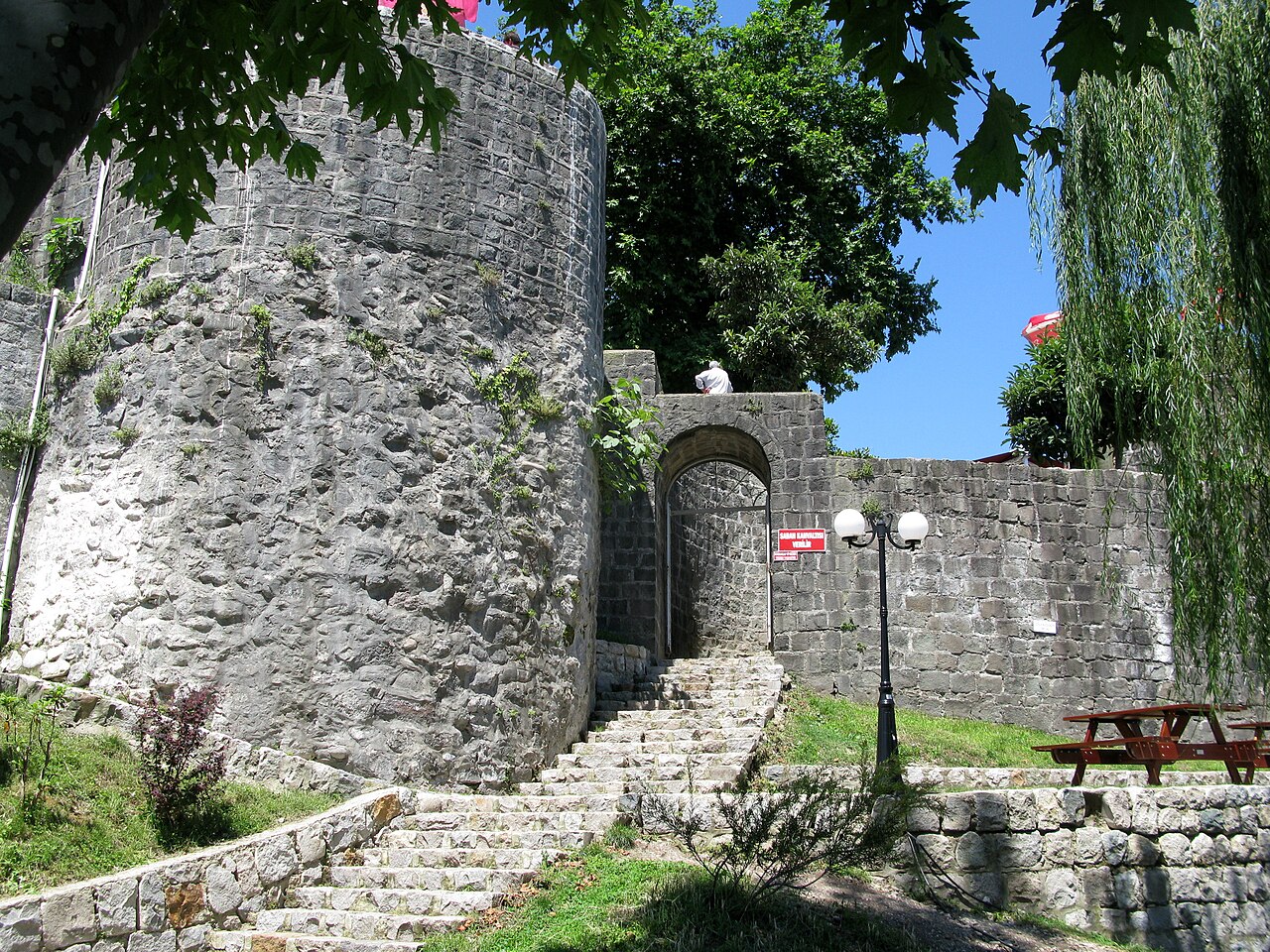
The surviving remains of Of Castle are modest in scale, indicating it was likely a small fortification rather than a large castle complex. Situated on a rocky headland, the castle's layout probably consisted of a watchtower or keep that provided a vantage point over the sea and surrounding coastline. This would have been complemented by a defensive wall enclosing the tower and protecting the garrison from attacks.

Due to overgrowth and limited excavation, detailed architectural analysis is challenging. However, typical Byzantine and Genoese coastal fortifications feature thick stone walls, battlements, and narrow arrow slits designed for archers or crossbowmen. The castle's position on elevated terrain would have enhanced its defensive capabilities and visibility.

Current condition and accessibility

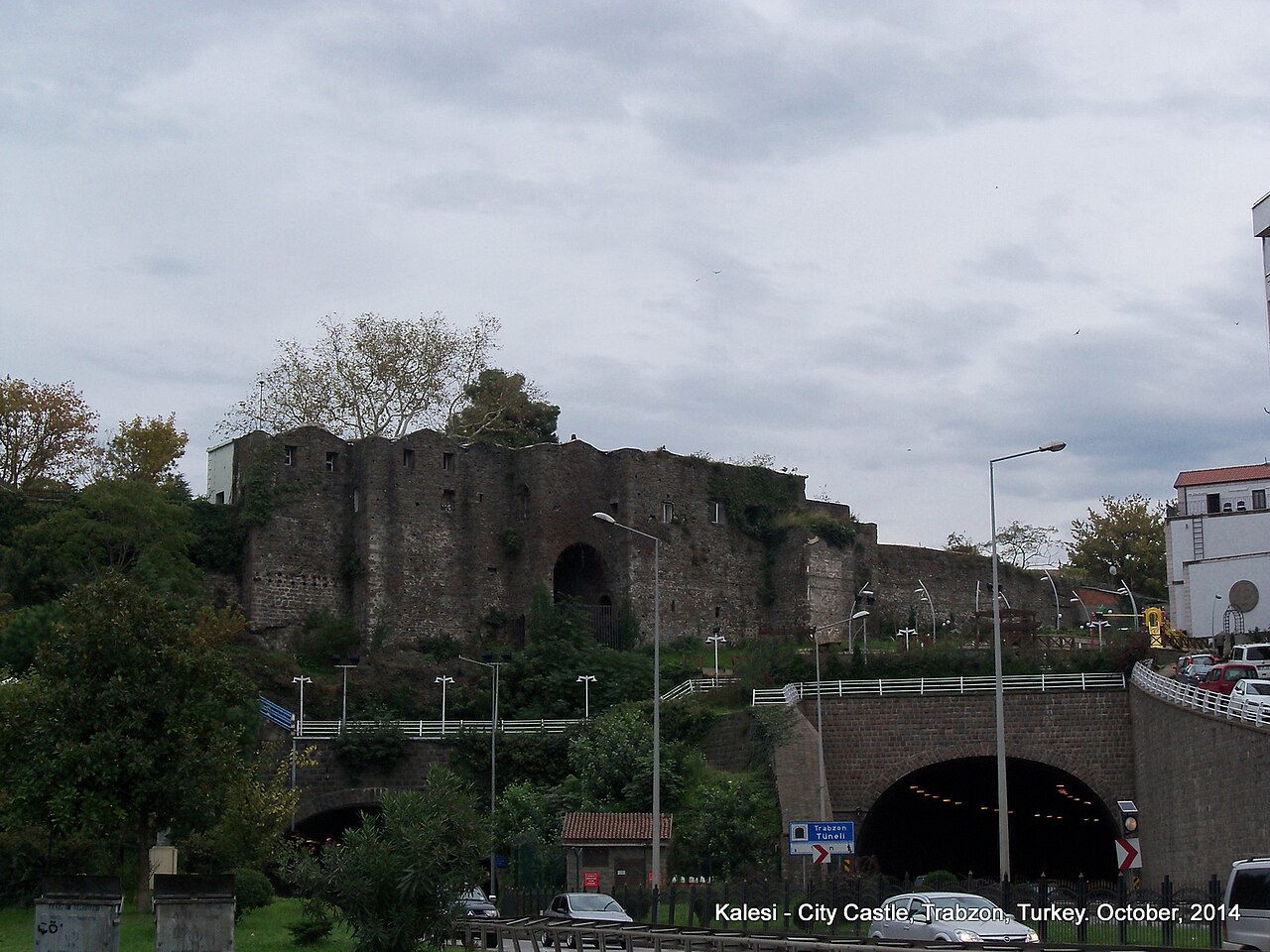
Today, Of Castle exists as a small ruin that is freely accessible to visitors. The site and its immediate surroundings have a somewhat neglected appearance, with vegetation overgrowing much of the remaining structure. This overgrowth has made close inspection and entry into the ruins difficult.

Despite its modest state, the castle offers panoramic views of the Black Sea and the nearby town of Of. Its remote and quiet location provides a glimpse into the region's medieval coastal defenses, although the lack of extensive facilities or interpretative signage means visitors should prepare accordingly.

Significance and cultural heritage

While Of Castle is not as prominent as other fortifications in the Trabzon region, it contributes to the understanding of the area's historical maritime security network. The castle's probable Byzantine or Genoese origins highlight the strategic importance of the Black Sea coast throughout the medieval period.

Preserving and studying such minor fortifications can provide valuable insights into the local history, trade, and military architecture. Increased archaeological attention and conservation efforts could enhance the site's accessibility and educational value in the future.

Frequently asked questions (FAQ)

How do I get to Of Castle?
Of Castle is located southwest of the town of Of in Trabzon province, Turkey. Visitors can reach it by local roads leading to Fatih Cd. near the Black Sea coast.
What is the historical significance of Of Castle?
Of Castle likely served as a Byzantine or Genoese coastal fortification to monitor and protect maritime routes along the Black Sea during the medieval period.
Is Of Castle accessible to visitors?
Yes, Of Castle is freely accessible. However, the ruins are overgrown and in a neglected state, so visitors should be prepared for limited facilities and challenging terrain.
What architectural features does Of Castle have?
The castle features a small watchtower and defensive walls typical of Byzantine or Genoese coastal fortifications, designed for surveillance and defense against naval threats.
When was Of Castle built?
The exact construction date of Of Castle is unknown, but it is generally attributed to the late medieval period, possibly Byzantine or Genoese era.

Information

Water Castle

Address

Fatih Cd., Of, Trabzon, Turkey

Loading map...

Visitor reviews

No reviews yet. Been here? Write the first review and help other travelers!

Write the first review

Visited this castle? Share your experience

Your review helps other travelers and adds first-hand knowledge to our encyclopedia.

Write a review

(5/5)

0/2000 characters

Your review will be visible after admin approval

Nearby castles

18.5 km

Kalecik Castle

Merkez, Turkey

Kalecik Castle, known locally as Kalecik Kalesi, is a historic fortress located on the edge of a plateau overlooking the Kura river valley in the province of Ardahan, Turkey. This castle occupies a strategic hilltop position south of the village named Kalecik, commanding views of the surrounding landscape and serving historically as a defensive stronghold. Historical context and origins The precise origins of Kalecik Castle remain uncertain due to limited historical records. However, archaeological and architectural evidence suggests that the castle's foundations may date back to the Urartian period (860-590 BC). The Urartians were an ancient civilization known for their advanced fortifications in eastern Anatolia, and Kalecik's location and construction style bear similarities to other Urartian sites. Later, the castle is thought to have been used or rebuilt during the Byzantine era. It is speculated that Kalecik Castle may have served as a fortification for a settlement called Herakleia, possibly named after Heraclonas, the son of Emperor Heraclius. According to some historical conjecture, Heraclonas was born in this region around 622 AD during his father's military campaigns against the Persians. Kalecik Castle may have functioned as an outpost or satellite fortification related to the nearby Canayer (Buzluca) Castle, situated atop a plateau to the south. This proximity suggests a network of defensive structures controlling key routes and terrain in the region. Architectural features and layout The castle is classified as a hill castle, strategically positioned on a hilltop that overlooks a small beach area below. The elevated location provided natural defense advantages and visibility over the surrounding valley. Today, the remains of Kalecik Castle primarily consist of low, heavily rebuilt walls that crown the summit of the hill. These walls form a rough enclosure, with evidence of a gate and the ruins of towers integrated into the defensive perimeter. The castle's walls appear to have extended down the hillside, suggesting additional fortifications at the base, though these are now largely lost or obscured. The surviving masonry indicates multiple construction phases, with later repairs or modifications likely during Byzantine or subsequent periods. The castle's defensive structures would have included battlements and towers designed for surveillance and protection against invaders. Current condition and accessibility Kalecik Castle is currently in a state best described as partially preserved, with significant portions of the original walls and towers remaining, albeit in a ruined and reconstructed form. The site has been adapted into a small public park, allowing visitors to explore the ruins freely. The castle's location on a hilltop offers scenic views of the Kura river valley and surrounding countryside, making it a pleasant destination for visitors interested in history and nature. There are no entrance fees, and the site is accessible year-round. Significance and cultural heritage Although Kalecik Castle is not extensively documented in historical texts, its enduring presence reflects the strategic importance of the Ardahan region throughout ancient and medieval times. The castle's possible Urartian roots link it to one of Anatolia's earliest civilizations, while its Byzantine associations connect it to the empire's defensive network in eastern Anatolia. Kalecik Castle contributes to the cultural landscape of Ardahan province, representing a tangible connection to the region's layered past. Its ruins offer valuable insights into the military architecture and settlement patterns that shaped this part of Turkey over millennia. Visiting Kalecik Castle Visitors to Kalecik Castle can enjoy a quiet and accessible historic site without the crowds typical of more famous castles. The hilltop location provides excellent opportunities for photography and appreciating the natural beauty of the Kura river valley. While the castle lacks extensive visitor facilities or interpretive signage, its open access encourages exploration and personal discovery. Nearby towns and villages offer additional cultural experiences and amenities for travelers.

Details
24.5 km
Rize Castle — Turkey castle

Rize Castle

Rize, Turkey

Rize Castle, locally known as Rize Kalesi, is a partly-ruined medieval fortress perched on a hill southwest of the city center of Rize in northeastern Turkey. The castle commands a panoramic view of the city and the surrounding landscape, occupying a strategic position about 150 meters above sea level. Historical origins and early construction The origins of Rize Castle are closely tied to the ancient settlement of Rhizaion, a town founded by Greek settlers in the region. The town is first mentioned in the 2nd century AD, marking the earliest known historical reference to the site. However, the castle itself is generally believed to have been constructed during the reign of the Byzantine emperor Justinian I (r. 527–565), placing its primary construction in the 6th century. This period saw extensive fortification efforts across the Byzantine Empire, and Rize Castle likely served as a crucial defensive stronghold overseeing the Black Sea coast and the surrounding territory. The castle originally consisted of an upper citadel, which forms the core of the present-day ruins, and a lower citadel. These two parts were connected by city walls that extended down to the sea shore, enclosing the settlement and providing layered defenses. Architectural features and fortifications The fortification walls of Rize Castle are constructed primarily of ashlar masonry bonded with mortar. The walls vary in height from approximately 2 meters to 20 meters and are between 2 and 3 meters thick, demonstrating robust defensive engineering. The castle's defensive system includes cylindrical bastions interspersed with overhung support towers of various shapes, including square, rectangular, and round forms. These towers provided vantage points for defenders and enhanced the castle's ability to repel attackers. The castle covers an area of about 480 square meters (5,200 square feet), a relatively modest size that reflects its role as both a military fortification and a local administrative center. Later developments and restorations During the 13th and 14th centuries, when the region was part of the Empire of Trebizond, the castle and its city walls underwent significant restoration and reinforcement. Architectural comparisons suggest that these medieval modifications adapted the fortress to the changing military technologies and political realities of the period. In the 14th century, the area around Rize became part of the historic Georgian province of Chaneti. Subsequently, from 1547 onwards, the region was incorporated into the Ottoman Empire. It is likely that the castle gradually fell out of military use during Ottoman rule, as the strategic importance of the site diminished and the fortress was no longer maintained as a primary defensive structure. Present condition and conservation efforts Today, Rize Castle stands as partly-ruined archaeological remains. Some sections of the castle walls, particularly in the southern part, were restored in 1989. However, parts of the ruins have been affected by modern urban development, with some castle walls buried beneath reinforced concrete buildings and streets. The Ministry of Culture and Tourism of Turkey initiated a restoration project in 2011 to preserve and stabilize the remains of the castle. The upper citadel area has been converted into a small public park, which includes a tearoom, providing visitors with a place to enjoy the historic ambiance and the views over Rize. Visiting Rize Castle Rize Castle is freely accessible during daytime hours, allowing visitors to explore the ruins and appreciate the panoramic vistas of the city and the Black Sea coastline. While the interior of the upper citadel now serves as a recreational area, the castle's historic atmosphere remains evident in its surviving walls, towers, and fortifications. Architectural significance The castle is a notable example of Byzantine military architecture adapted and expanded during the medieval period. Its combination of ashlar masonry, cylindrical bastions, and diverse tower shapes reflects evolving defensive strategies over centuries. The layered citadel system and the connection to the city walls highlight the integration of urban defense and military fortification. Historical context Rize Castle's history illustrates the complex political and cultural shifts in the Black Sea region, from ancient Greek colonization through Byzantine rule, the Empire of Trebizond, Georgian influence, and Ottoman incorporation. Each period left architectural and historical marks on the fortress, making it a valuable site for understanding regional history.

Early Medieval (5th–10th c.)
Details
43.7 km
Kalepark — Turkey castle

Kalepark

Trabzon, Turkey

Kalepark castle, originally known as Leonkastron and later called Güzelhisar (meaning "Beautiful Castle" in Turkish), is a historic fortress located on the eastern side of Trabzon, Turkey. This medieval fortress, constructed and fortified by Genoese merchants, was strategically positioned on a rocky outcrop commanding views over both of Trabzon's significant harbors: the summer harbor to the west and the winter harbor just to the east. This location made Kalepark a key defensive and commercial stronghold in the Black Sea region during the Middle Ages.Medieval origins and strategic importanceThe fortress was initially established by the Genoese, who were prominent maritime traders and sought to secure their trading routes and interests in the Black Sea. The construction of Kalepark as a fortified trading outpost reflects the Genoese strategy of building strongholds to protect their commercial activities and exert influence in foreign territories. Its position on a rocky promontory provided natural defensive advantages, enhancing the fortress's ability to oversee and control maritime traffic entering Trabzon's harbors.Just a few hundred meters to the west of Kalepark lay another fortification known as the Venetian Castle. This neighboring fortress was established by the Venetian Republic as a competing trading post, highlighting the intense rivalry between Genoese and Venetian merchants during this period. The proximity of these two fortresses created a dynamic European quarter within Trabzon, where traders from various parts of Europe, including merchants from Lviv in Ukraine, settled and conducted business.Evolution under ottoman rule and later historyIn the 18th century, the site of Kalepark underwent significant changes under Ottoman administration. In the 1740s, a palace was constructed on the fortress grounds for the Ottoman Governor Ahmet Paşa. This palace symbolized the integration of the fortress into the Ottoman administrative and military framework. Unfortunately, the palace was destroyed by a fire in 1790, and no substantial remains of this structure survive today.Despite the palace's destruction, the fortress area remained strategically important through the centuries. During World War I, Kalepark was subjected to frequent shelling by Russian naval forces due to its accessible location near the Black Sea coast. This military action underscores the continuing strategic value of the site well into the 20th century.Architectural features and current conditionKalepark is classified as archaeological ruins today, with much of its original structure lost or heavily damaged over time. The fortress's remains include portions of its defensive walls and foundations that reveal its medieval construction techniques and layout. The rocky outcrop on which it stands still provides commanding views of the surrounding area, reflecting its historical role as a lookout and defensive position.The fortress's architecture reflects typical medieval fortification elements adapted to the local terrain, such as thick stone walls designed to withstand sieges and naval attacks. While the structure is now in ruins, it remains an important cultural and historical landmark that offers insight into the Genoese presence in the Black Sea and the complex interactions between European and Ottoman powers in Trabzon.Cultural significance and european quarter legacyKalepark's history is intertwined with the broader narrative of European trade and settlement in the Black Sea region. The area around the fortress became known as the European quarter due to the diverse communities of traders and settlers who lived there, including Genoese, Venetians, and merchants from Eastern Europe. This multicultural environment fostered economic exchange and cultural interaction that shaped Trabzon's development as a vibrant port city.Today, the ruins of Kalepark serve as a tangible reminder of this period of intense commercial rivalry and cultural exchange. The site attracts historians, archaeologists, and visitors interested in the medieval history of the Black Sea and the legacy of Genoese and Ottoman influence in Turkey.

Late Medieval (14th–15th c.)
Details