Rivieren Castle — Belgium castle

Rivieren Castle

Rivieren castle in ganshoren, belgium
Ganshoren, Brussels Hoofdstedelijk Gewest, Belgium
High Medieval (11th–13th c.)
Well Preserved

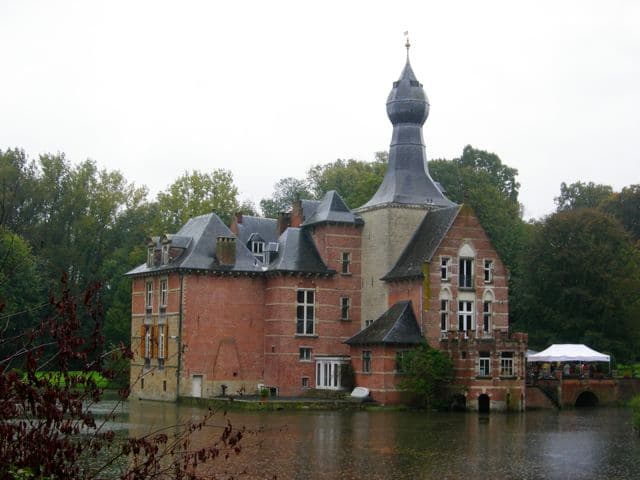
Rivieren Castle is a remarkable example of a high medieval hill castle located in Ganshoren, within the Brussels Hoofdstedelijk Gewest region of Belgium. Its origins date back to the 12th century, when it began as a fortified defense tower established by the noble lords of Rivieren d’Aerschot. Over the centuries, the castle evolved through multiple construction phases spanning from the 12th to the 19th century, reflecting changing architectural styles and social functions.

Medieval origins and feudal significance

The castle’s foundation as a medieval fortress was typical of the period, serving as a stronghold for the local feudal lords to assert control over the surrounding lands. The central feature is the 13th-century square donjon, a robust stone tower that remains the only surviving element of the original medieval structure. This donjon was designed for defense and residence, embodying the military architecture of the high medieval period.

Rivieren Castle was originally the possession of the Clutinck family before passing to the lords of Rivieren d’Aerschot. The estate was elevated to a barony in 1638 and further to a county in 1659 by François II de Kinschot, Treasurer General of the Spanish Netherlands. This elevation in status marked a shift from purely military functions to more representative and residential uses.

Architectural evolution from fortress to pleasure estate

Following its medieval origins, the castle underwent significant transformations, especially during the 17th to 19th centuries. The original stone donjon was complemented by extensive additions constructed primarily of brick with distinctive stone bands and quoins, which visually delineate the various building phases. These later expansions reflect the transition from a defensive fortress to a pleasure estate, designed for comfort, status, and leisure rather than military defense.

In the 19th century, Ulric, Count de Villegas de Saint-Pierre Jette, undertook major renovations that restored and enhanced the castle’s residential and aesthetic qualities. Despite suffering damage from several fires in the early 20th century, subsequent restoration efforts have preserved the castle’s historic character.

The estate and landscape setting

The castle is set within a 10-hectare park known today as Parc Albert I. This landscaped park includes remnants of the castle’s original defensive features, such as a surrounding pond that traces the outline of the medieval moats. Although the original drawbridge has been removed, the water features and parkland contribute to the estate’s historic ambiance.

The park is home to several protected trees and was carefully restored in the late 20th century to complement the castle’s heritage. The entire property sits approximately 40 meters above sea level, offering a commanding position typical of hill castles.

Historical transitions and modern use

Throughout its history, Rivieren Castle changed hands multiple times, reflecting the shifting political and social landscape of Belgium. After the death of Elisabeth de Botmiliau in 1977, the widow of Albert de Villegas, the castle was sold to a Swiss company that undertook extensive restoration. Since then, the castle has been adapted for modern use as a venue for conferences, receptions, expositions, and cultural events.

In 1983, the castle and its park were officially designated as protected heritage sites, recognizing their cultural and historical importance. Although the castle is not regularly open to the public, it occasionally welcomes visitors during special heritage days, allowing insight into its rich history and architectural evolution.

Architectural features and preservation

The surviving square donjon is a key architectural highlight, constructed entirely of stone and exemplifying medieval military design. The later brick additions feature stone quoins and decorative bands that mark the castle’s stylistic development over several centuries.

The estate’s water features, including the pond that remains from the original moat system, provide both aesthetic appeal and a glimpse into the castle’s defensive past. Restoration efforts have ensured that the castle remains in well-preserved condition, despite the challenges posed by fire damage and periods of neglect.

Cultural significance within the brussels region

Rivieren Castle holds the distinction of being the only remaining medieval feudal-style castle within the Brussels-Capital Region. This unique status enhances its importance as a cultural landmark and a testament to the region’s medieval heritage.

Its adaptation from a fortress to a leisure estate and finally to a modern event venue illustrates the dynamic history of Belgian castles and their evolving roles over time.

Frequently asked questions (FAQ)

How do I get to Rivieren Castle?
Rivieren Castle is located in Ganshoren, Belgium, easily accessible by public transport. You can take the metro to the nearby station and then a short bus ride will bring you directly to the castle.
What is the historical significance of Rivieren Castle?
Rivieren Castle dates back to the 18th century and is known for its rich history and beautiful gardens. It has served various purposes over the years and is an important example of the architectural style of its time.
When was Rivieren Castle built?
Rivieren Castle was constructed in the early 1700s, showcasing the Baroque style that was popular during that period. Its construction reflects the grandeur and elegance characteristic of that era in Belgian architecture.
Can I visit Rivieren Castle year-round?
Yes, Rivieren Castle is open to visitors throughout the year, although hours may vary seasonally. It's best to check the official website for the most current visiting hours before planning your trip.
Why is Rivieren Castle considered an architectural gem?
Rivieren Castle features stunning Baroque architecture, with intricate detailing and beautifully landscaped gardens. Its design reflects the opulence of the 18th century, making it a must-see for architecture enthusiasts.
Is it possible to hold events at Rivieren Castle?
Yes, Rivieren Castle offers facilities for hosting various events, including weddings and corporate gatherings. The scenic surroundings and historic ambiance provide a unique setting for any occasion.
What are the ticket prices for visiting Rivieren Castle?
Ticket prices for Rivieren Castle vary depending on the type of tour or event. Generally, entrance fees are affordable, allowing visitors of all ages to enjoy this historic site.
What is the best time to visit Rivieren Castle?
The best time to visit Rivieren Castle is during the spring and summer months when the gardens are in full bloom. However, each season offers a unique charm, so visitors can enjoy the castle year-round.
Are there any nearby attractions to Rivieren Castle?
Yes, Rivieren Castle is surrounded by several attractions, including beautiful parks and other historical sites. Visitors can easily explore the local area to enhance their experience in Ganshoren.

Photo gallery

Rivieren Castle
Click to view

Photo by Rharris•CC BY-SA 3.0

1 photo • Click any image to view in full screen

Information

Hill Castle

Sources & official resources

Verify the information above using these authoritative references.

Loading map...

Visitor reviews

No reviews yet. Been here? Write the first review and help other travelers!

Write the first review

Visited this castle? Share your experience

Your review helps other travelers and adds first-hand knowledge to our encyclopedia.

Write a review

(5/5)

0/2000 characters

Your review will be visible after admin approval

Nearby castles

1.5 km

Karreveld Castle

Molenbeek-Saint-Jean, Belgium

Karreveld Castle is a remarkable historic estate located in the municipality of Molenbeek-Saint-Jean within Brussels, Belgium. With origins tracing back to the medieval Duchy of Brabant, this castle embodies a rich blend of noble residence and agricultural estate, illustrating centuries of architectural evolution and cultural significance. The castle's history, architecture, and unique contribution to Belgian cinema make it a notable landmark in the region. Medieval origins and early history The earliest documentation of the estate, originally called "Carnevelt" or "Karreveld," dates to 1253, when Duke John I of Brabant granted the land to his wife Marguerite, daughter of King Saint Louis of France. Although the original medieval structures have not survived intact, this grant firmly situates the estate within the feudal landscape of the High Middle Ages. The estate was part of the extensive holdings of the Duchy of Brabant, a key political entity in the Low Countries. Transition to a manorial estate The present castle structure was primarily built during the 16th or 17th century, reflecting its transformation into a manor house that combined agricultural functions with noble residential use. This period saw the adaptation of many medieval estates into more comfortable and representative homes for the local gentry, often incorporating Renaissance stylistic elements and practical farm buildings. Ownership and municipal changes Over the centuries, Karreveld Castle passed through several notable owners. In 1656, the widow of Jérôme Van Ghindertaelen sold the property to Don Garcia Osario y Borgia. Later, in 1780, the estate was acquired by the Villegas family, who also owned the nearby Rivieren Castle. The castle's municipal affiliation shifted in 1812, moving from Anderlecht to Molenbeek-Saint-Jean, reflecting broader administrative reorganizations during the Napoleonic era. 20th-century challenges and restoration By the early 1900s, parts of the castle had fallen into disrepair amid growing urbanization pressures. The construction plans for the nearby Brussels ring road (Boulevards de Grande Ceinture) threatened the estate's integrity. In response, the municipality of Molenbeek-Saint-Jean purchased the 16-hectare property in 1930 to preserve the castle and its park as public green space while allowing controlled urban development. Restoration efforts Between 1952 and 1958, the castle underwent extensive restoration led by municipal architect Pierre De Bruyne. This work stabilized the structure, reinstated historical architectural features, and adapted the building for new civic and cultural uses. The restoration culminated in the castle's designation as a protected monument in 1955 and its inauguration during the Brussels World’s Fair in 1958. Architectural features and estate layout Karreveld Castle is a manor that harmoniously blends elements typical of a farming estate with those of a noble residence. Situated on marshy terrain, the castle required reinforced foundations installed during the mid-20th-century restoration to ensure stability. Exterior and structural elements The main façade faces a pond and is characterized by a pointed gable that defines its historic silhouette. Beneath layers of whitewash removed before 1930, the façade reveals exposed Spanish brickwork, highlighting authentic construction materials and craftsmanship. The castle complex includes a gatehouse and a dovecote equipped with a traditional weather vane, reflecting the estate's functional and defensive features. Inner courtyard and outbuildings On the east side of the inner courtyard stands a barn rebuilt during restoration, featuring a monumental fireplace relocated from Havré Castle. The barn's visible wooden roof structure preserves traditional building techniques. Adjacent to it is a tavern with an Elizabethan-style balustraded gallery, adding a decorative and social dimension to the estate. Interior spaces and decoration The castle's interiors showcase a range of historical influences. A salon displays Renaissance stylistic elements, while two upstairs rooms reflect later French design tastes. The attic houses a meeting room styled as a monastic hall with exposed wooden beams, creating a rustic yet solemn atmosphere. An oratory, or small chapel, was recreated in the left wing of the former hostelry beneath a turret topped by a campanile, lending a spiritual character to the space. Gardens and parkland The castle is surrounded by a three-hectare park redesigned to respect its historical layout. The original defensive moat was transformed into a pond bordered by a semicircular sandstone ravelin, adorned with flowerbeds and seating alcoves for visitors' enjoyment. Behind the castle lies a formal French garden with flower basins and geometrically trimmed yew hedges, leading into a wooded area that buffers the garden from the busy adjacent boulevard. Botanical diversity The park is notable for its diverse collection of conifer species, including Himalayan cedar, Lebanese cedar, Japanese cedar, Douglas fir, black pine, Weymouth pine, European yew, and Japanese larch. These trees enhance the estate's botanical richness and provide a varied visual experience throughout the seasons. Pioneering role in Belgian cinema Between 1912 and 1923, Karreveld Castle played a pioneering role in the development of Belgian cinema. Film producer Charles Pathé appointed filmmaker Alfred Machin to establish Belgium's first film studio on the castle grounds. This complex included specialized glass studios and workshops, as well as a small zoological garden housing exotic animals such as bears, camels, and panthers used as actors in early films. Notable productions such as "La Fille de Delft" and "Maudite soit la guerre" were filmed here, marking significant milestones in Belgium's cinematic history. Although the film studios and zoo no longer exist on the site, their legacy remains an important chapter in the castle's multifaceted heritage. Current use and cultural significance Today, Karreveld Castle and its park serve as vibrant cultural and civic venues. The estate hosts municipal meetings, cultural festivals, and community events that continue to enliven this historic site. Its preservation as a protected monument and public green space ensures that Karreveld remains a cherished landmark reflecting Brussels' rich historical tapestry and architectural heritage.

Late Medieval (14th–15th c.)
Details
3.1 km

Château du Stuyvenberg

Brussels, Belgium

Château du Stuyvenberg is a significant royal residence located in Laeken, Brussels, within the Brussels Hoofdstedelijk Gewest region of Belgium. Constructed in 1725, this castle has played an important role in the history of the Belgian Royal Family and remains a notable symbol of royal heritage in the country. Historical background and royal connections The castle was originally built in the early 18th century and later acquired by the Belgian State in 1840 for 200,000 francs. Shortly after, it was purchased by King Leopold II, who generously donated it to the Royal Trust, an institution managing royal properties. Its proximity to the Royal Palace of Laeken, the official residence of the King and Queen of the Belgians, underscores its importance within the royal estate. King Leopold I used Château du Stuyvenberg as a residence for his mistress, Arcadie Meyer-Claret, and their second child, Arthur, was born there in 1852. The castle also served as the birthplace of two Belgian kings: King Baudouin in 1930 and King Albert II in 1934, both of whom spent their formative years at the residence. Following World War II, the castle became the home of Elisabeth of Bavaria, widow of King Albert I, until her death in 1965. For nearly three decades thereafter, Château du Stuyvenberg was repurposed as a guest house for foreign dignitaries, reflecting its continued role in state affairs. From 1998 until her death in 2014, Queen Fabiola, widow of King Baudouin, lived at the castle. The residence has also been home to Princess Astrid of Belgium, sister of the current King Philippe, maintaining its status as a royal domicile. Architectural features and style Château du Stuyvenberg is an example of Post-Renaissance architecture, a style that reflects the transition from the ornate Baroque and Rococo periods to more restrained classical forms prevalent in the 18th century. The castle's design emphasizes symmetry, proportion, and subtle decorative elements rather than extravagant ornamentation. The building is characterized by its elegant façade, balanced window arrangements, and a modest yet stately presence befitting a royal residence. The grounds surrounding the château include formal gardens and parkland that complement the architectural style and provide a serene environment. Role in Belgian royal history and state functions Throughout its history, Château du Stuyvenberg has been intimately linked to the personal lives and official functions of the Belgian monarchy. Its use as a residence for royal family members, including kings and queens, highlights its importance beyond a mere architectural landmark. The castle's role as a guest house for foreign dignitaries during the mid-20th century illustrates its diplomatic significance. Hosting international visitors in a royal setting helped reinforce Belgium's status on the global stage. Current status and preservation Today, Château du Stuyvenberg remains a well-preserved royal residence under the management of the Royal Trust. It continues to serve as a private home for members of the Belgian royal family, ensuring that its historical legacy is maintained and respected. While the castle is not generally open to the public, its historical importance and architectural elegance contribute to Brussels' cultural heritage. Its proximity to other royal sites in Laeken makes the area a focal point for those interested in Belgium's monarchy and aristocratic history. Visiting considerations and surrounding attractions Although Château du Stuyvenberg itself is not accessible for public tours, visitors to Brussels can explore nearby royal landmarks such as the Royal Palace of Laeken and the Royal Greenhouses, which are occasionally open to the public. These sites offer insight into the royal family's lifestyle and the architectural grandeur of their residences. The Laeken district also features parks and cultural institutions, providing a rich experience for tourists interested in history, architecture, and Belgian heritage.

Post-Renaissance (17th–18th c.)
Details
3.3 km

Groot-Bijgaarden Castle

Dilbeek, Belgium

Groot-Bijgaarden Castle, known locally as Kasteel van Groot-Bijgaarden or Château de Grand-Bigard, stands as a remarkable example of medieval and Renaissance architecture in the Flemish Brabant province of Belgium. Founded in the latter half of the 12th century by Arnulfus de Bigard, the castle originally began as a wooden motte-and-bailey fortress, a common defensive structure of the High Medieval period. Over the centuries, it evolved into a grand residence that reflects the rich history and architectural heritage of the region. The castle's early history is closely tied to the noble families who owned and shaped it. The initial wooden fortification was replaced by a more durable stone keep around 1347, likely commissioned by the Veels/van Vele family, who acquired the estate through marriage in the 14th century. This square keep tower, standing 30 meters tall with walls three meters thick, remains one of the most striking medieval features of the castle. It was built adjacent to the gatehouse, whose central section also dates back to the 14th century. Medieval origins and turbulent history Groot-Bijgaarden Castle's strategic location on a hill and its wide surrounding moat made it a formidable defensive site. The moat is spanned by a distinctive five-arched stone bridge leading to a drawbridge, which controlled access to the castle's fortified entrance. The castle's medieval history is marked by episodes of conflict and political intrigue, including the notable event in 1547 when William Estor's daughter and grandson declared themselves Protestants during the reign of Emperor Charles V, who had outlawed Protestantism. Their subsequent 36-hour siege in the keep ended with their capture and execution in 1548, illustrating the castle's role in the religious conflicts of the era. Renaissance transformation and architectural features In 1634, the castle was acquired by the Boisschot family, who undertook a comprehensive rebuilding project over 15 years, transforming Groot-Bijgaarden into a fine example of Flemish Renaissance architecture. This style is characterized by the use of red brick with contrasting white sandstone window sills and horizontal bands (entablatures), topped by a steep blue slate roof. The castle's long main building and its wings are notable for their harmonious proportions and decorative details. The left wing is crowned by a distinctive pear-shaped spire, a feature typical of Flemish Renaissance design. Attached to the right wing is a chapel dating from 1640, which has remained largely unchanged for over three centuries. Inside the chapel are commemorative plaques honoring Ferdinand van Booischot and Charles Ferdinand de Königsegg-Rothenfels, reflecting the castle's continued noble associations into the 18th century. Gatehouse and defensive elements The castle's gatehouse, with its central 14th-century section, is flanked by the imposing four-storey keep. The battlemented platform atop the tower offers panoramic views of the surrounding Flemish countryside, extending up to 30 kilometers on clear days. Two 17th-century heraldic lion sculptures guard the bridgehead, adding a ceremonial grandeur to the castle's entrance. 20th-century restoration and gardens By the early 20th century, Groot-Bijgaarden Castle had fallen into a state of disrepair. In 1903, Belgian industrialist Raymond Pelgrims de Bigard purchased the property and dedicated three decades to its meticulous restoration, preserving its historical and architectural integrity. During this period, the renowned garden architect Louis Fuchs designed the surrounding 14-hectare park, which complements the castle's grandeur with formal landscaping. Since 2003, the park has hosted the annual Floralia Brussels, an international spring flower exhibition showcasing over one million tulip bulbs from the Netherlands. This event has become a celebrated cultural attraction, drawing visitors to experience the castle's historic ambiance alongside spectacular floral displays. Current status and visitor information Today, Groot-Bijgaarden Castle remains privately owned and is not generally open to the public. Access is typically granted during special events such as the Floralia flower exhibition. The castle's well-preserved condition and its combination of medieval fortifications and Renaissance elegance make it a significant heritage site in Belgium. Its location in the municipality of Dilbeek, just 7 kilometers from Brussels, situates it conveniently for visitors interested in exploring Flemish history and architecture. The castle's elevation at 47 meters above sea level, its extensive moat, and the surrounding parkland contribute to its picturesque setting. Architectural significance and heritage Groot-Bijgaarden Castle exemplifies the transition from medieval defensive structures to Renaissance noble residences. Its combination of a 14th-century keep, moat, and gatehouse with the later Flemish Renaissance brickwork and decorative elements illustrates the evolving architectural styles over several centuries. The castle's preservation and restoration efforts have ensured that key features such as the crenellated tower platform, the pear-shaped spire, and the historic chapel remain intact. The presence of heraldic sculptures and commemorative plaques provides insight into the castle's noble lineage and its role in regional history. Moat and bridge engineering The wide moat surrounding the castle is a defining defensive feature, typical of hill castles designed to deter attackers. The stone bridge with its five arches not only serves a functional purpose but also enhances the castle's imposing appearance. The drawbridge mechanism historically controlled entry, emphasizing the castle's fortified nature. Interior and chapel details While the castle is primarily known for its exterior architecture, the interior chapel remains a significant element. The chapel's original 17th-century design and the memorial obits it houses reflect the religious and familial heritage of the castle's owners. Historical ownership lineage The castle's ownership history traces back to Almaric Bigard, the first lord of Bigard, who acquired the land from St. Bavo’s Abbey around 1110. The property passed through several noble families, including the Veels/van Vele, Estor, Schetz, Longin, and Booischot families, each contributing to its architectural and historical development. The elevation of the lordship to a marquisate by Empress Maria Theresa in the 18th century underlines the castle's importance within the noble hierarchy of the region. This noble status is commemorated within the castle's chapel and heraldic decorations. Cultural impact and tourism Although not regularly open to the public, Groot-Bijgaarden Castle plays an important role in Belgium's cultural tourism through its hosting of the Floralia flower exhibition. This event blends natural beauty with historic architecture, attracting horticultural enthusiasts and history lovers alike. The castle's proximity to Brussels makes it an accessible destination for day trips, offering a glimpse into the region's medieval and Renaissance past. Its well-maintained grounds and architectural features provide a picturesque backdrop for photography and cultural events.

High Medieval (11th–13th c.)
Details
