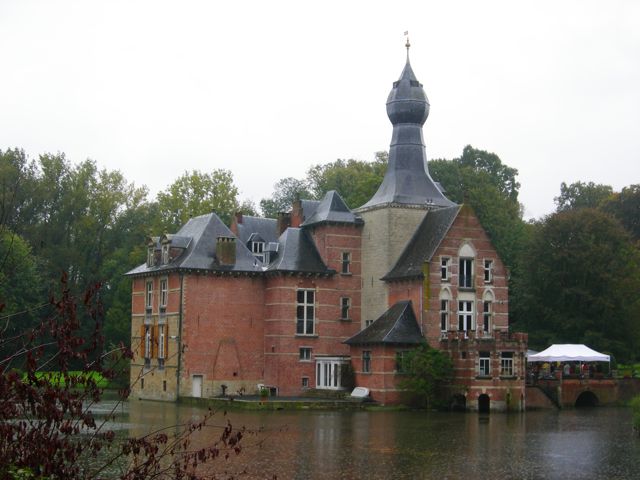
Groot-Bijgaarden Castle
Groot-Bijgaarden Castle, known locally as Kasteel van Groot-Bijgaarden or Château de Grand-Bigard, stands as a remarkable example of medieval and Renaissance architecture in the Flemish Brabant province of Belgium. Founded in the latter half of the 12th century by Arnulfus de Bigard, the castle originally began as a wooden motte-and-bailey fortress, a common defensive structure of the High Medieval period. Over the centuries, it evolved into a grand residence that reflects the rich history and architectural heritage of the region.
The castle's early history is closely tied to the noble families who owned and shaped it. The initial wooden fortification was replaced by a more durable stone keep around 1347, likely commissioned by the Veels/van Vele family, who acquired the estate through marriage in the 14th century. This square keep tower, standing 30 meters tall with walls three meters thick, remains one of the most striking medieval features of the castle. It was built adjacent to the gatehouse, whose central section also dates back to the 14th century.
Medieval origins and turbulent history
Groot-Bijgaarden Castle's strategic location on a hill and its wide surrounding moat made it a formidable defensive site. The moat is spanned by a distinctive five-arched stone bridge leading to a drawbridge, which controlled access to the castle's fortified entrance. The castle's medieval history is marked by episodes of conflict and political intrigue, including the notable event in 1547 when William Estor's daughter and grandson declared themselves Protestants during the reign of Emperor Charles V, who had outlawed Protestantism. Their subsequent 36-hour siege in the keep ended with their capture and execution in 1548, illustrating the castle's role in the religious conflicts of the era.
Renaissance transformation and architectural features
In 1634, the castle was acquired by the Boisschot family, who undertook a comprehensive rebuilding project over 15 years, transforming Groot-Bijgaarden into a fine example of Flemish Renaissance architecture. This style is characterized by the use of red brick with contrasting white sandstone window sills and horizontal bands (entablatures), topped by a steep blue slate roof. The castle's long main building and its wings are notable for their harmonious proportions and decorative details.
The left wing is crowned by a distinctive pear-shaped spire, a feature typical of Flemish Renaissance design. Attached to the right wing is a chapel dating from 1640, which has remained largely unchanged for over three centuries. Inside the chapel are commemorative plaques honoring Ferdinand van Booischot and Charles Ferdinand de Königsegg-Rothenfels, reflecting the castle's continued noble associations into the 18th century.
Gatehouse and defensive elements
The castle's gatehouse, with its central 14th-century section, is flanked by the imposing four-storey keep. The battlemented platform atop the tower offers panoramic views of the surrounding Flemish countryside, extending up to 30 kilometers on clear days. Two 17th-century heraldic lion sculptures guard the bridgehead, adding a ceremonial grandeur to the castle's entrance.
20th-century restoration and gardens
By the early 20th century, Groot-Bijgaarden Castle had fallen into a state of disrepair. In 1903, Belgian industrialist Raymond Pelgrims de Bigard purchased the property and dedicated three decades to its meticulous restoration, preserving its historical and architectural integrity. During this period, the renowned garden architect Louis Fuchs designed the surrounding 14-hectare park, which complements the castle's grandeur with formal landscaping.
Since 2003, the park has hosted the annual Floralia Brussels, an international spring flower exhibition showcasing over one million tulip bulbs from the Netherlands. This event has become a celebrated cultural attraction, drawing visitors to experience the castle's historic ambiance alongside spectacular floral displays.
Current status and visitor information
Today, Groot-Bijgaarden Castle remains privately owned and is not generally open to the public. Access is typically granted during special events such as the Floralia flower exhibition. The castle's well-preserved condition and its combination of medieval fortifications and Renaissance elegance make it a significant heritage site in Belgium.
Its location in the municipality of Dilbeek, just 7 kilometers from Brussels, situates it conveniently for visitors interested in exploring Flemish history and architecture. The castle's elevation at 47 meters above sea level, its extensive moat, and the surrounding parkland contribute to its picturesque setting.
Architectural significance and heritage
Groot-Bijgaarden Castle exemplifies the transition from medieval defensive structures to Renaissance noble residences. Its combination of a 14th-century keep, moat, and gatehouse with the later Flemish Renaissance brickwork and decorative elements illustrates the evolving architectural styles over several centuries.
The castle's preservation and restoration efforts have ensured that key features such as the crenellated tower platform, the pear-shaped spire, and the historic chapel remain intact. The presence of heraldic sculptures and commemorative plaques provides insight into the castle's noble lineage and its role in regional history.
Moat and bridge engineering
The wide moat surrounding the castle is a defining defensive feature, typical of hill castles designed to deter attackers. The stone bridge with its five arches not only serves a functional purpose but also enhances the castle's imposing appearance. The drawbridge mechanism historically controlled entry, emphasizing the castle's fortified nature.
Interior and chapel details
While the castle is primarily known for its exterior architecture, the interior chapel remains a significant element. The chapel's original 17th-century design and the memorial obits it houses reflect the religious and familial heritage of the castle's owners.
Historical ownership lineage
The castle's ownership history traces back to Almaric Bigard, the first lord of Bigard, who acquired the land from St. Bavo’s Abbey around 1110. The property passed through several noble families, including the Veels/van Vele, Estor, Schetz, Longin, and Booischot families, each contributing to its architectural and historical development.
The elevation of the lordship to a marquisate by Empress Maria Theresa in the 18th century underlines the castle's importance within the noble hierarchy of the region. This noble status is commemorated within the castle's chapel and heraldic decorations.
Cultural impact and tourism
Although not regularly open to the public, Groot-Bijgaarden Castle plays an important role in Belgium's cultural tourism through its hosting of the Floralia flower exhibition. This event blends natural beauty with historic architecture, attracting horticultural enthusiasts and history lovers alike.
The castle's proximity to Brussels makes it an accessible destination for day trips, offering a glimpse into the region's medieval and Renaissance past. Its well-maintained grounds and architectural features provide a picturesque backdrop for photography and cultural events.
Frequently asked questions (FAQ)
- How do I visit Groot-Bijgaarden Castle?
- Groot-Bijgaarden Castle is privately owned and generally not open to the public. Visitors can access the castle grounds during special events such as the annual Floralia Brussels flower exhibition held each spring.
- What architectural styles are featured at Groot-Bijgaarden Castle?
- The castle showcases a blend of High Medieval defensive architecture and Flemish Renaissance style, including a 14th-century keep tower, red brick walls, white sandstone window sills, and a slate roof.
- When was Groot-Bijgaarden Castle originally built?
- The castle was founded in the latter half of the 12th century, initially as a wooden motte-and-bailey structure, with significant stone construction occurring in the 14th century.
- Why is the castle surrounded by a moat?
- The wide moat served as a defensive feature typical of hill castles, deterring attackers and controlling access via a five-arched stone bridge and drawbridge.
- What is the Floralia Brussels event?
- Floralia Brussels is an international spring flower exhibition held annually in the castle's 14-hectare park, featuring over one million tulip bulbs and attracting visitors from around the world.
Information
Current owner
Private owner
Website
Visit websiteAddress
Isidoor Van Beverenstraat 5, Belgium
Sources & official resources
Verify the information above using these authoritative references.
Loading map...
Visitor reviews
No reviews yet. Been here? Write the first review and help other travelers!
Write the first reviewVisited this castle? Share your experience
Your review helps other travelers and adds first-hand knowledge to our encyclopedia.