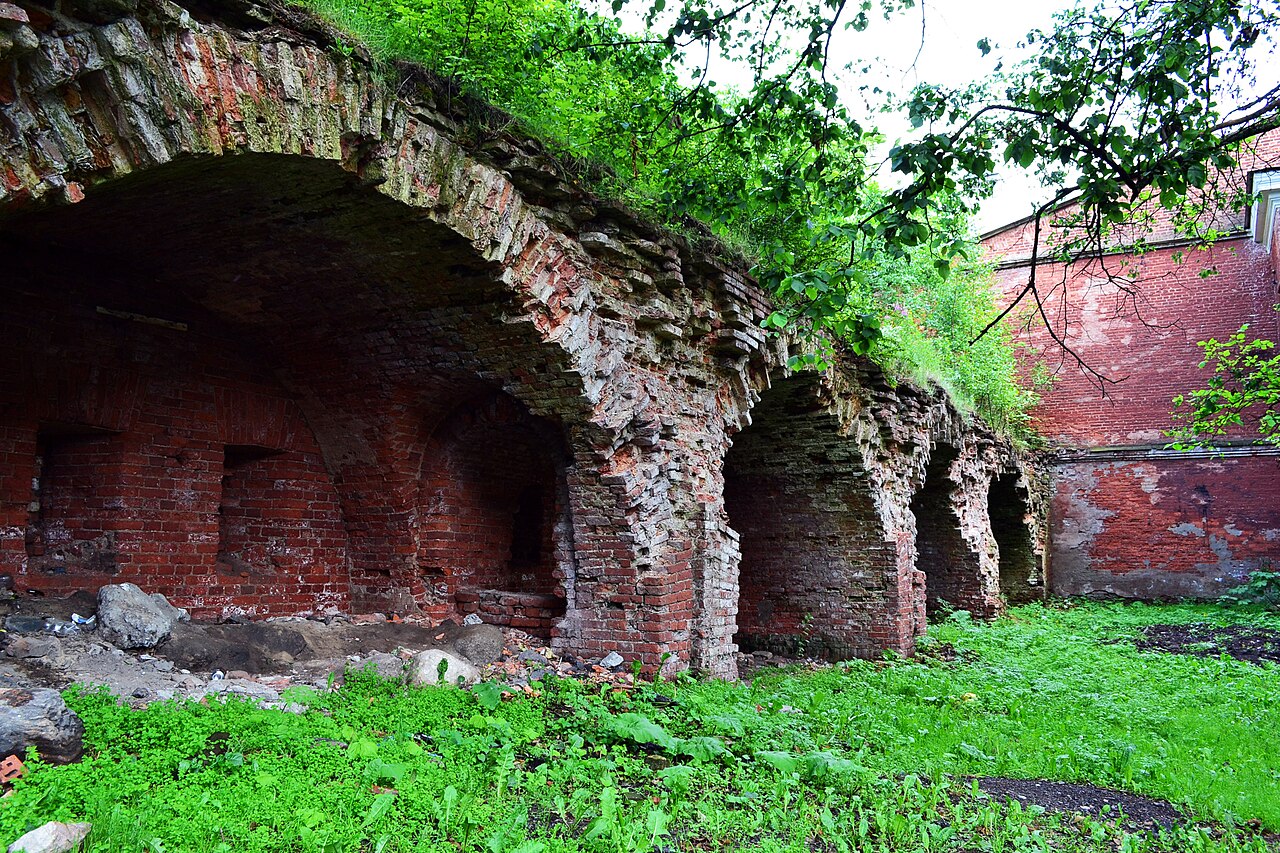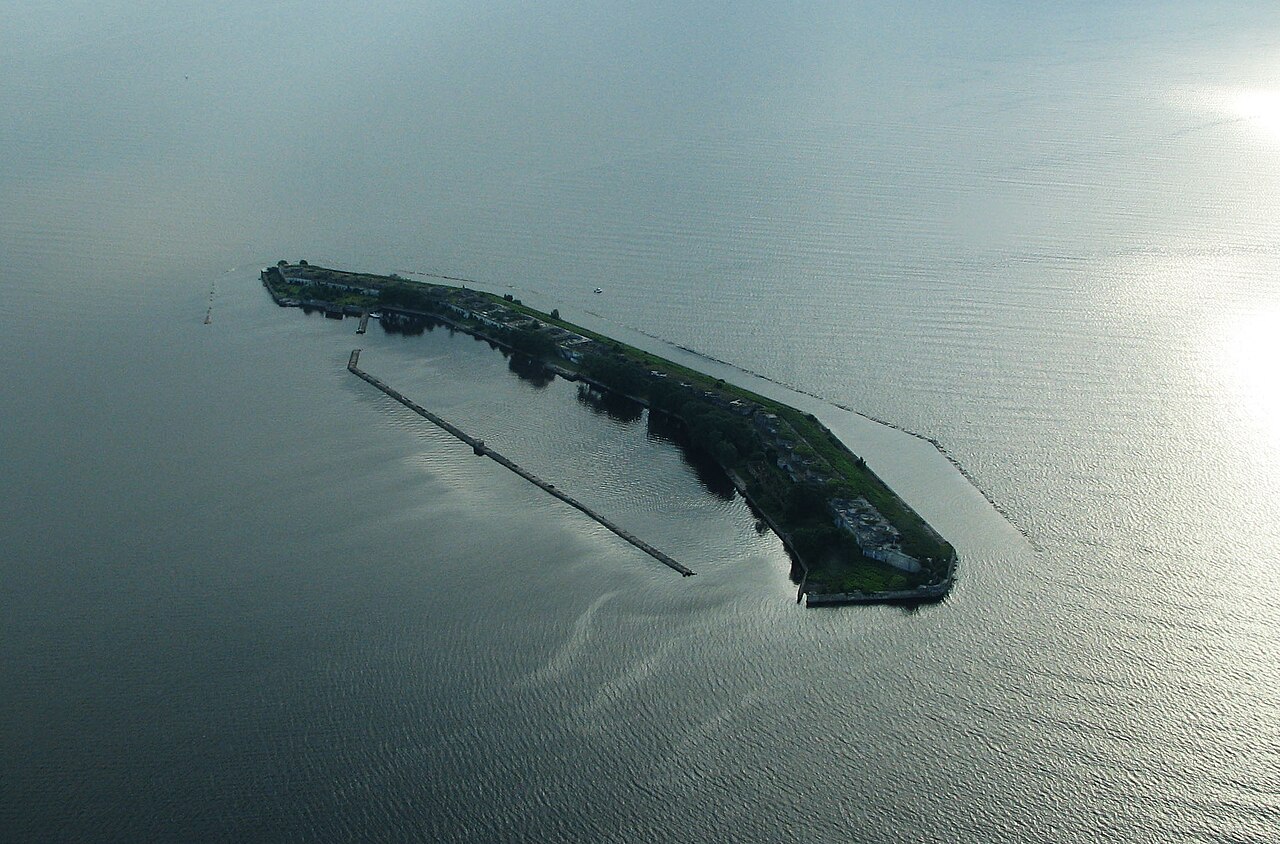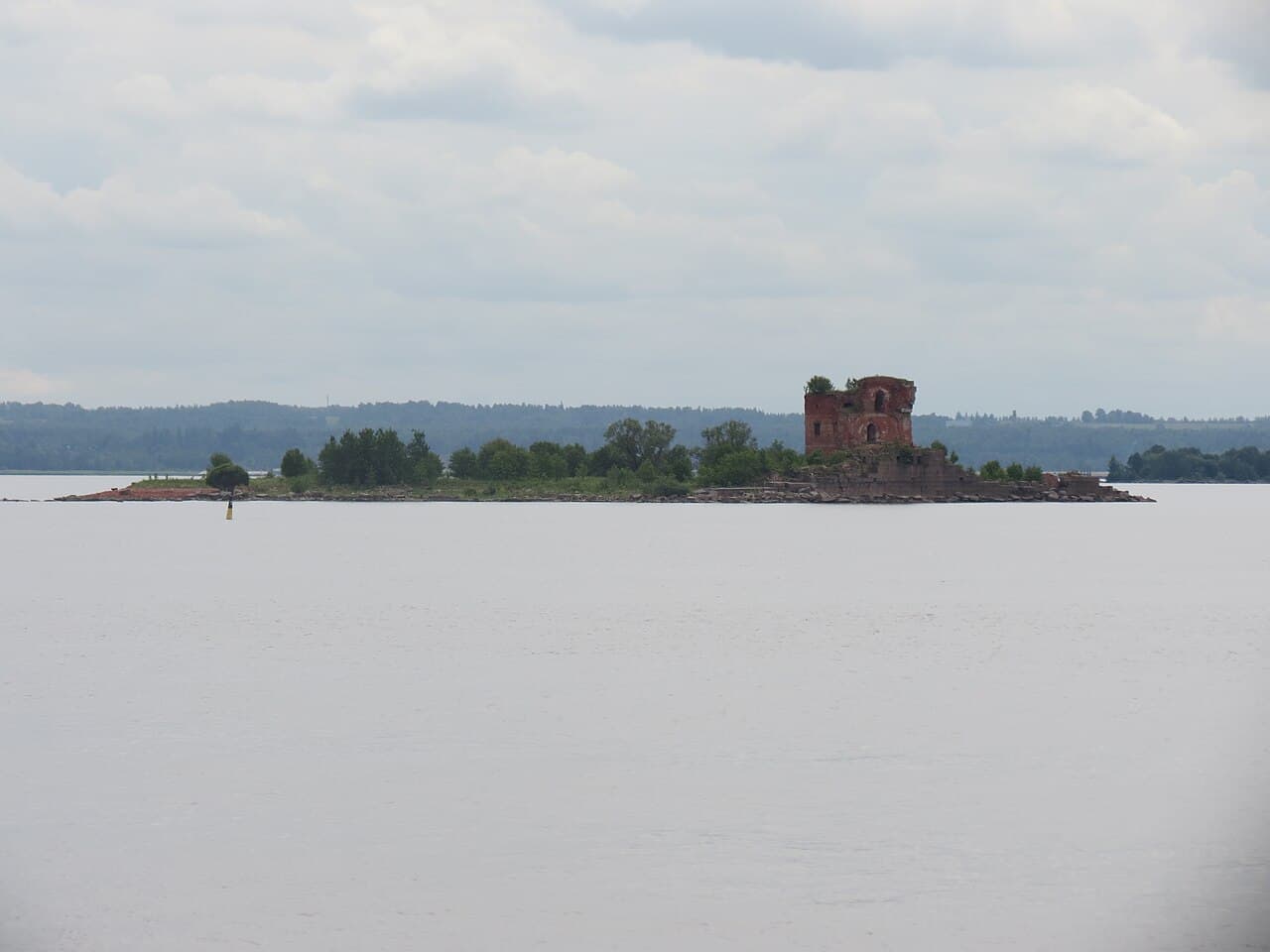
Risbank Fort — Russia castle

Risbank Fort

Risbank Fort: 19th-century bastioned fortress in Russia
Modern (19th–20th c.)
Well Preserved

Risbank Fort is a notable example of a 19th-century bastioned fortress located within the Russian Federation. As a modern period military structure, it reflects the evolution of fortification design during an era marked by advancements in artillery and changing warfare tactics.

Historical context and strategic importance

Constructed in the 19th century, Risbank Fort was part of a broader trend of military modernization across Europe and Russia. This period saw the transformation of traditional medieval castles into fortresses adapted to withstand the firepower of cannon and rifled artillery. The fort's design was influenced by the principles of bastioned fortifications, which originated in the Renaissance but were extensively developed in the modern era to enhance defensive capabilities.

Risbank Fort's location, though not precisely documented in public records, would have been strategically chosen to control key routes or protect important assets, typical of bastioned fortresses built during this time. Such forts often served as defensive strongholds against potential invasions or as garrison points to maintain regional security.

Architectural features and design elements

The fort exemplifies the bastioned fortress type, characterized by angular bastions projecting from the curtain walls, allowing defenders to cover adjacent walls with flanking fire. This design minimized blind spots and maximized the defensive field of fire, a significant advancement over earlier medieval curtain walls and towers.

Risbank Fort's walls would have been constructed using robust materials such as brick and stone, designed to absorb and deflect artillery bombardment. The bastions are likely equipped with platforms for mounting cannons, and the overall layout would include a dry or wet moat to hinder enemy approach.

Typical features of such forts include a gatehouse with defensive mechanisms like drawbridges or portcullises, casemates for troops and ammunition storage, and underground passages for secure movement within the fort. Although specific details about Risbank Fort's internal structures are scarce, these elements are consistent with bastioned fortresses of the era.

Military role and historical significance

During the 19th century, forts like Risbank played a crucial role in regional defense strategies, especially in the context of the Russian Empire's military reforms and territorial concerns. The fort would have housed a garrison trained to operate artillery and manage the fort's defenses in case of conflict.

While there are no widely known major battles or sieges associated specifically with Risbank Fort, its presence contributes to the understanding of military architecture adaptation in response to technological changes in warfare. It represents the transition from medieval fortifications to more complex, artillery-resistant designs that dominated until the early 20th century.

Preservation and current condition

The current condition of Risbank Fort is categorized as well preserved, indicating that much of its original structure remains intact. Preservation of such forts is important for historical and educational purposes, providing insight into military engineering and the geopolitical landscape of the 19th century.

Access to the fort may be subject to local regulations, and it could serve as a site for heritage tourism or military history study. Its architectural features offer valuable examples for scholars and enthusiasts interested in bastioned fortifications and their role in modern military history.

Architectural legacy and influence

Risbank Fort stands as a representative of the bastioned fortress tradition that influenced military architecture well into the modern era. Its design principles informed the construction of later fortifications, including adaptations for new artillery technologies and changing tactical doctrines.

The fort's architecture reflects a synthesis of Renaissance fortification concepts with 19th-century innovations, showcasing the enduring relevance of bastioned designs. This legacy is visible in various military structures across Europe and Russia, marking an important chapter in the history of fortification engineering.

Frequently asked questions (FAQ)

What is the historical significance of Risbank Fort?
Risbank Fort, built in the 18th century, played a crucial role in the defense strategies of the Russian Empire. It served as a military outpost during several conflicts, highlighting its importance in protecting the region from invasions.
When was Risbank Fort constructed?
Construction of Risbank Fort began in 1765 and was completed in 1773. The fort was designed as a strategic military installation, reflecting the architectural styles of its time.
Can I visit Risbank Fort?
Yes, Risbank Fort is open to visitors year-round. Guided tours are available, allowing you to explore its rich history and unique architecture.
What are the opening hours for Risbank Fort?
Risbank Fort is typically open from 9 AM to 5 PM daily. However, it's advisable to check the official website for any seasonal changes in hours or special events.
Is it possible to access Risbank Fort by public transportation?
Yes, Risbank Fort is accessible via public transportation, with several bus routes servicing the area. Be sure to check local transit schedules for the most convenient options.
What is the best time to visit Risbank Fort?
The best time to visit Risbank Fort is during the late spring and early autumn months when the weather is pleasant and suitable for outdoor exploration. Visiting during this time also allows you to enjoy the beautiful surrounding landscapes.
Are there any nearby attractions to Risbank Fort?
Yes, there are several attractions near Risbank Fort, including local museums and historical sites that provide deeper insights into the region's history. Visitors often enjoy exploring the nearby parks and scenic areas as well.
What are the ticket prices for visiting Risbank Fort?
Ticket prices for Risbank Fort are generally affordable, with discounts available for students and seniors. It's recommended to check the official site for the most current pricing and any special promotions.

Photo gallery

Risbank Fort
Click to view

Photo by Perfektangelll•CC BY-SA 3.0

1 photo • Click any image to view in full screen

Information

Bastioned Fortress

Loading map...

Visitor reviews

No reviews yet. Been here? Write the first review and help other travelers!

Write the first review

Visited this castle? Share your experience

Your review helps other travelers and adds first-hand knowledge to our encyclopedia.
Write a review

(5/5)

0/2000 characters

Your review will be visible after admin approval

Nearby castles

1.7 km
Fort Alexander I — Russia castle

Fort Alexander I

, Russia

Fort Alexander I, also known as the Plague Fort (Russian: Форт Александр Первый, Fort Aleksandr Perviy; Чумный форт, Chumnyi fort), is a distinctive 19th-century bastioned fortress located on an artificial island in the Gulf of Finland near Kronstadt, Russia. It forms part of the extensive Kronstadt Fortress system, which was built to protect the approaches to Saint Petersburg from naval threats. The fort's unique history and architecture make it a remarkable example of modern military engineering in the Russian Empire during the late 19th century. Historical context and strategic importance Constructed in the 19th century as a response to the increasing naval power of potential adversaries, Fort Alexander I was designed to strengthen the defense of the vital maritime gateway to Saint Petersburg. The fort's location on an artificial island was a strategic choice, allowing it to control naval access through the Gulf of Finland effectively. It was part of a broader network of sea forts that included other fortifications around Kronstadt, creating a formidable defensive ring. Architectural design and fortifications The fort exemplifies the bastioned fortress design, a style characterized by angular bastions projecting outward from the main walls, allowing defenders to cover adjacent walls with overlapping fields of fire. This design was a key feature of coastal and sea fortifications in the 19th century, intended to resist bombardment and amphibious assault. The fort's walls were constructed using robust masonry and reinforced with iron and concrete, materials that reflected advances in military architecture of the period. Its artificial island foundation was engineered to support the heavy weight of the fort's walls and artillery emplacements. The fort included multiple gun batteries, barracks, magazines, and defensive ditches, all arranged to maximize its defensive capabilities against naval attacks. The plague research laboratory From 1899 to 1917, Fort Alexander I served a distinctive role beyond its military function. It housed a research laboratory dedicated to the study of plague and other bacterial diseases. This laboratory was part of Russia's efforts to understand and combat infectious diseases at a time when bacteriology was rapidly advancing. The isolated location of the fort made it an ideal site for such research, minimizing the risk of contagion to the mainland population. The laboratory conducted experiments and developed vaccines, contributing to early bacteriological science. The fort's association with plague research earned it the nickname "Plague Fort," a testament to its unique place in medical as well as military history. Later history and current status After the laboratory closed in 1917, the fort's military significance declined with changes in naval warfare and technology. Over time, Fort Alexander I fell into a state of disuse and partial ruin. Today, it stands as a historical monument and an intriguing example of 19th-century coastal fortifications. While it is not regularly open to the public, it attracts interest from historians, architects, and tourists fascinated by its unique blend of military and medical history. Preservation efforts have been limited, and the fort remains in a partially preserved condition, with many of its original structures still visible but deteriorating. Its remote location on an artificial island presents challenges for restoration and maintenance. Architectural and cultural significance Fort Alexander I represents an important phase in the evolution of military architecture, showcasing the transition from traditional masonry fortresses to more modern constructions incorporating new materials and technologies. Its dual role as a defensive bastion and a medical research facility underscores the multifaceted uses of such structures in the late 19th and early 20th centuries. The fort is also a cultural landmark in the Russian Federation, symbolizing both the military heritage of the Kronstadt region and the pioneering efforts in infectious disease research. Its presence in the Gulf of Finland continues to draw attention to the strategic and scientific history of the area.

Modern (19th–20th c.)
Details
3.6 km
Kronstadt Fortress — Russia castle

Kronstadt Fortress

Kronstadt, Russia

Kronstadt Fortress stands as a significant bastioned fortress located on Kotlin Island in the Gulf of Finland, serving as the primary maritime defense for Saint Petersburg, Russia. Founded in 1704 by Peter the Great following his capture of Kotlin from the Swedes in 1703, Kronstadt was designed to protect the approaches to the newly established capital and its vital seaport. Its strategic position made it a cornerstone of Russian naval power in the Baltic Sea, housing the Russian Baltic Fleet and the seat of the Russian admiralty for centuries. Founding and early construction The fortress's initial construction was overseen by Abram Petrovich Gannibal, a notable military engineer and the great-grandfather of the Russian poet Alexander Pushkin. The first fortifications were inaugurated on 18 May 1704, marking the rapid establishment of Kronstadt as a formidable maritime stronghold. The builders employed innovative techniques to overcome the challenging environment of the frozen Gulf of Finland during winter. Workers used thousands of oak log frames filled with stones, transported over the ice by horses, to create artificial islands on which forts were erected. This method effectively closed off access to Saint Petersburg by sea, leaving only two narrow navigable channels heavily guarded by the strongest forts. Architectural evolution and 19th-century refortification Throughout the 18th and 19th centuries, Kronstadt Fortress underwent significant expansions and modernizations to adapt to evolving military technologies and threats. The original three-decker forts, five in total, which had successfully resisted Anglo-French fleets during the Crimean War, were eventually supplemented by new fortifications designed by the renowned military engineer Eduard Totleben. Between 1856 and 1871, Totleben's plans led to the construction of the Constantine Fort and several batteries, including four defending the main southern approach and seven covering the shallower northern channel. These new defenses featured low, thickly armored earthworks armed with Krupp heavy guns mounted in turrets, reflecting advances in artillery and fortification design. The town of Kronstadt itself was enclosed by a strong enceinte, providing an additional layer of protection. The fortress's layout and armaments exemplify the post-Renaissance bastioned fortress style, combining angled bastions and robust earthworks to maximize defensive capabilities against naval and land attacks. Kronstadt in russian history and conflicts Kronstadt played a pivotal role in several major historical events, particularly during the 19th and early 20th centuries. During the Crimean War (1853–1856), the fortress withstood attacks by Anglo-French fleets, demonstrating its strategic importance. In the early 20th century, the sailors of Kronstadt gained a reputation as fervent revolutionaries, notably during the February Revolution of 1917 when they joined the uprising and executed their officers. During the Russian Civil War (1917–1921), Kronstadt was a key Bolshevik naval base. However, in 1921, the fortress became the site of the Kronstadt rebellion, where sailors and civilians demanded political reforms such as freedom of speech and liberation of soviets from party control. The uprising was suppressed by forces led by Leon Trotsky, marking a significant moment in Soviet history. In the World War II period, Kronstadt endured repeated bombings by the German Luftwaffe starting in August 1941, underscoring its continued military significance. Until 1998, Kronstadt remained a closed city due to its naval importance but has since opened to tourists as a site of rich historical and architectural heritage. Architectural features and surviving structures Today, much of the original fortress complex has been altered or lost, but key elements remain. The Northern Wall, located along Vosstaniya Street in Kronstadt's center, survives in good condition. This wall dates from the 19th century and reflects the fortress's extensive refortification during that period. The fortress's design integrates multiple forts, batteries, and earthworks arranged on artificial islands, controlling access through the Gulf of Finland. The use of oak log frames filled with stones to create these islands was a distinctive engineering solution to the frozen maritime environment. The combination of bastioned defenses and heavy artillery emplacements illustrates the evolution of military architecture from the early 18th century through the late 19th century. Cultural and heritage significance Kronstadt Fortress is part of the Saint Petersburg UNESCO World Heritage Site, recognized for its historical and architectural value. It represents a key chapter in Russian naval history and the development of bastioned fortifications in northern Europe. The site attracts visitors interested in military history, architecture, and Russian heritage, offering insights into the strategic defense mechanisms that protected one of Russia's most important cities for over three centuries. The fortress's role in major historical events such as the Crimean War, the Russian revolutions, and World War II adds layers of significance beyond its architectural merits, making Kronstadt a multifaceted monument to Russia's maritime and political history. Visiting kronstadt fortress today Since the lifting of its closed city status in 1998, Kronstadt has become accessible to tourists. Visitors can explore the surviving fortifications, including the well-preserved Northern Wall, and learn about the fortress's role in Russian history through local museums and guided tours. The fortress's unique location on Kotlin Island provides scenic views of the Gulf of Finland and Saint Petersburg's maritime approaches. While some parts of the fortress remain in ruins or have been repurposed, the site offers a tangible connection to centuries of military engineering and Russian naval power. Visitors are advised to check local opening hours and access conditions, as some areas may still be restricted due to ongoing naval activities or preservation efforts.

Post-Renaissance (17th–18th c.)
Details
14.3 km
Totleben — Russia castle

Totleben

, Russia

Totleben bastioned fortress is a significant example of 19th-century military architecture located in the Russian Federation. Constructed during the modern period, this fortress showcases the strategic defensive design typical of the era, emphasizing bastioned fortifications that were developed to withstand artillery advances. Historical context and strategic importance Built in the 19th century, the Totleben fortress was part of a broader effort by the Russian Empire to modernize its defensive structures in response to evolving military technologies and geopolitical threats. The fortress was named after a notable military engineer, reflecting the importance of expert design in fortification construction during this period. During this time, bastioned fortresses were integral to military defense, designed to provide overlapping fields of fire and reduce blind spots. Totleben's location, while not precisely documented in available sources, would have been chosen for its strategic value, likely controlling key transportation routes or protecting important settlements or military installations. Architectural features and design The fortress is classified as a bastioned fortress, a style characterized by angular bastions projecting from the main walls. These bastions allowed defenders to cover adjacent walls with gunfire, eliminating dead zones and enhancing the fortress's defensive capability. Typical features include thick, sloped walls designed to deflect cannonballs, deep moats or ditches surrounding the perimeter, and robust gatehouses controlling access. The design would have incorporated casemates and bombproof shelters to protect troops and ammunition. While specific details of Totleben's layout are scarce, the fortress likely followed the principles of Vauban-style fortifications, which were influential in Russian military architecture during the 18th and 19th centuries. This includes star-shaped outlines, layered defensive walls, and strategic positioning of artillery emplacements. Construction and materials The construction of Totleben fortress would have involved extensive use of stone and brick masonry, materials chosen for their durability against artillery fire. The walls were probably reinforced with earthworks to absorb the impact of cannonballs. Given the era, the fortress construction likely employed both traditional masonry techniques and emerging engineering practices, including precise geometric planning and the use of gunpowder for excavation and shaping of defensive ditches. Military role and later history Throughout its operational history, Totleben fortress would have served as a garrison point, controlling regional military movements and serving as a deterrent against invasions. Its bastioned design allowed it to mount significant artillery defenses, making it a formidable obstacle to enemy forces. As military technology advanced into the 20th century, many bastioned fortresses, including Totleben, became obsolete due to the rise of more mobile and powerful artillery and air power. The fortress's current condition is not extensively documented, but such structures often face challenges from neglect and changing land use. Cultural and heritage significance Totleben fortress represents an important phase in the evolution of military architecture in Russia. Its bastioned design reflects the adaptation of European fortification principles to local strategic needs. Preserving such sites contributes to understanding the military history and engineering achievements of the period. Visitors and historians interested in 19th-century fortifications and Russian military history may find Totleben a valuable subject of study, although accessibility and preservation status may vary.

Modern (19th–20th c.)
Details