Fort Alexander I
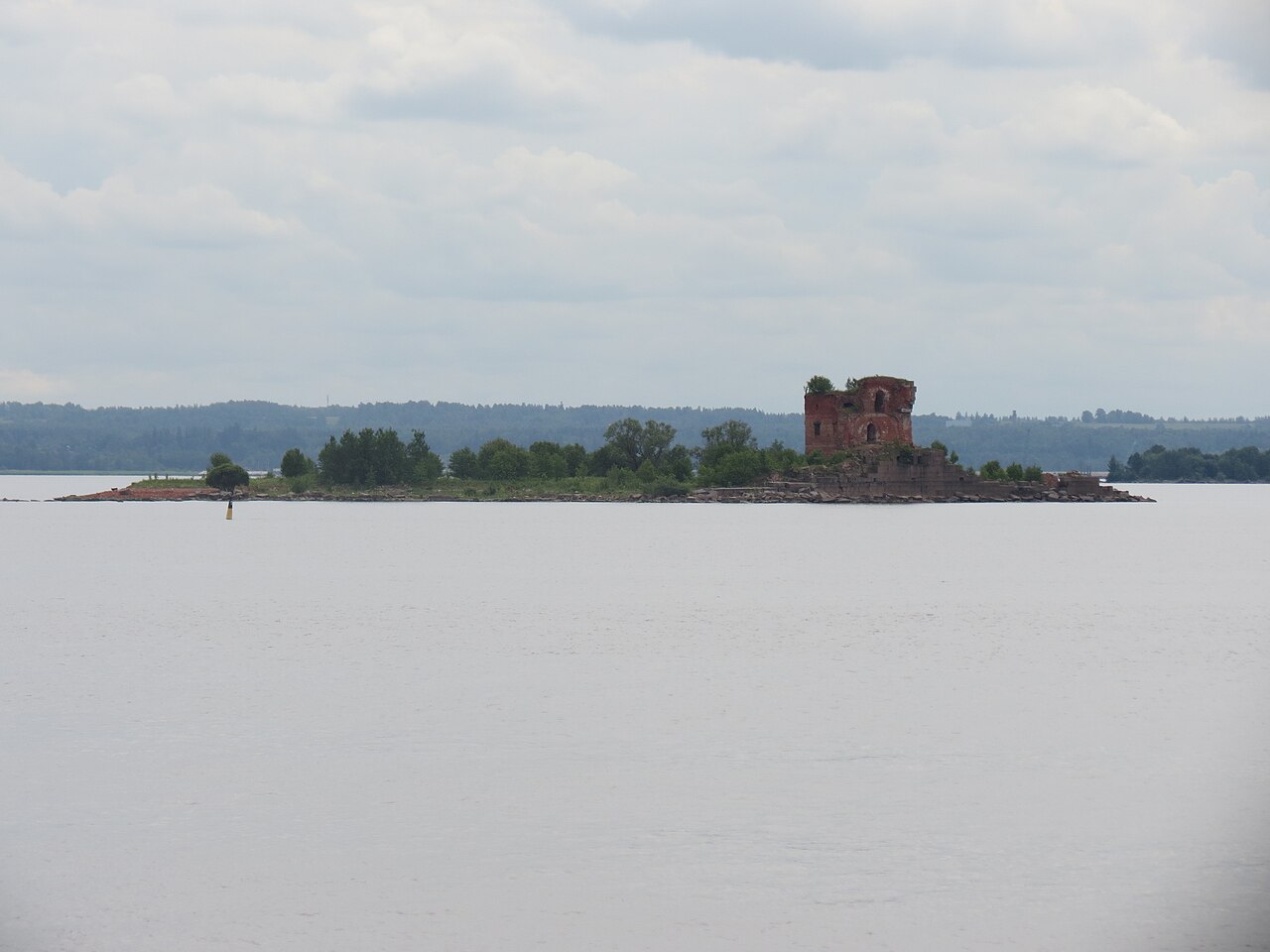
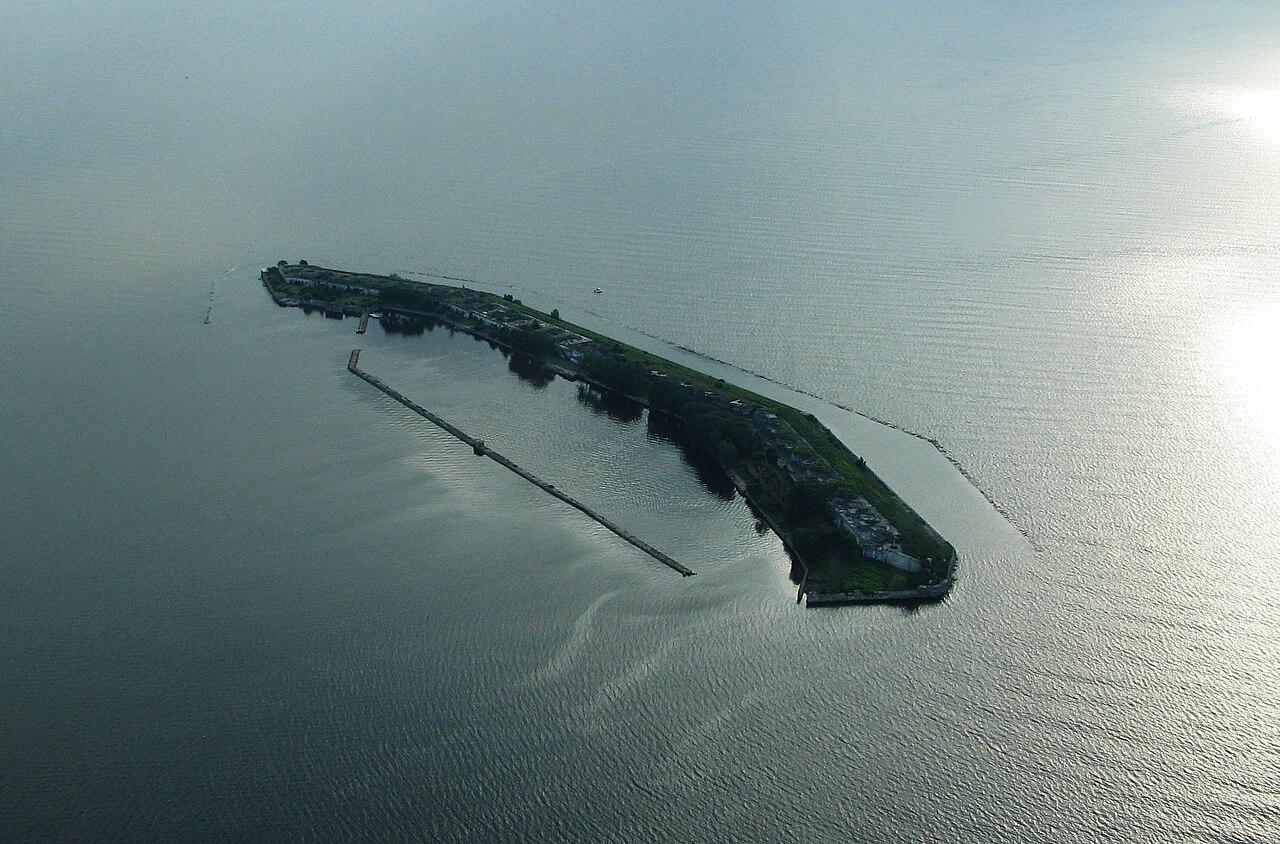
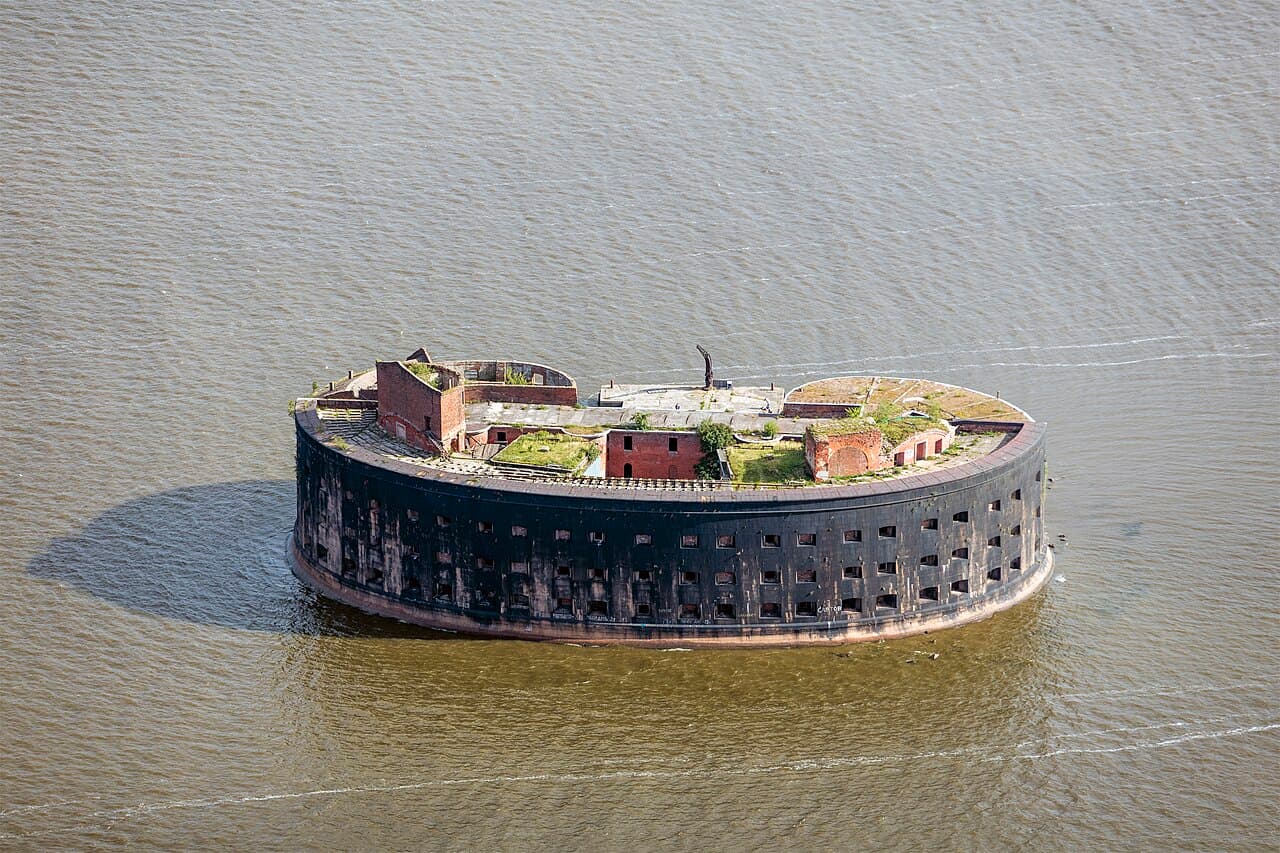
Fort Alexander I, also known as the Plague Fort (Russian: Форт Александр Первый, Fort Aleksandr Perviy; Чумный форт, Chumnyi fort), is a distinctive 19th-century bastioned fortress located on an artificial island in the Gulf of Finland near Kronstadt, Russia. It forms part of the extensive Kronstadt Fortress system, which was built to protect the approaches to Saint Petersburg from naval threats. The fort's unique history and architecture make it a remarkable example of modern military engineering in the Russian Empire during the late 19th century.
Historical context and strategic importance
Constructed in the 19th century as a response to the increasing naval power of potential adversaries, Fort Alexander I was designed to strengthen the defense of the vital maritime gateway to Saint Petersburg. The fort's location on an artificial island was a strategic choice, allowing it to control naval access through the Gulf of Finland effectively. It was part of a broader network of sea forts that included other fortifications around Kronstadt, creating a formidable defensive ring.
Architectural design and fortifications
The fort exemplifies the bastioned fortress design, a style characterized by angular bastions projecting outward from the main walls, allowing defenders to cover adjacent walls with overlapping fields of fire. This design was a key feature of coastal and sea fortifications in the 19th century, intended to resist bombardment and amphibious assault. The fort's walls were constructed using robust masonry and reinforced with iron and concrete, materials that reflected advances in military architecture of the period.
Its artificial island foundation was engineered to support the heavy weight of the fort's walls and artillery emplacements. The fort included multiple gun batteries, barracks, magazines, and defensive ditches, all arranged to maximize its defensive capabilities against naval attacks.
The plague research laboratory
From 1899 to 1917, Fort Alexander I served a distinctive role beyond its military function. It housed a research laboratory dedicated to the study of plague and other bacterial diseases. This laboratory was part of Russia's efforts to understand and combat infectious diseases at a time when bacteriology was rapidly advancing. The isolated location of the fort made it an ideal site for such research, minimizing the risk of contagion to the mainland population.
The laboratory conducted experiments and developed vaccines, contributing to early bacteriological science. The fort's association with plague research earned it the nickname "Plague Fort," a testament to its unique place in medical as well as military history.
Later history and current status
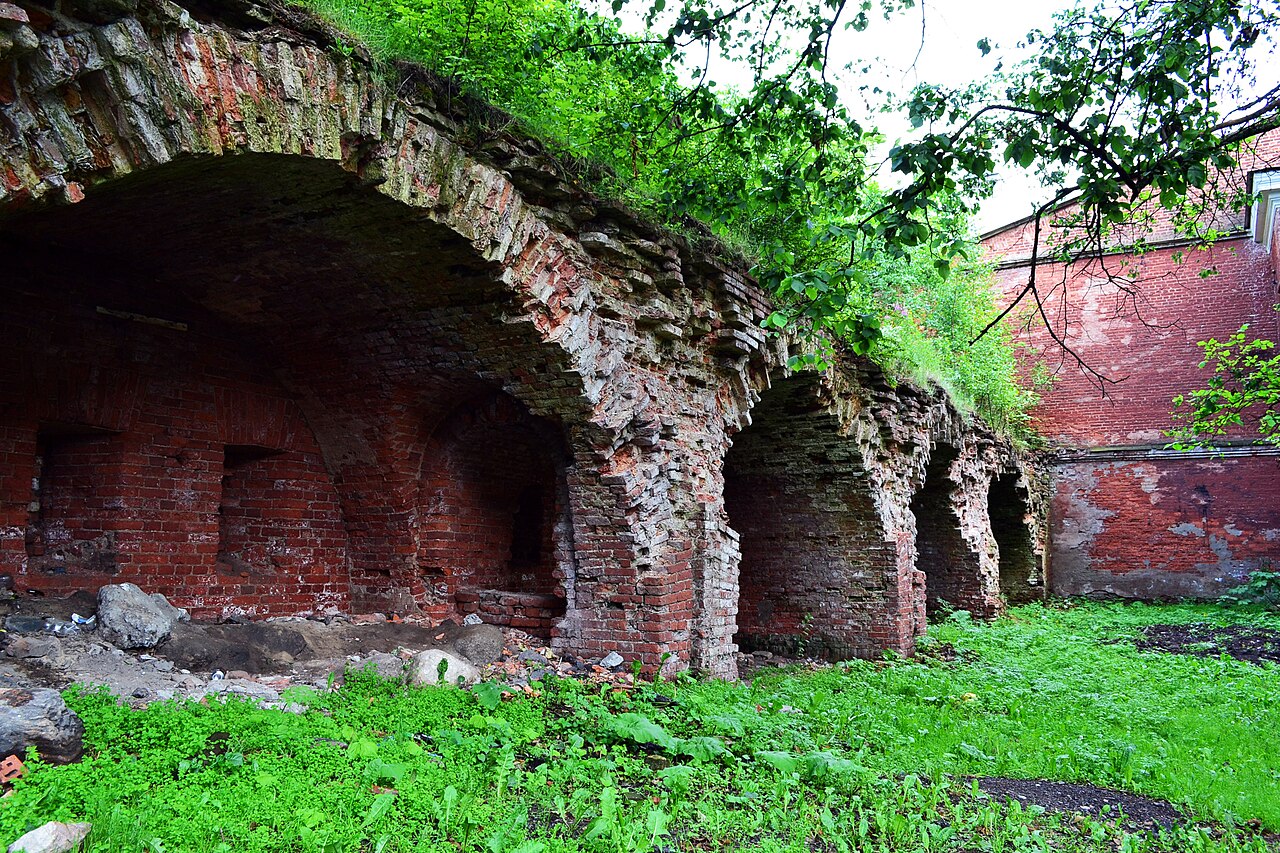
After the laboratory closed in 1917, the fort's military significance declined with changes in naval warfare and technology. Over time, Fort Alexander I fell into a state of disuse and partial ruin. Today, it stands as a historical monument and an intriguing example of 19th-century coastal fortifications. While it is not regularly open to the public, it attracts interest from historians, architects, and tourists fascinated by its unique blend of military and medical history.
Preservation efforts have been limited, and the fort remains in a partially preserved condition, with many of its original structures still visible but deteriorating. Its remote location on an artificial island presents challenges for restoration and maintenance.
Architectural and cultural significance
Fort Alexander I represents an important phase in the evolution of military architecture, showcasing the transition from traditional masonry fortresses to more modern constructions incorporating new materials and technologies. Its dual role as a defensive bastion and a medical research facility underscores the multifaceted uses of such structures in the late 19th and early 20th centuries.
The fort is also a cultural landmark in the Russian Federation, symbolizing both the military heritage of the Kronstadt region and the pioneering efforts in infectious disease research. Its presence in the Gulf of Finland continues to draw attention to the strategic and scientific history of the area.
Frequently asked questions (FAQ)
- What is Fort Alexander I known for?
- Fort Alexander I is known for being a 19th-century sea fort near Kronstadt and for housing a plague research laboratory from 1899 to 1917.
- Can I visit Fort Alexander I?
- Fort Alexander I is located on an artificial island and is not regularly open to the public due to its remote location and preservation challenges.
- When was Fort Alexander I built?
- Fort Alexander I was constructed in the 19th century as part of the Kronstadt Fortress system to protect Saint Petersburg.
- Why is it called the Plague Fort?
- The fort earned the nickname 'Plague Fort' because it housed a research laboratory studying plague and other bacterial diseases between 1899 and 1917.
- What architectural style is Fort Alexander I?
- Fort Alexander I is a bastioned fortress, featuring angular bastions designed for overlapping fields of fire typical of 19th-century military architecture.
Photo gallery

Information
Loading map...
Visitor reviews
No reviews yet. Been here? Write the first review and help other travelers!
Write the first reviewVisited this castle? Share your experience
Your review helps other travelers and adds first-hand knowledge to our encyclopedia.