Rio Castle
Rio Castle, historically known as the Castle of the Morea, stands prominently at the northern tip of the Rio peninsula in Achaea, Greece, guarding the strategic entrance to the Corinthian Gulf. Constructed in 1499 by the Ottoman Sultan Bayezid II, the fortress was built rapidly in just three months atop the ruins of an ancient temple dedicated to Poseidon. Its primary purpose was to control naval traffic and defend the gulf's entrance in tandem with its twin, the Castle of Rumelia at Antirrio. Together, these fortifications earned the nickname the "Little Dardanelles" due to their strategic importance reminiscent of the famous straits in Turkey.
Strategic location and architectural layout
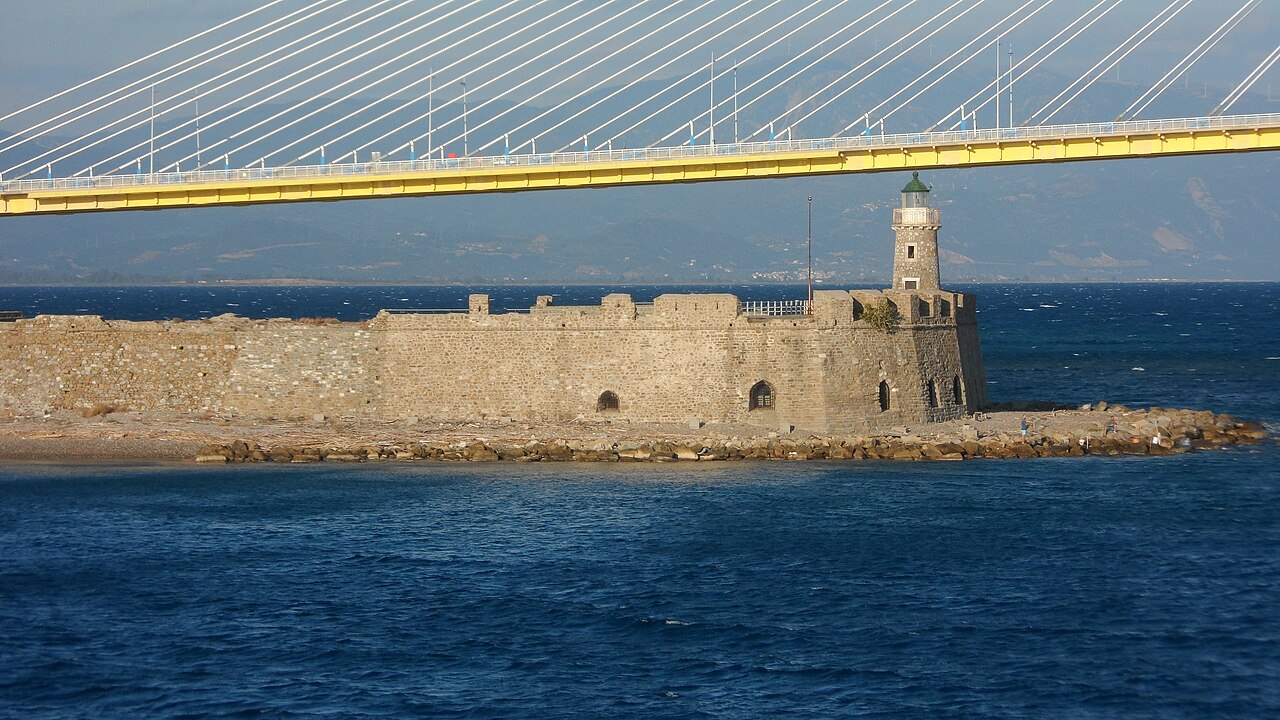
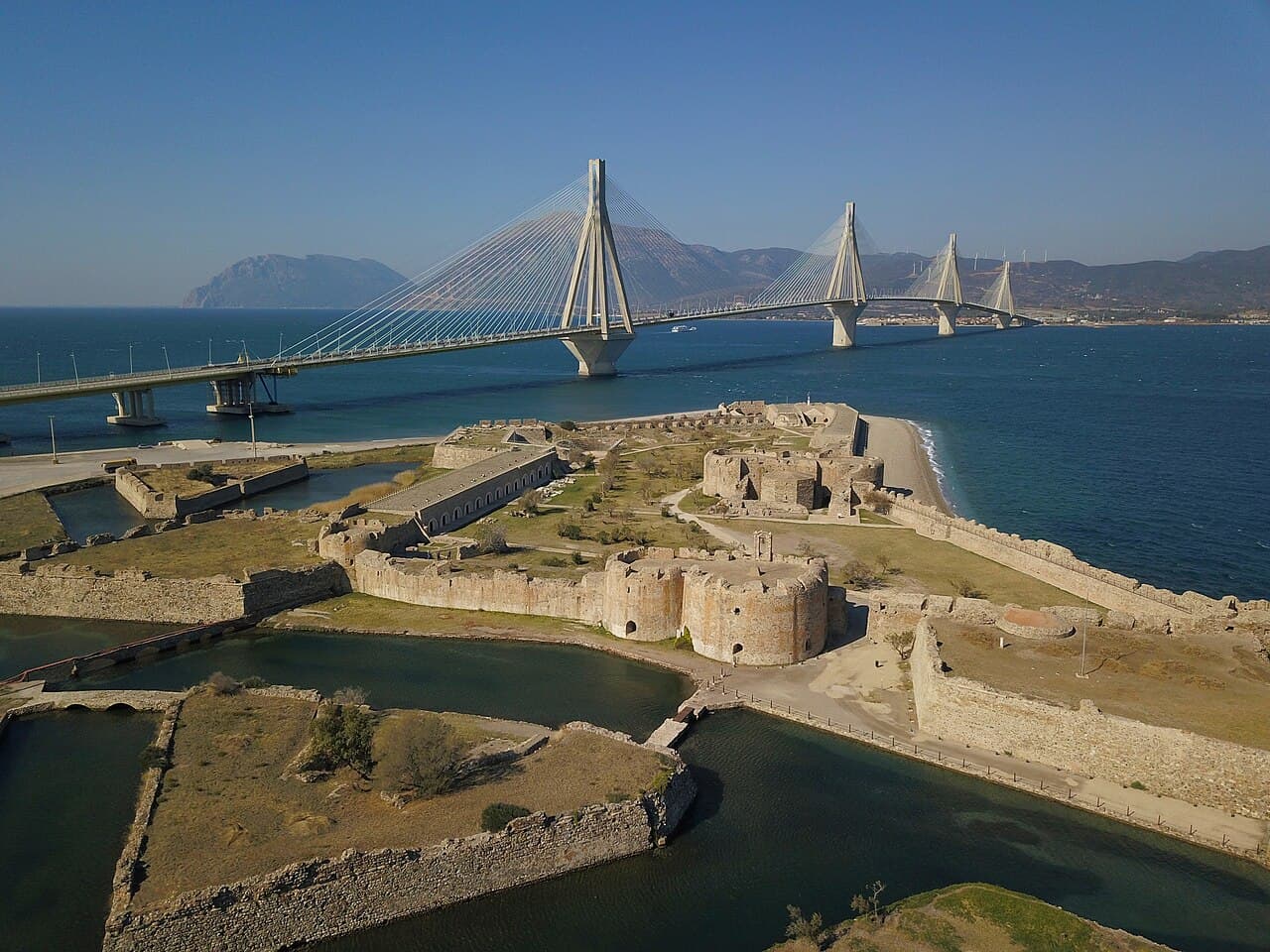
The castle's location on the seashore provides natural defense, with its northern side directly protected by the sea. The southern side is fortified by a broad moat filled with seawater, enhancing its defensive capabilities against land-based assaults. Two outer bastions, known as ravelins, are connected to the main fortress by sturdy stone bridges, creating layered defenses. The castle features two primary gates: a central gate facing inland to control land access, and a sea gate allowing access from the water.
Design and fortifications
The castle's design reflects the military architecture of the late medieval period with adaptations for artillery defense, typical of Ottoman fortresses of the era. The use of ravelins and a water-filled moat demonstrates an understanding of contemporary fortification techniques aimed at resisting cannon fire and infantry assaults. The stone bridges linking the bastions to the main structure allowed defenders to move quickly between defensive positions.
Historical military engagements and ownership changes
In 1533, the castle was briefly seized by the Genoese admiral Andrea Doria, but it was recaptured by the Ottomans within the same year. During the Morean War in 1687, Venetian forces under Francesco Morosini captured the castle. The Venetians undertook significant rebuilding and strengthening efforts, adding towers and other fortifications that gave the castle much of its current form. They also constructed the small chapel of the Life-giving Spring (Zoodochos Pege) within the castle grounds, reflecting the Venetian influence on the site.
The Ottomans regained control in 1715 and held the castle until the early 19th century, when it was surrendered to French General Nicolas Joseph Maison. This transition marked the end of Ottoman rule in the region.
Later uses and cultural significance
Between 1831 and 1912, the castle served as both a military and civilian prison. Prisoners were often employed by the municipality of Patras for public works such as street cleaning in Rio, indicating the castle's integration into local civic life beyond its military origins.
Today, Rio Castle is a ruined fortress that remains a popular tourist attraction. Its proximity to the Rio-Antirio Bridge and the local ferry docks makes it accessible to visitors. The site is also used for cultural events, including concerts, which take advantage of the castle's atmospheric setting and historic ambiance.
Architectural features and preservation status
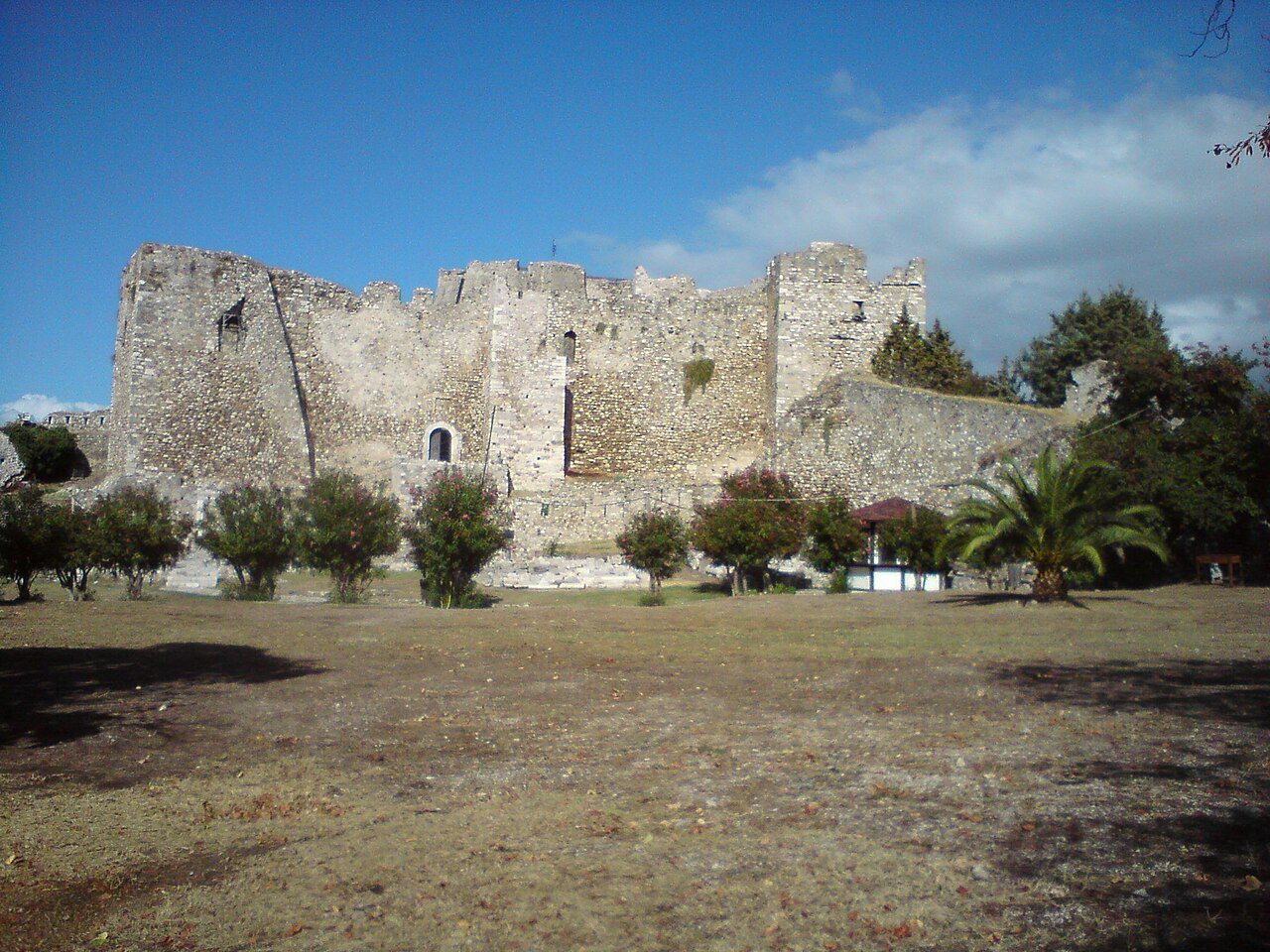
Although in a state of ruin, the castle's key defensive elements such as the moat, bastions, and gates are still discernible. The Venetian additions, especially the towers and chapel, highlight the layered history of the castle's construction and use. The castle's preservation as an archaeological site allows visitors to explore the evolution of fortress architecture from the late medieval Ottoman period through Venetian modifications.
The castle's location on the shoreline and its integration of water defenses make it a notable example of a water castle adapted for controlling a critical maritime passage. Its historical importance as a military stronghold guarding the Corinthian Gulf entrance remains a key aspect of its heritage.
Frequently asked questions (FAQ)
- How do I get to Rio Castle?
- Rio Castle is located at the northern tip of the Rio peninsula near the Rio-Antirio Bridge in Achaea, Greece. It is accessible by car or local ferry services from Patras and Antirrio.
- What is the historical significance of Rio Castle?
- Built in 1499 by Ottoman Sultan Bayezid II, Rio Castle guarded the entrance to the Corinthian Gulf alongside its twin at Antirrio. It played a key role in regional military conflicts involving the Ottomans, Venetians, and Genoese.
- Can visitors explore the castle ruins?
- Yes, the castle ruins are open to the public daily from 9:00 to 18:00. Visitors can walk around the moat, bastions, and gates, and attend cultural events held on site.
- What architectural styles are evident in Rio Castle?
- Rio Castle features late medieval Ottoman military architecture with Venetian modifications, including bastions, towers, and a chapel added during Venetian rule.
- Is there an entrance fee to visit Rio Castle?
- Admission to Rio Castle is free, making it an accessible historical site for tourists and locals alike.
Photo gallery

Information
Opening hours
9:00-18:00, daily
Ticket prices
Free
Current owner
Municipality of Patras
Loading map...
Visitor reviews
No reviews yet. Been here? Write the first review and help other travelers!
Write the first reviewVisited this castle? Share your experience
Your review helps other travelers and adds first-hand knowledge to our encyclopedia.