Patras Castle
Patras Castle stands as a monumental testament to Byzantine military architecture and the turbulent history of the Peloponnese region. Constructed in the mid-6th century AD under the reign of Emperor Justinian I, this hill castle was strategically positioned atop the ruins of the ancient acropolis of Patras, on a low outlying hill of the Panachaiko Mountain. Its location afforded commanding views over the surrounding landscape and the nearby Patraic Gulf, making it a critical defensive stronghold throughout its long history.
The castle's origins are deeply intertwined with the aftermath of the 551 AD earthquake, which devastated the city of Patras. In response, Justinian I ordered the construction of a fortified complex to protect the city from external threats. The builders ingeniously reused materials from pre-Christian structures, including Roman architectural fragments, which remain visible in the masonry to this day. This practice of spolia not only provided practical building materials but also symbolically linked the new fortress to the city's ancient past.
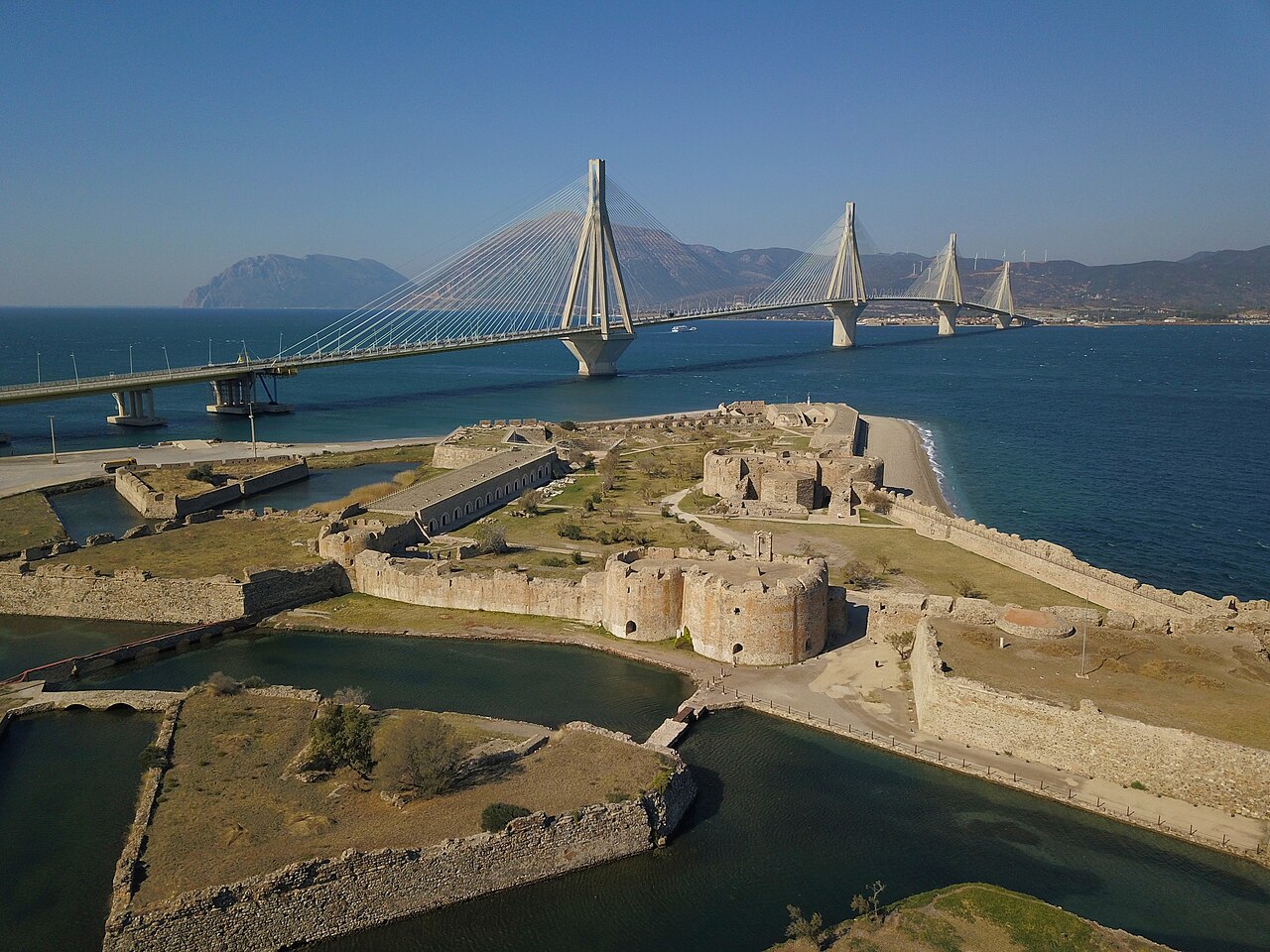
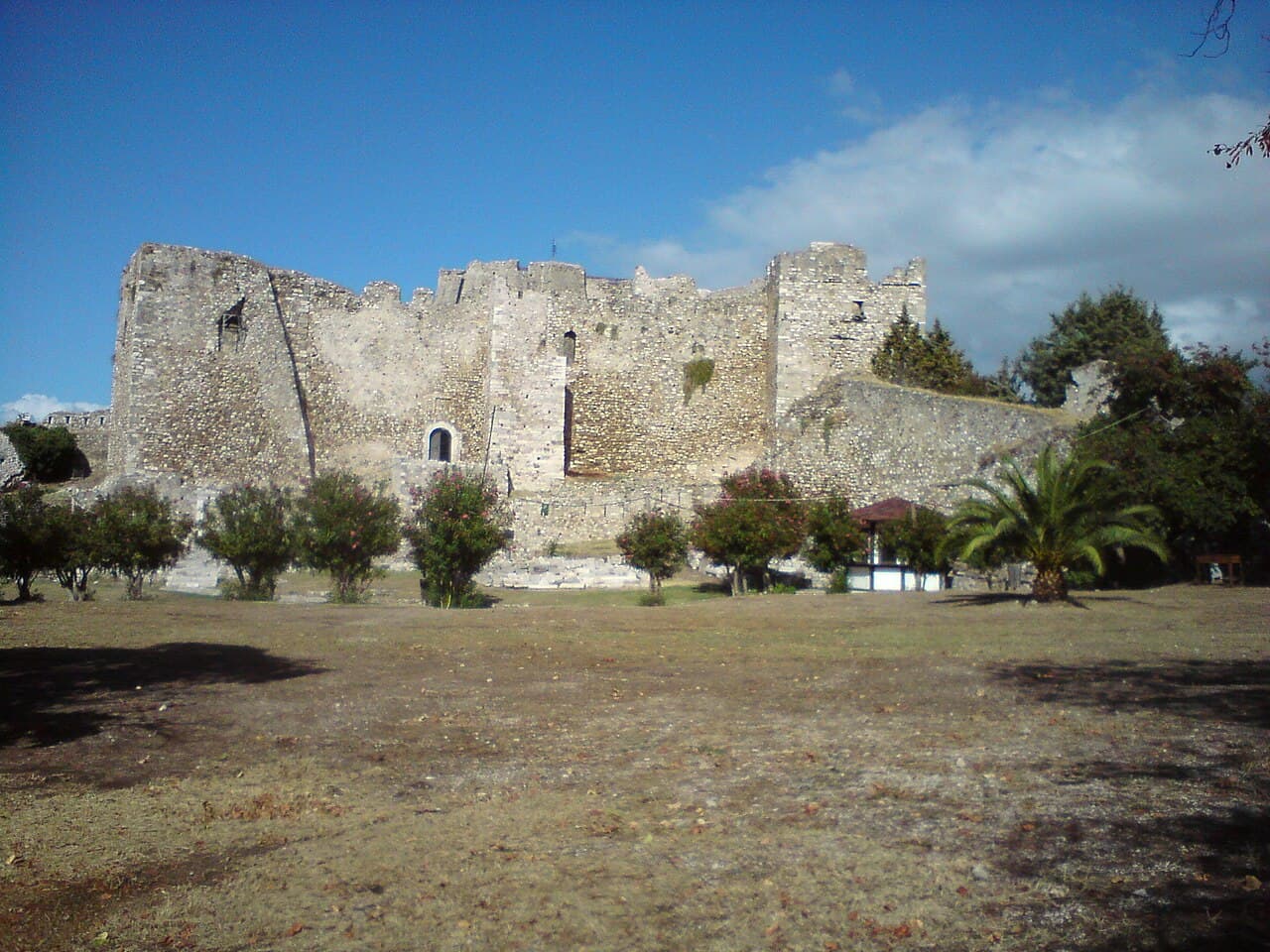
Patras Castle features a distinctive triangular outer wall reinforced by multiple towers and gates, originally surrounded on three sides by a deep moat. This moat, combined with the robust stone walls rising approximately 12 meters high, created a formidable barrier against invaders. Within the outer defenses lies an inner compound located at the northeastern corner, itself protected by another moat and accessed through a large gate tower. This layered defensive design exemplifies Byzantine military engineering aimed at maximizing protection and control.
Historical significance and military role
Throughout the Byzantine period, Patras Castle played a vital role as both a military fortress and administrative center. It successfully withstood numerous sieges by various groups, including the Slavs, Saracens, Normans, and Bulgarians. One of the most celebrated events in its history was the siege of 805 AD, when combined Slavic and Saracen forces attempted to capture the fortress but were repelled. This victory was traditionally attributed to a miracle by St. Andrew, the patron saint of Patras, enhancing the castle's spiritual and cultural significance.
After the Fourth Crusade in 1205, the castle came under the control of the Frankish Principality of Achaea. The Franks undertook significant fortification efforts, including the excavation of moats on all three sides of the outer walls, further enhancing the castle's defensive capabilities. In 1278, the castle was pawned to the local Latin Archbishop, who maintained possession for over 150 years. During this time, the fortress also briefly came under Venetian control in 1408, who leased it for five years and reinforced its defenses.
In 1430, the castle was reclaimed by the Despot of the Morea and future last Byzantine emperor, Constantine Palaiologos. He undertook extensive repairs and strengthening of the walls, reflecting the ongoing strategic importance of the fortress in the waning years of the Byzantine Empire.
The Ottoman Empire captured Patras Castle in 1458, incorporating it as a key administrative and military center in the Peloponnese during the period known as Tourkokratia. Despite Ottoman dominance, the castle briefly fell to the Venetians during the Morean War in 1687, who enhanced the fortifications before the Ottomans retook it in 1715, renaming it Balya Badra.
During the Greek War of Independence beginning in 1821, Patras Castle was a focal point of military action. Greek revolutionary forces, led by Theodoros Kolokotronis, laid several sieges but were unable to capture it until 1828, when French troops under General Maison succeeded in taking the fortress, marking a significant step towards Greek independence.
Architectural features and construction details
Layout and defensive structures
The castle covers an area of approximately 22,725 square meters on a gentle hill near the Panachaiko Mountain foothills, about 800 meters inland from the Patraic Gulf coast. Its triangular outer wall is punctuated by numerous towers and gates, providing overlapping fields of fire and robust defense. The original moat, now dry, surrounded three sides of the fortress, creating a formidable obstacle for attackers.
The inner enclosure, situated at the northeastern corner, was designed as a last line of defense. It is separated from the outer ward by its own moat and accessed via a large gate tower covering around 30 square meters. This gate tower controlled entry and exit, reinforcing security within the compound.
Use of spolia and masonry techniques
One of the castle's most striking features is the extensive use of spolia—reused building materials from earlier Roman and pre-Christian structures. Architectural fragments such as friezes, vaults, and even a notable marble torso and head of a Roman statue are embedded in the walls. This statue, affectionately known as the "Patrinella" by locals, connects the fortress to the city's rich cultural heritage.
The masonry exhibits multiple phases of construction and repair, with walls rising up to 12 meters in height. Repairs by Constantine Palaiologos in the 15th century and later Venetian modifications are evident in the differing stonework and fortification styles.
Modern use and preservation
Following the turbulent 19th and early 20th centuries, during which the castle served as a military garrison and prison, Patras Castle experienced occupation by German forces during World War II. After liberation in 1944, the fortress gradually transitioned from military use to cultural preservation.
Since 1973, the castle has been under the care of the 6th Ephorate of Byzantine Antiquities, which has overseen its maintenance and restoration. Today, the castle is a well-preserved historical landmark and a vibrant cultural venue. An open-air theatre with a capacity of 640 seats has been installed within the inner enclosure, hosting concerts, performances, and festivals, especially during the summer months.
Patras Castle remains one of the most significant and best-preserved Byzantine fortresses in Greece, offering visitors a tangible connection to the city's layered history, architectural evolution, and enduring strategic importance.
Frequently asked questions (FAQ)
- How do I visit Patras Castle?
- Patras Castle is open to visitors daily, though hours may vary seasonally. Admission is free, and visitors can explore the castle grounds and attend cultural events held in the open-air theatre during summer.
- What is the historical significance of Patras Castle?
- Patras Castle played a key role in Byzantine, Frankish, Venetian, Ottoman, and modern Greek history, serving as a military fortress and administrative center for over 1,400 years.
- When was Patras Castle built?
- The castle was originally constructed in the mid-6th century AD by Byzantine Emperor Justinian I following a devastating earthquake in 551 AD.
- Can I attend events at Patras Castle?
- Yes, the castle hosts cultural events, including concerts and theatrical performances in its 640-seat open-air theatre, primarily during the summer months.
- Is Patras Castle accessible for people with mobility issues?
- While the castle grounds include uneven terrain and historic stone pathways, efforts have been made to improve accessibility, but some areas may still be challenging for visitors with mobility impairments.
Photo gallery

Information
Opening hours
Open daily, hours may vary
Ticket prices
Free
Current owner
6th Ephorate of Byzantine Antiquities
Website
Visit websiteSources & official resources
Verify the information above using these authoritative references.
Loading map...
Visitor reviews
No reviews yet. Been here? Write the first review and help other travelers!
Write the first reviewVisited this castle? Share your experience
Your review helps other travelers and adds first-hand knowledge to our encyclopedia.